1 free read left. Create a free account for unlimited reading + AI research.
Create free accountWhitepaper DiGRA
1 free read left. Create a free account for unlimited reading + AI research.
Create free accountWhitepaperDiGRA
The paper situates language learning within a move from drill-based structural approaches, through cognitive models, toward socio-cognitive and communicative paradigms.
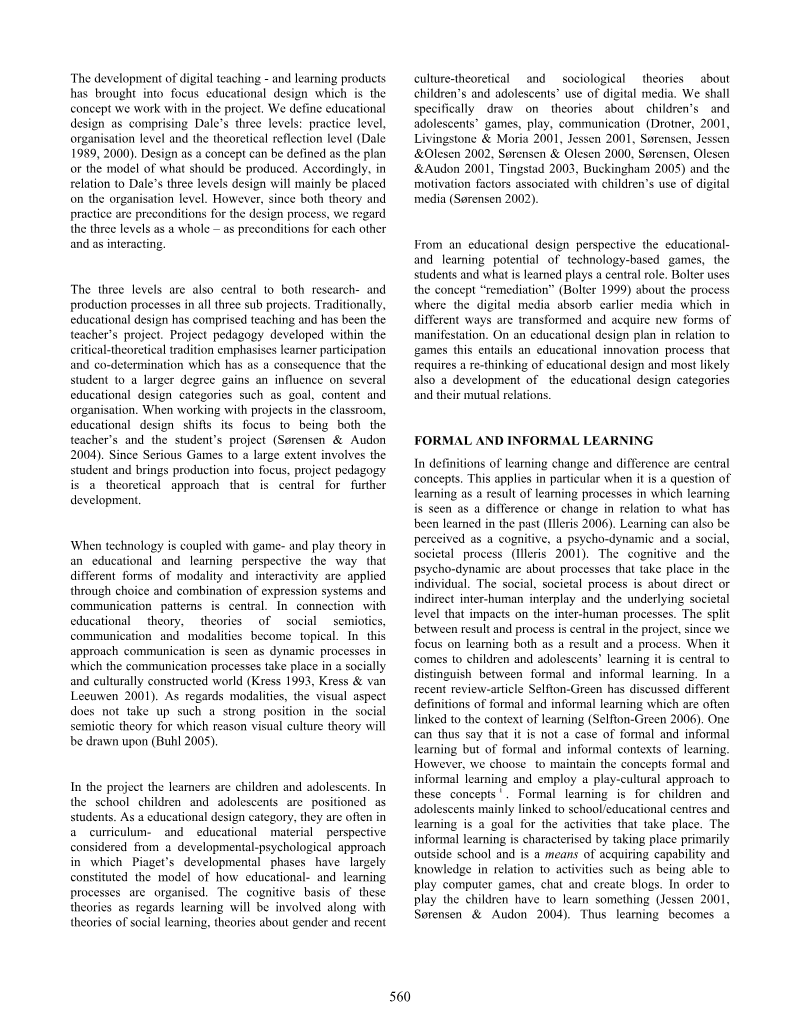
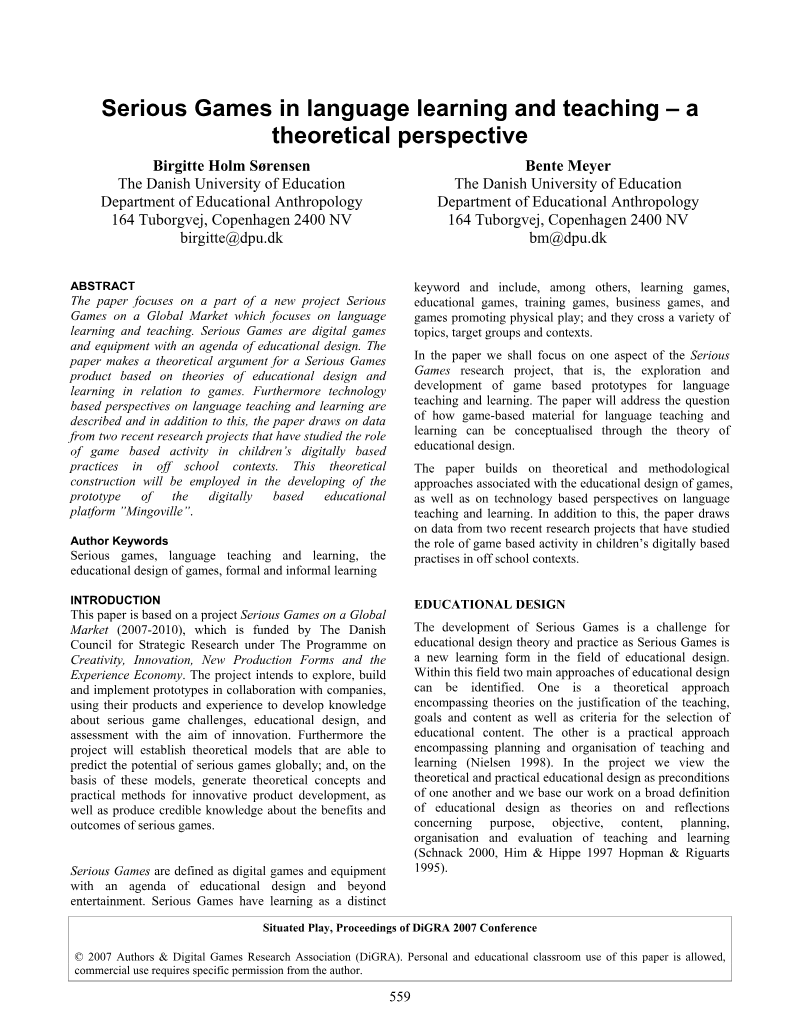
This paper, produced under the "Serious Games on a Global Market" project (2007–2010), advances a theoretical framework for designing serious games for language learning. Its thesis draws on educational design theory, project pedagogy, and social semiotics to argue that games can support meaningful, communicative language use. The authors situate this argument within a broader shift in language teaching from drill-based structural approaches, through cognitive models, toward socio-cognitive and communicative paradigms. They rely heavily on the work of Gee, Warschauer, and Kern, but present their claims as theoretical hypotheses rather than empirically established findings.
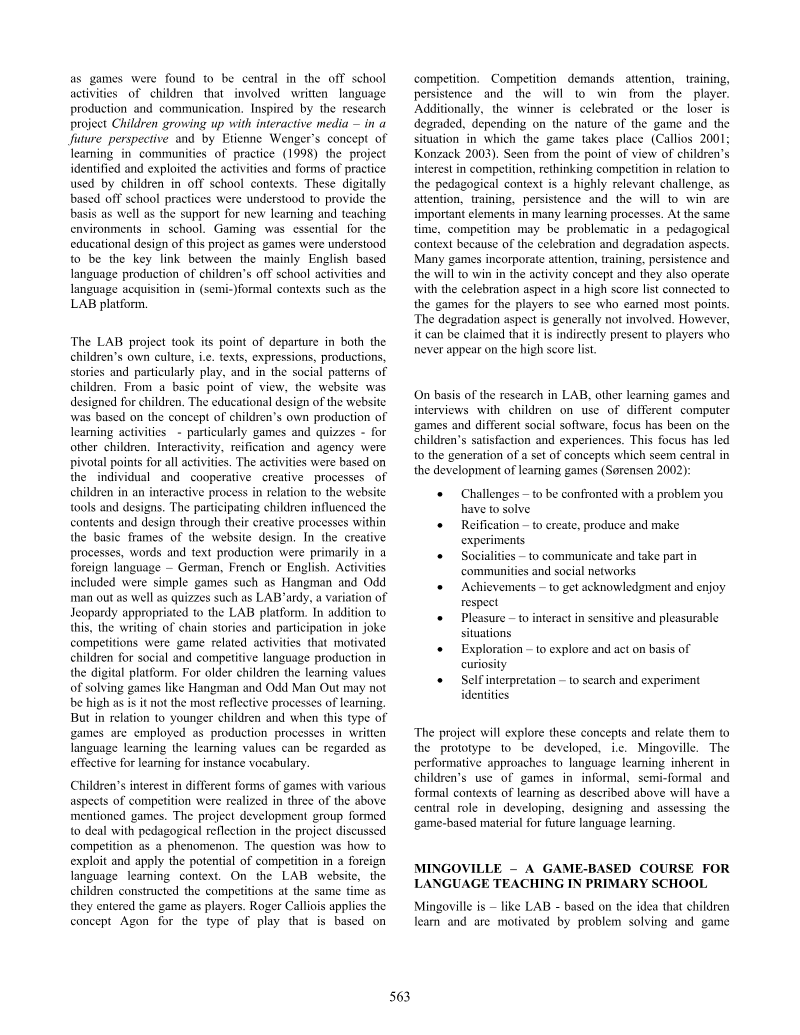
A central empirical reference point is a 2002 SAFT survey of 9- to 16-year-olds, which found that children learn about the Internet primarily from friends, then parents, their own experimentation, and teachers last. From this, the authors contend that serious games should build on children's informal competitive, interactive, and social play, drawing on Caillois's concept of agon and Sørensen's learning-game categories. They acknowledge that competition offers motivational benefits but may degrade pedagogical settings. The Mingoville course, a commercially distributed English program for children aged roughly 9–10 with ten theme-based missions, serves as the primary case study. It is presented as a prototype that reframes competence as participation in a narrative-driven world, though the authors remain uncertain whether it genuinely innovates on existing practice.
The paper's scope is theoretical and conceptual, spanning formal and informal learning contexts and drawing on the LAB (Language Across Borders) project. Its concluding argument is that designing language-learning games requires renegotiating the genre itself through interactivity, collaboration, and exploration-based simulations that let learners perform within their own achievement categories. This renegotiation must also account for curriculum constraints and market forces that shape the local and global significance of game-based language learning. The work reports no quantitative data beyond the cited survey, and its reference base spans educational theory, media literacy research, and computer-assisted language learning literature.

DiGRA · 2016
DiGRA · 2016

DiGRA · 2016
DiGRA · 2016
DiGRA · 2016
DiGRA · 2016
DiGRA · 2015
DiGRA · 2015
DiGRA · 2015
DiGRA · 2015
DiGRA · 2015

DiGRA · 2015
PocketGamer.biz · 2026








Comments