1 free read left. Create a free account for unlimited reading + AI research.
Create free accountArticle DiGRA
1 free read left. Create a free account for unlimited reading + AI research.
Create free accountArticleDiGRA
Prevailing research tends to assume that cooperation is the natural center of online games.
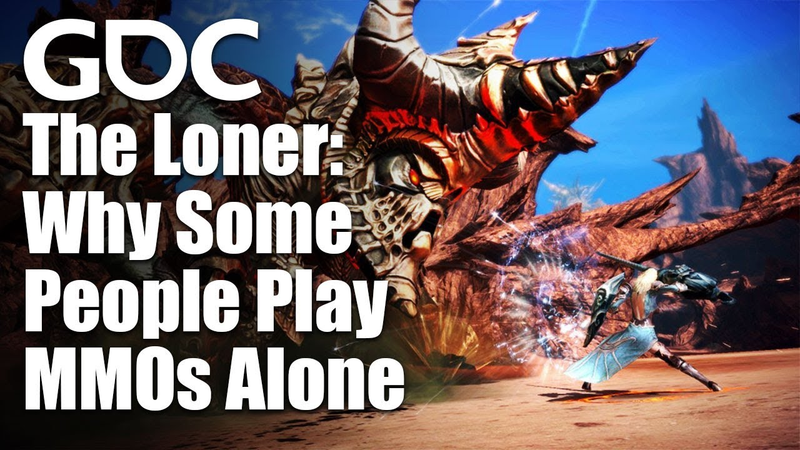
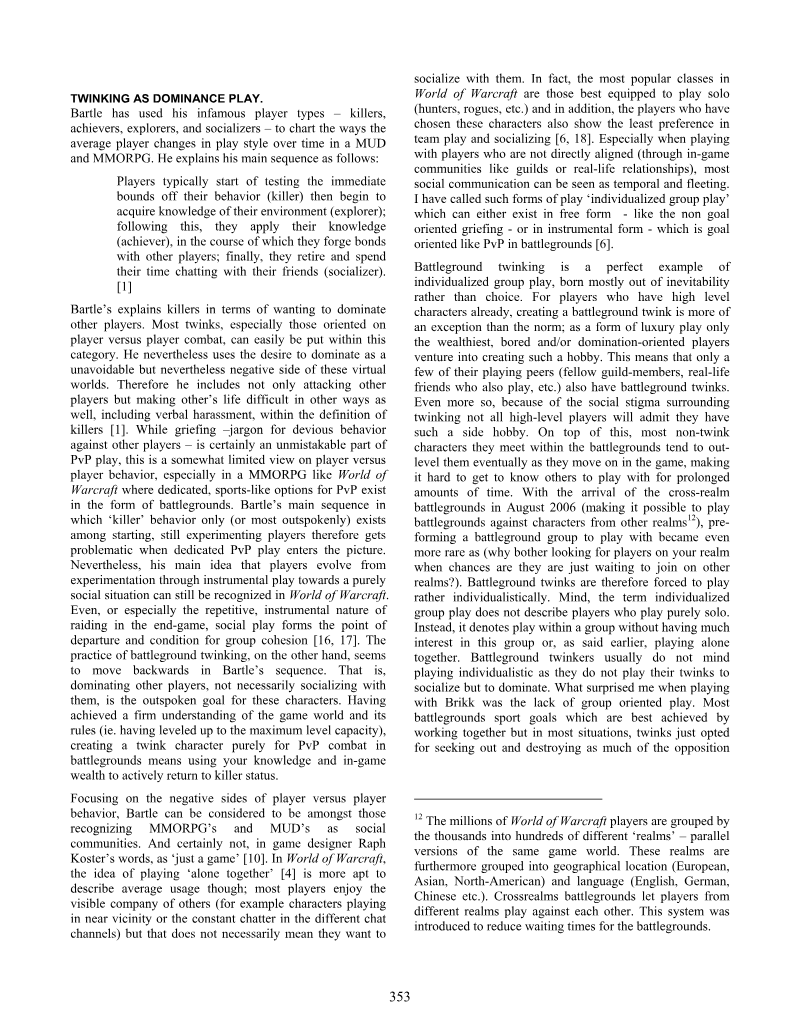
David Myers argues that online social play is more fundamentally self-oriented and oppositional than prevailing research assumes, and that it should be understood as a form of social control rather than as a natural expression of cooperation. Drawing on City of Heroes/Villains and World of Warcraft, the analysis challenges the premise that social and cooperative play represents the default or endpoint of MMORPG engagement. Its central thesis is that individual motivation and competitive valuation of characters are core to how these games operate and evolve, not peripheral to them.
The empirical basis rests on the examination of player-versus-player combat and social ritual in City of Heroes/Villains. One-on-one PvP emerges as a faster and more accurate indicator of relative character value than PvE play, while larger team matches on the test server prove highly variable, distorted by lag, bugs, and imbalances, and frequently avoided on repeat. Winners and losers tend to rationalize outcomes in patterned ways, and players who identify more strongly with their characters show a stronger pull toward inequity aversion. A notable observation is that most World of Warcraft players spend most of their time playing alone, a fact that complicates claims about the centrality of group activity.
The study concludes that social and cooperative structures tend to suppress oppositional play, so neither purely individual nor purely group-based models fully explain how value is assigned. Drawing on Nash equilibrium theory, behavioral economics, and the developmental and adaptive frameworks of Piaget and Sutton-Smith, the argument holds that social game structures channel individual motivations into predictable but less varied forms. The scope is focused on a limited set of titles and their player communities, so its generalizability to other MMORPGs and to broader player populations remains an open question, though its implications for design and analysis are clear: individual and oppositional play should be treated as a core component of game development rather than a derivative influence.
Each row is a game or company this document names, each column a document, oldest first. A mark means that document names it. Select a row to see those documents.

DiGRA · 2022

DiGRA · 2022



DiGRA · 2022



DiGRA · 2022

DiGRA · 2022

DiGRA · 2022



DiGRA · 2022

DiGRA · 2022

DiGRA · 2022



DiGRA · 2022



DiGRA · 2022

DiGRA · 2022
Game Developers Conference · 2018