1 free read left. Create a free account for unlimited reading + AI research.
Create free accountWhitepaper DiGRA
1 free read left. Create a free account for unlimited reading + AI research.
Create free accountWhitepaperDiGRA
Distilling the key insights…
This paper, presented at the 2020 DiGRA conference, argues that audio-only games can be designed as mechanically engaging experiences rather than merely story-driven ones, and that accessibility should be built into game design from the outset rather than added as an afterthought. Its central proposition is that spatial (binaural) audio, which game engines already model for 3D environments, can be developed into a primary interaction channel for blind and visually impaired players. The author frames this as both a gap in the games industry, which has prioritised visual fidelity, and an opportunity, particularly given increased reliance on digital life during the global pandemic.
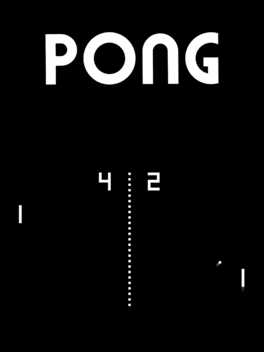
The work surveys existing non-visual titles, including A Blind Legend, Papa Sangre and Real Sound: Kaze no Regret, noting that their emphasis on narrative leaves a need for interactive, mechanics-focused audio spaces. The author's experimental approach is a sound-only prototype modelled on classic arcade designs such as Pong and Pac-Man, with visuals hidden to isolate the limits of human audio recognition. The development is co-designed through workshops with Sight Advice South Lakes, a community organisation, to determine control schemes, distinguishable sounds for separating objects, and the bandwidth limits of auditory perception.
The methodology is research through design, with user testing planned across a broad range of visual impairments to assess how sight affects hearing capacity and to tailor audio richness to different users. The paper discusses head-rotation cues and the trade-off between interface simplicity and feedback richness, while drawing on cited work on immersion, controller design and sensory bandwidth. The paper is presented as a work in progress; it reports the research aims and design rationale rather than presenting completed test results or quantitative findings.
Each row is a game or company this document names, each column a document, oldest first. A mark means that document names it. Select a row to see those documents.
DiGRA · 2022
DiGRA · 2022
DiGRA · 2022
DiGRA · 2022
DiGRA · 2022
DiGRA · 2022
DiGRA · 2022
DiGRA · 2022
DiGRA · 2022

DiGRA · 2022
DiGRA · 2022
DiGRA · 2022
Game Developers Conference · 2024