1 free read left. Create a free account for unlimited reading + AI research.
Create free accountArticle Eludamos: Journal for Computer Game Culture
1 free read left. Create a free account for unlimited reading + AI research.
Create free accountArticleEludamos: Journal for Computer Game Culture
Reyes and Adams argue that this separation is constitutive of play rather than a barrier to it.
Reyes and Adams's "Screening Play" argues that video games are defined by the screening of the player from the field of play, and that this separation is constitutive of play rather than a barrier to it. Drawing on Huizinga's concept of the magic circle and Lacan's Borromean knot, the authors propose that the video game apparatus is held together by three interlocking registers: rules (Symbolic), audio-visual representations (Imaginary), and wares, comprising hardware, software, and the embodied player (Real). Their central claim is that screen-play depends on the disavowal of the physical apparatus, and that the Real and Symbolic, not only the Imaginary as prior game studies emphasized, are essential to what it means to play rather than merely watch.
The authors locate play at the intersection of rules and wares, in win conditions and interactivity. When these elements fail to fully knot together, the result is what they call "other" objects such as glitches, cheats, and metadiegetic cues, which remain internal to play rather than external to it. They distinguish official built-in cheats from unofficial hacks and exploits, observing that cheating carries heightened ethical weight in multiplayer settings, where it produces unfair advantage over other participants.
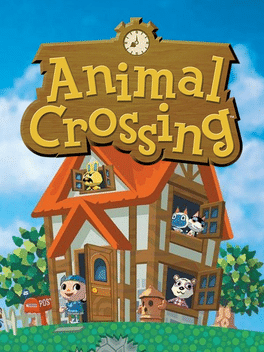
A significant portion of the analysis concerns realism, which the authors divide into three forms. Representational realism conveys a sense of place and persistence, as seen in Animal Crossing's real-time clock. Simulative realism concerns fidelity of rules rather than appearance, illustrated by Madden NFL's influence on real football strategy. Inverse realism applies game mechanics such as points and achievements to everyday life, as in Foursquare and TheSixtyOne. The authors note that only representational realism flows unidirectionally from the non-game world into games, while simulative and inverse realism describe how the magic circle both affects and is affected by social reality. Simulative realism is well established in education and training research, whereas inverse realism, which McGonigal and Schell envision as reshaping reality, remains an emerging area. The authors question whether gamified systems will serve commercial promotion or more prosocial ends.
Each row is a game or company this document names, each column a document, oldest first. A mark means that document names it. Select a row to see those documents.
Eludamos: Journal for Computer Game Culture · 2026
Eludamos: Journal for Computer Game Culture · 2026

Eludamos: Journal for Computer Game Culture · 2026
Eludamos: Journal for Computer Game Culture · 2026

Eludamos: Journal for Computer Game Culture · 2026
Eludamos: Journal for Computer Game Culture · 2026
Eludamos: Journal for Computer Game Culture · 2026
Eludamos: Journal for Computer Game Culture · 2025

Eludamos: Journal for Computer Game Culture · 2025
Eludamos: Journal for Computer Game Culture · 2025
Eludamos: Journal for Computer Game Culture · 2025
Eludamos: Journal for Computer Game Culture · 2025

Thomas Brush · 2026