Key insights
6 slides
New focus
Game user research is shifting from hedonic metrics to eudaimonic experiences.
The SAVEstate framework focuses on how players construct meaning and significance within digital environments.
1 / 6
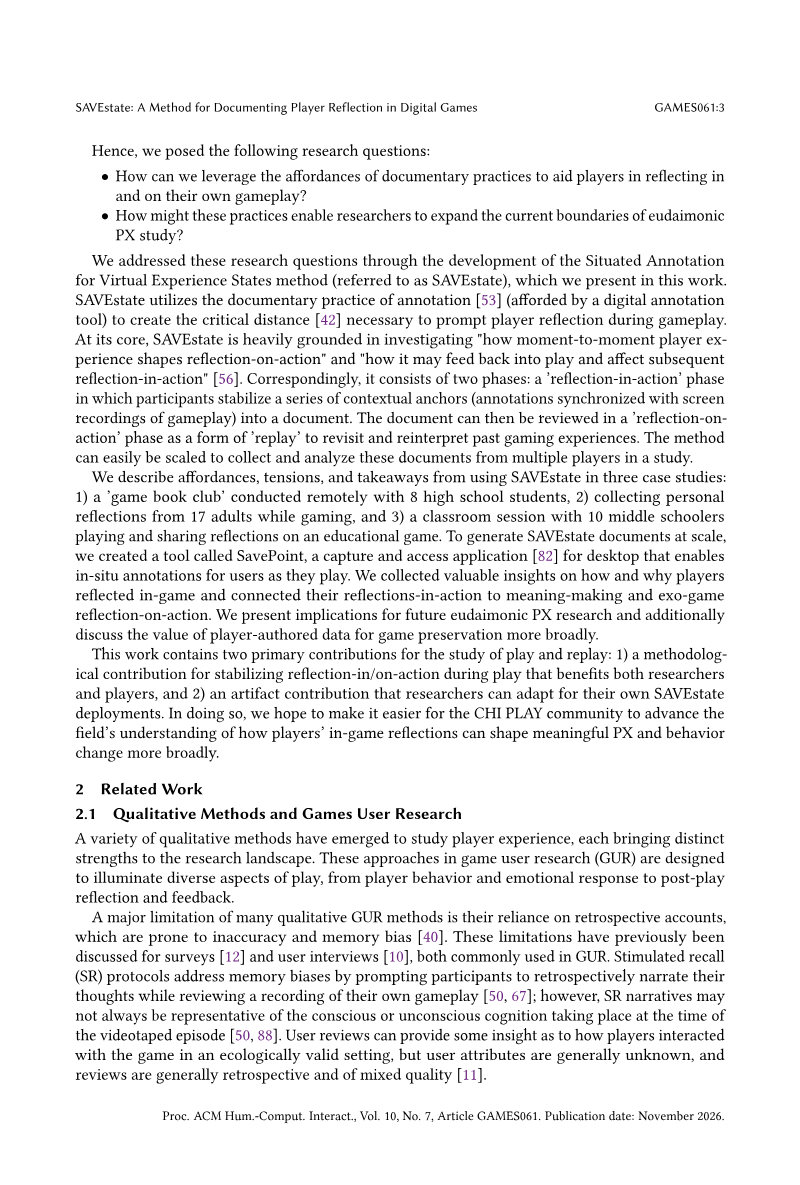
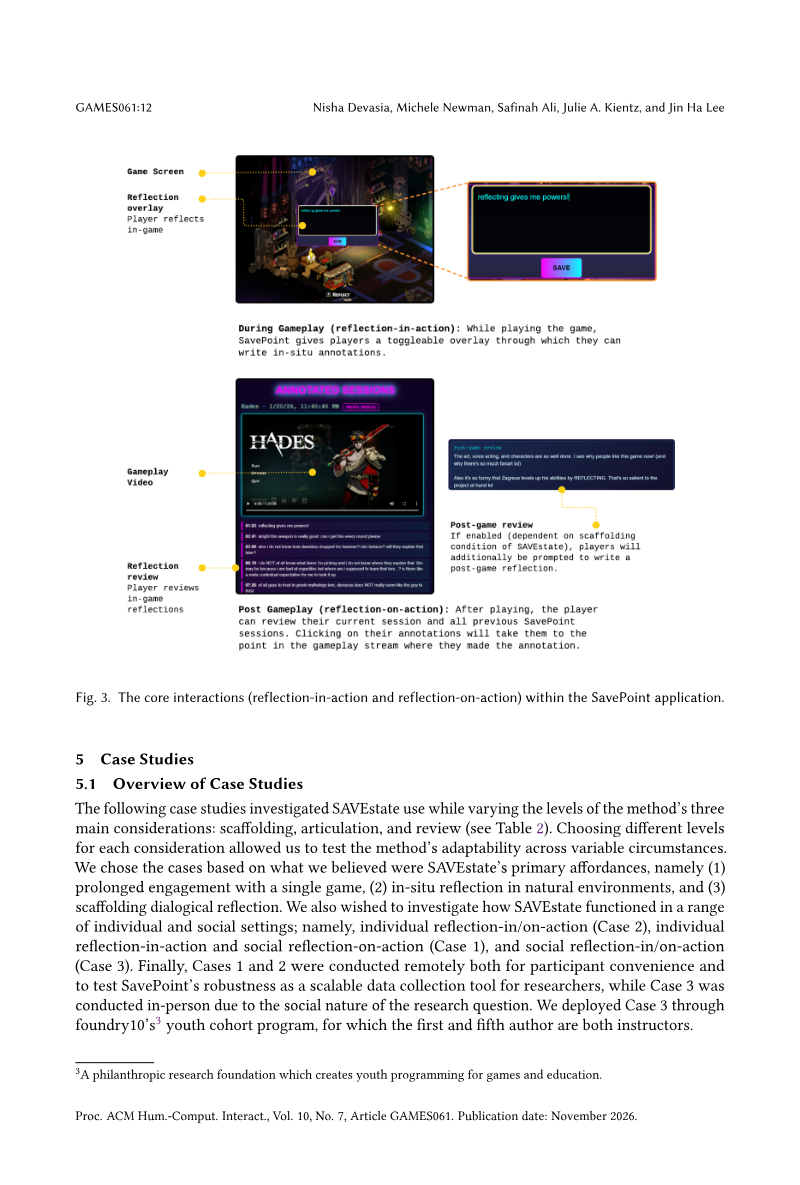
- 01The SAVEstate method utilizes the SavePoint desktop application to synchronize in-situ player annotations with gameplay recordings, allowing for the documentation of reflection-in-action and reflection-on-action.See it on page 3
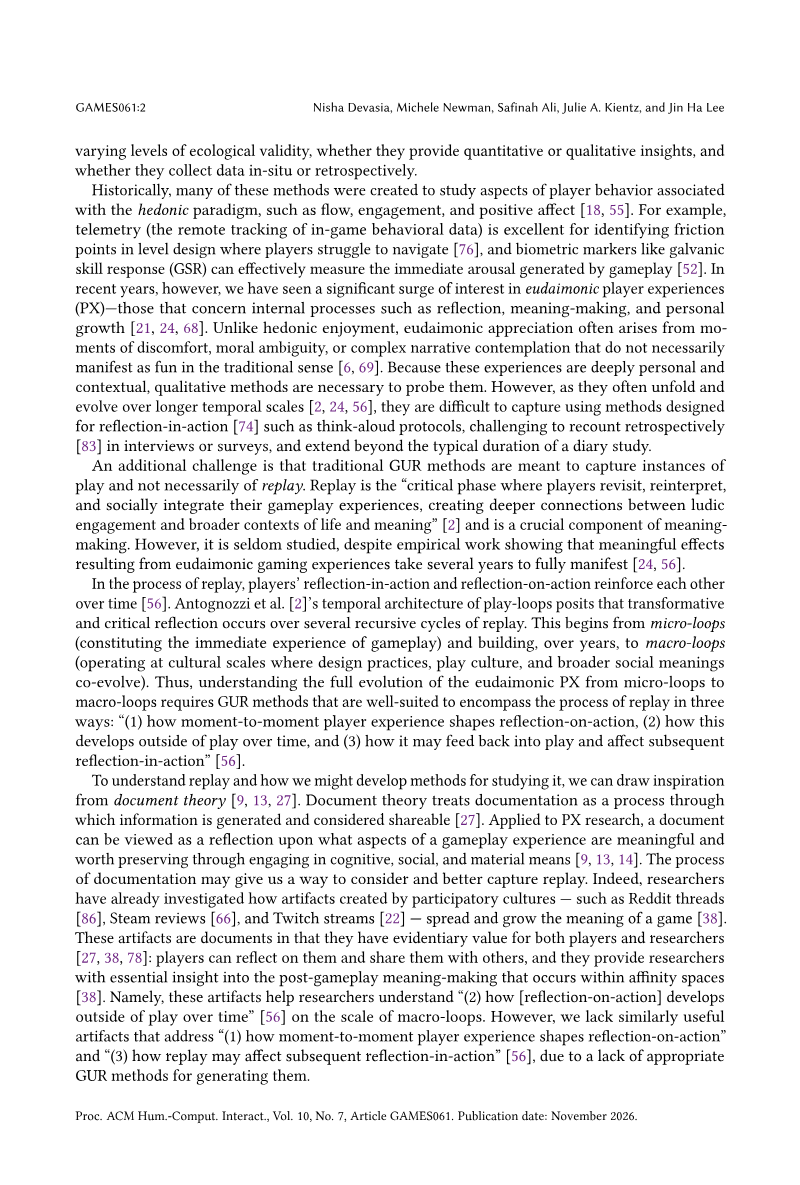
- 02This framework shifts game user research from purely hedonic metrics toward eudaimonic experiences, focusing on how players construct meaning and significance within digital environments.See it on page 2
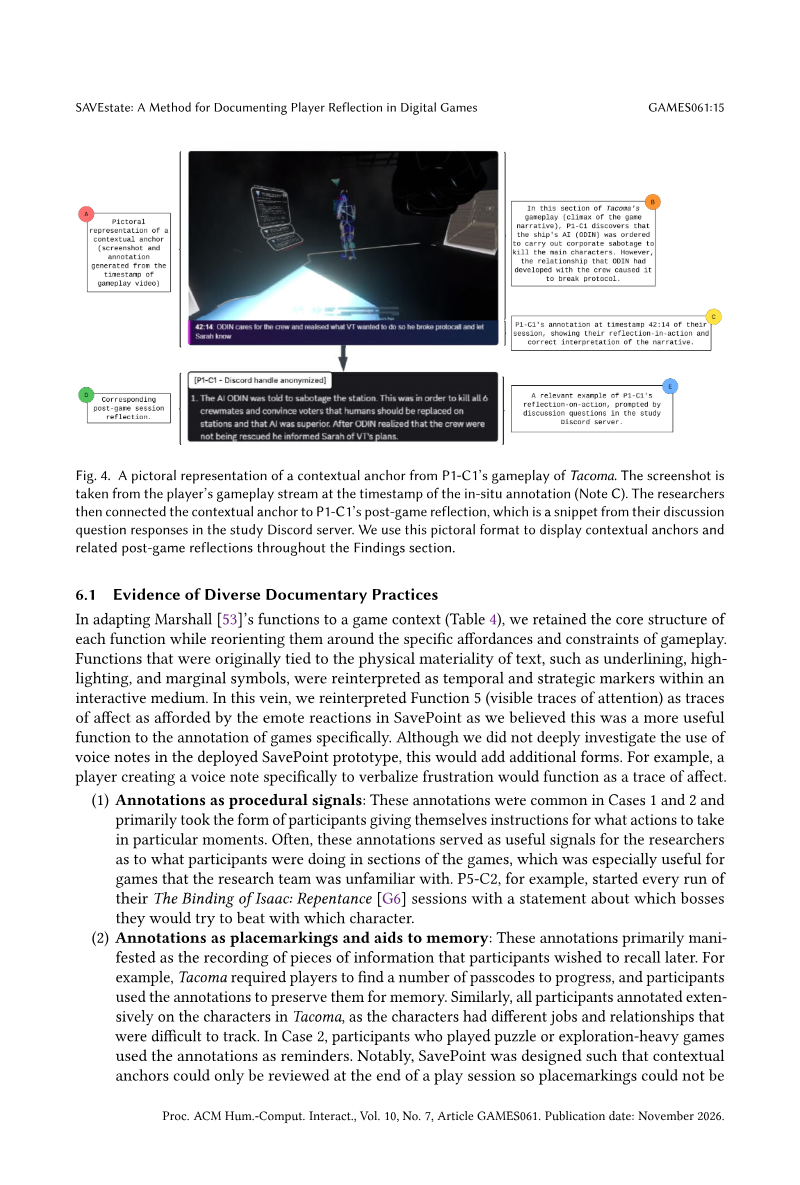
- 03By using contextual anchors linked to specific gameplay timestamps, the method categorizes player insights into functional types such as procedural signaling, memory aids, and traces of affect.See it on page 15
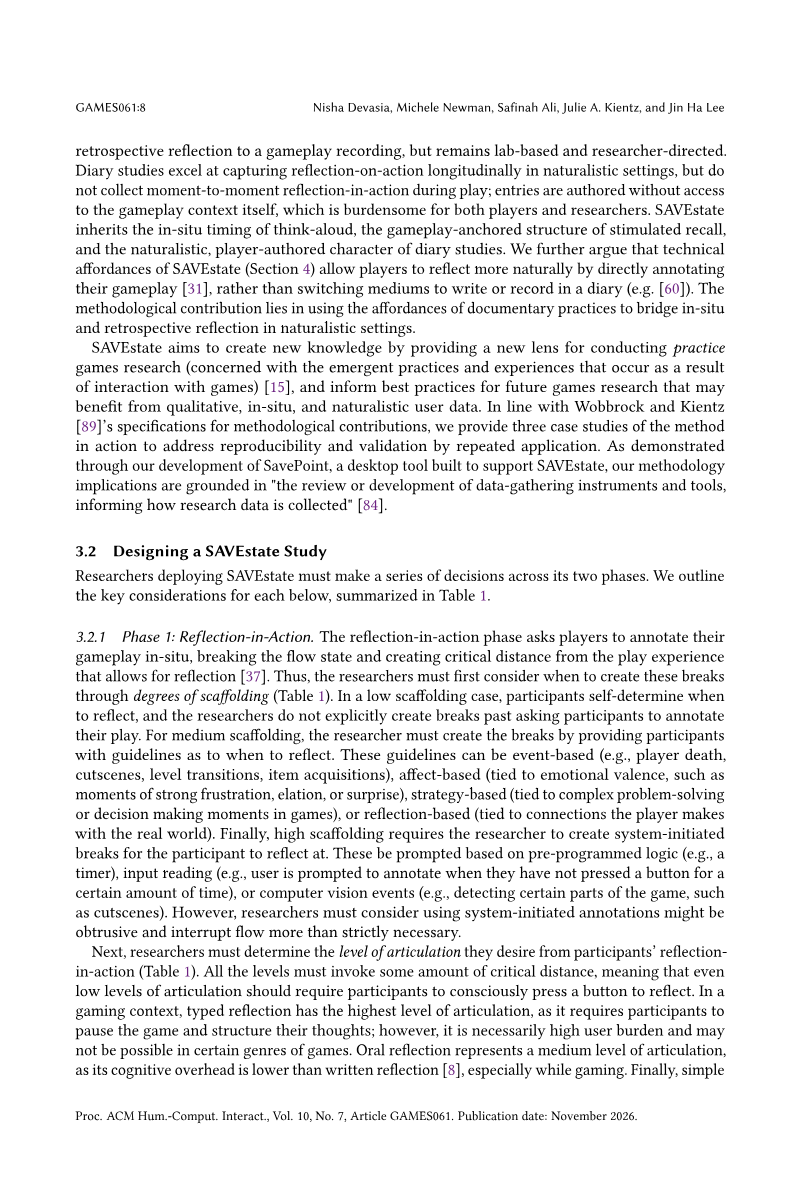
- 04The approach provides an alternative to traditional think-aloud or diary-based methods by creating persistent, player-authored records grounded in document theory.See it on page 8
- 05Case studies demonstrate that the framework is adaptable across diverse game genres and social settings, making it applicable for fields ranging from educational game design to game preservation.See it on page 12
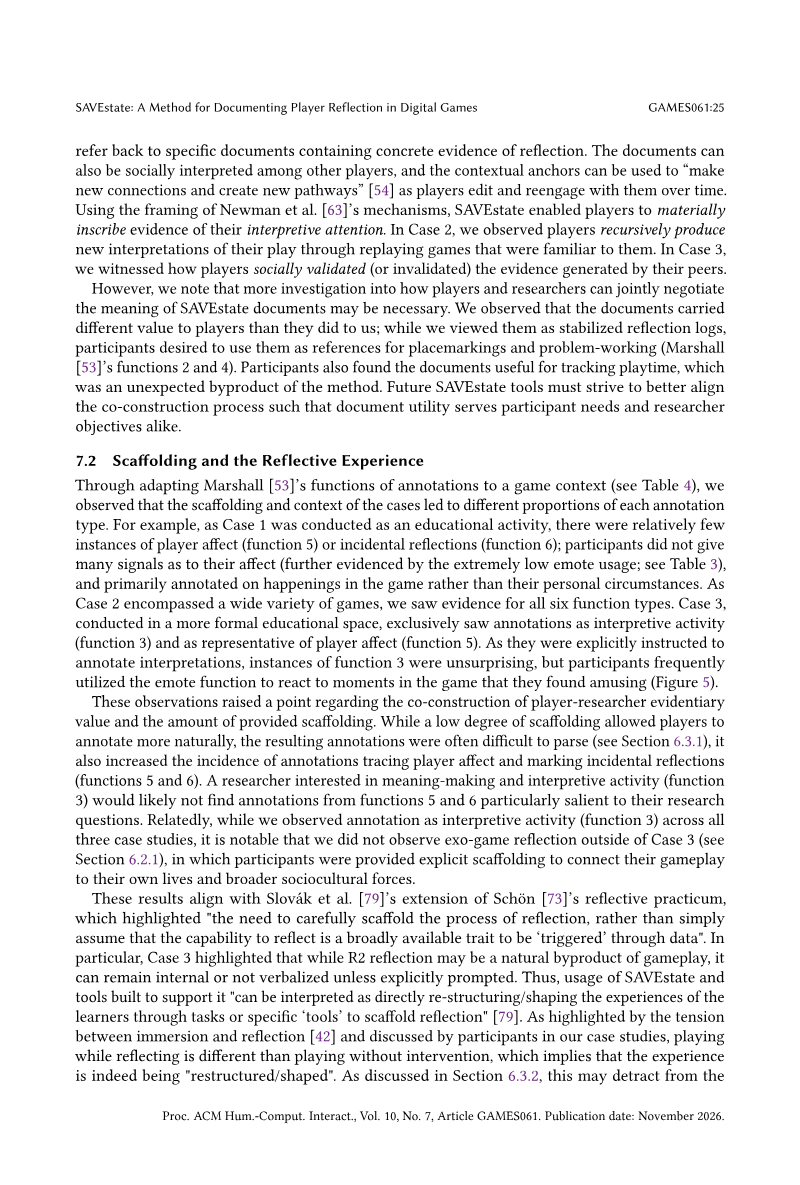
- 06A primary challenge of the method is balancing the need for reflective scaffolding with the risk of disrupting player immersion and the natural gaming experience.See it on page 25
Ask AI about this report
Summary
The SAVEstate method establishes a robust framework for capturing eudaimonic player experiences, shifting the focus of game user research from purely hedonic metrics toward the nuanced processes of reflection and meaning-making. By utilizing the custom SavePoint desktop application, the method synchronizes in-situ annotations with gameplay recordings, effectively bridging the gap between immediate reflection-in-action and longitudinal reflection-on-action. This approach addresses the inherent difficulty of documenting player interpretation across micro, meso, and macro-temporal scales, providing researchers with a structured, ecologically valid way to analyze how players construct significance within digital environments.
The methodology relies on contextual anchors—linked to precise gameplay timestamps—to categorize player insights into functional types such as procedural signaling, memory aids, and traces of affect. Validation through diverse case studies confirms that this framework is highly adaptable across various game genres and social settings. By grounding the process in document theory, the method creates persistent, player-authored records that allow for deeper retrospective analysis than traditional think-aloud or diary-based approaches. These records offer researchers a clear window into how players navigate narratives, solve complex puzzles, and synthesize in-game events with real-world perspectives.
While the method significantly enhances self-awareness and intentionality, it introduces a tension between natural play and the awareness of being observed. The degree of scaffolding required to prompt reflection must be carefully calibrated to avoid disrupting immersion or diminishing the emotional impact of the gaming experience. Ultimately, this framework serves as a versatile tool for fields ranging from educational game design to game preservation. Future advancements, including the integration of AI-supported scaffolding, promise to further refine the ability to track the evolution of player reflection over extended periods, offering a sophisticated supplement to existing qualitative research methodologies.