1 free read left. Create a free account for unlimited reading + AI research.
Create free accountArticle Replay. The Polish Journal of Game Studies
1 free read left. Create a free account for unlimited reading + AI research.
Create free accountArticleReplay. The Polish Journal of Game Studies
Distilling the key insights…
This analysis examines the intersection of digital gaming, academic discourse, and global crises, specifically focusing on how the COVID-19 pandemic and political instability have shaped recent game studies research. By synthesizing presentations from the 2022 DiGRA and CEEGS conferences, the text highlights a shift in scholarly focus toward the role of games as tools for social connection, political activism, and cultural critique during periods of forced isolation and societal upheaval.
Key findings indicate that digital games served as vital mechanisms for healthy escapism during the pandemic, allowing players to manage stress, boredom, and social isolation. Beyond personal well-being, research presented at these conferences demonstrates that games function as sophisticated political instruments. Examples include simulations of climate policy, ludic responses to far-right political movements in Brazil, and the use of tactical games to document human rights protests in Hong Kong. Furthermore, scholars are increasingly challenging the notion of gaming as purely escapist entertainment, instead identifying how games reflect local histories, such as the post-Soviet transformations embedded in Polish and Czech horror titles.
The scope of this research is global, encompassing perspectives from Europe, Asia, and South America, and spans the period immediately following the height of the pandemic. Methodologically, the insights are derived from qualitative analysis of game design, comparative cultural studies, and a quantitative study of 146 games. Ultimately, the discourse suggests a move toward "interpassivity," where the boundary between player agency and game-driven experience is blurred, reinforcing the conclusion that games are not merely passive media but active participants in shaping contemporary knowledge and political consciousness.
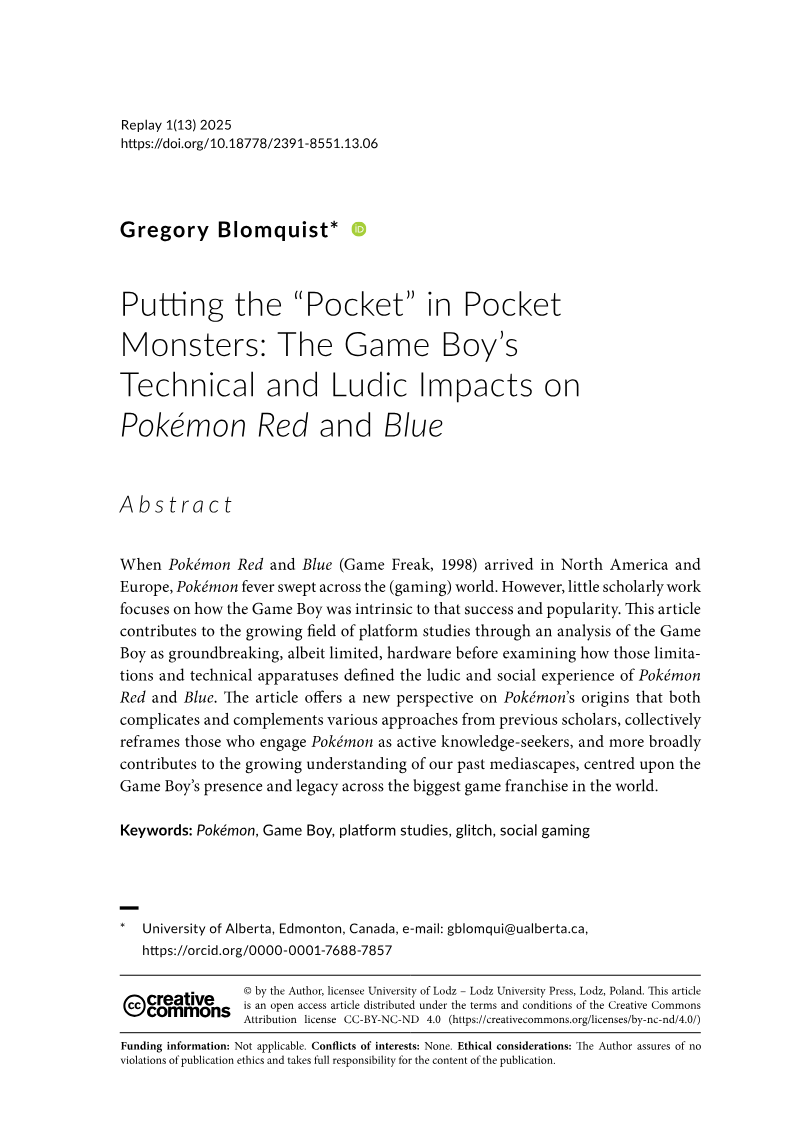
Replay. The Polish Journal of Game Studies · 2026
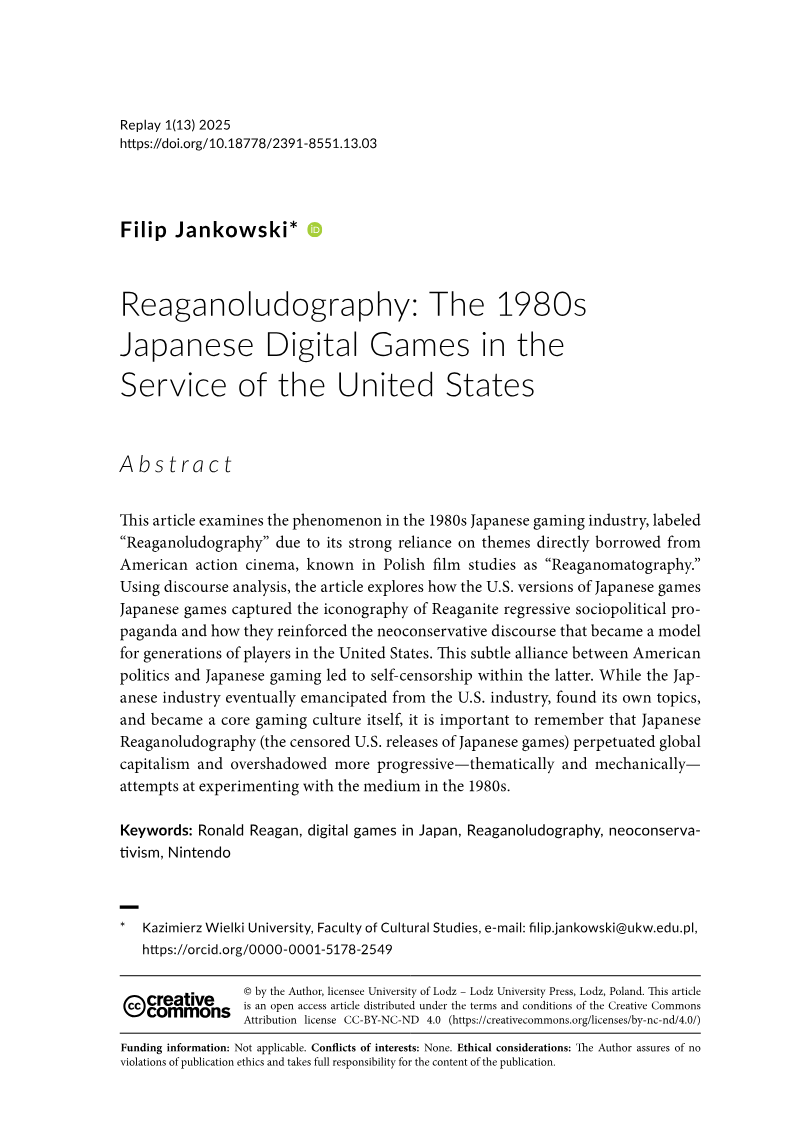
Replay. The Polish Journal of Game Studies · 2026
Replay. The Polish Journal of Game Studies · 2026
Replay. The Polish Journal of Game Studies · 2026
Replay. The Polish Journal of Game Studies · 2026
Replay. The Polish Journal of Game Studies · 2026
Replay. The Polish Journal of Game Studies · 2024
Replay. The Polish Journal of Game Studies · 2024
Replay. The Polish Journal of Game Studies · 2024
Replay. The Polish Journal of Game Studies · 2024
Replay. The Polish Journal of Game Studies · 2024
Replay. The Polish Journal of Game Studies · 2024
DiGRA · 2026