1 free read left. Create a free account for unlimited reading + AI research.
Create free accountArticle Replay. The Polish Journal of Game Studies
1 free read left. Create a free account for unlimited reading + AI research.
Create free accountArticleReplay. The Polish Journal of Game Studies
Distilling the key insights…
PETSCII, the character encoding and font set native to Commodore’s 8-bit computing line, has transitioned from a utilitarian system requirement into a vibrant, enduring creative platform. Originally designed for basic text display and early bulletin board systems, this grid-based aesthetic now serves as a specialized medium for digital artists and the global demoscene. The practice is defined by a persistent tension between purist creators, who insist on adhering to the strict technical limitations of original hardware, and modern practitioners who leverage cross-platform software to expand the medium’s visual potential.
Contemporary PETSCII art is categorized into three primary visual styles: line-drawing, text mosaic, and pixel-oriented compositions. Through the development of specialized editors that optimize character mapping and selection workflows, artists have successfully pushed these constraints to achieve complex, figurative, and even photorealistic imagery. This evolution demonstrates that the medium is not merely a relic of 1980s computing but a dynamic, skill-based discipline where software design and artistic intent are deeply intertwined.
The current renaissance of PETSCII is fueled by increased accessibility through modern tooling and the broader cultural interest in retrocomputing. By balancing the low-threshold entry point for beginners with the high-level craftsmanship required for competitive demoscene participation, the platform maintains a unique position in digital art history. Ultimately, the ongoing refinement of rasterization techniques and creative workflows ensures that PETSCII remains a relevant, evolving creative space that bridges the gap between historical hardware constraints and contemporary digital expression.
Each row is a game or company this document names, each column a document, oldest first. A mark means that document names it. Select a row to see those documents.
Replay. The Polish Journal of Game Studies · 2026
Replay. The Polish Journal of Game Studies · 2026



Replay. The Polish Journal of Game Studies · 2026
Replay. The Polish Journal of Game Studies · 2026
Replay. The Polish Journal of Game Studies · 2026
Replay. The Polish Journal of Game Studies · 2026
Replay. The Polish Journal of Game Studies · 2024
Replay. The Polish Journal of Game Studies · 2024
Replay. The Polish Journal of Game Studies · 2024
Replay. The Polish Journal of Game Studies · 2024
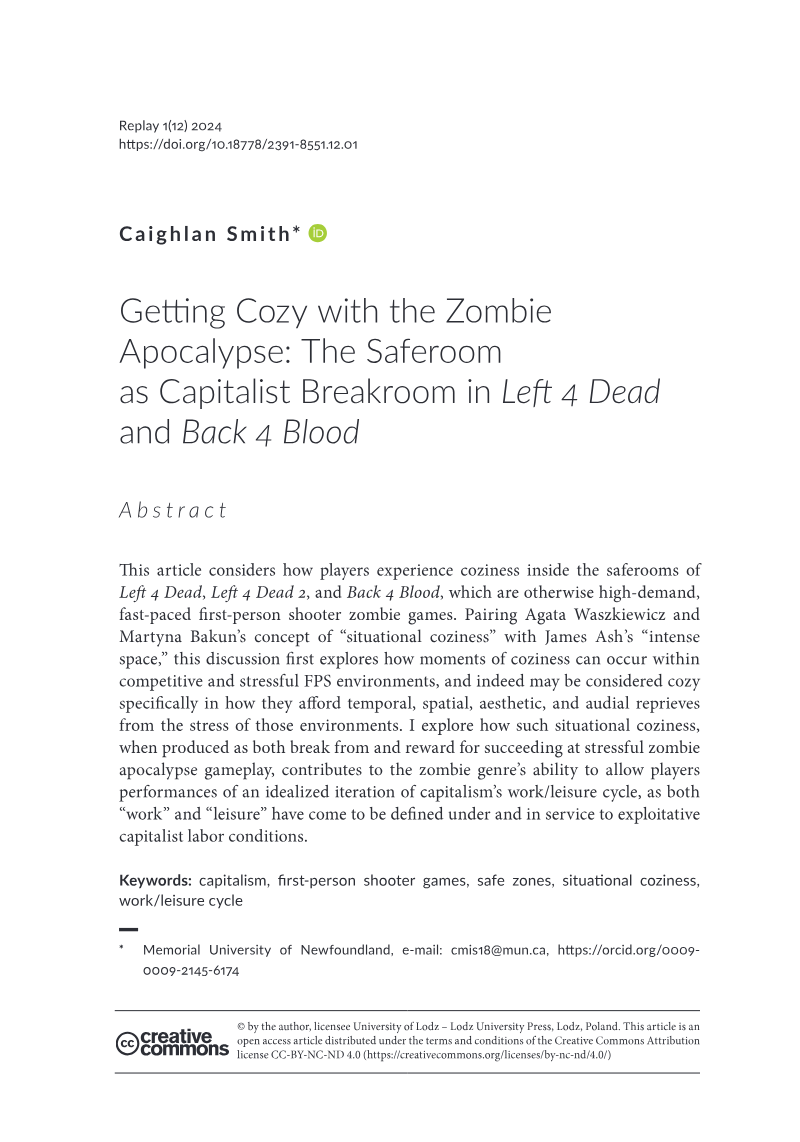
Replay. The Polish Journal of Game Studies · 2024
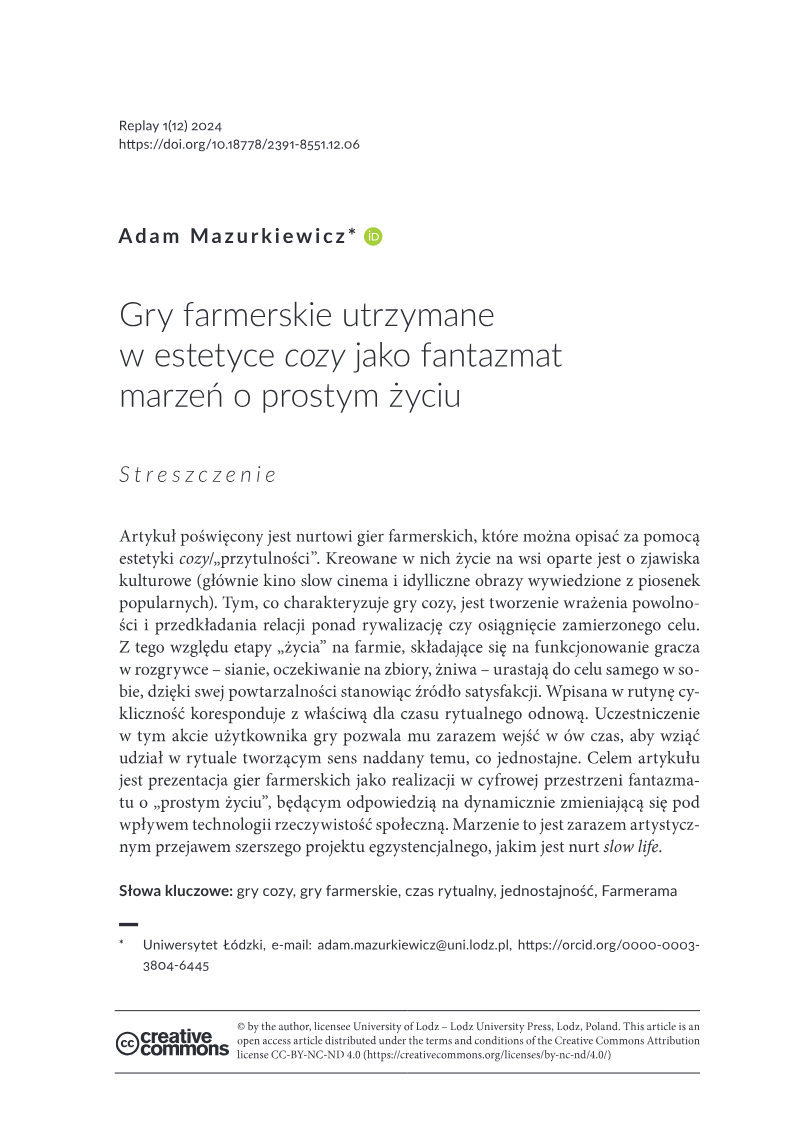
Replay. The Polish Journal of Game Studies · 2024
Uniwersytet Jagielloński · 2015