Related Documents
Financial
Giant Network 2025 Annual Report: China
Giant Network’s 2025 annual report demonstrates a robust year‑over‑year performance, with total revenue escalating 72.7 % to ¥5.05 billion and net profit attributable to shareholders rising 23.1 % to ¥1.76 billion. Operating cash flow surged by 188.6 %, underscoring strong liquidity generation. The company’s dual‑core strategy—leveraging the MMORPG IP “征途” and the casual title “超自然行动组”—drives growth, supported by AI‑enabled development and cross‑platform expansion. Despite these gains, recent non‑recurring losses have yet to turn positive, creating some uncertainty about long‑term profitability. Regulatory developments in China have accelerated a focus on original IP and digital‑culture products. Government policies encourage embedding traditional culture into game design, boosting AI and cloud R&D, and expanding overseas digital content. Giant Network aligns with these directives through a research‑and‑operations model, heavy IP investment, and compliance tightening under new child‑online‑protection rules. Financially, operating profit rose 54 % to ¥829 million, while net profit increased 93 % to ¥947 million, largely due to higher investment income and lower tax expense. R&D spending more than doubled, reflecting intensified product development. Other comprehensive income swung from a positive ¥219 million to a negative ¥220 million, driven by fair‑value changes and credit impairment losses. The group maintained a conservative asset‑liability ratio, rising from 12.76 % to 18.67 %, and retained over 80 % voting control through founder‑controlled entities. Key findings highlight that core gaming revenue remains strong, investment income is mixed, and non‑recurring items significantly impact overall profitability. The report covers China exclusively, focusing on the 2025 fiscal year and encompassing gaming operations, IP development, regulatory compliance, and financial risk management.
Giant Network GroupApr 2026

Financial
Archosaur Games Annual Report 2025
Archosaur Games, a Hong Kong‑listed mobile‑game developer incorporated in the Cayman Islands and majority owned by Tencent and Perfect World, reported a 14.3 % revenue rise to RMB 1,304.4 million in FY 2025, driven by the launches of Dragon Raja: Cassell Gate and Immortal Skywalker in China. Gross profit climbed 11.8 % to RMB 923.7 million, but the margin slipped to 70.8 % because of higher IP‑holder commissions on licensed titles. Operating loss narrowed sharply to RMB 91.1 million from a ¥341.4 million loss in 2024, largely due to a 19 % cut in selling and marketing expenses; R&D spend remained flat. Net loss improved to RMB 36.7 million, an 87.2 % reduction versus the prior year, with an adjusted net loss of RMB 31.9 million after share‑based compensation add‑back. Cash flow and liquidity strengthened: operating cash usage fell 71.9 %, net current assets rose to RMB 1.48 bn and cash to RMB 1.09 bn, although gearing increased to 24.6 %. The group maintained a robust capital strategy with no external debt, Level‑3 fair‑value investments of RMB 2.24 bn, and a low credit‑risk profile for trade receivables. Governance structures met listing requirements; the board comprised two executives, two non‑executives and three independent directors, with audit, nomination, remuneration and risk committees each staffed by three members. Share‑based incentive plans remained within regulatory caps, granting 4.9 million RSUs and 4.1 million options in 2025. Geographically, Archosaur operates seven wholly‑owned overseas entities across Singapore, UAE, China, Japan, Korea and the U.S., while its Chinese subsidiaries are controlled through a complex contractual framework that navigates foreign‑investment restrictions. The company’s financial reporting follows IFRS and HKCO, with ongoing transition to IFRS 18 for revenue recognition. Overall, Archosaur Games achieved significant profitability improvement and strengthened liquidity while maintaining compliance with governance and regulatory standards across its global operations.
Archosaur GamesApr 2026


Report
Vietnam's Mobile Dev Opportunity
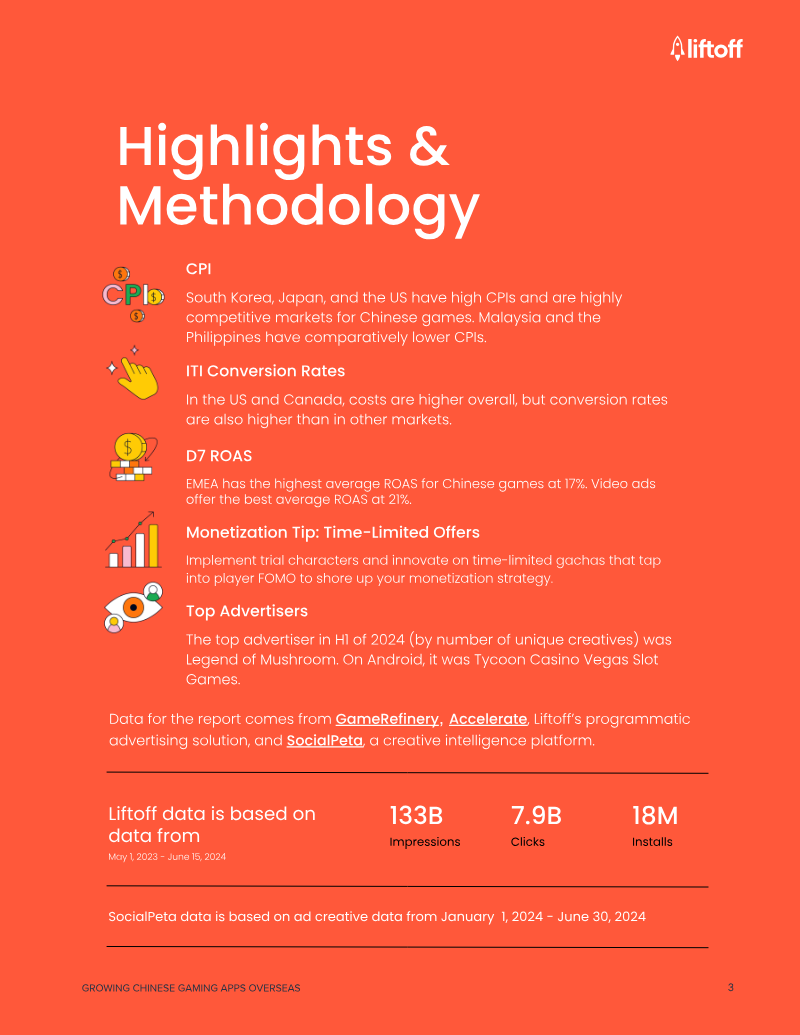
Vietnam’s mobile game sector has evolved from a consumer‑centric market into a burgeoning production hub, driven by a skilled talent pool forged through outsourcing, stringent regulatory frameworks that forced local publishing entities to emerge, and the explosive rise of mobile gaming. The country now hosts over 35 000 game programmers—comparable to China’s workforce—and more than 300 active mobile publishers headquartered in Vietnam. In 2024, five Vietnamese studios ranked among the world’s top 25 publishers by downloads, contributing nearly 2.4 billion downloads and $133 million in revenue—a 67 % increase in downloads and an 82 % rise in earnings since 2020. Key titles such as *Car Race*, *Wood Nuts & Bolts Puzzle*, and *Hair Salon: Beauty Salon Game* illustrate the domestic IP pipeline, while globally recognized titles like *Sky Garden: Farming Paradise*, *Magic Tiles 3*, and *Axie Infinity* showcase the country’s capacity for high‑impact releases. The transformation accelerated after 2013 when Vietnamese solo developer Nguyen Ha Dong’s *Flappy Bird* achieved worldwide chart dominance, proving that local talent could produce globally successful mobile games with limited resources. This success spurred a wave of small studios and startups, many of which transitioned from outsourcing or publishing roles to independent IP creation. Vietnam’s high smartphone penetration (84 %) and a youthful, digitally native demographic further underpin market growth. Regulatory challenges remain: stricter limits on gaming time for minors, mandatory Ministry of Information and Communications approvals, and content censorship can constrain creative expression and international appeal. Future success will hinge on navigating the shift from hypercasual to more complex casual and social mobile games while adapting to evolving regulatory constraints. Despite these hurdles, Vietnam’s established talent base, rapid growth trajectory, and increasing foreign investment position it as a rising contender for global mobile game leadership over the next decade.
NaavikFeb 2026

Report
Guide to Growing Chinese Gaming Apps Overseas
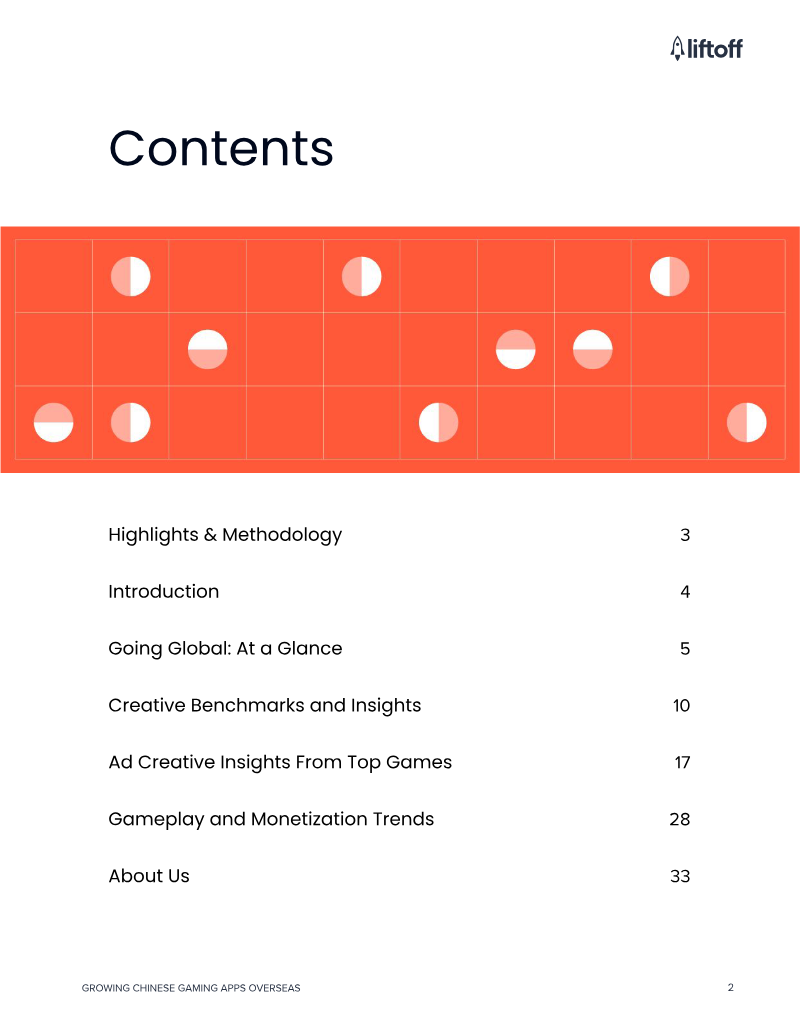
Chinese gaming developers are aggressively expanding their global footprint by leveraging sophisticated monetization models and high-volume, AI-driven marketing strategies. The primary objective for these publishers is to balance the high revenue potential of mature markets like the United States, Japan, and South Korea against the rising costs of user acquisition. By prioritizing video advertising, which currently yields the highest Day 7 return on ad spend at 21%, developers are successfully capturing market share in competitive strategy and RPG segments. Success in these international territories is increasingly predicated on hyper-localization and technological integration. Publishers are utilizing generative AI to streamline the production of localized ad creatives, voice-overs, and performance-tested copy, allowing for rapid iteration and regional customization. Leading titles demonstrate that high-engagement gameplay loops—such as the inclusion of social hangout spaces, customizable home systems, and minigame integrations—are essential for sustaining long-term retention. These efforts are further bolstered by strategic partnerships with local influencers and the implementation of innovative, time-limited gacha mechanics. To maintain consistent growth, developers are diversifying their engagement tactics through gamified live events, including seasonal collections and interactive board-style challenges. These features, combined with trial character systems, allow publishers to cater to varied player motivations while maintaining a steady revenue stream. By synthesizing competitive intelligence with agile content updates, Chinese gaming apps are effectively navigating the complexities of global expansion, ensuring that both monetization and user interest remain high across diverse geographic regions.
EAJan 2025