1 free read left. Create a free account for unlimited reading + AI research.
Create free accountArticle Replay. The Polish Journal of Game Studies
1 free read left. Create a free account for unlimited reading + AI research.
Create free accountArticleReplay. The Polish Journal of Game Studies
Distilling the key insights…
The primary objective of this analysis is to demonstrate that immersion serves as the fundamental driver behind the success and popularity of escape rooms. By examining the industry through the lens of game studies, the research posits that high-quality, immersive design is essential for player engagement and long-term viability in an increasingly competitive market. The study focuses on the Polish escape room sector, utilizing the Tick Tack company in Gliwice as a primary case study to illustrate how narrative consistency and environmental storytelling contribute to a superior player experience.
The analysis draws upon a methodology combining existing academic literature, industry definitions—specifically those proposed by Scott Nicholson—and personal field observations conducted between 2016 and 2017. The research evaluates escape rooms based on three types of immersion: sensory, challenge-based, and imaginative. Findings indicate that successful rooms, such as those at Tick Tack, avoid ludonarrative dissonance by ensuring that every physical element and puzzle is diegetically justified. Furthermore, the study highlights that the most effective designs integrate administrative elements, such as hint systems, into the game’s narrative to prevent emersion, or the breaking of the illusion that the game is a reality.
The research concludes that as the escape room industry matures, consumer expectations are rising, forcing operators to move beyond simple puzzle-solving toward more sophisticated, LARP-inspired experiences. Rooms that fail to maintain narrative coherence or provide high levels of immersion are increasingly likely to struggle or exit the market. Ultimately, the most successful venues are those that treat the entire facility as a cohesive, immersive environment, effectively blurring the boundary between the real world and the game world.
Replay. The Polish Journal of Game Studies · 2026
Replay. The Polish Journal of Game Studies · 2026



Replay. The Polish Journal of Game Studies · 2026
Replay. The Polish Journal of Game Studies · 2026
Replay. The Polish Journal of Game Studies · 2026
Replay. The Polish Journal of Game Studies · 2026
Replay. The Polish Journal of Game Studies · 2024
Replay. The Polish Journal of Game Studies · 2024
Replay. The Polish Journal of Game Studies · 2024
Replay. The Polish Journal of Game Studies · 2024
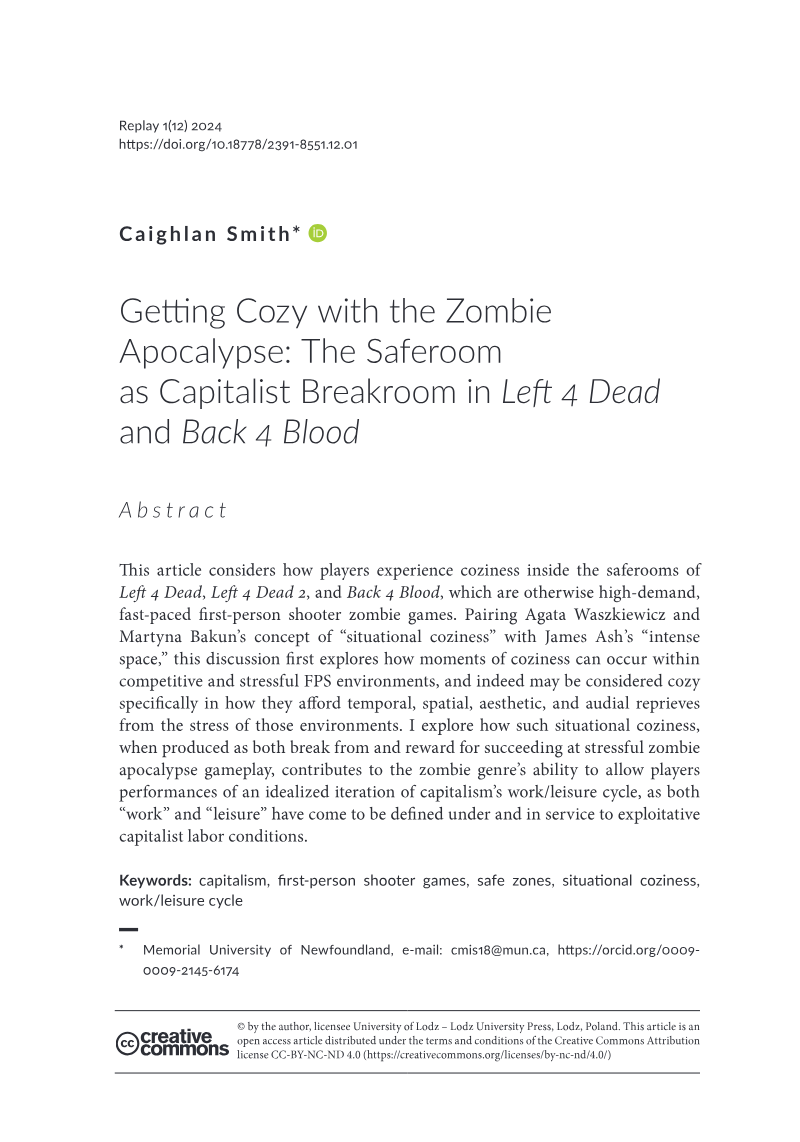
Replay. The Polish Journal of Game Studies · 2024
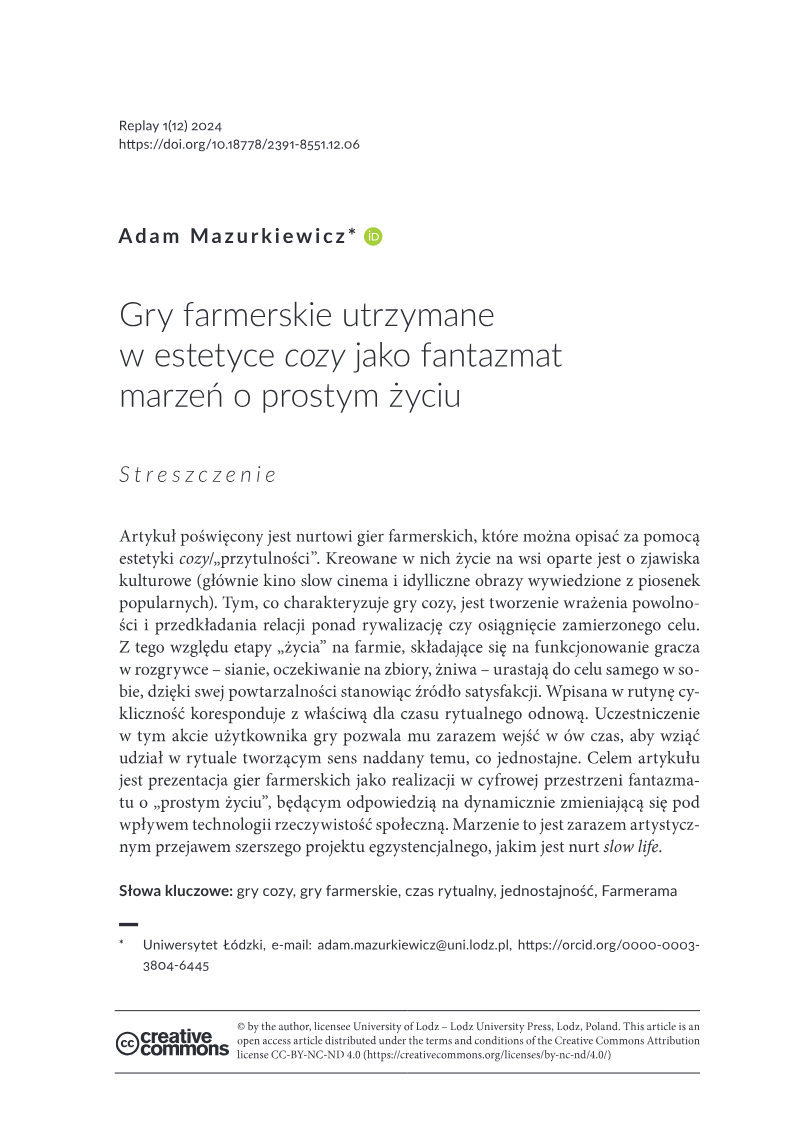
Replay. The Polish Journal of Game Studies · 2024
DiGRA · 2026