FinancialKLab
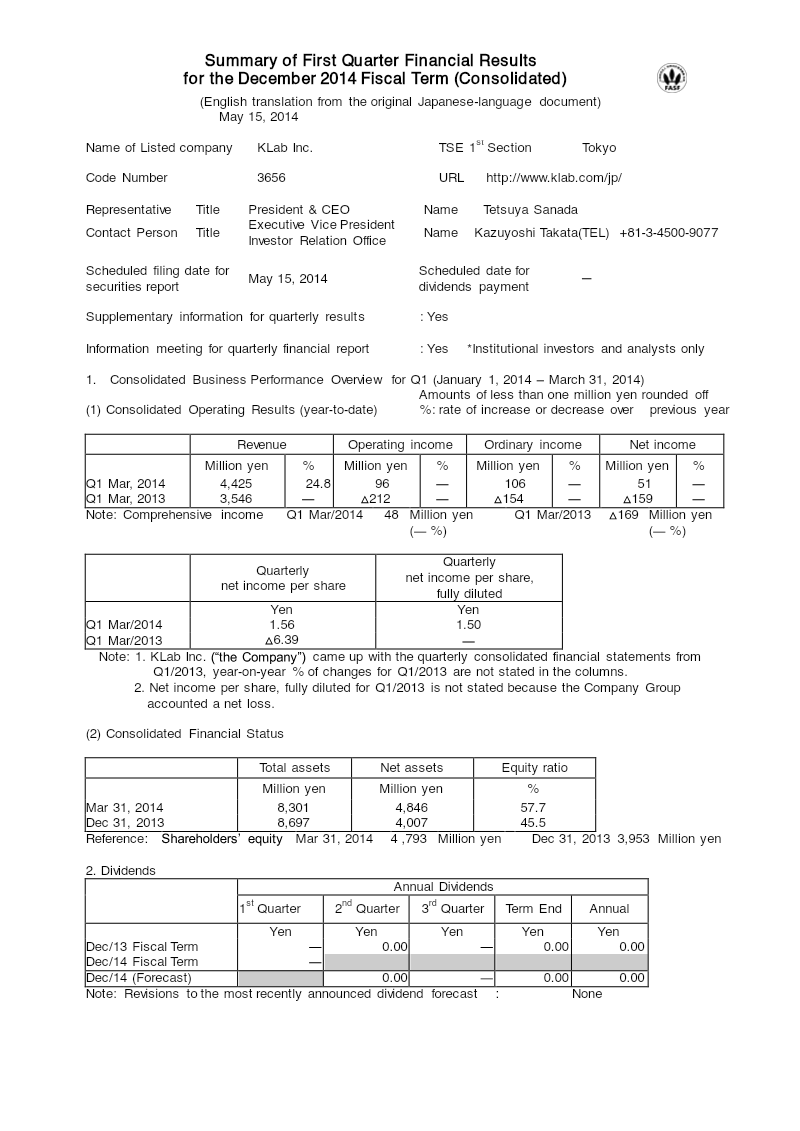
Summary of First Quarter Financial Results for the December 2014 Fiscal Term (Consolidated)
1 May 201410 pages~12 min full read
KLab Inc. reported a significant financial turnaround in its consolidated results for the first quarter of the fiscal term ending December 2014. Following a net loss in the same period the previous year, the company achieved profitability with a net income of 51.1 million yen. Revenue grew to 4.4 billion yen, representing a 24.8% increase year-over-year. This growth was primarily driven by the sustained performance of the mobile title Love Live! School Idol Festival, successful New Year in-game events, and the contribution of the newly released Celestial Craft Fleet.
The transition to profitability was supported by aggressive cost-reduction measures and structural reforms. The company reduced its workforce by 141 positions to a total of 825 employees and successfully lowered outsourcing expenses by 59.3% from their 2013 peak. Operational efficiency was further enhanced by liquidating unprofitable projects, consolidating domestic subsidiaries to streamline indirect costs, and closing several overseas and regional offices. While total assets decreased slightly to 8.3 billion yen, net assets rose to 4.8 billion yen, aided by a capital increase resulting from the exercise of stock subscription rights by Deutsche Bank’s London Bureau.
The report focuses on the Japanese mobile gaming market for the period of January 1 to March 31, 2014. Looking forward, management maintained a cautious but positive outlook, forecasting first-half revenue of 8.9 billion yen and an operating income of 216 million yen. However, the company noted that the volatile nature of the mobile gaming industry, which is highly dependent on hit products, makes full-year forecasting difficult. Segment data confirms that the game business remains the primary revenue driver, accounting for nearly the entirety of the company's 4.4 billion yen in quarterly sales.
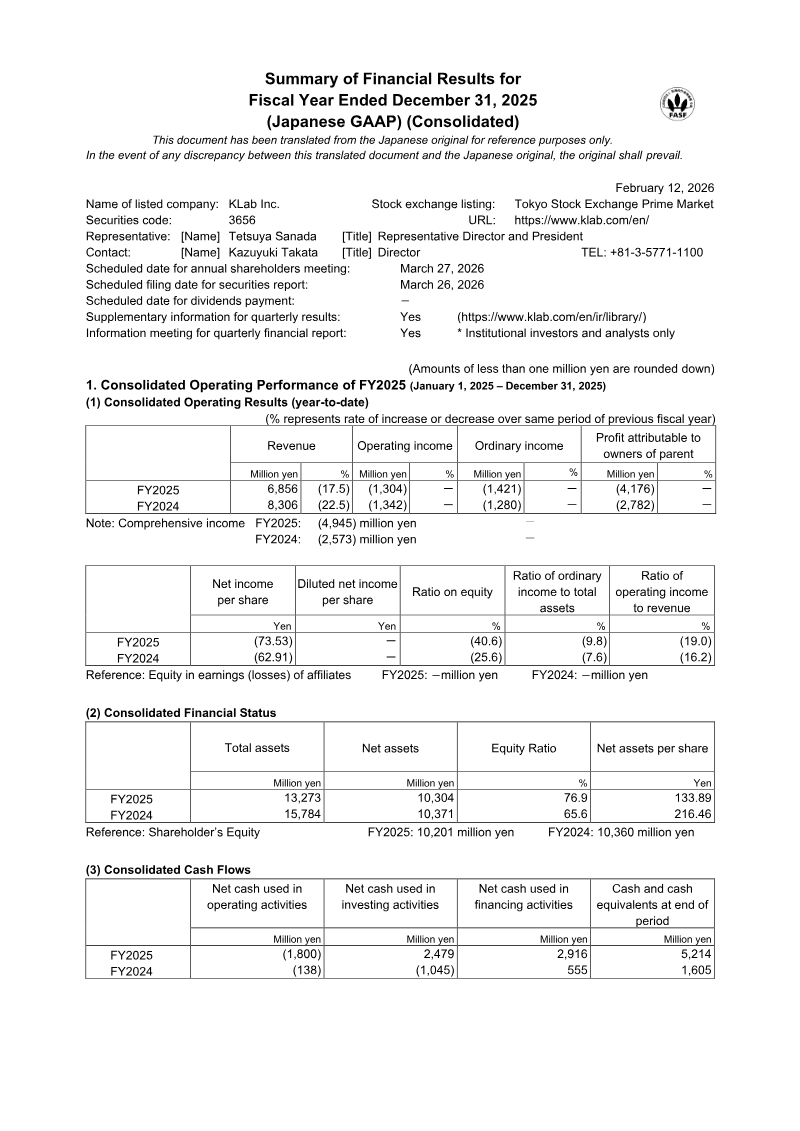
KLab · 2026
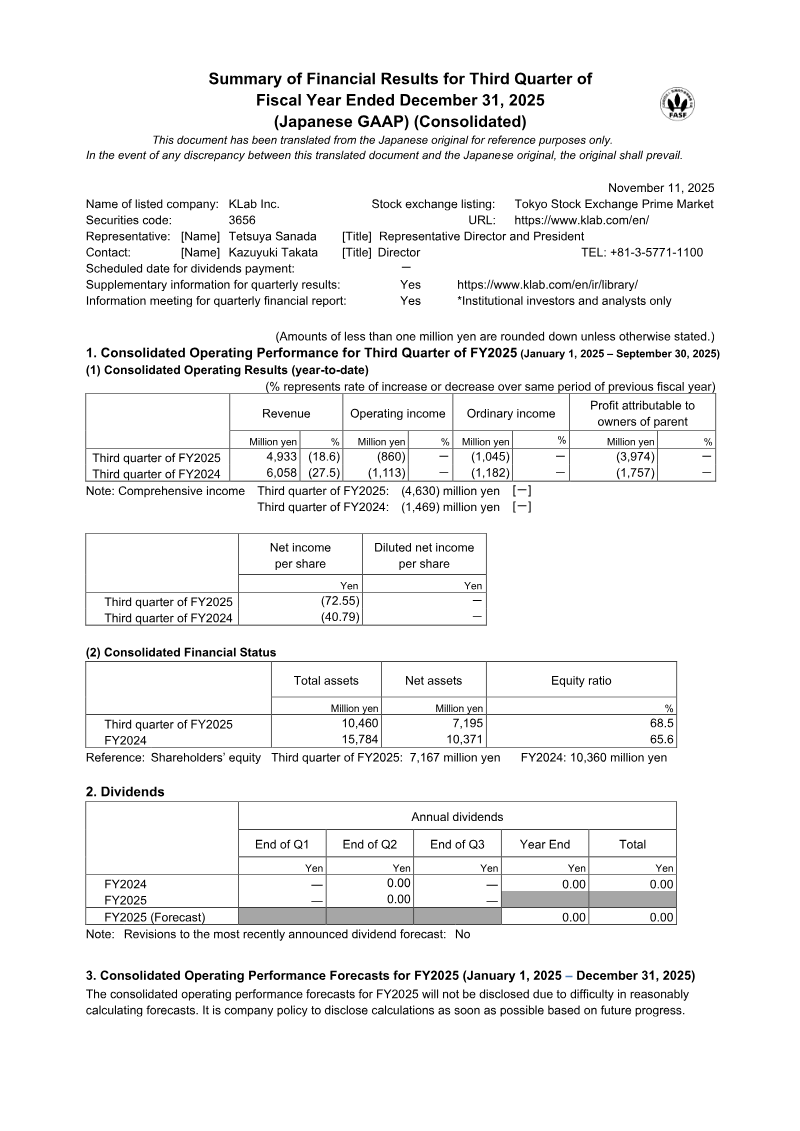
KLab · 2025
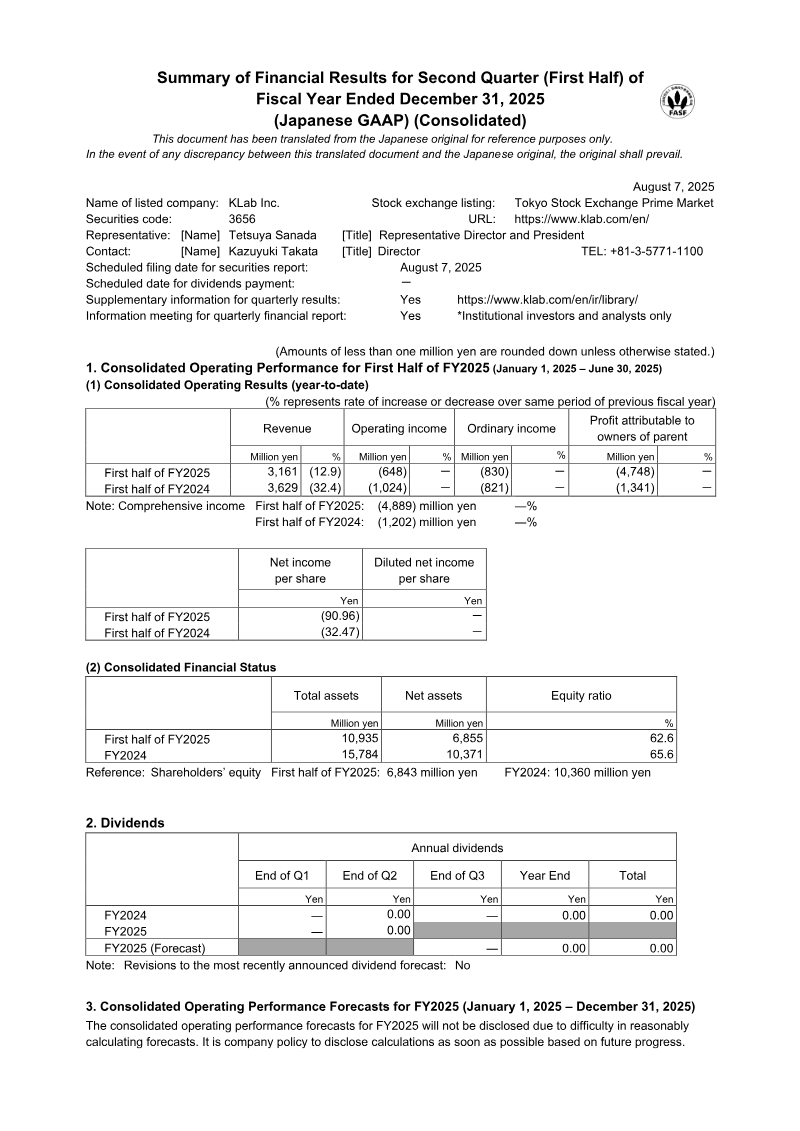
KLab · 2025
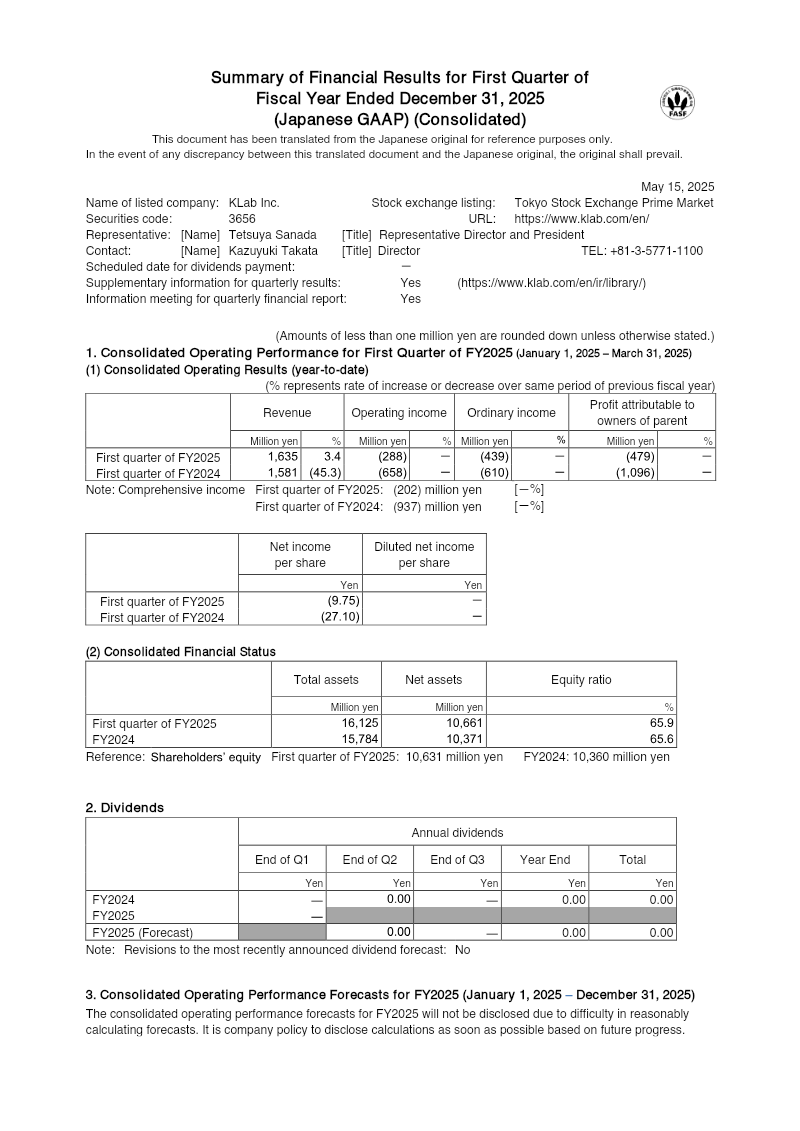
KLab · 2025
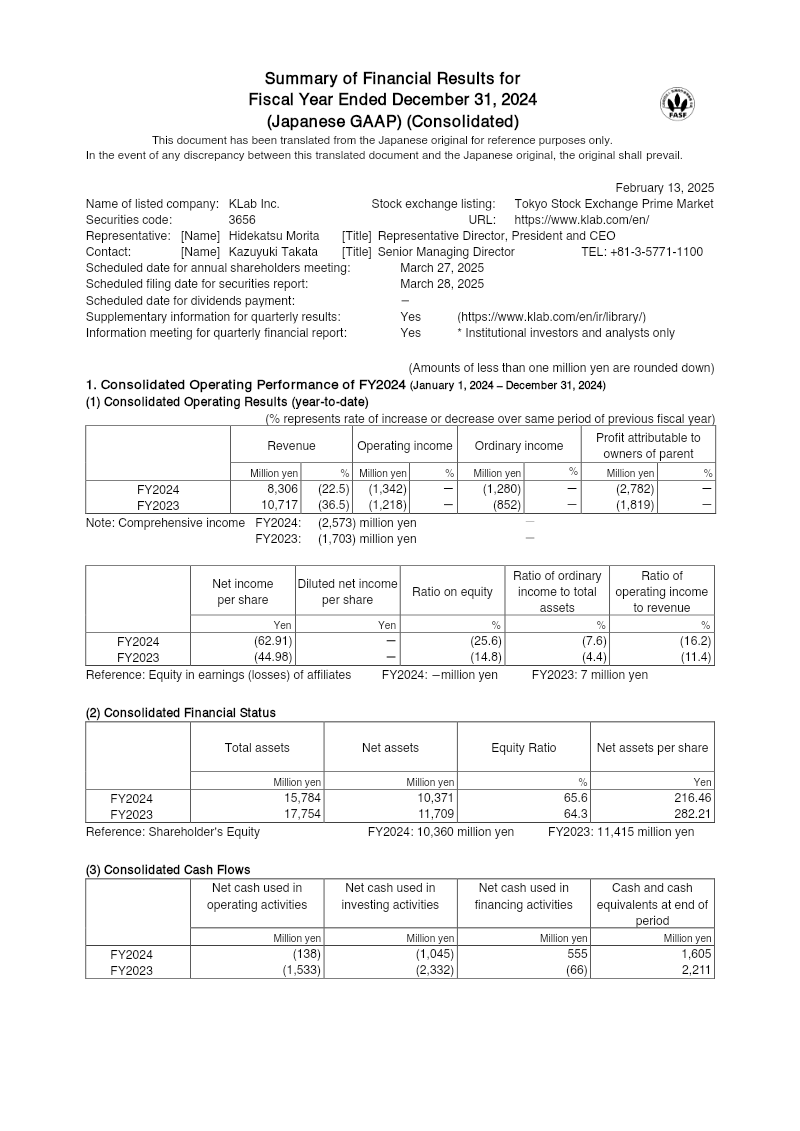
KLab · 2025
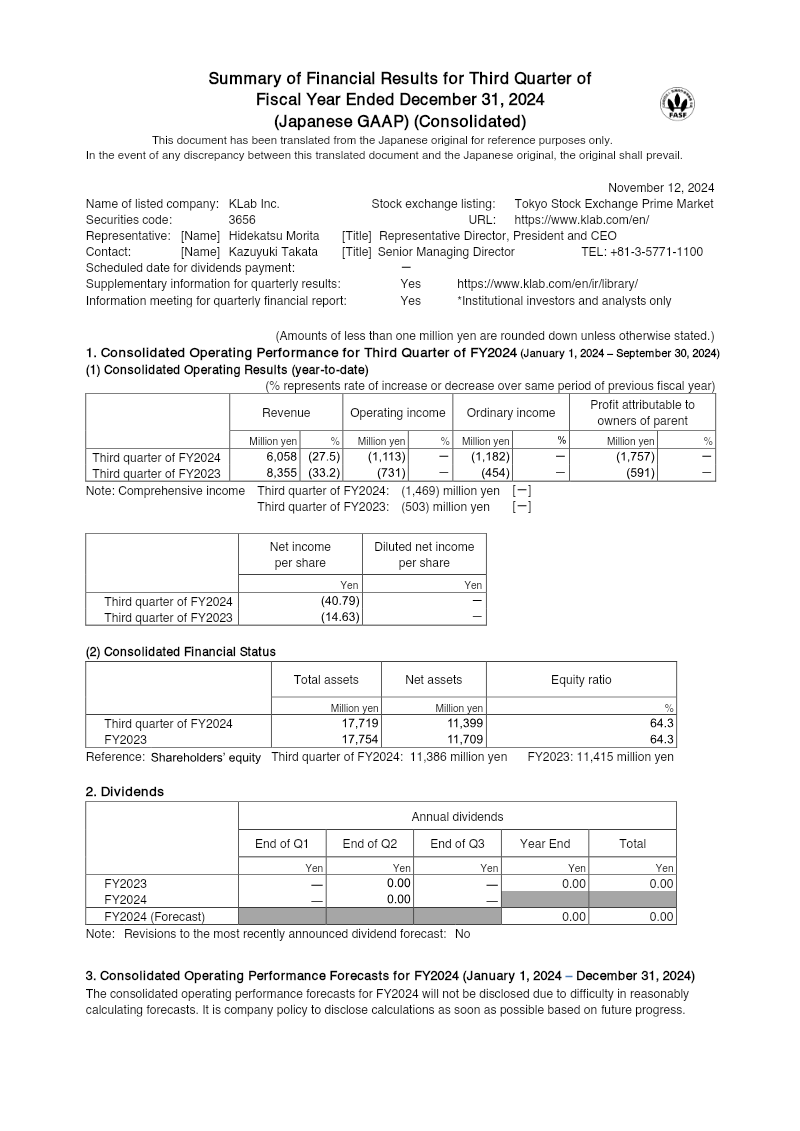
KLab · 2024
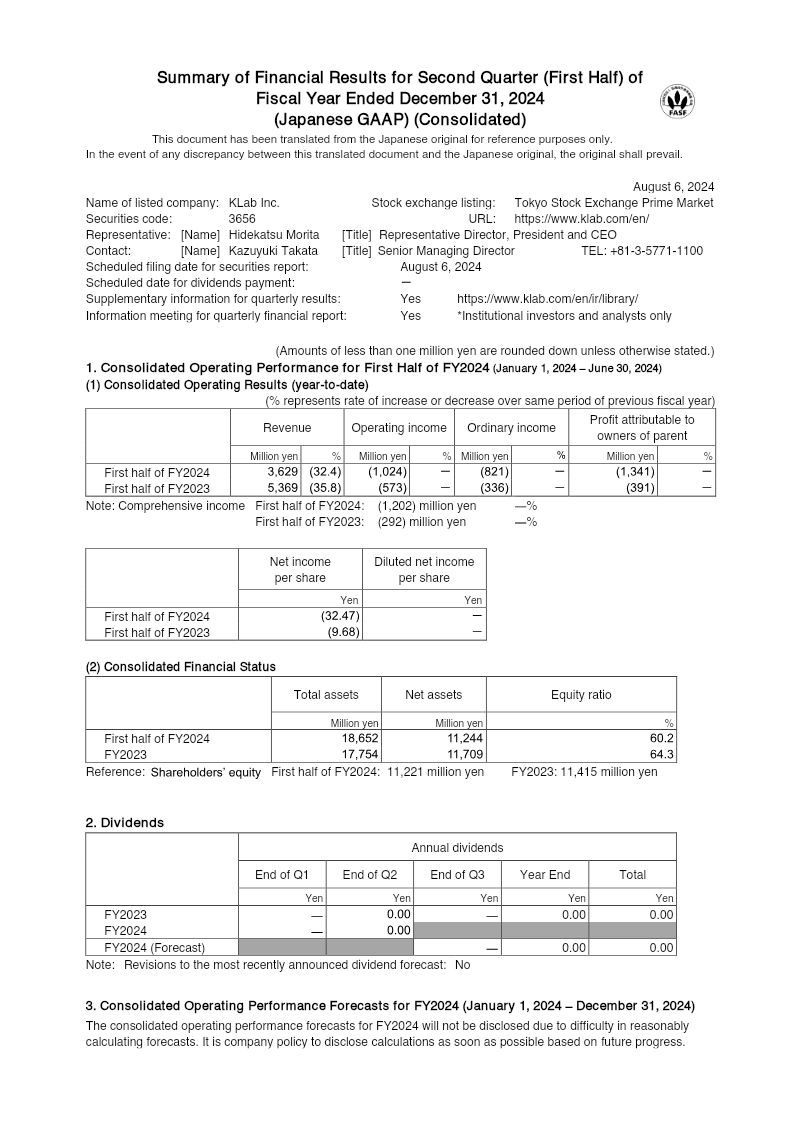
KLab · 2024
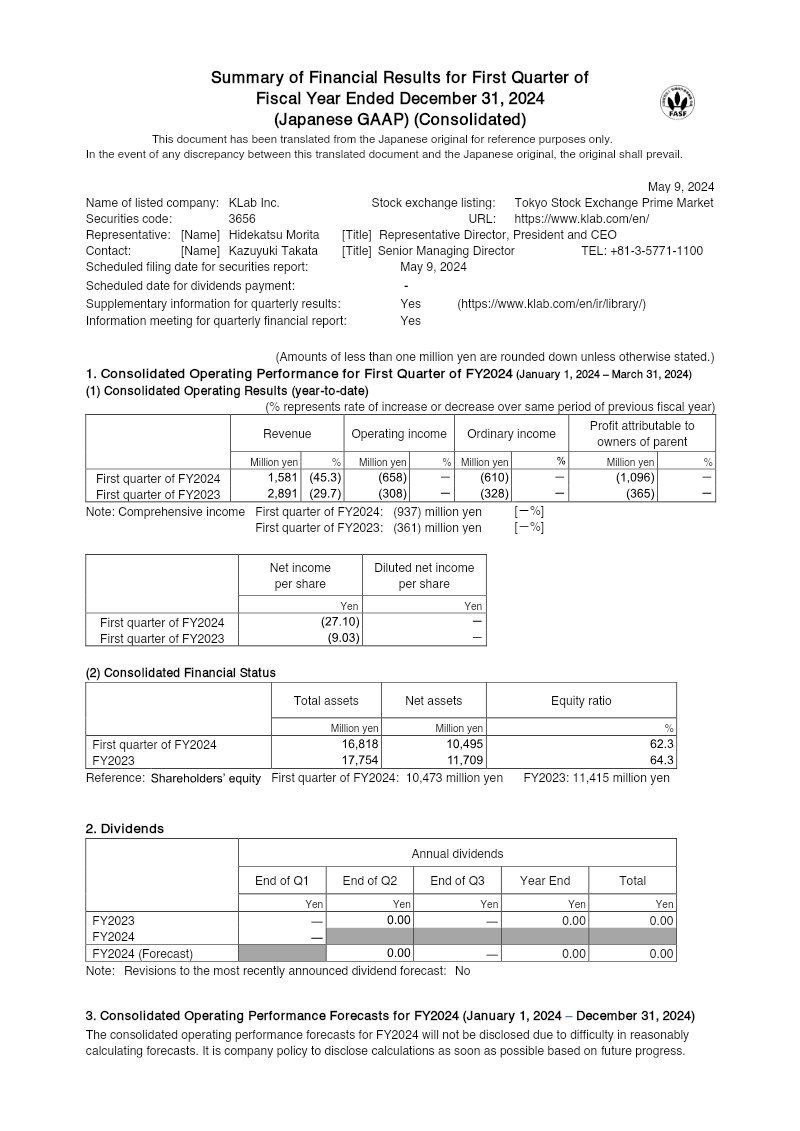
KLab · 2024
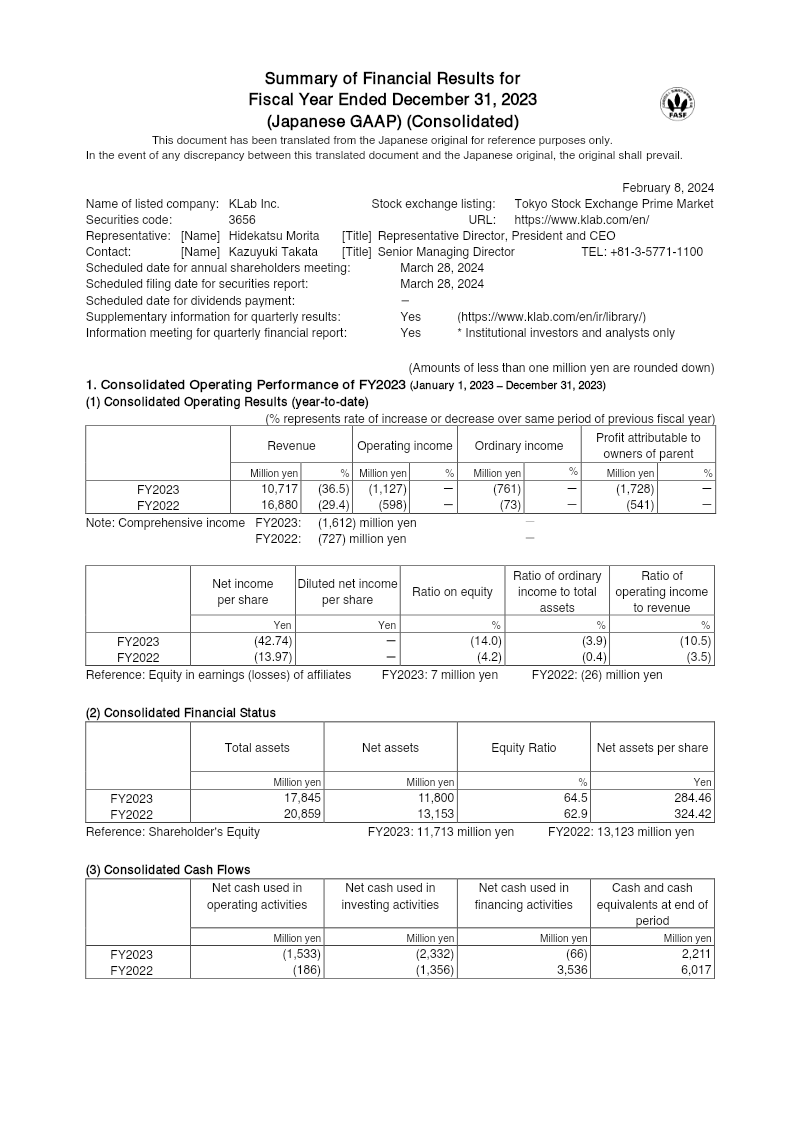
KLab · 2024
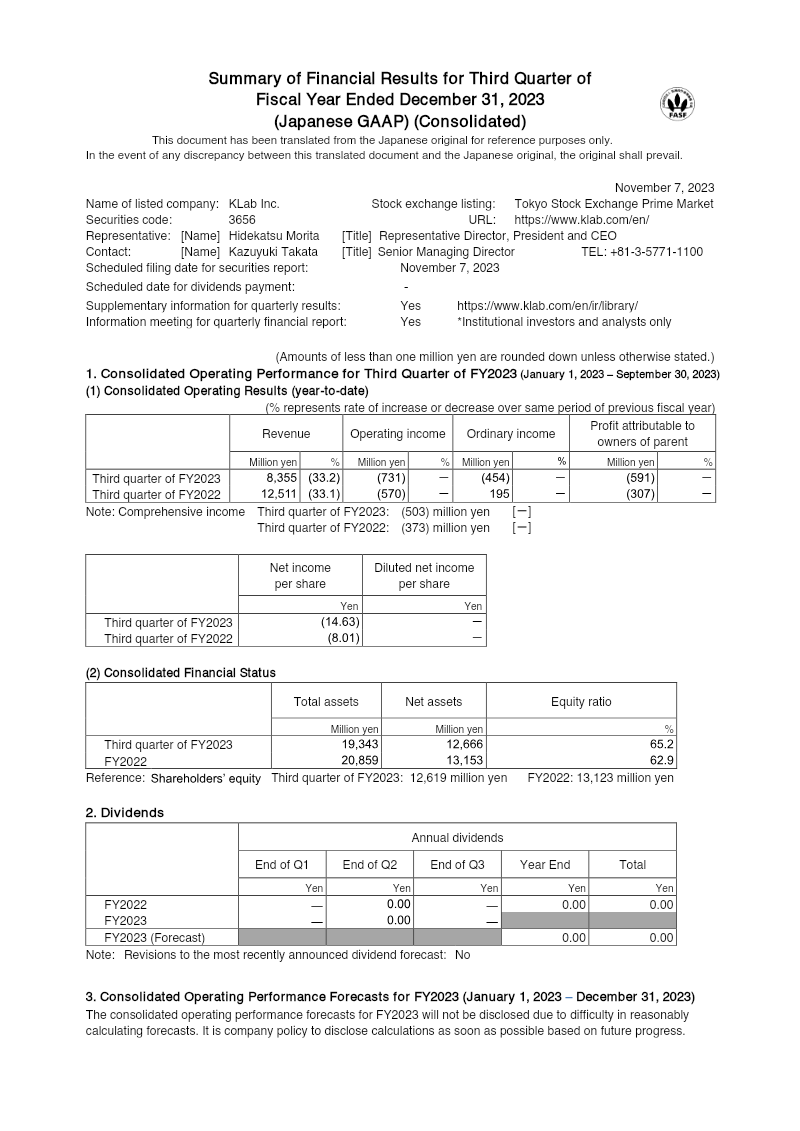
KLab · 2023
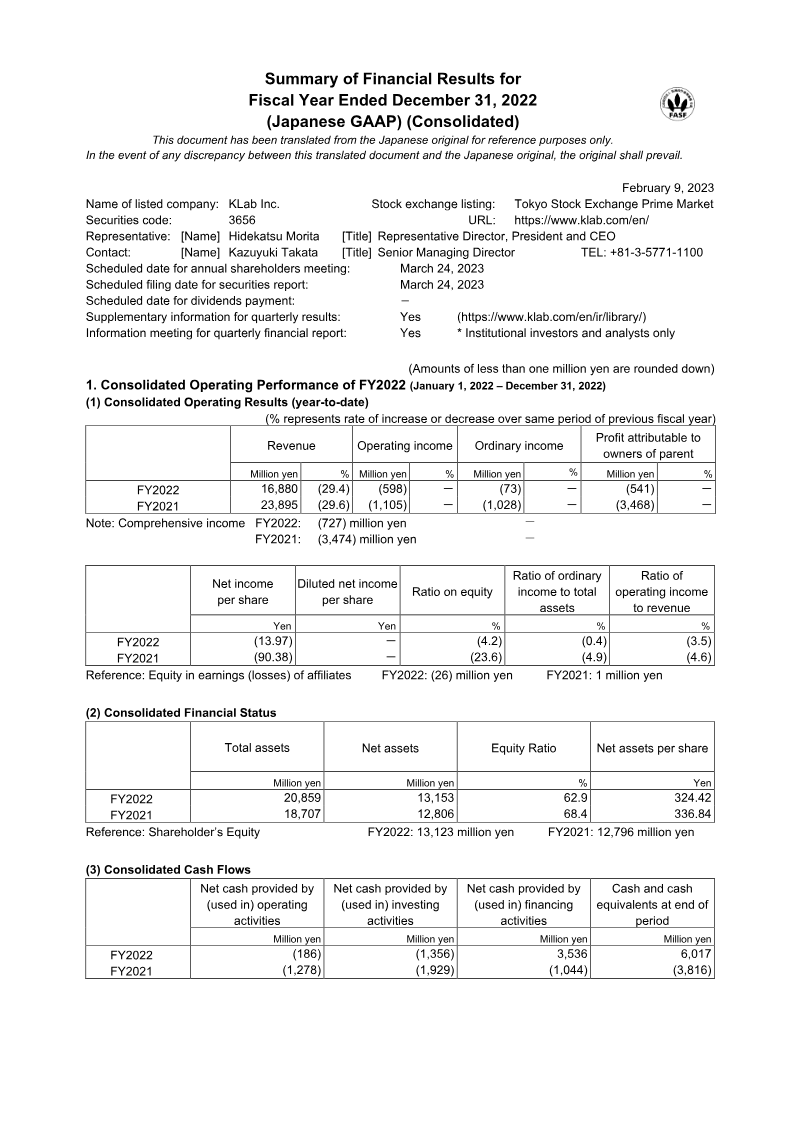
KLab · 2023
KLab · 2022
GungHo Online Entertainment · 2026
Drecom Co. · 2025
GREE · 2025
GREE · 2024
GREE · 2024
GREE · 2023
GREE · 2023
GREE · 2023