1 free read left. Create a free account for unlimited reading + AI research.
Create free accountReport DEV – Asociación Española de Empresas Productoras y Desarrolladoras de Videojuegos
1 free read left. Create a free account for unlimited reading + AI research.
Create free accountReportDEV – Asociación Española de Empresas Productoras y Desarrolladoras de Videojuegos
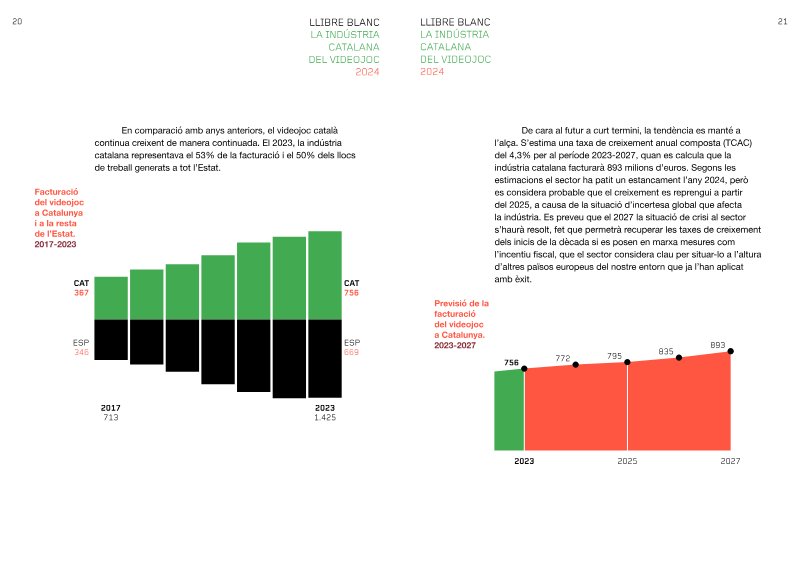
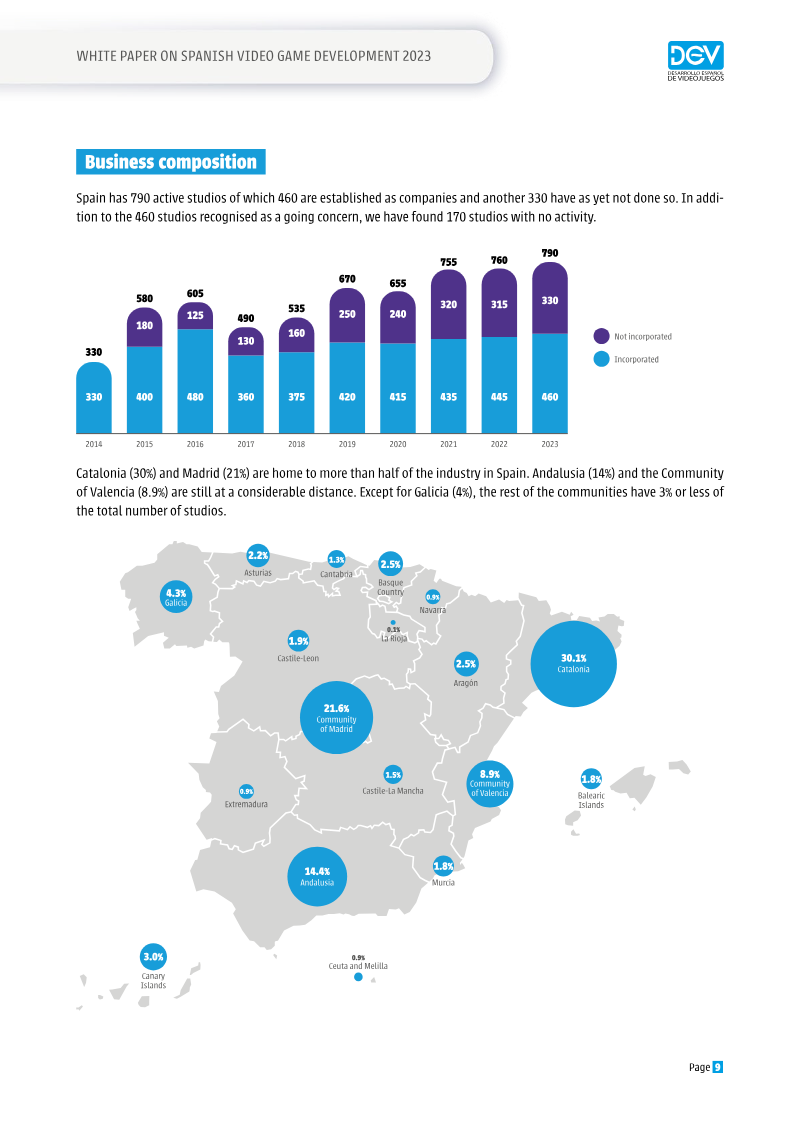
The region accounts for a significant portion of both companies and revenue within the national video game sector.
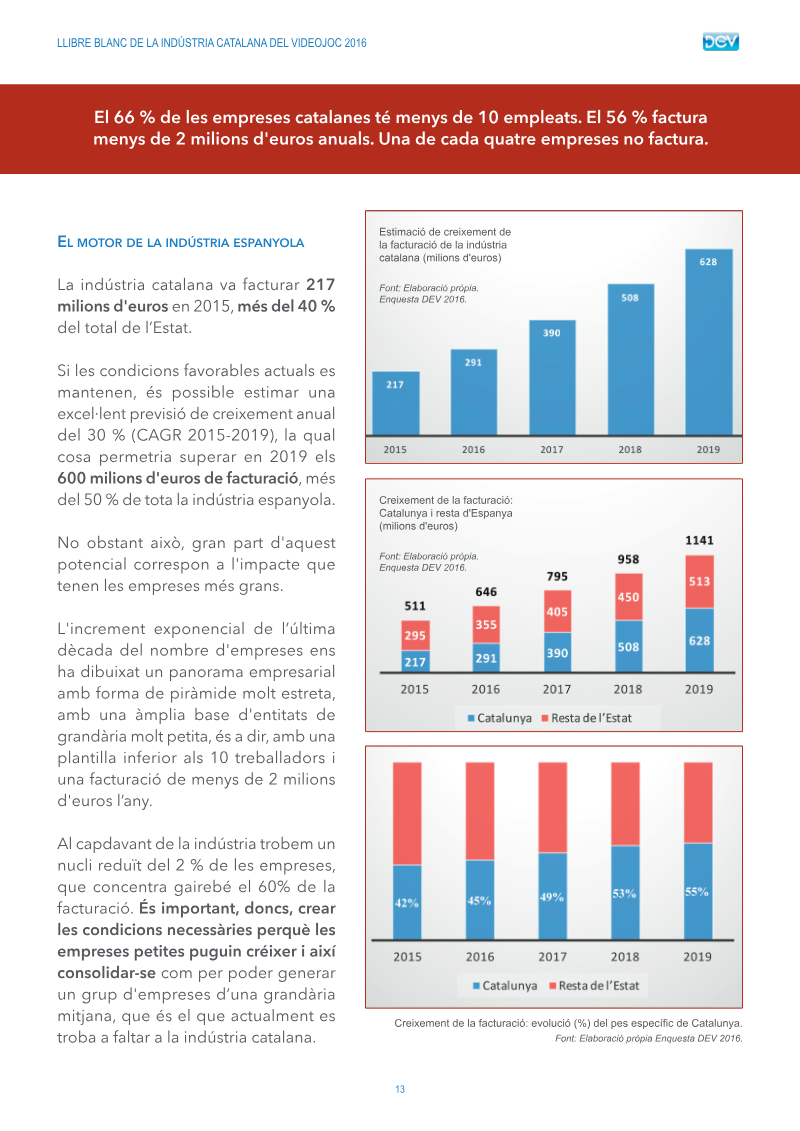
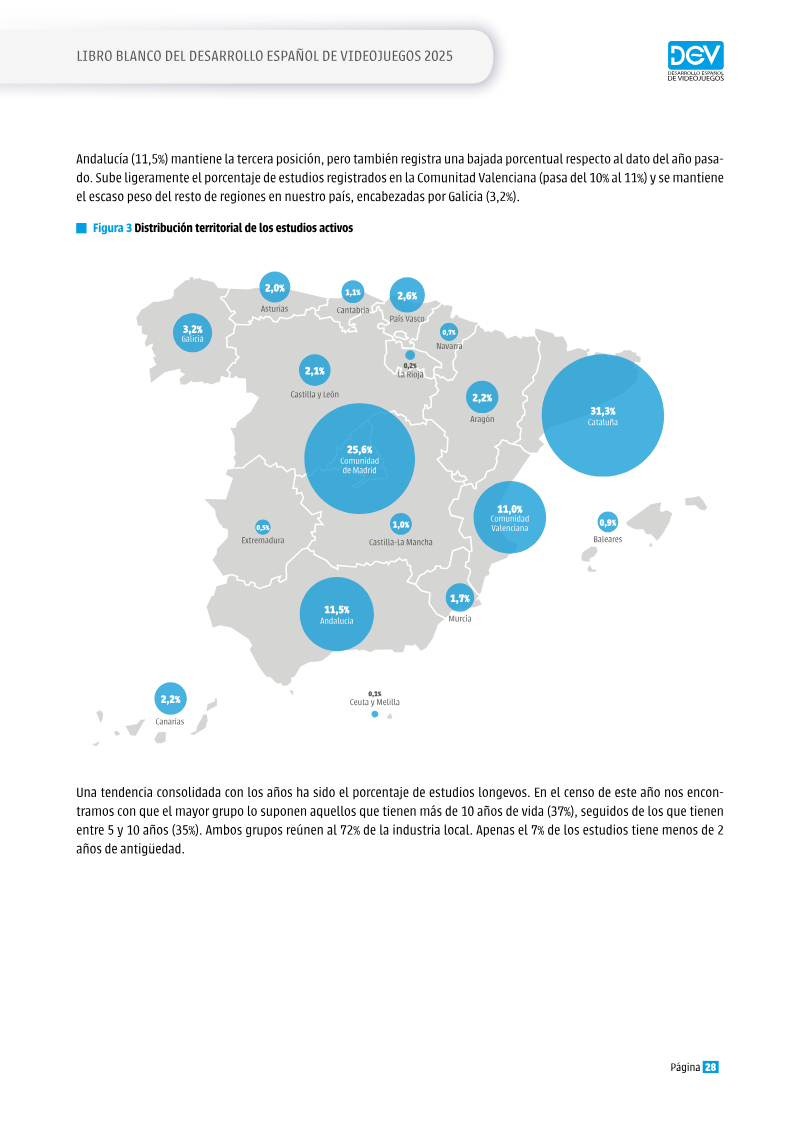
Key role. The Catalan video game industry accounts for 25 percent of Spanish companies and 42 percent of total national revenue.
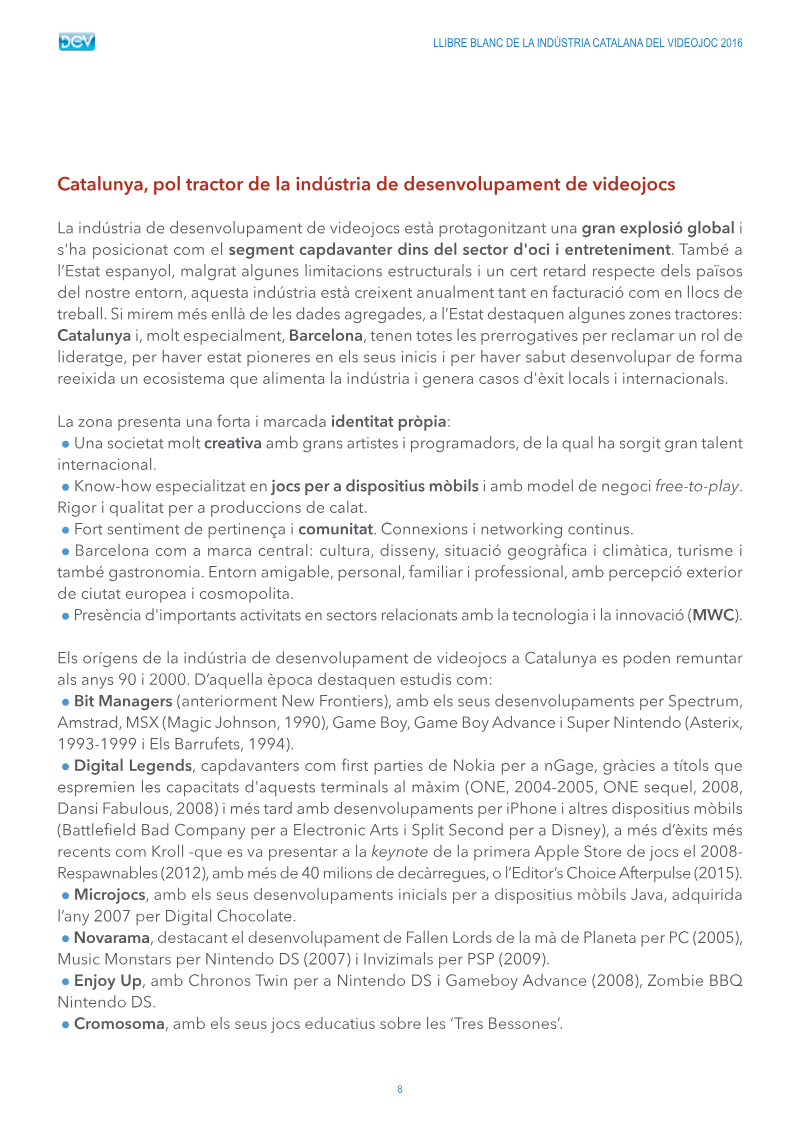
See it on page 10The Catalan video game industry serves as a primary economic engine within Spain, representing 25 percent of the nation’s companies and generating 42 percent of its total revenue. As of 2015, the sector comprised 120 firms producing €217 million in annual revenue, with a heavy emphasis on international markets that account for 72 percent of total earnings. Centered largely in Barcelona, the industry is characterized by a polarized structure consisting of a vast base of small studios and a concentrated core of high-revenue enterprises. Projections for 2019 indicate an ambitious growth trajectory, targeting over €600 million in revenue and 4,600 direct jobs.
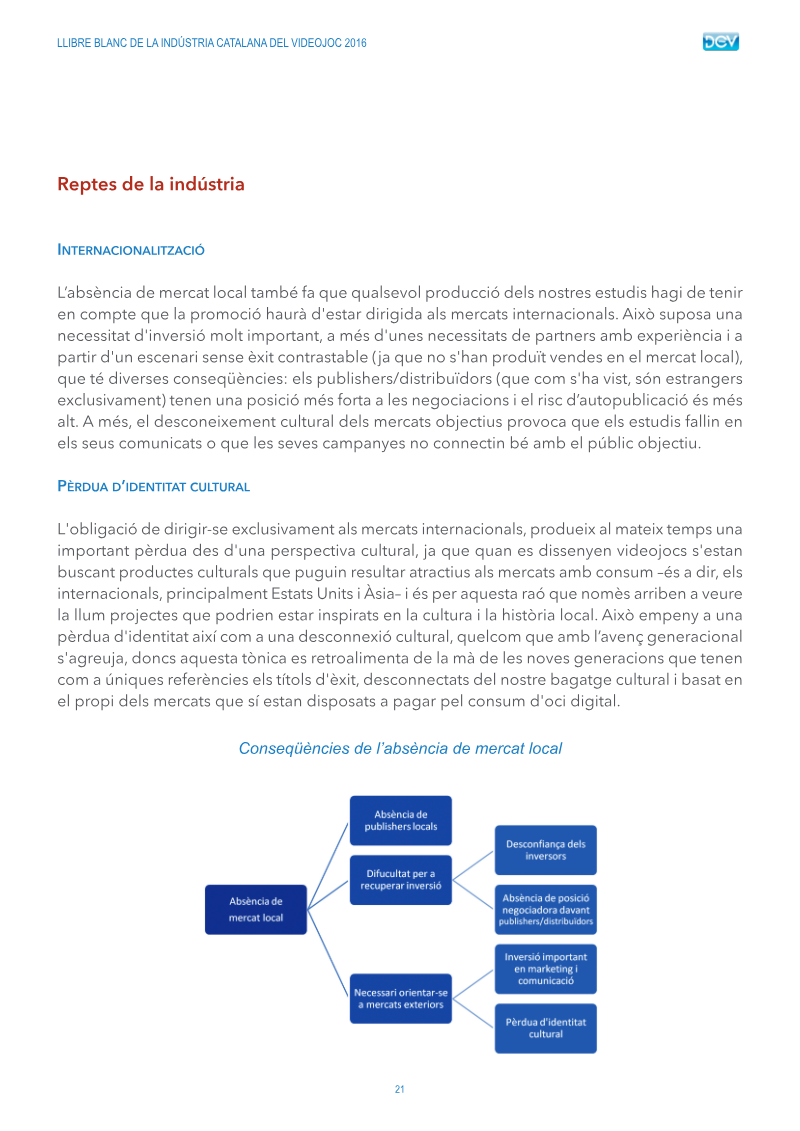
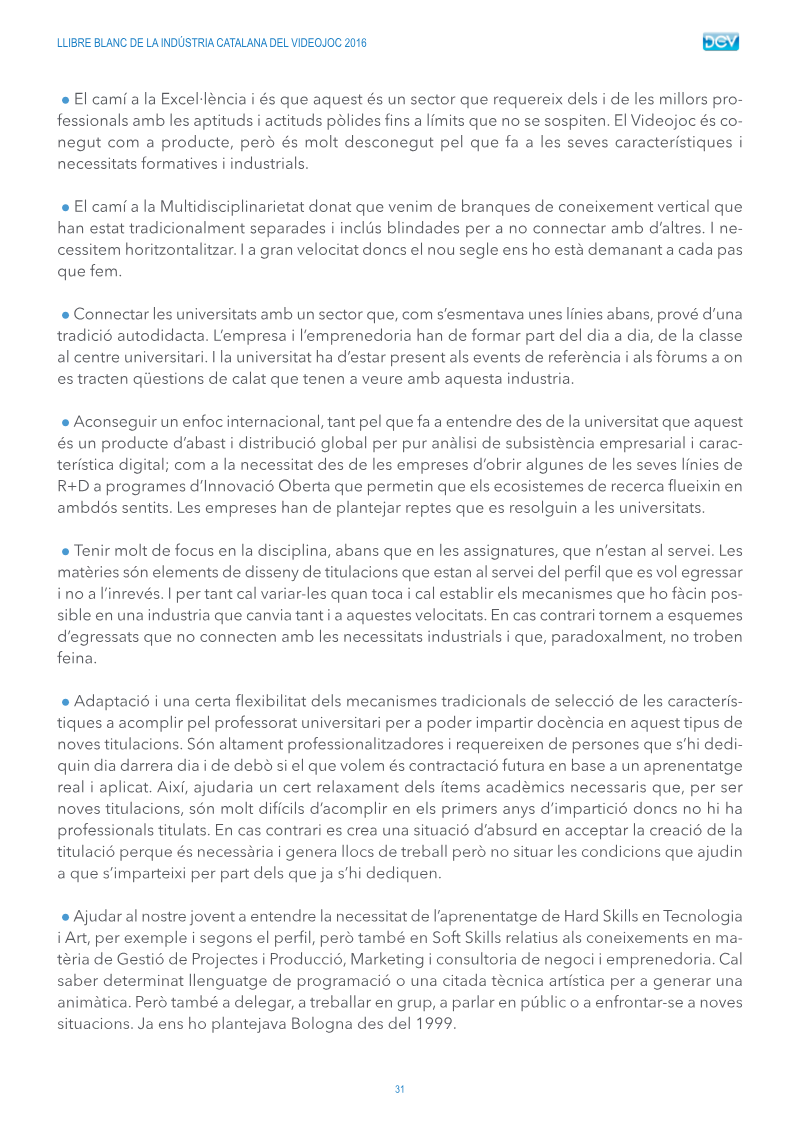
To maintain this momentum, studios are increasingly adopting data-driven methodologies and user-centered design to optimize player retention and monetization. This shift toward professionalization extends to the academic landscape, which has evolved from informal, autodidactic roots into a multidisciplinary educational ecosystem. However, the industry faces persistent structural hurdles, including a lack of a robust local market, a shortage of senior specialized talent, and significant gender disparities. These challenges necessitate a more cohesive integration between academic curricula and market demands to ensure that the workforce possesses both the technical and soft skills required for global competition.
Sustained growth depends on a strategic policy framework that bridges the gap between private innovation and public support. While recent tax reforms and research incentives have improved the financial climate, further progress requires tax parity with the broader audiovisual sector and streamlined internationalization efforts. By fostering deeper collaboration between universities, government bodies, and private studios, the region aims to solidify its position as a strategic economic driver, ensuring that the industry remains competitive while navigating the complexities of emerging technologies like virtual reality.
DEV – Asociación Española de Empresas Productoras y Desarrolladoras de Videojuegos · 2023

DEV – Asociación Española de Empresas Productoras y Desarrolladoras de Videojuegos · 2015
DEV – Asociación Española de Empresas Productoras y Desarrolladoras de Videojuegos · 2014
8Bit · 2026