1 free read left. Create a free account for unlimited reading + AI research.
Create free accountArticle Eludamos: Journal for Computer Game Culture
1 free read left. Create a free account for unlimited reading + AI research.
Create free accountArticleEludamos: Journal for Computer Game Culture
Bojin frames game design as the construction of semiotic spaces, each with its own literacies. The language and conventions designers use are argued to both reflect and reinforce their epistemological assumptions.
Bojin's study examines how the language, conventions, and "grammar" that designers use shape the epistemologies of game design, that is, the ways designers come to know and practice their craft. Drawing on Wittgenstein's language-game concept and James Paul Gee's notion of semiotic domains, the work treats game design as the construction of spaces with their own literacies. Its central claim is that language both reflects and reinforces the epistemological assumptions underlying design, and that Wittgenstein's view of knowledge as grounded in contextual meaning rather than transcendental truth makes his framework well suited to analyzing design practice.
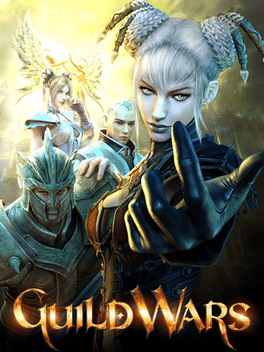
The most developed empirical case concerns MMO grinding, the repetitive collection of resources or experience. Using Guild Wars as the key example, the analysis shows that grinding persisted and became central to play even though the game was initially marketed as grind-free. Later expansions, including Factions, Nightfall, and Eye of the North, introduced point-based progression, unique "green" weapons, and prestige titles that made farming integral to advancement. The work concludes that shared terminology, which Richard Garriott called "nomenclature," reifies the practice, so that designers and players come to regard grinding as a defining feature of play itself, often without a clear justification.
Extending this argument to commercial design more broadly, the analysis holds that dominant conventions become entrenched through communal acceptance and persuasion, making alternative paradigms such as Guild Wars vulnerable to being undermined. Examples include the persistence of the "Adventure" genre label despite changed gameplay and the normalization of grinding within MMO communities. Drawing on Sutton-Smith's rhetorics of play and Gramsci's notion of hegemony, the author describes these conventions as "ludic hegemonies" that players consent to, and concludes that deliberate change requires reflexive, communal engagement. The framework's applicability to other genres, however, remains untested.
A later treatment applies Wittgenstein's late philosophy more directly, arguing that "game" has no fixed formal definition and must be understood through use and "forms of life" rather than through essential criteria. Contrasting this with his earlier logical atomism, the analysis draws on MMO practices such as grinding, loot-camping, instancing in Guild Wars, and World of Warcraft's market dominance. It concludes that games are constituted by the actions and practices within them, since action is necessary to complete a language-game move.
Each row is a game or company this document names, each column a document, oldest first. A mark means that document names it. Select a row to see those documents.
Eludamos: Journal for Computer Game Culture · 2026
Eludamos: Journal for Computer Game Culture · 2026
Eludamos: Journal for Computer Game Culture · 2026
Eludamos: Journal for Computer Game Culture · 2026
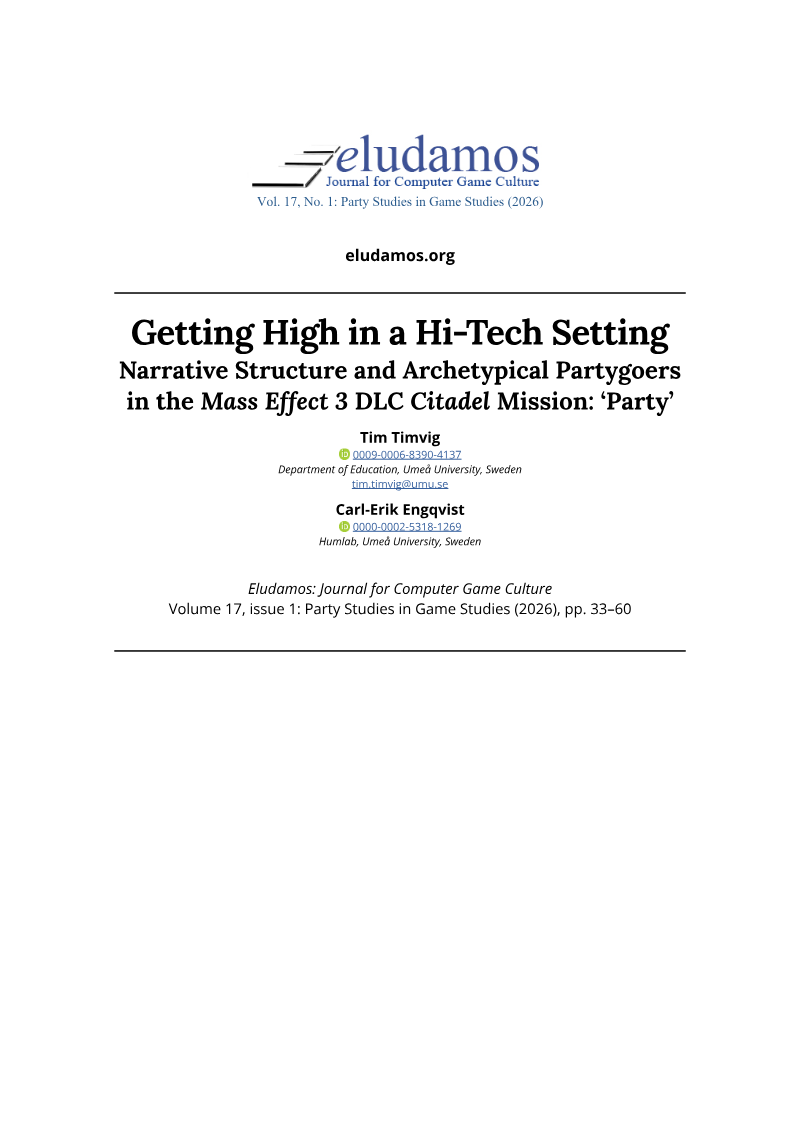
Eludamos: Journal for Computer Game Culture · 2026
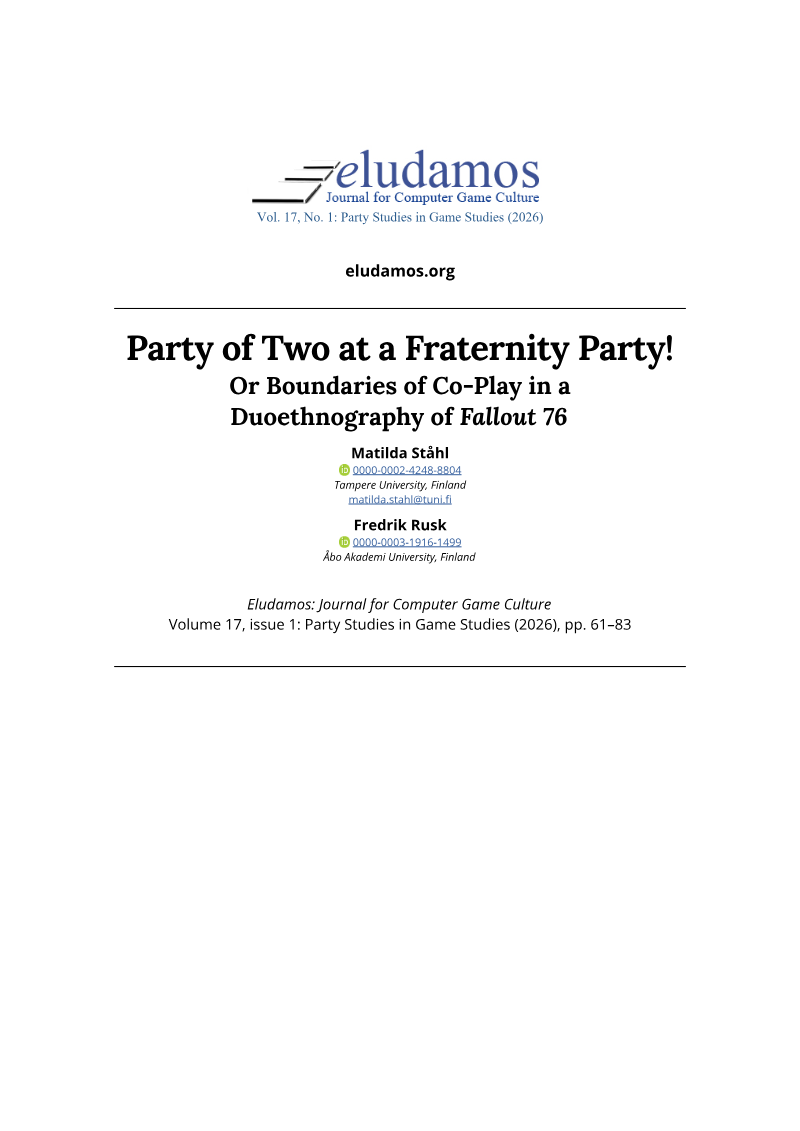
Eludamos: Journal for Computer Game Culture · 2026
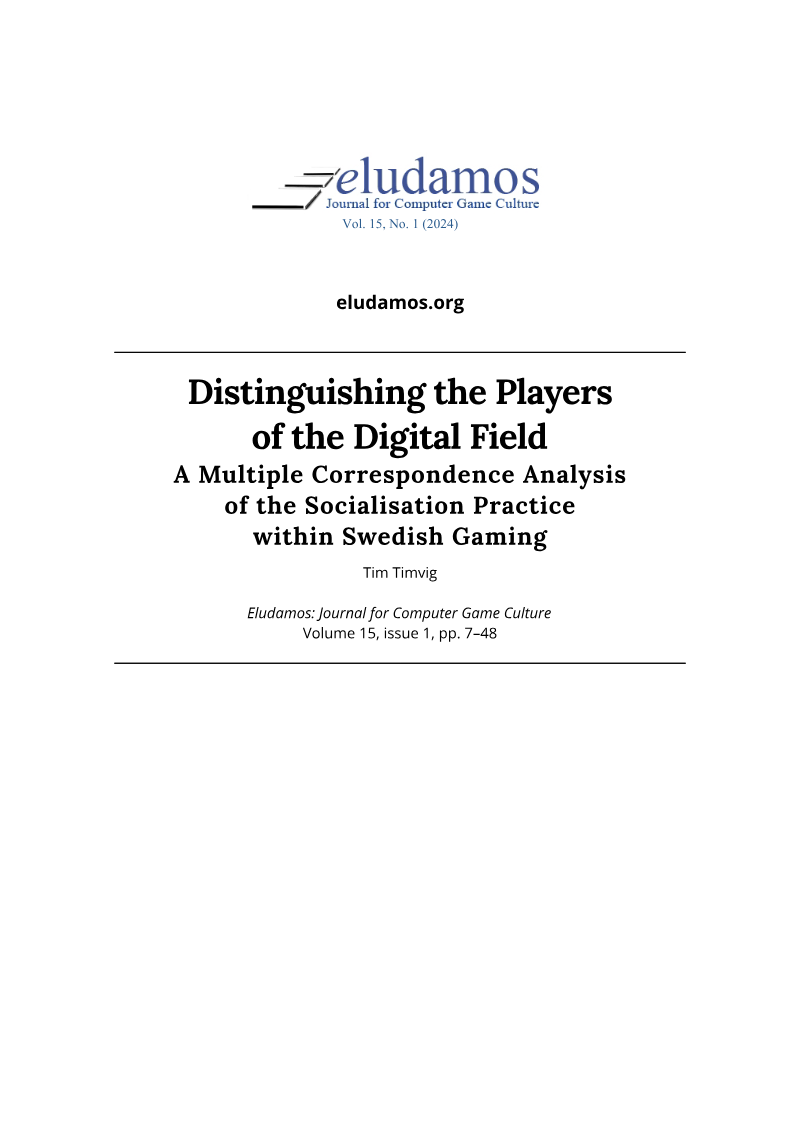
Eludamos: Journal for Computer Game Culture · 2026
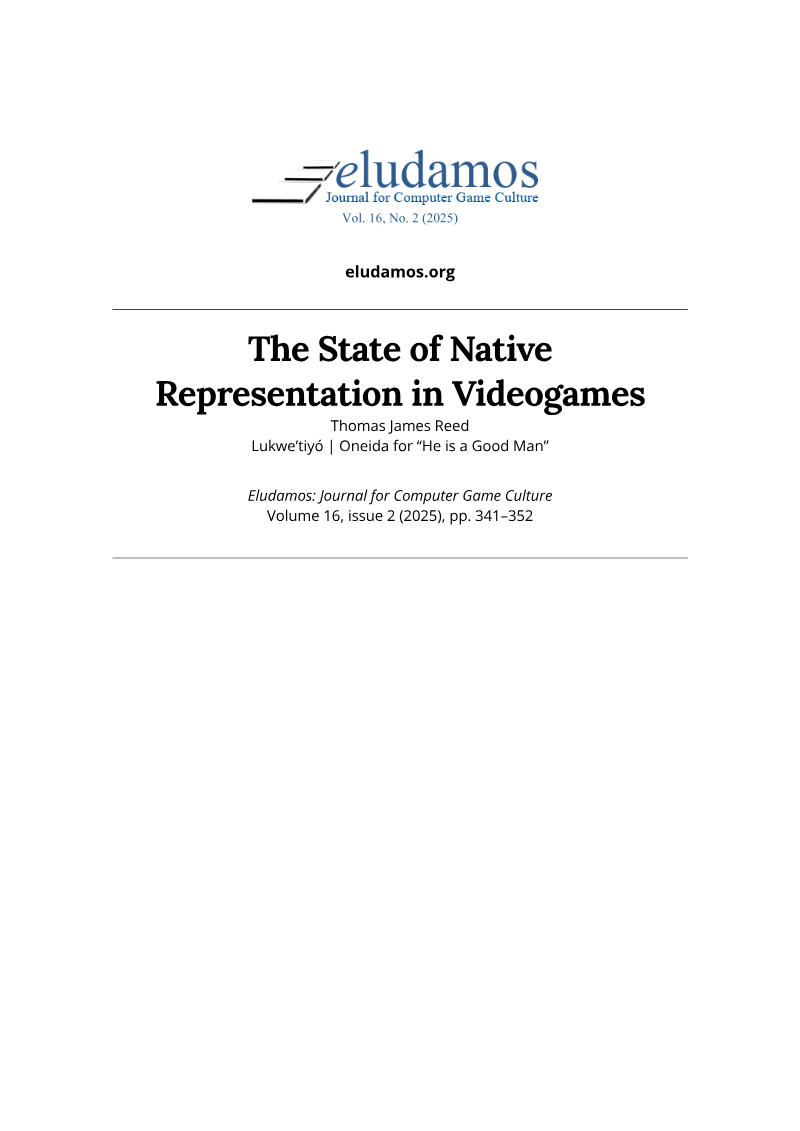
Eludamos: Journal for Computer Game Culture · 2025
Eludamos: Journal for Computer Game Culture · 2025
Eludamos: Journal for Computer Game Culture · 2025
Eludamos: Journal for Computer Game Culture · 2025
Eludamos: Journal for Computer Game Culture · 2025
DiGRA · 2026