1 free read left. Create a free account for unlimited reading + AI research.
Create free account
Key insights on winning global gamers with smart localisation
Key insights
6 takeaways- 01Eighty percent of the 27 billion-dollar mobile gaming market is located outside the United States, making localization a critical requirement for reaching high-spending, non-English speaking users.
- 02Failure to account for regional nuances, such as the distinction between Simplified and Traditional Chinese or specific Hong Kong dialects, can trigger public backlash and negative brand sentiment.
- 03Developers should implement internationalization—the process of isolating text strings from source code—from the first day of development to prevent expensive technical overhauls.
- 04Utilizing a Translation Management System (TMS) optimizes the workflow by automating processes, integrating directly with game engines, and facilitating quality assurance.
- 05Effective translation requires providing linguists with contextual reference materials, including character backgrounds and UI descriptions, to ensure quality and cultural resonance.
- 06Adopting a Minimal Viable Localization (MVL) strategy allows developers to test market potential by prioritizing high-impact assets like App Store descriptions before committing to full-scale in-game culturalization.
Ask AI about this video
Transcript
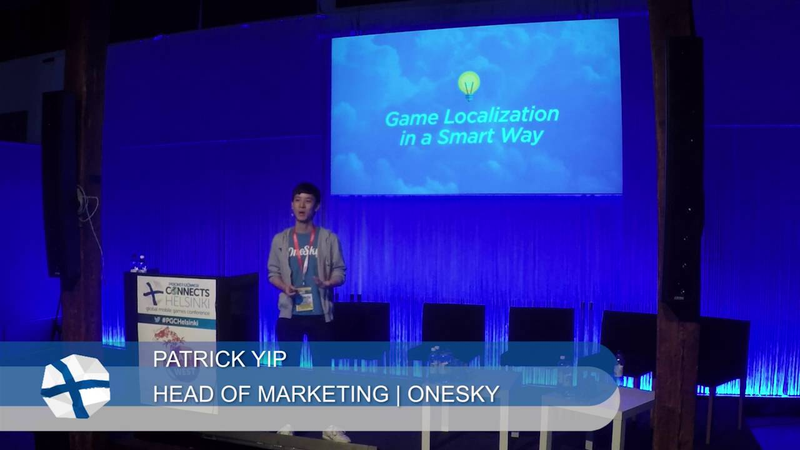
[Music] um guten morgen this is the best I could do anyway so today we talked about this is patrick from one sky today we talked about how to win global gamers with a smart localization and I don't news new issue has done a really good job on the explaining the google map gaming market so it's not to get into how to do it well so a peep i found a background for me i'm doing marketing at one sky so you can feel free to follow my twitter or email me about anything about global so and take a step back to explain more about one sky when sky is globalization complete meaningful games but we also do translation services for mobile apps and also website we have translation management system to a cloud platform so that you can manage your translation easily and we also offer professional
translations for more than 40 languages so these are the games that we help to go global we like for my from here chris up and bend island calm and so on we also have some chinese game like type of phone is from china so today i will go through three things the first thing for the first thing is like why you have to localize your game the second thing is other how question how to localize your game and the third one is not just how to do it but how to do it in a smart way we divide research as a strategy called minimal viable localization van riel that we explain it later so the first question is why you have to localize your game after all but this answer is really simple because your gamers are global just like a new shoe and also other data complete ayat beneath estimation the google mobile gaming market is huge so I just copy the data from nutrient not raise up data yet so the most updated one you have to go
for engines so when out are there numbers is 27 billions over the road it's really big I wonder how much I can hear from my life and eighty percent of them is outside you so it's like from China a pack also the Latin America more importantly actually 71 percent of these regions a lot of speaking English in their first language sis just like me I speed my mother tongue is Chinese and Cantonese most of those big spenders in the market does not speak English at all so you may say oh although my mother tongue is not in China it's not in English but I do with English right so what's the point of localization localization is a way to reach and engage global gamers in there the most lateral rate their native languages so simple simply you your game is understandable by them it's not enough a slight many other ways one set if you talk to a man in the language that he understand it only goes to his brain but if you speak to them in their language
it that goes to their heart you really win their heart with their own language so this is one of our clients in the past wassup no currency they also our client Chris up we have them to translate into five languages and in a poly gear Spanish French and Italian and so on and in seven months where we have them gain 20 millions of users so that's why local a translation or available in there you're gamers and language is really important to engage them and make them feel like lateral to play your game so I have explained why you have to localize your game the second question is how to localize your game so in general we will suggest you to localize your game in five step the first that I will go through them one by one the first step is planning you project plan your localizations I campaign the second thing is the same studies you have to get your game ready we will go through something like internationalisation the first step is to translation or
localization you have to translate your content to four step this stat test drive and the five final step is to acknowledge your game the first step is planning our it turns out is like designing what languages you wish to localize into there are some questions that you have to consider one is for your target market and one is for current users for the target markets you have to understand Oh what's the size of your target market and what do your map target markets really speak so for these questions I think that new shoe or mne or any many gaming conservancy can help your job and the second question is related to current users you have to study or where are you your users coming from and what knowledge do they speak so you have to go into your analytics and like Google and in hex or any attribution models I'm not promoting other comforts so I stop here and this is something like the top 10 languages we've been helping with our former clients or from our experience so
in Asia in Russia we recommend our clients to localize into Chinese Japanese Korean and Russian in Europe are French German Portuguese and Spanish actually it Italian should become likes to the four languages and South America risa we suggest our clients do localizing super Syrian portuguese and latin america spanish so you may say oh you missing always so intuitive that you go to China then you could localize into Chinese right is so simple but you know actually length some languages could be quite I could be tricky just take chinese example do anybody know that actually there are two characters in chinese yeah yeah and many spoken dialect in china yeah so basically just take a china chinese example in china and only I China will write in simplified chinese but in Taiwan and in Hong Kong day with traditional Chinese and they speak
different dialects well in China they speak Mandarin but in Hong Kong our people speak mostly in Cantonese they are very different language when it comes to play so if you don't plan your language pretty well actually you could be the consequences could be serious just take Ninon 2x example like I'm not talking about pokemon gold but the Pokemon officially the pokemon game so then Nintendo this year they are DVDs are official translation they unify the whole Chinese speaking regions into one translation version that follows the chinese mandarin poland station and also the china the mainland china fashion so you are but it raised so much reaction from gamers in hong kong and taiwan because it's so a soul and natural tool there are their own experience because in hong kong they speak in Cantonese so the pronunciation doesn't match for their native experience so there's
reaction against unified translations so there are petition online me metering that out get me give me give me my Pikachu back in hong kong cantonese and there's even a protest in hong kong against the Japanese embassy so they say oh if we are defender Hong Kong translation I don't want the Chinese to transition giving back by Pikachu and they have the gift Assad the nature to the ambassador in China Japan so is a pretty serious thing and Nintendo has to like dr do another thing afterwards you to take care of the issue so after you decide your translations or languages you have to get your game localization ready what I mean why localization already is too you have to make sure your infrastructure is ready for translation in the industry we call that code internationalisation it means to isolate your string from your source
code you make sure it helps to facilitate the transition process otherwise if your string and it's also a mixed together you can't do any translation is we will become a mess so this is mortally cosine so I think if you guys just search the term internationalisation on online or you just ask us we can have a share a lot of more technical guy how to do it do it well or through different platforms from unity and we owe to apple android iOS when your game is ready for translation are you make your code where your source code ready and then you can start you start to translate your content then the the step are pretty straightforward your higher translators or use vendors and once guy is obviously one advantage you can think of and better step is you before before sending the original content to translate to your values you also come out come with the reference materials reference material are some contextual information about your content night or was your
characters coming from what's the contest of your weapons and was into very specific results like oh this is the button shown on the screen of these so these are good help your translators are graded you're a better job to translate your content in a more higher professional way and we recommend you to when doing the translation process we recommend you to use a translation management system we call TMS to optimate a whole process the TMS will do about a few things the first thing is like integrate with your game engines so when throughout your game development process you can just like export your entire content to the TMS and on the TMS you can control the whole manage the whole translation processes and a TMS will also have some QA features that can enhance the localization quality and the third thing is because although everything is automated so you minimize the manual
cost to maintain your localization and you can focus on doing your your game and opaque building your game to be a better one oops and once your translation already you should are go to test drive your localization and you may think oh if my translators are doing a good job I have to test my translations actually some common problems we may involve doing the translation process the first thing is if you don't do your reference material well that sometimes the translation maybe does not fit the contest farewell and just like this one I think it's a very classic example from shelter in 1980s and sometimes if you don't do your internationalisation Rao translation may be missed in the whole workflow because we didn't isolate the string from your source code and the first thing is this translation may not fit your introducer interface pretty well like German German
is usually one hundred fifty percent longer than English phrases so it may break your bubble bars if you don't take care of Harry rail so you have to test drive your localization before launching and once all the transition already and its task you can launch your localizations but don't forget to track your results like in terms of Daniels and mau etc and you learn from your results and try to scare up your localization efforts so this is the whole localization process from planning building the infrastructure translation testing and non-chain this is the common workflow no matter what so the same thing is the first thing is how do you do it in a smart way so you may ask Oh hammer house much I be there are three benefits you if we develop strategy called minimal Viable localization just like minimal Viable Product in a positive I my world there are three banished from that so the first thing is you can minimize your calls in time while you can grow your
game globally the second thing is you can't answer your market potentials before for lunch the third thing is the whole process is iterative you can improve and optimize continuously so the key thing here is the minimal Viable so when we suggest when you think about localization we suggest you to look at your your funnel so what's your your most troubling our stage like for most of us editor's beginning it would be an acquisition so you have to deal with the acquisition stuff so the Minimum Viable acquisition would be those promotional stuff like your product listing your app store pages your App Store description and your ESO or your website telling about what is your game is so the third if you just want to tackle the acquisition path then you can first thing of just translating the app store page X minimal I just saying is you could thing in this way and when you prove all the localization successful
you see another attraction throughout your App Store or channel or your acquisition channels then you can scare up to oh okay this market works then we scare up to engagement we start to localize the whole in-game access we first come up with Reese first translated task maybe the video audio later or maybe we input we implement some local cultural eyes in a localized feature in in the legs up so and when it still keep going out and then you keep scaring up to retention oh then I localize my forum I localize my community a host localized events in the target markets so this in this way you can manage your course to minimal wow you can still work in the target market and you keep doing it just iterate and grow so it's just like a cycle that is theta different and you won't lose so much money on localization because localization could be a big spending so here here at some take away the first
degree is your game is a global so your game should be too the second thing is you should when you look like your game you can use mb l2 to localize in a smart way and the first thing is if you don't cheat your language seriously beware of protest coming up soon so yeah and this is the end of my presentation and actually once we once again have a lot of educational access or content on how to localize your stuff in a more effective way so this is our you can check out our ebook right to be in it the beginner's guide to mobile localization yet here's the QR code and here's to shortening up please I dunno it and subscribe to our list at a phone and I'm welcome to any questions thank so do you have any questions well yeah any questions Patrick all is one that smell fun where's our roving mic all right
no it's good no I like I was thinking one that's good so you can go go for it maybe Mike's coming you get a chance to phrase it just right so it's can be [Laughter] having these are my colleagues they might ask you something yeah hello you talk a lot about translating yeah games in every way and then you talked about doing an incremental ways localization and you said later you can change the in-game assets the in-app purchasing do you do that as well or is like also the pricing of those things around the world that's that changes yeah what a pity that we went out with you just you translation so for those cultural isolation I think you have to look for out of others but we do have a parallel at work we can recommend which color you can do if one to go deep localization to cultural eyes or to have in Game
different things in your game in different places where now we are focusing on TMS a platform decades automate your transition process and also our professional translation services but we will like for sure maybe in the future we can do something but it's not what we can do for now yeah okay yeah i have i've got any more questions i have one quick question again so i was gonna ask which you might have gone through sighs screaming backwards and forwards but at what stage in the game kind of development should you be talking about kind of localization or internationalization lays it is it you finish your game and now you've got a couple of weeks or should you be building that more into the kind of design process from yeah several months out sure for internationalization I would think by day one you should view it on its own because we've seen so many games that they don't in they don't intend to to go global at first so there if the infrastructure is not built for global markets but when they start to think about oh I have to go globalized they have to they have to we treat a lot of
the coke inside so it's a hug tons of work there and so for now no matter what you think about the master bracket of gold markets have to deal with your build a platform or infrastructure that enables you to go global later on yeah because you will be a header if you don't do that but it but in terms of global markets it will really depends on the strategy of their games so like I would suggest you just go small first like targeting one market and with proven successful then you just go bigger can I did ya guys thank you very much sooner please Patrick yep thank you very much is that the Oscar you might want to take that that's fine there was with we had a chance to give away an apple [Music] you
Summary
Effective global expansion for mobile games requires a strategic approach to localization that prioritizes cultural resonance over simple translation. With 80 percent of the 27 billion-dollar mobile gaming market located outside the United States, and a significant portion of high-spending users not speaking English as a first language, developers must treat localization as a core engagement strategy. Failing to account for regional nuances—such as the distinct differences between Simplified and Traditional Chinese or the specific dialects preferred in Hong Kong—can lead to significant user backlash, including public protests and negative brand sentiment.
The recommended workflow for successful localization involves five distinct phases: planning, internationalization, translation, testing, and launch. Internationalization, which involves isolating text strings from the source code, should be implemented from the very first day of development to avoid costly technical overhauls later. During the translation phase, providing translators with contextual reference materials—such as character backgrounds and UI descriptions—is essential for maintaining quality. Utilizing a Translation Management System (TMS) further optimizes this process by automating workflows, integrating with game engines, and facilitating quality assurance.
To manage costs and mitigate risk, developers should adopt a strategy of Minimal Viable Localization (MVL). This iterative approach suggests starting with high-impact acquisition assets, such as App Store descriptions and promotional materials, before scaling to full in-game content and community support. By testing market potential in smaller segments first, developers can validate their efforts before committing to full-scale culturalization. This method allows for continuous optimization, ensuring that localization efforts remain cost-effective while effectively capturing global audiences by speaking to them in their native languages.














Comments