1 free read left. Create a free account for unlimited reading + AI research.
Create free account
How to gain more users with complementing organic and paid strategies
Key insights
6 takeaways- 01Paid user acquisition (UA) drives organic growth through the 'K-factor,' which represents the number of organic installs gained for every paid install.
- 02The K-factor varies significantly by industry; for example, transportation apps average 17 organic installs per paid install due to their inherent viral and community-driven nature.
- 03A/B testing creative assets for organic App Store Optimization (ASO) can improve paid campaign performance, with winning themes applied to paid ads yielding up to a 20% increase in conversion rates.
- 04Organic and paid strategies are interdependent: high organic rankings lower the cost-per-install (CPI) for paid campaigns, while paid traffic velocity signals app stores to improve organic keyword rankings.
- 05Platform-specific performance differs, as evidenced by a 43% difference in organic uplift between iOS and Android for social casino apps.
- 06Effective growth requires cross-functional 'squads' where organic and paid teams share data, such as using paid LTV metrics to inform organic targeting and creative tagging tools to identify high-performing video elements.
Ask AI about this video
Transcript
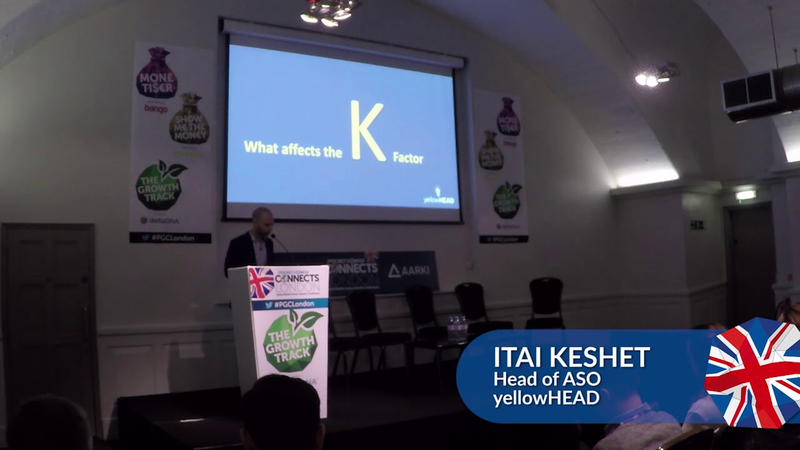
[Music] so I'm very excited too my name is Dee Takeshi I will be talking about the combination of organic and paid myself on the head of the ASO department at Yellowhead and again from our experience I want to talk about what potential can be found when combining organic and paid and why both should be part of your marketing strategy so a few words about yellow head yellow head is an online performance-based marketing marketing company specializing both in paid user acquisition but also in inbound organic
growth methods over the years we've gained our experience and knowledge through working with some of the biggest names in the industry and today I'd like to share with you some points from from that experience now because we're going to talk about the relationship between organic and paid I want to make sure we're all on the same page so in organic install is obviously one that was achieved without directly responding to an ad campaign we have two kinds of organic installs a proactive search and a browse on the App Store's now it's very important to remember that installs are disputed meaning some systems display them as paid while others look at them as organic and if you want to measure your organic incremental uplift you have to be consistent with the way you look at your data now a paid app aid install is obviously one that was achieved through a direct respond response to a mobile ad now with paid
obviously from search to social to different media buying options and in-app options you have a lot of really great ways to do very three very important things for your product number one get a larger volume of installs number two get it in a shorter period of time and number three target the quality audience that you're trying to get so you'll have enough in obsessions and the App Store's we'll look at the quality of users that you're bringing in as high quality users we say that there is a connection between organic and paid the k-factor or in other words the organic incremental uplift you can expect by combining the two now in the past when we when we did edg's we wanted to increase organic installs today what you want to do you're going to pay a price for each install but you want to make sure that with your organic strategy you're paying less on your paid
and overall your overall CPI so let's look at the k-factor is it something that really exists and can you actually predict it so simply put the K factor is the number of organic installs you're getting for each paid install now a few facts about it it's dependent on size the bigger the brand is the more popular it is it makes sense that the K factor the organic uplift would be bigger category it depends on categories so different categories different K factors so for example the transportation category it only makes sense that would have a bigger K factor because that is an app that feeds off a community and a service a service that is outside the app and without the community of people using that service it wouldn't exist so it has to be shared in viral and so on platform same app to different platforms Android and iOS different K factors and
we'll talk about all of these in a second the factor can definitely be influenced by ASO your ASO strategy your organic growth strategy and also by your product strategy by taking into consideration in-app sharing options when thinking of your product and the most important thing it's not predictable so the potential is there but you want to make sure that we've had clients over the years ask us what can we expect from a K factor in its it's really hard to say because of all the different dimensions and and and things that can influence it you really have to test it for your own product but you should test it because the potential is there so we claim that you're paid jump-starts organics let's look at how a paid campaign can result with organic installs so let's say you start a page you a campaign let's say a facebook video campaign right you have the budget
and all of that what happens pretty fast after that is an increase in installs and velocity of installs as well that signals to the app stores to start ranking you organically for keywords and within your category that leads to better visibility which leads to more organic installs but it doesn't stop there because that you a campaign also contributes to brand awareness and now that your brand is out there people are proactively searching for it proactively searching for it that means more organic installs but again it doesn't stop there because if your product is good then it will be shared with family and friends and again more organic installs so you see at least three places along the paid funnel where organic comes in and at each place it has to do with something different keyword rankings or organic rankings that has to do with your ASO strategy shared with family and friends that's your product strategy if it's
good it will be shared and brand awareness your brand that's a combination of your product and your marketing but organic also effects paid so let's look at that so if you have an a so strategy doing two main things number one you're doing creative a/b testing you can do it on different platforms the developer console or any other platform your your goal here is to increase conversion from from page from page view to install from impression to install you want to increase conversion what you're also doing is doing a keyword strategy the idea with your keyword strategy is to get better organic rankings so if you better organic cranky rankings where you're getting is you will be favored by the paved platforms and you will pay a lower CPI if you're getting if you're getting better conversion conversion
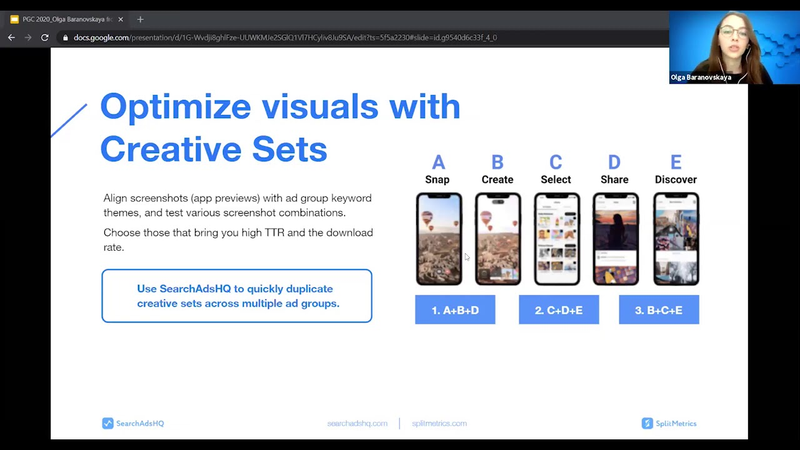
rate then you will ultimately get better conversion rate for your paid as well and that also leads to lower CPI's so this is how organic effect it's paid but again it doesn't stop there because you're a be testing strategy also highlights your pain opportunities to later use them within your paid advertising and your keyword strategy increases your app page quality a score if you're doing Apple searches for example that used to be the case also on Google before you AC so let's look at an example how a continuous graphics funnel looks like so again you're doing creative a be testing as part of your organic strategy every once in a while you'll have a winning theme and that winning theme will be applied on the store from our experience if you start if you use that theme on a Facebook campaign a video campaign optimized for a purchase event you'll see a 20%
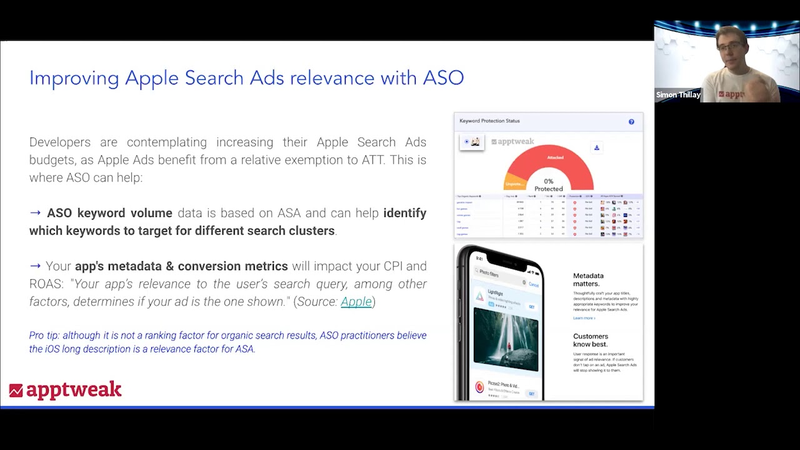
decrease in your cost per paying user on average of course and a 50% increase in your ROI d-7 now you don't need to say I'm not saying these are the numbers that you'll be seeing but you definitely we can definitely see a trend here and you should definitely test this and if you have something that's organically proven itself use it in your paid ad campaigns and it should definitely you should definitely see results so we spoke about your creative a/b testing but let's look at your keyword strategy so let's say you're doing Apple search ads and you're targeting keywords as part of that you want to make sure that the Quality Score on your page if it's not you do on-page modifications and again simply put you need your paid and your App Store page you're organics to be synced if it's information that you're targeting not targeting on you pay have to be again on your organic or on
your app store page but also they have to be always synched and you always change it if you're targeting something else you go back and you modify your organics but this information should not be just kept in one market because Apple search ads for example is now available in all these different markets not only english-speaking markets and what you could do and should do is localize and try to target and and get all that information not just from the US or english-speaking markets in all these different markets so let's look we've briefly talked about what effects the k-factor let's dive into that again so sighs it only makes sense that the more popular the brand is or the app is the greater the impact the greater the organic incremental uplift obviously a consumer was more likely to choose or
search for coca-cola than anything any other soda or tinder than a generic dating app or obviously uber than any other car services so if these or our brands decide to do a paid campaign the organic incremental uplift they'll see the number of organic installs for each paid would be much higher than a smaller band or an unknown brand and that actually makes sense but let's look at the category so an article by tune looked at the k-factor across categories so we see a few interesting things here number one it's different it's different across categories and again that makes sense number two the the highest K factor is in the transportation category for each paid install on average app a transportation app gets 17 organic installs and again that makes sense because these types of apps need to be
shared need to have a community around them need to be viral if they're not they simply will not exist and if you look at apps from tools and strategy and so on they simply don't need that same viral nests and and so it makes sense that their K factor would be lower another interesting thing is also within games you can see different K factors within type of games if you're in a certain category that this will be your K factor you can always test and think of in-app sharing options you can always increase it by that but this is some sort of a benchmark to understand that there is a difference what about the platform so we work with a lot of social casino apps so we looked at 15 social casino apps for six months worth of installs with pretty much a similar volume of installs and a similar budget going into paid and we found that there's about 43% difference between the
K factors now it doesn't matter which one is higher for this because the idea here is that there is a difference and it mainly comes down to the types of users using the different platforms now again the numbers don't really matter here what I'm trying to say is that you need to take into consideration that the platforms are different so you need to make sure you have a proper strategy for each platform and not just for the product as a whole what about a negative K factor can a K factor be negative even if you increase your paid budget sometimes you can see a dip in organic installs and why does that happen the main idea is you're probably bringing users with low user engagement engagement is one of the key factors for the app stores to organically rank you for category and keywords and what that
signals to the stores is that your quality that the the quality of your traffic is low if it's slow you will get a decrease in your organic rankings and your visibility will be hurt your organic ranking installs will go down also remember that simply shutting down a low-performing campaign can get you back some of those organic installs now it's super important to always track and understand what you're doing in terms of paid and organic so you can shut it down if results are not good the three factors for the for success in this the way we see it are followed are the following ones so number one what we do at Yellowhead we try to work in the form of squads so you have a is so someone
from organics working with someone from paid from PPC working together for the main reason of knowledge sharing if you see from one hand from the organic if you have a really good a/b test that was working you want to obviously try to use it on your paid ad but from the paid side these are backed up by systems with a lot of information in them CPI's and LTVs and otherwise which the organic site doesn't have so you can use that information to see the types of users you're bringing in and really share that with the organic side and see if you're on the right track for that same reason exactly we want to make sure that our creative team if possible is working both on your organic and paid again for knowledge sharing reasons and you would be surprised you would obviously say that if there's an good performing a/b test you'll use it
in your paid but if that if it's not the same team working on its owns you miss out on those opportunities because that knowledge is not being shared on a practical basis and then the last thing is your bi team again because organics doesn't have that ecosystem behind it with all the different information we have to constantly try to build something or try to visualize or display the data in a way that we can drive actionable next steps and actionable intelligence from it this brings us to the tool the way we use the information so with our clients we ask for access for the developer consoles but we don't simply use the information there we use some of the reports but we try to take out the information via live API connections and display it or visualize it in a way where again we can create actionable next steps for example show
paid and organic together show them for a longer period I can see trends or you can see seasonality but again it doesn't stop there for that same reason of adding more information and more data to your decision making process we're working on a creative tagging tool that won't just tell you which a in an a/b test which for example video performed better will also know why it performed better meaning was it the orientation of the video was it the length of it the sound something that happened after 20 seconds a certain character all those things can be broken down in tact and you can then later on understand if if there's a winning video why it won and use that information to when you're creating your next videos and then the last thing which is obviously the most important thing is your product so if
your marketing strategy is perfect and your product strategy is not perfect you'll not get the results you're trying to get and by a perfect marketing strategy I'm not be the next fortnight or snapchat or tender of course not that's impossible to forecast as as look at your product and make sure it's getting good star ratings no bad reviews no crashes no bugs make sure that you took into consideration in-app sharing options when you created your product if you think of all of these ahead of time and combine organic and paid you should see that uplift that we're talking about here that's all I have for you today so thank you very much [Applause]
[Music] you
Summary
The integration of organic and paid user acquisition strategies is essential for maximizing app discoverability and growth. Rather than operating as separate silos, these two channels function as a symbiotic ecosystem where paid campaigns act as a catalyst for organic visibility. By leveraging paid advertising to increase install velocity, developers signal to app stores that their product is gaining traction, which improves keyword rankings and overall organic search performance. Conversely, a robust organic strategy—focused on App Store Optimization (ASO) and creative testing—lowers the cost per install (CPI) for paid campaigns by improving conversion rates and informing ad creative with proven, high-performing assets.
The effectiveness of this synergy is measured by the K-factor, which represents the number of organic installs generated per paid install. This metric is highly variable, influenced by brand size, app category, and platform. For instance, transportation apps often exhibit significantly higher K-factors due to their inherent reliance on community and viral sharing. However, the K-factor is not inherently predictable and can be negatively impacted if paid traffic quality is low, as poor user engagement signals to app stores that an app is less relevant, ultimately damaging organic rankings.
To successfully execute this dual-track approach, organizations should adopt a collaborative structure where ASO and paid media teams share data, creative insights, and performance metrics. Utilizing Business Intelligence (BI) tools to visualize data through live API connections allows for more informed decision-making, such as identifying winning creative themes or optimizing keyword strategies across global markets. Ultimately, the success of these marketing efforts remains tethered to product quality; high star ratings, stability, and built-in sharing features are prerequisites that ensure marketing investments translate into sustainable, long-term user growth.

















Comments