1 free read left. Create a free account for unlimited reading + AI research.
Create free account
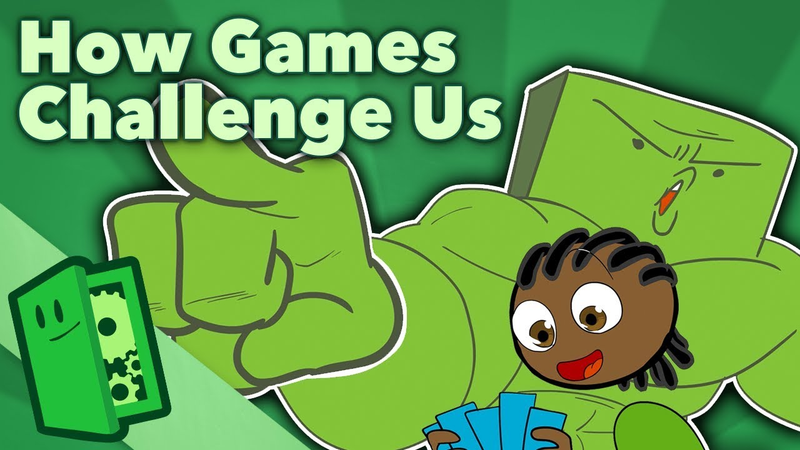
How Games Challenge Us - Empathy and Intuition in Puzzle Design - Extra Credits
Key insights
6 takeaways- 01Designers can expand the industry's toolset by incorporating empathy and intuition as core gameplay mechanics rather than relying solely on logic and reflexes.
- 02Traditional game design is limited by a binary framework that focuses exclusively on logical cognitive puzzles and reflex-based physical dexterity.
- 03Empathy-based challenges should prioritize atmospheric, low-fidelity interactions that mirror real-world social cues instead of reducing emotional nuance to simple, definitive logical puzzles.
- 04Effective empathetic design requires players to interpret subtle, non-explicit cues like body language and behavioral shifts to understand character states.
- 05Intuition-based design allows players to make decisions based on feeling and implication rather than pure deduction, as demonstrated by the mechanics in Cultist Simulator.
- 06The future of game development relies on integrating diverse human faculties to create more complex, human-centric experiences that move beyond the standard reflex-logic paradigm.
Ask AI about this video
Transcript
Almost every game you ever play will present you with only two types of challenges, logical challenges or reflex challenges. What if there were more? This episode of Extra Credits is brought to you by Extra Sci-Fi. You heard me right. A little while ago we were lucky enough to have Oculus Rift sponsor two special episodes of Extra Sci-Fi on the history of virtual reality. So please check them out after this episode at the link below. Games are a series of micro tests. Every pit you jump or puzzle you overcome is a tiny test of how well you can use the systems and mechanics of the game. Almost universally as designers, we create tests that are comprised of two elements, reflex challenges and logical challenges. Logical challenges ask, can you figure out what to do here? And a reflex challenges ask, are you physically adroit enough to do what you need to do here?
Most of the in-game tests we create require some combination of the two elements. Defeating an enemy in a shooter may require realizing you should flank them, the logical part of the test, and then actually being able to line up your gun sights and fire before they scramble behind some other piece of cover, the reflex part of the test. In a well-designed game, the tests in it cater to what the player wants to experience, what captures their attention and feels satisfying to overcome. So in a shooter, a designer may aim to create a test that's 80% reflex and 20% logic, while in a turn-based tactics game, they're probably going to want to build out tests that are 99% logic focused. A designer for a DDR or Guitar Hero on the other hand, knows their players are probably looking for things that are 99% reflex focused. After all, knowing what to do and not being able to push the buttons fast enough in a tactics game would be as frustrating as having feet of lightning but not being able to puzzle out what a DDR level was actually
asking you to do. And this two-axis system is useful. It gives us a tool for rooting out problems in our overall design. Half of the time when a system mechanic or even level feels off, it's because the balance between reflex requirement and logic requirement just isn't right for the game. And good designers know when they can play against type and create differences of kind by putting in a logic puzzle in an action-heavy game or some fancy stick work in an otherwise logic-focused title. But has thinking in this way for so long become restrictive? Are there whole categories of challenges we're not presenting the player by limiting our tests to logical and reflex-based ones? Probably. Now, the rest of this episode may seem a little weird to some of you because much of it runs counter to many of the ways we're currently thinking about games. Heck, much of it runs counter to one of the most deeply rooted ideas of the modern education system and thus modern culture. But we're going to push against
the idea that the only things we can test are reflexes and logical capacity. Imagine an in-game challenge built around an empathetic test. Can you tell that someone is hurting, is in a bad situation, or needs your help without them explicitly saying so? This is something that we do in real life all the time through a series of subconscious clues. The way a person looks, their body language, their word choice can all tell you if they're in a rough place without them ever having to spell it out. Many of you have probably even had that strange experience where you're chatting with someone over IM and you suddenly feel like you should ask them if they're okay, if everything's all right. How did you know? You probably couldn't even verbalize it. Maybe their responses are shorter than normal or maybe it's taking them a little longer than average to respond. It can be that subtle. That's how wired we are for this sort of thing as human beings. Now, many of you are probably
going to point out how horribly ham-handed games have tended to be when they've wandered into this territory, and you're absolutely right. But, that's because many of the games that have tried to create empathetic challenges have just reduced them to logical challenges, to a group of clues that if you spot them, pretty definitively can tell you something bad is going on. In part, this is because as designers, we're not used to this sort of design and are afraid of our players missing things or getting it wrong. So, we reduce them to things we know our players will understand. And partially, this is due to the fact our games are nowhere near the level of fidelity we'd need to truly convey all of the clues that we pick up on in real life, and they'll probably never be. But luckily, we don't need all of them. Things like the IM conversation I just mentioned are totally craftable in a game. It's only when we assume we need full fidelity to deliver on this sort of empathetic challenge that we stumble. But empathy isn't the only thing other than reflexes
and logic we can design challenges around. How about an intuitive challenge? Can you form a gestalt from a group of non-logical references to take a guess at what the consequences of an action might be? Because that's a mechanic right there. But don't worry if that sentence made no sense to you. Try Cultist Simulator. It's a game about taking vague implications and Lovecraftian dream-like passages and making decisions based on what you feel like they might mean. Now, that may seem loose and nebulous, not like something you could actually play with, and not something you could make interesting decisions with, but once you get in there and mess around with it a bit, you'll see the designers are just utilizing one of humanity's other decision-making faculties besides pure logic for the challenge. Interestingly though, just as we often combined reflex and logic challenges in games, this game also shows us that we can combine intuitive and logical challenges as well.
But empathy and intuition are just a few of the possibilities for other vectors to craft challenges for our players. The next few decades of game design will be about expanding our tool belt and finding all of the interesting things we can do if we don't make every encounter, puzzle, or test about reflexes or logic. So, what do you think? What other interesting faculties can we use to make challenges in games and how would you use them? I'll be lurking in the comments below and can't wait to see what others you come up with. Until next time everyone. Can you not get enough Extra Credits videos? I do know that feeling. Then check out a special two-part Extra Sci-Fi series on the history of virtual reality sponsored by Oculus Rift. Personally, I love the topic of VR and I was psyched to get to learn all about where it came from. So, click the link and be sure to tell, well, us that we sent you. Yeah, that sounds right.
Summary
Game design traditionally relies on a binary framework of challenges: logical puzzles that test cognitive problem-solving and reflex-based tests that measure physical dexterity. While this two-axis system is effective for balancing gameplay in genres ranging from shooters to turn-based tactics, it is inherently restrictive. By limiting design to these two vectors, developers overlook the potential to engage players through alternative human faculties, specifically empathy and intuition.
Empathy-based challenges require players to interpret subtle, non-explicit cues—such as body language, tone, or behavioral shifts—to understand a character’s emotional state. Current attempts to implement this often fail by reducing emotional nuance to simple logical puzzles, where players merely collect clues to reach a definitive conclusion. However, designers can create meaningful empathetic gameplay by focusing on atmospheric, low-fidelity interactions that mirror real-world social intuition, rather than striving for perfect graphical realism.
Intuition-based design offers another path, allowing players to form a gestalt from vague, dream-like, or non-logical information to predict consequences. Games like Cultist Simulator demonstrate that decision-making can be driven by feeling and implication rather than pure deduction. By moving beyond the standard reflex-logic paradigm, the industry can expand its design toolset to create more complex, human-centric experiences. The future of game development lies in identifying and integrating these additional cognitive and emotional faculties to craft deeper, more varied player challenges.





















Comments