1 free read left. Create a free account for unlimited reading + AI research.
Create free account
How a Master Investor Breaks the Rules & Gamifies Life
Key insights
6 takeaways- 01Integrating game design principles, such as randomization for task prioritization and competitive frameworks, can enhance professional decision-making and mitigate decision fatigue.
- 02The gaming industry has shifted from a disruptive, rule-breaking sector to a mature, institutionalized landscape, requiring investors to view technological and design advancements as long-term progressions rather than isolated product releases.
- 03Investors must look beyond the 24-hour news cycle and market volatility to focus on the transformative impact of artificial intelligence and the strategic integration of gaming into broader digital platforms.
- 04Long-term investment success is best achieved by holding transformative, high-quality companies for decades, as the potential for unlimited gains from a single mega-winner outweighs the capped risk of individual asset losses.
- 05Companies that leverage subscription-based ecosystems and maintain a customer-centric focus, such as Amazon, are best positioned to maintain market dominance.
- 06Investors should prioritize companies that practice conscious capitalism—balancing ethical stakeholder management, employee well-being, and customer satisfaction—as these firms consistently outperform those focused solely on short-term transactional gains.
Ask AI about this video
Transcript
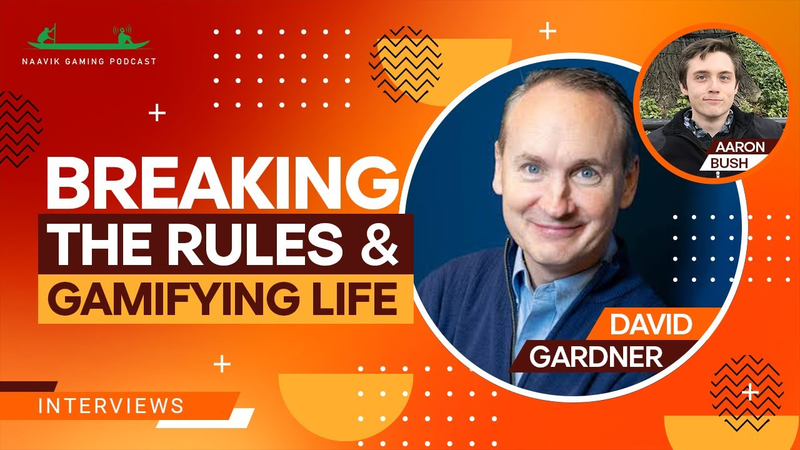
foreign [Music] gaming podcast where it is our mission to explore the business and future of video games we bring together the industry's brightest Builders investors and thinkers to keep a full sun current events dissect emerging Trends and games share Lessons Learned and have a great time this podcast is also part of novik's growing ecosystem which ranges from free and premium research to Consulting and advisory services for more information visit www.navic.com now let's jump into the episode hi everyone I'm your host Aaron Bush and today's episode is incredibly special to me my guest is David Gardner David is co-founder co-chairman and chief rule breaker at the Motley Fool a companies whose mission is to make the world smarter happier and richer through expert investment advice he's also
chairman of the Motley Fool foundation and a board member at conscious capitalism however not only is David a successful founder but over his 27 years of professional investing he has cemented himself as one of the top investors of our time as an example in the motley Fool's Flagship service stock advisor which David started with his brother Tom in 2002 the average recommendation is up 493 percent at the time of recording and beating the market by 365 percent David is also a huge gamer who probably plays more games than you and who has also created several ways to infuse fun and games into his investing business now all of that is a great reason to interview David but the reason this episode is so special to me is because for many years David has been a mentor friend and an inspiration in my life I had the privilege of working with David for over a decade as a contributor and then investor at the Motley Fool and
his ever encouraging Spirit played a real role in motivating me to stay hungry and you guessed it stay foolish so it's an absolute pleasure to host him here today on the novik gaming podcast David welcome what a wonderful welcome Erin thank you very much and you know you've added innumerable value to my podcasts uh rule breaker investing you've made so many appearances over the years you are missed it's a reminder I need to have you back people will enjoy having you back but maybe I can add a little value to yours it will be just a candle held to the value you've added to ours so thank you so much for the invitation of course and this this hour is going to be really fun and it's exciting for me to switch chairs around and be able to to host you um in in this episode um and we're going to talk about so many things today we're gonna talk about investing conscious capitalism maybe democratization but before we dive into all of that let's talk about games so so
David I totally and respectfully creeped on your board game geek profile and I counted that you have played over 50 different board games so far this year and it's just June and I am of course jealous that you have been able to to pull that off but I have to ask what is your favorite board game so far of 2023 but more importantly why is gaming so important to your everyday life uh answer in reverse order last in first out Aaron I gaming is really important to my day-to-day life because I think it combines my favorite things and therefore I want it as part of my day-to-day it's fun challenging cerebral and social and as I think about those things I want to be getting smarter I want to be having a lot of fun I wanted to be competitive but I'm totally fine with
losing those 50 plus games that you cited those are 50 different games but some of them I played probably five or more times I'm often losing those people should not start thinking that I'm some kind of a great gamer most of the time it feels like I'm on the losing end it's maybe because I've made friends smarter than I am but what I do bring is a love of what's the new new thing and uh for me at least in the last year or so the best new game this is a deep strategy game uh is Arc Nova and Arc Nova technically it's a 2022 release maybe late 2021 but just in terms of the quality of that game you're creating your own zoo and you're competing with others who are creating zoos you're trying to attract animals to your zoo there's a spatial kind of build out your zoo with hexagons and you're kind of you know building out your zoo at the same time you're drafting cards and you're taking um actions uh that shift in terms of what you can do and how valuable it
would be so for example if you go out and get some animals now you can't get as many as if you wait one or two turns where you'll get more so you're constantly weighing um lots of different things in Arc Nova it takes an hour to learn about three hours to play uh it probably shouldn't be played with four players it's excellent with two or three it also plays solo there are many games I could talk about this is not technically a board games podcast though so we can leave it there for now but Aaron what I want to say about that game is it's totally the opposite of other wonderful recent releases um I'm sure a lot of people know code names for example which has a great online site codenames.game or even a game as simple as just one which takes about one minute to learn and lots of hours to enjoy with friends and family I love a wide variety of games so that you can play things with grandparents over holidays who don't even know the rules but they can and learn and enjoy that and go really deep with friends who
might love Arc Nova again many other great games Aaron we're not even talking about video games I know we're going to but I've actually spent more video game time this week Diablo 4's release um not too long ago June early June uh I mean I've been up to 4 30 two different nights in the last four nights playing Diablo 4. so I am constantly gaming across all different types of games and I couldn't not for the reasons cited I love that so much for you and I will absolutely drop a link to Arc Nova into show notes for for those who are curious and checking it out it is it is on my my wish list but I got all of these games if you're watching on video you can see in the background plus many more around the corner that I don't even get nearly enough time to spend on the games that I have um but one day at a time ABG Aaron always be gaming you and I played another great strategy game together terraforming Mars one of the better releases of the last decade um somewhat analogous and so much to Arc
Nova but anyway what a great game that is the last time we played my recollection is our mutual friend Emily Flippin beat both of us but that's a separate topic for another day we played twice and she beat us both times and I have not forgotten but let's switch gears a bit you are an investor a founder and a gamer but what's super cool is that you have uniquely found ways to blend all three of those together so for example in two thousand 5 The Motley Fool published a board game Buy Low sell High which by the way is in stock on Amazon and rocks of 4.8 Stars right now and in 2019 uh you published a mobile game investor Island which still sits at a solid 4.6 stars on on the App Store and I was fortunate to have played the smallest of roles and part of that but I'm curious what have you learned from creating games inside of a traditionally non-gaming company
well I I think that in in the case of I'll just speak briefly to both of them the first one is a design by Reiner konitzia who is one of the great living game designers and has become a friend of ours over the years uh the german-born and now munich-based German game designer Reiner konitzia has published any number like hundreds of games and and that's just the number of games he's created when you start saying well in these 30 countries it's known by 12 different names and has slightly different rule sets you can see that there's unbelievable uh prolific nature to Reiner's success and so we took a game that we liked that was stock market-ish it was actually called Palmyra I think as a German board game and as we befriended him he's like well why wouldn't we bring this to the U.S and we're like great well we'll turn into an actual stock market game and we'll call it Buy Low sell high and it is it is a light um stinky but not time consuming game that
will help people I think sort of understand how the stock market Works in shorter term Dynamics where it is smart to buy low and sell High when the hype cycle starts making it look like maybe we shouldn't be buying right now Savvy players would not be buying they'd be selling as they play the game Buy Low sell high but you and I both know that I try to think outside of hype Cycles I try to actually be invested for the long term which we can't really do in a board game that would be boring so that's Buy Low sell high and then investor Island uh has been our effort to create a game that might popularize the stock market more with young to adult players but through a totally different um milia so rather than try to turn it into a stock picking game we decided to turn it into a traditional strategy game but what drives uh the resources available as you play the game is the movement of actual stock so it's a crazy mashup of taking Real World Companies
and how their stocks did and make that instead of rolling dice like in Risk we actually generate the randomness and resources through stock market movements for a risk like game so that's investor Island and um your your question about you know what I've learned from those things is that um neither one has been a big Commercial Success um Reiner hasn't needed a commercial success from a Motley Fool version of a game of his to be very commercially successful and I'm happy to say my company uh the Motley Fool did not need investor Island to hit it big to to make it um an important part of of our growth and our profits at the fool so I think both of them are kind of a lark in a way passion projects for me just things that I really love the Motley Fool is not a games-based company but it was fun to create those and maybe there will be more in future Aaron you and I know there's lots of different gamification
going on and really the games that I play more frequently than any others aren't the board games like Arc Nova aren't the video games like Diablo it's literally gamifying actions that I take from one day to the next as I go through life and that probably is very idiosyncratic I'm not recommending it to others but the games I'm playing most of the time are games of my own design that helped me make decisions and do stuff well let's talk a bit more about that because before we we hopped on you mentioned that gamifying life is one of your your core principles and I'm sure many people listening to this podcast who spend most of their days thinking about games and some shape or form are intrigued by that notion um and maybe would be interested in thinking about what that means for them how would you recommend someone think about gamifying their own life so first of all I would say make sure
that it's appropriate um don't roll the dice on a life or death matter but maybe do roll the dice on very trivial matters and that's how it started for me Aaron it was in college I was at University of North Carolina Chapel Hill it was like junior year we're sitting around friends in a dorm room we're like hey let's uh let's get some food and the conversation would take like 24 minutes somebody would say well what about Chinese and nobody would necessarily want to assert their own love or hate it's kind of like and then after like five minutes say well I don't really like Chinese I'm like okay well what about I don't know tacos and that kind of thing recurred enough that I'm like this is ridiculous so here's the thing I have a six-sided die here one Chinese two tacos three four five six are we committed yes boom two tacos and at that early stage in life I realized you actually can accelerate a lot of the rather menial trivial decisions that
we're constantly having to make in life by randomizing and more recently throughout the course of my adult years ever since College I've I've in particular two different ways augmented or done more of that the number one way that I'm constantly doing every single day is I have my to-do list my task list I add up all the emails I need to reply to all the slack badges I need to get down to zero all of my to Do's off my actual task list even the texts that I'm responding to and I aggregate that into a single number we'll call it 63. and then I'm like okay here we go 34. okay that's uh emails oh it's that email to Aaron I'm gonna drop that email to Aaron Bush right now boom and so I spend zero time debating or procrastinating or avoiding because randomly number seven we'll say on that list is like the thing I want to do least in life and old me would blow that
off till Kingdom Come I would probably never get to it but knew me if I roll a seven I'm doing that thing right now I have like this sacred bond that I've made with randomizing my tasks and daily uh actions there are weaknesses to this for example some things are actually more priority uh oriented than others and sometimes I'm not hitting priority stuff because I didn't roll that number but I believe that I have added that such a degree of fun and unpredictability to my day-to-day life that this is very addictive and I've done it for decades now so and it's worked for me I've been very productive as a person and I'm often getting the things that I wouldn't have wanted to get to that I would have blown off so that's really big for me the last one I'll mention is I also randomized Ben Franklin was a big fan of thinking of Virtues and saying well Tuesday will be Temperance neither drink nor eat to excess Franklin would say and I've always embraced that kind of mentality
so I have a list of daily virtues that I also randomize and I do this for some friends and family so I'll drop a note as I randomly say oh today it's going to be blank we'll just say it's actually for me today it's it's awe a w e which is one of the positive emotions that Barbara Frederickson of the University of North Carolina Chapel Hill who's kind of the world's leading Authority on positivity as she's identified awe feeling awe fear and wonder at some things the world around us as one of the 10 positive emotions so I'm giving you straight from my playbook here what I sent out to some friends and family earlier today so these are examples by no means are they only examples Aaron and it's really geeky and thanks for letting me share but a big part of what I've done with stock picking and the work you and I did together is not randomizing which stock I'm going to pick but creating tournament brackets battling stocks in my head together randomly paired against each other in
order to see which one ends up winning the March Madness for me picking the stock that month so constantly gamifying things around me is my orientation and one thing I I love about the Motley Fool is that in many ways at least your workout The Motley Fool is a reflection of who you are as a person in trying to gamify your own life because so much of what you've worked on at the Motley Fool has been gamifying investing so for example um Motley Fool Supernova the greatest Motley Fool service of all time uh thank you in my opinion and which you made a lot of great contributions Aaron it was a lot of fun and it for those who don't know it was essentially um a service with different investment portfolios for different people to follow for example if you're in the middle of your career making making money there's a portfolio for you to keep regularly investing or maybe you're in retirement and you just have a lump sum and there is another portfolio to help you best invest there but what was
so fun about Supernova was that we injected stock market games into the service you also started Motley Fool caps which was an open browser based stock market game for anyone um to to compete and openly learn from each other um and and test their their stock market skills so all the way to even um the market cap game show on your podcast and I of course have been in many meetings with you that have been gamified and randomized um and and there absolutely is an element of when you do that it creates more fun more fun for you as a leader and and building something like that more fun for me as a contributor an employee and being able to be part of that and then of course more fun for users and customers um as well and so my my question here is that I feel like maybe some of the benefits of embedding fun into otherwise
standard products and services are fairly fairly obvious people want to have fun but how do you think more companies can embed fun more often well I think it's a great question and I don't think there's any easy one-size-fits-all answer the reason the question is great is because you're simply inviting the possibility that more companies might or that everyone listening to us right now might think about well what if I did gamify this or that thing either personally or professionally I think there is a heck of a lot of gamification going on these days I mean I would say even something like my hydrate spark Pro water bottle which is a smart water bottle is as I take a swig it's like oh kaching on my app on my phone 1.2 ounces great you're you're a little bit closer to your goal today of 77.9 ounces and and that goal changes each day based on the humidity and my activity level so I would describe that as gamification especially as you start to invite friends in and
then you're kind of who can finish their water goal their hydration goal first each day or start creating streaks so the act of creating races or creating streaks both different are things that are part of lots of different applications today many of which are not traditional games or we would say do not come from the gaming industry I think that hydrate spark Pro would describe itself as the foremost smart bottle uh smart hydration bottle but secondarily there's gaming going on they they have unlockable achievements there are a monthly competitions and so that's just for your water bottle so when I think about you know the possibilities of gaming up almost anything I think part of it is that that's the right question to ask in the first place sometimes the answer is no this is not appropriate for whatever reason but when it's yes or a new yes then I think it gets you to a new possibility of growth and as you said also fun and enjoyment
and a big part of any culture your workplace culture I would want to be part of is that it's fun we spend more time at our work most of us each day than with our families and that's just the math of being an adult therefore let's make sure that it's as fun as possible I love it well let's go ahead and shift gears and talk about investing David part of why I invited you onto the podcast today is because I don't see a ton of what what we would call rule breaker investing Tendencies and the investing world that surrounds the games industry for example most of the the largest companies in in the industry are increasingly risk averse and are often eager to maintain the status quo in some ways most investing done by companies through M A has failed and has been misguided in some ways many individual
investors remain short-sighted with much commentary always focused about what what's going to happen this quarter or what's going to happen this year what is this game gonna do for this company and even among Venture capitalists um some Venture capitalists there hasn't been enough respect given to Hype Cycles or even necessarily prioritizing Alpha beating the market um and coming from a company that focuses on um outperforming that focuses on doing good not just doing well um and that focuses on playing long-term games with long-term people uh it sort of has been bothering me as a newer entrance into this industry and that's not to say everyone or every company falls into that category that's certainly not true and I recognize there's no one solution to solve everything but as David as someone
who has trounced the market has helped millions of people millions of investors level up what advice would you give to investors in and around the games industry to help them refocus find their inner rule breaker maybe you can explain a little bit about what that means and help beat the market that was a heck of a question Aaron I mean there's a lot going on so I feel like I'll I'll give not a long answer because I feel like there's four more questions that we can discover ReDiscover together from that one question and this is a conversation so also I I do want to say that you are in the games industry you are um you are analyzing it you're thinking about it I'm not I'm just a gamer who's an investor and I some of my best stock picks are indeed video game companies but as you're saying um they're a lot of those are more mature companies today they're not really the upstarts or what I like to call the rule Breakers who show up like
David did and surprise Goliath and all of a sudden win that's really what I celebrate and what I've tried to do with a lot of my stock picking over time by the way the bad news is David sometimes in fact more often than not loses to Goliath but when David beats Goliath it's the stuff of biblical proportions and it is for investors It's usually the best returns you can get on the market so that's what when I say rule Breakers I'm thinking about the companies that come along look at how the world is set up generally by Goliath and say let's break those rules let's play it differently and let's go against the conventional wisdom when Netflix first showed up everybody thought it was so silly you were having to like mail your DVDs in instead of just going over to Blockbuster two blocks away and getting your next movie and it seemed Preposterous or Amazon when it first said we're Earth's biggest Bookseller people are like why you're tiny compared to Barnes and Noble like what are you doing so those are good examples of spectacular wins and it's because those
companies were breaking the rules so yeah I'm looking for that and to start this conversation I would say that the games industry you know I had a conversation with my son Gabe who who's designing his own indie game right now he was raised on games by dad you figure this out Aaron who really loves games and so Gabe is a talented uh game designer and uh software developer he got degree from Cal Berkeley and he said you know Dad I think the I think the games industry is hit driven and it's mature at this point kind of like Hollywood so I'm crediting Gabe with this Insight but it's reached a stage of maturity pretend it's movies not a lot of so like what's the new disruptive movie company that's coming along I mean we could say streaming or we might identify Macs or HBO is like an edgier um Creator creative type but for the most part there aren't forces coming in and directly Inside Out disrupting what
we think of when we think of streaming content it's just more of and they've got big budgets and they're very conservative they're generally risk-averse when you start dealing with these really big budgets games these days or a lot of people running the video game companies kind of like the movie industry they're more media Moguls and they don't necessarily look to break the rules they're making the rules in a lot of cases so I would say the video game industry Aaron has gotten to the point where it's more of a rule maker you and I kind of grew up in an age where this was a novel thought 15 years ago you know video games are actually becoming bigger than Hollywood that sounded like such a radical thing to say or a radical reason to buy Activision Blizzard 20 years ago was that Insight but now it's fairly commonplace I just saw that the Saudi Arabian maybe you saw this Aaron Savvy games they're sort of they're taking billions of Saudi money are now investing in the games industry because
they've gotten onto it too they're like we need to be a an important force in this important industry I feel like once the Saudis show up with big big bucks we're probably at a inflection point in terms of the size of something and the risk aversion associated with it so that's a little bit of my thought as to why it's hard to find rule Breakers as stocks today in the video gaming gaming industry yeah uh maybe one other piece of this that we can unpack a bit and I think that assessment is generally right um although there still are plenty of large there still are some large companies that are looking to to change the rules and do things differently give a quick example give a quick example just because I'm sure I agree with you and again you're following this more than I am Microsoft uh and what Xbox is trying to do with Game Pass and building ecosystem that is not as much Hardware first but is more play anywhere and changing the business model it is going through all sorts of regulatory hurdles
lots of questioning about whether it can succeed and I don't honestly don't know if it is the best model going for but there still are some out there and of course there are startups that are leveraging trying to leverage new technologies such as cloud gaming to create new types of experiences that we haven't seen before um so I I still think do you remember Google stadia do you remember Google stadia of course and we've talked to them this part cast many times about Okay Google stadia and why it didn't work and maybe some other ways in which cloud gaming can be reassessed uh both in terms of its impact but also where it could add value and how it can best serve um yeah people um so there there is still innovation in the industry definitely an industry that still is growing around the world but one one piece that I I wanted to hit on a bit here too is just the time frame that people think about and maybe we can connect this later into some some stock picks that you have made even in or around the games industry
um but there still is so much commentary around like uh this game performed this way what does it mean for this company and what does that mean for the stock um or um even a lot of Executives I think this has gotten a bit better but many executives are thinking about okay we gotta hit our earnings estimates or Wall Street is going to crush us and so we gotta push a game out maybe faster than we we would otherwise and then there are all sorts of Ripple effects to untangle um later and of course I don't think this is even necessarily unique to the games industry this is probably found in many Industries but so much focus on what things mean now and therefore what should I do about it now I feel like is overdone and I would maybe just love for you to talk about just what you've learned as an investor and following so many companies over the years that have gone through ups and downs and hits and misses and maybe how people who are thinking in terms of quarters or even a
year or two can maybe reframe their thinking for the better well I mean it's a it's a great question it's as you're indicating Aaron it's not just a a games industry question um the difference between the short term and the long-term mentality is evident in almost every industry I would say and understandably as humans we want results so if we're going to invest 250 million dollars into a game or a movie at that scale we kind of want that to to hit because at that kind of scale except for very very Mega cap companies that kind of scale that really matters like how that game or movie does or doesn't do does count for something um however there are two ways that that's faulty the first is that um unless you are rolling the dice with your one app and it all comes down to
this one um you can get over focused on the short-term results and so uh obviously one of the great I would say maybe the greatest blind spot and the greatest reason why as rule breaker investors and I include you Aaron you and I have beaten the market with our advice and our picture of yours is because we're simply not playing that game like David we've decided to take a different approach Goliath is all about the short term and short-term results and all of the CNBC reporting so much of the news cycle is a 24-hour cycle across all topics if you simply don't play by that cycle you the the competition is very thin and so playing the long game I believe is inherently uh superior but you have to have the resources in order to do that so that's one way that I think it's classically faulty is that we are all too enmeshed in the here and now but maybe another way that it's faulty is that I think for a lot of games and
movies um it should be not viewed as one-offs but as a progression one of the things that I love about the video game industry and I know you know this is that there are sequels but at least as a gamer I love video game sequels I'm not a big movie sequel guy um I I realize there are some um heist movies and some um uh what's the what's the classic Vin Diesel um space I've actually never seen any of the car Fast and Furious Fast and Furious thank you was it X this year what we're talking about there are some movie series that have been going a long time I've literally skipped all the Fast and Furious I'm not saying I'm smart they might be great movies but in general this is a generalization movie sequels get worse video game sequels get better and in part that's because uh the technology gets better and better for for video games if you saw Jensen Huang
I'm sure you did I'm sure you've talked about this Aaron Jensen Wong's um demonstration a few weeks ago of a live conversation with a non-player character in a video game which is spontaneous and uh so you see how the technology really does make video games consistently better over time also our understanding of game design like Arc Nova referenced earlier is such a much better game than the strategy games of a generation ago we just didn't have the Savvy we've been building like great cities Rome building on the bones and ruins of what went before and assuming we're we're relatively smart there's a progression toward better that I've observed a lot of people think this is pie in the sky or too optimistic but at least in my experience both looking at our own lives and over the last couple centuries things are a heck of a lot better today than they were before and in video games since I started with my first one pong in the 19 late 70s I know how much better video games have gotten
consistently so I think that understanding that there's a progression and you're building something bigger than that one release or that one quarter matters a lot quick example would be Grand Theft Auto 5 comes out as a video game but then all of a sudden becomes basically games as a service gas and 10 years later you know I think it was still the number three selling video game last year um and so of course Grand Theft Auto 6 which is expected for next year um it's no longer a one shot it's no longer a single quarters release for a lot of the best games it's about a longer term experience fortnite Etc not everybody gets this not everybody can do this it's very hard to do but I think you have to read things as a progression so you're connecting one title to its future in a way that short termers don't and of course and uh in an industry that now has more ongoing Virtual Worlds than ever too not even necessarily sequels
but just one game that can last a decade or two decades with with ongoing updates um even if you don't get it right a certain quarter you always got the next quarter to well set and improve so um so I think of course the industry has changed a lot but maybe what would be interesting is if we could ground this conversation of long-term thinking and seeing and seeing through the noise with a couple examples of related stock picks that you have made over the years and I have three here that I think that we can we can get through and let's start with Activision Blizzard which you recommended and August of 2002 at a cost basis of three dollars and eight cents for contacts that pick is currently outperforming by 1896 and for many years from 2009 to 2013 and I remember this because this is when I was starting to invest
um Activision stock shredded water it just hovered around let's call it the eleven dollar Mark for those four years without going up in any big way or down in any big way and for you know those in the industry who are so focused on performance this year or this quarter um even investors and insiders many of them probably just wrote off Activision sometime during those years it's like okay this isn't going anywhere let's let's refocus on a company that that is going that is going up and is growing um but then Activision went on a tear and has been an incredible performer since then I'm curious David what lessons can you share with us from your time investing in Activision especially during and kind of related to that era that can be imparted on this group well two things come to mind Aaron first of all um it was a it's a passion of mine I mean I think our best investments are
generally going to come from things that we really love or understand I also really love coffee and Starbucks has been an amazing stock to hold for three decades uh I I also love streaming content so Netflix has been a huge I love buying things on the internet not having to go to Stores um Aaron because I'm a generation older than you you young people may not remember we had we had maps not GPS and we had to take a map to figure out how to get to the store and buy stuff at the store so I mean there are so many examples of just great innovations that caught my fancy and I'm like let's buy the stock and uh it's okay to be wrong because we're going to be wrong kind of like that Venture Capital mentality you and I I share you're going to have a minority of your Investments that are going to be real winners but the good news is those winners will outweigh all of your losers and create astonishing profit on top of that and Activision Blizzard is a good example I think it's up like 23 times in value the markets may be up
maybe four times in value over the last 20 years something like that so that's that Alpha that difference between how much better it's done than the market so I think number one is just that made so much sense to me I loved the the company I'm a big blizzard fan again I played Diablo to the wee hours but every day I've played HearthStone for like the last six or seven years like I love the products I feel like I can follow the company the company's gotten a lot of negative press sometimes very deservedly so and I'm not just talking about the last few years it was also true 10 years before that the stock went sideways because it was substantially owned by vivandi the French media company uh which didn't really prioritize Activision Blizzard it wasn't necessarily allocated or prized in the way it deserved to be so Once vivandi Sold off its ownership of Interest that's where Activision really started to rock but if if answer number one Aaron is just that when we invest aligned with the things that we love in this world we're going to do better that explains Activision and anything else
you're going to throw at me in the next five minutes but the second thing I want to point out is simply holding and again I'm preaching to the choir because Aaron Bush knows this but maybe not every novik listener is an investor or realizes that the real way to win for sure big the bad news is not immediately but for sure and big is to buy great companies and hold them for long periods of time so Activision Blizzard is such a good example of this we as you mentioned I recommend in 2002 it's still an active position today so 21 years later yeah you bet over 21 years there's gonna be some down times and you bet you're going to go sideways as Activision did for those four or five years while the Market's going up Activision's not adding any value now we'd held it for six or seven years at that point and we knew it right so we've gotten to know it by holding it but we were willing to keep holding it and that was also True by the way of Tesla Tesla for five years
from like 2014 to 19 went sideways as the market rocketed uh Tesla is now perceived to be a gigantic success and a huge successful company but again outside the gaming industry although Tesla has games on the screen this is true so what is a game company what's not but I mean so this is true of many companies but you're only going to discover this if you hold them for long periods of time people are jumping in jumping out we'll never have this experience and so that patience is the way that you get up the mountain you have to go sideways for a while in order to have huge wins and sometimes it's not even sideways and perhaps even a better example than Activision is NVIDIA which you recommended in 2005 at a cost basis of 1.63 and that pick Is Now outperforming by wait for it 24 582 percent and of course the headlines recently are about Nvidia becoming a trillion dollar company
NVIDIA is not a gaming company but gaming is the path in which Nvidia found its initial breakout scale and right now everyone is rightfully celebrating the success of the company but what people forget is that nvidia's stock has spent approximately half of its time since that 2005 recommendation trading at 50 or lower its previous all-time highs great and of course there were good reasons for it to be down uh so much at various points along the history maybe most recently about crypto related ups and downs but also gaming related inventory concerns in the past as well um and so I'd love David to maybe just hear from you how did you not sell and during those ups and downs and maintained the ultra Long View um when many other people gave up or
moved on I I guess it's because I've seen it work more often than not and again this is a view that is this very rarefied air that we're that we're flying around in if we're having this conversation about multi-decade Holdings Wall Street does not do this the vast majority coverage of the markets doesn't talk about this and therefore people don't have numbers to share or stories that they can relate to but at least for my whole career I've been trying to drive those numbers and tell the stories so people can see beyond the next bend around the corner not just think about what's on the next block but what's in the next city and so uh By the way when it works it's just absolutely beautiful and I also want to make sure you know this already Aaron but I want to make sure I get things wrong a lot probably more than most people so but the the key is and it's mathematical but some people have a hard time wrapping their psychology around this map the key is that the worst you can ever do with an investment is to lose a hundred percent
the best you can do with an investor well you just quoted Nvidia it's up more than 200 to 20 000 percent and so I'm gonna take those risks all day long if I were to have picked 11 stocks and 10 of them literally lost everything and I've never done that I don't think I've ever I did have Enron in my son's portfolio so I think we lost it all with one stock pick over the years it's very unlikely that we're going to lose everything but just play that game 10 stocks down 100 each that's a minus one thousand percent but the other one was up 200 times value that's a plus 20 000 now that's one of the great stocks of this era so that's not necessarily the fairest example of what winning looks like winning is not as dramatic as that in many cases although I will say I've punched above my weight class in terms of picking the mega mega winners but the only way that we can do it is by holding them so the way I could manage to keep holding it Aaron is because I know that works and it doesn't work every time but when it doesn't work you
can't lose that much when it does work you make so much that you can be a lazy bum and not worry too much about all your losers you loser and I'm saying that to me not you and because I mean yes yes that's a move in the headlines here in 2023 you probably know this a lot of the world will have forgotten but I mean 2022 Nvidia basically went from 300 to 100. it lost two-thirds of its value last year and we're talking about a stock that's now up more than 200 times for us since 2005. so it's not just about the early days and how hard it is to hold it could be true in years 18 and 19 of your time with a stock the whole stock market had a horrible 2022 as I talked about a lot of my podcast I lost half what I have like over the course of 2022 from the high of 2021 to the lows of 2022 I got cut in half at the age of
57 with all that I have the reason I can keep holding is because that's happened before multiple times and by the way it's going to happen again in future bad news but good news it doesn't matter if you're playing the game the right way I love that answer I got one more example to throw at you we can make this one a bit quicker but I can't help myself from also throwing out amazon.com which you recommended in September of 1997 um at an adjusted cost basis of now 16 cents uh which that means that that pick is outperforming but you thought Nvidia was impressive this one is outperforming by 76 716 Amazon is of course known for its day one mentality team driven Innovation and Relentless Chase of optionality and so just quickly David uh and this isn't even necessarily about investing lessons but Amazon has been eyeing and starting
to Target the games industry a bit more in recent years how seriously should the games industry take Amazon's entry into this Market do you think well it's so multi-featured because I mean you've got they're selling games like most of the video games I bought over the last 30 years I've just bought on Amazon initially I was buying on GameStop I would literally buy all my games in person at GameStop when Gamestop was a monster back then and I loved GameStop we had run right near full HQ I pick up I'm always a day one buyer for most AAA games and I don't care about the genre I buy in volume when it comes to video games and so I mean I was so grateful when all of a sudden I was like wait I don't have to go to GameStop I could just buy on Amazon now I could also buy at gamestop.com which I did for a while but increasingly Amazon was just better it was either quicker day one delivery cheaper free shipping uh more comprehensive I couldn't trade my games
in via Amazon where I could do that at GameStop back in the day but Amazon as a game retailer is a very successful large company but when we start talking about game design game development game launching I haven't played their MMO they're I don't know have you played the uh there's a role-playing game I think that Amazon has backed or been behind have you talked about this new world yeah I haven't played new world I I try to play lots of different stuff but there's so much stuff out there now even just books or streaming shows I'm behind on everything I will die before I get through my library of streaming Q or my actual book ebook library to say nothing of my board games many of which I have over 600 now about a third of which are still in shrink wrap and video games where I can't even count how many but the point is this is a great problem to have by the way a society that is
creating so much content so much content across every medium and we haven't even had AI start driving some of this in force yet but I mean it's creating a situation for us the players that is a little bit overwhelming and as Kevin Kelly has talked a lot about co-founder of wired over the years filtering becomes an increasingly necessary and valuable thing to be able to do anyway I think that Amazon should be taken seriously in every context I'm quite sure nobody's asleep at the switch on this in the gaming industry because Amazon is so universally admired and in some cases feared today and for good reason because it really has become Earth's most customer-centric company which was the vision that Jeff Bezos put out there in his first investor letter back in the 1990s about what he was trying to build well thank you for sharing your your wisdom on on all these investing hey thank you for going back and calculating the cost bases Aaron I really appreciate that fun yeah amazing it is amazing and that you know there are a lot of a lot of losers that that
we're not talking about but there are also some other winners like Tesla and you know other companies Netflix that have been Mega winners as well so I want people to understand that it doesn't take a portfolio full of these companies just holding a great company that you love that actually proves it's great let me give it a quick example of a stock I've never owned Microsoft I've never owned Microsoft I have great admiration for it and wow Sacha nadala done such a great job there so and I love my Xbox in addition to my PlayStation 5 and my switch and the previous generations of all of those devices which are gathering dust in my basement but I mean I love what Microsoft is doing you don't have to own every stock I don't have fomo that I never bought Microsoft because there's there's so many other good companies out there so the main thing this is the investment lesson part of this podcast Aaron is find great stuff make sure it is great you'll only get to discover that as it makes decisions the management team and the business over years and if you have observed and
believe that they are great keep holding don't get shaken out by somebody shouting on CNBC or by Nvidia losing two-thirds of its value last year uh by the way it's now recouped all of that and searched to all-time highs of course but it wasn't ever about one year for us for NVIDIA it's now an 18-year story for Amazon it's now a 26 year story people don't talk about stocks this way for the most part but this is the only way to for sure succeed and I think in the biggest way so highly ironic that it takes fools like you and me Aaron to point that out to the world since so much of the world that's conventional wisdom that you know we got to follow in a very short-term basis and look to sell probably pretty soon whatever we're holding well let's spend a few minutes talking about business in a way that many people don't talk about which is through the lens of conscious capitalism I know that we both know David that there are corners of capitalism that do not
represent the best of humanity and as a result many people have soured on the idea of capitalism and companies but at the same time we know that business at its best elevates Humanity it creates progress Prosperity it educates it takes care of communities it serves a higher purpose and ideally it unlocks win wins for everyone involved and to me that's at least what I view as the Crux of conscious capitalism which of course you are passionate about and the Motley Fool totally embodies now in the games industry I've never heard that term said and that doesn't mean there aren't leaders who believe in it or have big hearts or perhaps vouch for it under different terms but there also has been real criticism in the games industry that some companies perhaps over prioritize one group of stakeholders like shareholders sometimes at the expense of others like employees and so my question for you David is if the
games industry were to embrace conscious capitalism more fully which by the way we should probably mention that when you create win-wins for everyone often you're just gonna do better as a whole but for those who want to better Embrace conscious capitalism um what would you suspect would change um in the games industry and are there uh best initial steps that some of these especially larger companies can take to to start turning the ship more in that direction well it's a great question Aaron I'd love for you to give insights and answers I should be asking you back most of the questions you're asking me because you have such a good head for these kinds of things my own quicker answer is that generally the really big companies are less likely to get the religion in any big world shaping way because they're just so big it's hard to turn that boat if you're not
hip to conscious capitalism by the way just Google conscious capitalism for anybody who's hearing the phrase first time you'll see the four Bedrock principles of conscious capitalism and the one I want to focus on for the answer is just higher purpose so generally um companies that are serving a higher purpose than mere profit which isn't to say they don't love their profit but companies that do the right thing pulling Tylenol off the shelves at huge expense in order not to endanger people buying stuff at their CVS um Patagonia which cares as much about the environment as it does its profit margins and has demonstrated that through its actions over the years there are many examples I would even say a company like apple which you could certainly ding for a hundred different reasons one of them might be near slave labor uh in in China to to create some of the machines that we all take for granted today and don't think too much
about that until in some cases you start to realize those people wouldn't have jobs at all without Apple but more importantly without getting nickeled and dimed for whatever the latest thing one of the largest companies in the world at scale has done right or wrong I'll just say that at least for me Apple has built a trusted brand over time which is powerful and hard to do by I'd say Being A Cut Above by caring more about me that I felt like I did for my PC purveyor of the 90s and I think that Apple has always and I think Tim Cook is a great conscious leader Apple has tried to do the right thing you know most of the time even if it's getting criticized for blowing it sometimes so and that's been a great stock and it's probably the best brand in the world so I am not a cynic at all about capitalism I think it's a great system I recognize that there are lots of aspects of it that can be improved but we also are in danger sometimes of taking it too much for granted what we have in the United States of America today which is the world's most successful economy and while not
everybody's crushing it all the time here's a fun stat I came across last week Aaron Mississippi is is in the U.S 50 states is the state with the lowest per capita income Mississippi and there are lots of reasons behind that and we're not going to explore that I just want to point out Mississippi has a higher per capita income than France so a lot of times we're forgetting in the U.S that this is an amazing thing that we don't want to take for granted I don't want to take for granted that I can zoom to say goodnight to my kids from an airplane for free when back in the day I had to pay a dollar a minute for a collect call to somebody couldn't see them feeling the time pressure uh just to connect with them over the phone there are so many examples of that like I I still wake up each day thinking this is amazing if you told me 20 years ago that my car could do what it does as a Tesla that actually I don't go to gas stations anymore I
come home and fill my car up using my plug in my basement and it does superhero things that cars of the past never could do that's just another One-Shot example there are so many of those that you aggregate them over time not all of these Aaron as you know are being done by awesome people with the best of intentions many are not and some are outright bad but more often than not in my experience companies that serve a higher purpose people that serve a higher purpose end up being the biggest winners of all I think to close my Shaggy Dog answer here the irony is that in most Industries the companies that serve a higher purpose have most of the share of profit in their Industries it's not true of every industry maybe not true the gaming industry but for a lot it is and that's telling itself that if you actually serve it's kind of like happiness if you try to be happy you're probably not going to be but if you go out and serve
others and add value to the world all of a sudden you'll be really happy that's the way I feel about profits and purpose and not everybody gets this and you know the gaming industry you would know this better than I may not be getting this but if I were to focus on something there it's harder as a big company but I'd say what's your purpose articulate that put it there on your website help me understand how you are motivated and then is it authentic to your own employees believe it and are you demonstrating that with your real world actions that's what I look for across all Industries gaming included one more question for you here before we we need to start wrapping up and we'll we'll move on to our our final lightning round segment great um but some listeners might say conscious capitalism is a great ideal to strive for but it's hard to think about in hard times so a large number of games companies for
example have had to recently conduct layoffs or even acts entire projects or Studios or just have to even rethink their entire strategies and product roadmaps in some cases which has huge Ripple effects for how it affects stakeholders across the industry from suppliers to employees the shareholders Etc um how should the tenets of conscious capitalism you think come into play during times when whens seem impossible to come by yeah I I would say that um first of all there is no litmus test that says one company or person is good one company or person is bad or neutral we're I would say we're all on a path and I would say there's room for improvement for you for me for every company we're looking at for anybody listening to us if you can't recognize room for improvement in your own life or the things you're looking at look harder um so I think it's very important to make it clear there's no kind of virtue
signaling going on uh among real conscious capitalists it's a recognition that's hard and if you're a leader like you are Aaron of a startup you know you're having to think about a lot more things than you did as merely an employee and you're having to try to integrate things and sometimes you're having to trade things off in a painful way so I just want to make it clear that um no one is perfect and I just value the people that are trying and and I'm not going to sit there and cancel somebody because they said something wrong unless they're repeatedly saying and doing things that are wrong there's a little bit of one-off One-Shot culture going on out there that I do not participate in nor do I admire I think it's healthy so with that said and understanding that none of us is perfect but it's about trying to do good and those that do usually earn the most profit in my experience Chick-fil-A is an incredibly profitable fast food business and it's kind of the
Envy of its industry and it treats people really well and people love Chick-fil-A it even makes profit without opening on Sundays that's a good example in a totally different industry so um you know be Chick-fil-A by demonstrating that you're trying and that you care about people your customers and your employees and those are the two key custom stakeholder segments to think about here Aaron because certainly when you lay off employees and that happens all the time not just in games but in many other businesses too that hurts a lot how you do it says a lot about who you are by the way and uh we've had to conduct layoffs in the past of the Motley Fool and one of my times of greatest gratitude are when those employees come back in time they come back and work for us again even though we laid them off that's incredibly ingratiating for me but I would say that those two key segments your employees you need to be treating them well you they are the energy that enables your car or your train to get to
its destination faster and gloriously or not but your customers count for a lot too and this is this is a little bit of a bone to pick with the gaming industry right in some cases um is axi infinity good for its customers or for any CEO is my product or service helping and I think that you want to be able to look back in your life and say that you left the campfire better than you found it so I would be scrutinizing at any industry level what is my business model and am I creating wins for everybody in good times and in bad so a lot of it is about architecting one of the things I love about Netflix Aaron is that Netflix it's not just that they went to streaming it's that they literally changed the business model before it had been transactional with late fees like you you pay four bucks for that video and you better have it back by Monday otherwise it's gonna be two bucks more each day that was pure transaction cash business and Netflix was so disruptive
with its business model it turned that business into a subscription model and so that to me was the initial Brilliance of Netflix which people don't really necessarily reflect on but it was about the choice of business model and how you're making money and there are certainly games today where you want to be asking yourself am I playing the game or am I getting played by The Game and especially the younger that we are and the more we think about that uh I think the better off will be at an individual level and I favor the companies that are truly adding societal benefit second order effects of their business in many cases good or bad that's a good question to ask well we could have dedicated an entire episode just uh talking through more of the tenets of conscious capitalism and more how to to implement it um in in real life but we'll have to to leave that there for now David do you have time for one last call it a five
minute lightning round session always okay so I'm really excited about this I spent many years as you know at the Motley Fool but I never got to play the iconic Foolish Game buy sell or hold so today I am writing some wrongs and we're going to play a quick round for those who don't know which is probably most of you listening what I'm gonna do is I'm just gonna toss out a few ideas games Trends and David you can let me know if you would buy sell or hold whatever it is I'm saying David are you ready I am absolutely ready I love this game I regret we've never played it before but here we go here we go number one buy sell or hold Starfield uh that's a really good question so I was I was a hold to a cell about a year ago as some of the graphics that looked
like a generation earlier were being foisted by Bethesda software upon an unassuming public that thought that Starfield would be amazing however given starfield's recent Revelation uh the event that they did last week and the clear ambition that's in this game and by the way generally am I in my world winners keep on winning and I think Bethesda is a winner I think Amazon's a winner I think Nvidia is a winner uh they're not going to win every time but in general Ty goes to those who've demonstrated success one of the worst things the world ever came up with was past performance is no guarantee of future results the classic Financial TV disclaimer that is wrong the vast majority of time past performance is our very best indicator and future results on buying Starfield buy sell or hold artificial intelligence as a tool that will help individual investors beat the market
that's a really fun one so I'm generally a Buy on artificial intelligence for lots of reasons that maybe others are I realize not everybody's a fan I sure am um but of course I love the wrinkle that you gave which is helping individual investors to beat the market so I'm going to say ahold I would never say a cell because most of us don't even know what AI is going to end up doing for society and I think it's going to be better than most people think but I still can't articulate no way it's like Jeff Bezos in 1997 tell me about the cloud and Amazon web services he would have been like I'm sorry what he might have had some inkling but if you're really playing the long game and thinking forward about things you have to be humble you have no idea really where these things will take us and we all shape that in part so the decisions we make together anyway I would just say that for me um artificial intelligence has been out there for decades for stock market investors algorithmic trading computers
trying to guess which way things will happen neural networks there has been a huge amount of AI competition already for investors and I don't believe that it's necessarily LED some to make a huge amount of money if it did that would become evident and then other AIS would come along and copy that and destroy it and so I believe that for the most part AI is sort of a neutral it's a nice to have but I don't think we're all of a sudden going to see that no one can make money anymore because all the AI is making money or the opposite I don't think AI is about to create a trillion dollars of value for the investors the few investors who started that one AI program I think that that's unrealistic as well a key Dynamic here Aaron I realize this is longer than a lightning round answer but a key Dynamic is for every buyer there's a seller so there are AIS on both sides of every trade going uh and so it's not like it's all One Direction and AI is going to power it to the Moon
so hold okay it's a hold how about this one buy sell or hold Netflix's video game ambitions um I'm gonna go with I mean spiritually I think it's probably a cell simply because Netflix is just so much bigger with what it's doing outside of video games that that feels like a little tale that can't even Wag the Dog as a long-term shareholder I think Netflix is my biggest holding I want it to succeed so my inherent bias is I'm going to call it a hold but I'd say a hold it best and it's not to say Netflix shouldn't be trying this it's also not to say Netflix isn't succeeding with it it is to say that I believe it's a small part of what Netflix is today and even though sometimes acorns grow to Oaks I think Netflix's identity remains ensconced in what it's doing which is to be the largest global provider of
streaming entertainment I realize games might move into streaming there's stadia there's Xbox game pass there's efforts there and in a lot of ways it makes sense I still bought for example Diablo 4 as a DVD I still like the hard product but I recognize I'm also starting to download games and none of the games on my phone have DVDs attach them they're all downloaded from the App Store so I certainly recognize the transition anyway I'm gonna go with hold but with a small h I like it uh so this next one is the most contentious one I'm gonna throw at you love it solve an internal debate hopefully once and for all buy sell or hold the Oxford comma I am a gigantic strong Buy on the Oxford comma Now I know you have a very Discerning listenership 98 of whom know what the Oxford comma is but for the two percent who don't the Oxford comma is when you have a list of things like Tom Dick and Harry you put that comma before the second to last
item in this case dick Tom comma dick comma and Harry and a lot of people don't put a comma after dick and I'm not going to say what I think of them I'm not going to say what I would call them colloquial colloquially but um overall a lot more clarity is gained when you use that extra comma there are great hilarious examples you can Google them and see when people didn't use the Oxford comma when they did not include that extra comma what they ended up saying by mistake because they didn't so to me grammar counts it always will I'm an English major not just at heart but in truth and so yeah Strong by Oxford comma forever Hill I will die on great thank you so much for agreeing with me David I got two more for you great buy sell or hold Apple remaining the largest company in the world in three years uh I'm definitely gonna buy that um and when I've been asked this question over the years this one I've
gotten right because a lot of times like which will be the first to one trillion dollars I was like apple two trillions of apple and the reason is in most cases it was already the closest to that position and so you had to view you know Amazon is growing even faster to catch Apple obviously this is just fun it reminds you to mention Aaron that the market cap game show is uh really important to me it's a game that I developed by the way we didn't really talk about we're not going to but Motley Fool caps is probably the most important and greatest game I developed that I love a lot the the stock picking game on our website but uh the market cap game show which we're literally playing next week on my podcast is uh is is a game show all about knowing the relative sizing and value of the companies out there so you're Discerning listenership knows that apple is number one but a lot of people don't they might think Microsoft's bigger than Apple but using market cap I'm going to say apple winners keep on winning tendency to be inertia being the the key
Force here I don't see external forces all of a sudden acting in such a obvious way that it wouldn't still be apple again three years from now but we'll see right and I don't really there's no dog in that fight for me I love the question though yeah and uh it wouldn't surprise me either apple is continues to remain incredibly impressive final one for you today David buy sell or hold a new Motley Fool game [Laughter] um I'm gonna say hold because since I work at the Motley Fool I know we don't have any particular game under wraps that we're developing right now so I know it's not a buy but I'm never going to say a sell because we have a history of creating games and you know the ones we've released the public like investor Island like Buy Low sell High the board game or like Motley full caps which I just mentioned um we had a history of doing that so I wouldn't be surprised if we do that again at the same time
um there are lots of other things we're trying to do with the fool today it's sort of like Netflix and gaming I mean they're a lot bigger than we are but Gaming's never going to matter number one for Netflix and it's not gonna matter number one for the fool but I'm trying to get it to be a good number two I love it well thank you so much David for playing this game with me I feel like I have fulfilled a lifelong dream um so so that was a bunch of fun but even more so than that and we gotta wrap up David thank you so much for joining me on this episode today hopefully the games industry can increasingly find its rule breaker spirit and works a better embody conscious capitalism take a longer term view among many other things and it all starts with learning and acknowledgment and hearing from the people who have figured it out even sometimes in other Industries so David again thank you so much for sharing your wisdom with us today I had a wonderful time Erin thank you for your great
questions and your intellectual curiosity and your wonderful vision for your industry and for the future I've enjoyed working with you over the years so I know what a pleasure it is for those to get to learn from you and I did today as well thank you Aaron and we'll end with the final full-on full on if you enjoyed today's episode whether on YouTube or your favorite podcast app make sure to like subscribe comment or give a five star review and if you want to reach out or provide feedback shoot us a note at podcast navic dot Co or find us on Twitter and Linkedin plus if you want to learn more about what novik has to offer make sure to check out our website www.navik.com there you can sign up for the number one games industry newsletter navic digest or contact us to learn about our wide-ranging Consulting and advisory Services again that is www.navic.com thanks for listening and we'll catch you in the next episode
Summary
Integrating game design principles into professional and personal life serves as a powerful mechanism for enhancing decision-making, reducing procrastination, and mitigating decision fatigue. By applying techniques such as randomization for task prioritization and competitive frameworks for strategic planning, individuals can foster innovation and maintain long-term engagement. This philosophy extends to the broader business landscape, where companies that prioritize employee well-being, customer satisfaction, and a higher purpose—a framework known as conscious capitalism—consistently outperform those focused solely on short-term transactional gains.
The gaming industry has evolved from a landscape of disruptive rule-breaking into a mature, institutionalized sector dominated by large-scale media entities. Despite this shift toward risk-aversion, significant opportunities remain for investors who look beyond quarterly performance. Success in this sector requires viewing technological and design advancements as long-term progressions rather than isolated product releases. Companies that leverage subscription-based ecosystems and demonstrate a customer-centric focus, such as Amazon, are positioned to maintain dominance. Investors should prioritize holding high-quality, transformative companies for decades, as the mathematical potential for unlimited gains from a single mega-winner far outweighs the capped risk of individual asset losses.
Ultimately, long-term investment success depends on ignoring the noise of the 24-hour news cycle and market volatility. By identifying organizations that balance ethical stakeholder management with innovative business architectures, investors can secure superior returns. While established leaders like Apple and Bethesda remain strong, the market must remain vigilant regarding the transformative impact of artificial intelligence and the strategic integration of gaming into broader digital platforms. Adopting a patient, purpose-driven approach to capital allocation remains the most effective strategy for navigating the complexities of the modern global economy.