Key insights
5 slides
Key number
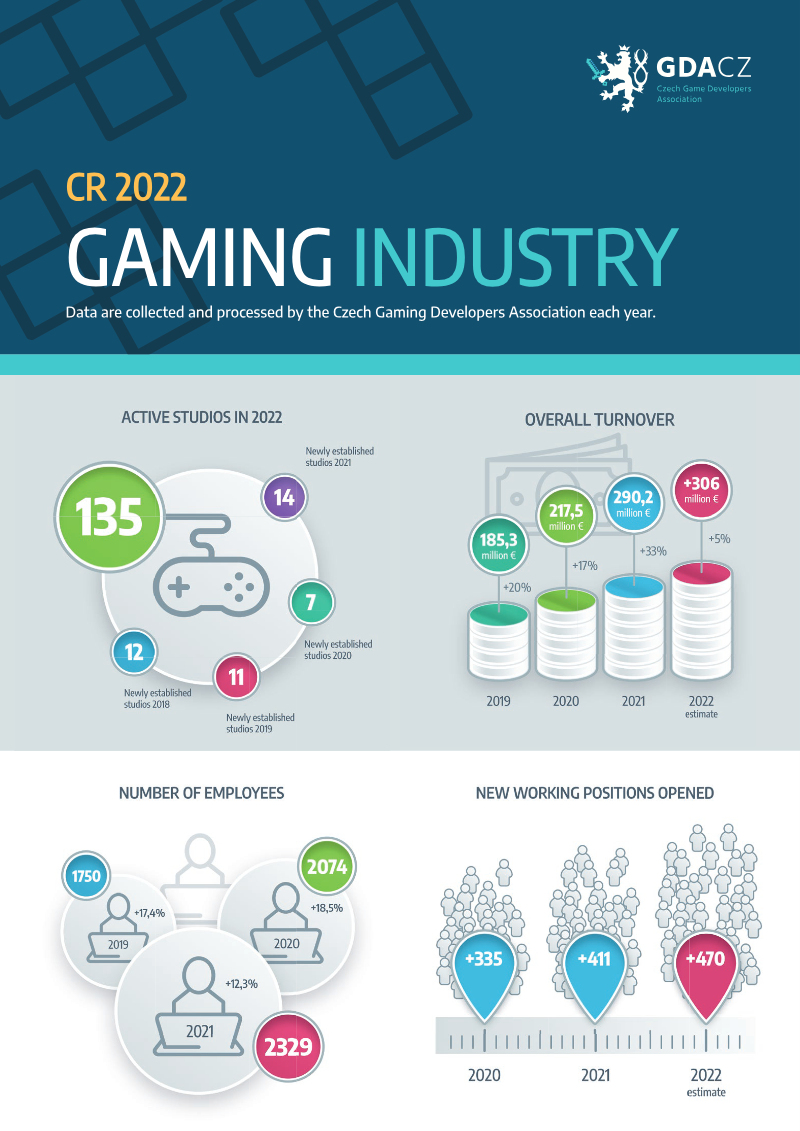
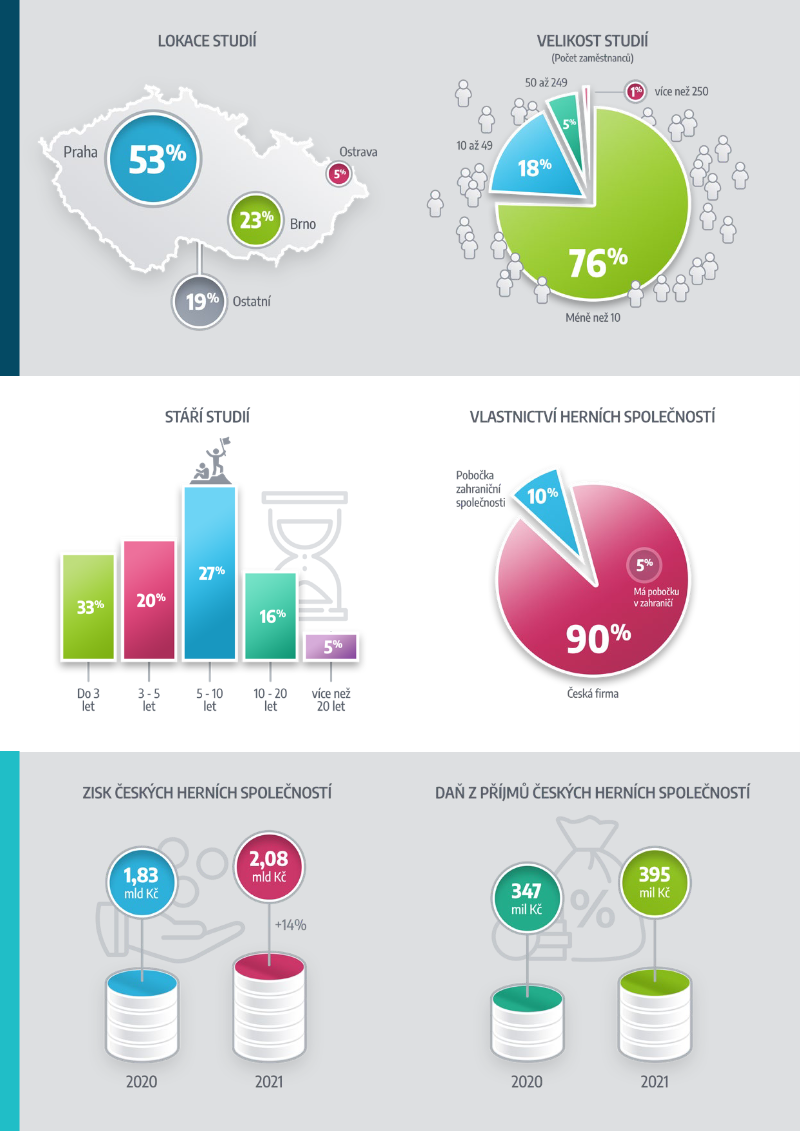
The Czech game industry generated 2.08 billion CZK in total revenue in 2022.
This represents a 14 percent increase compared to previous reporting periods.
See it on page 12.08 billion CZK
Total revenue generated by the Czech game industry in 2022.
- Increase over previous periods
- 14 percent
- Tax contributions
- 395 million CZK
1 / 5
- 01The Czech game industry generated 2.08 billion CZK in total revenue in 2022, representing a 14 percent increase over previous periods.See it on page 1
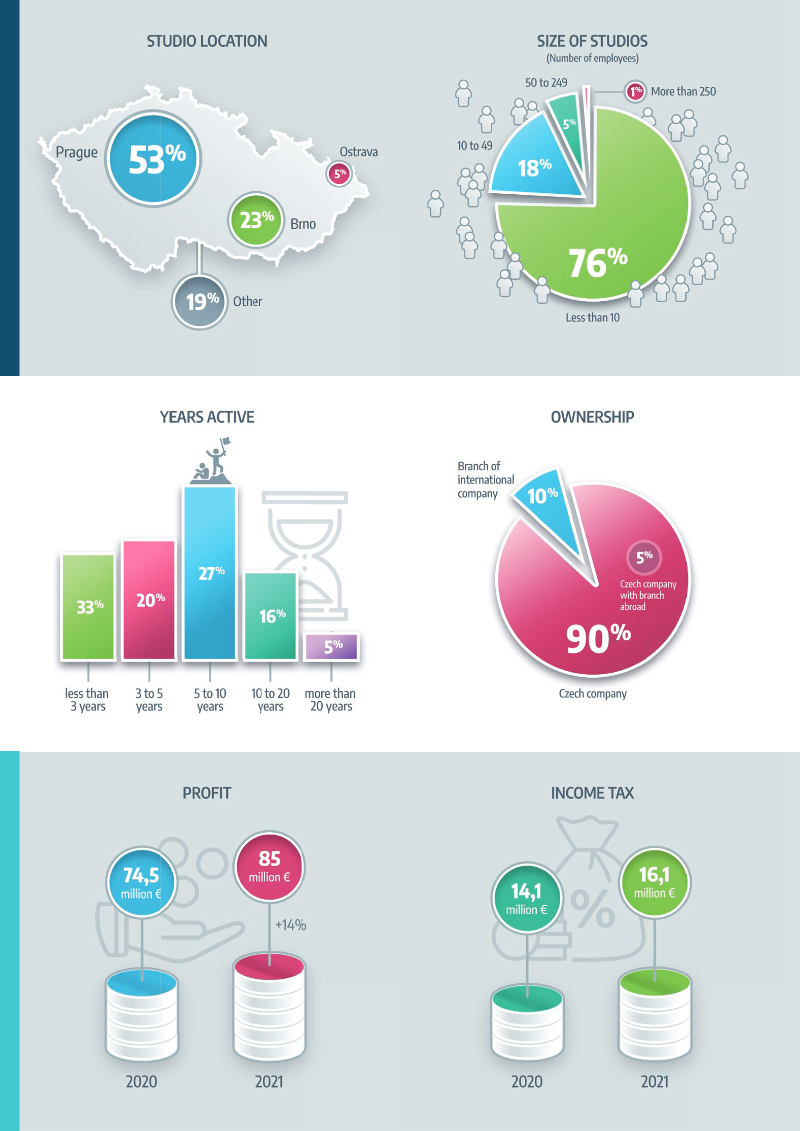
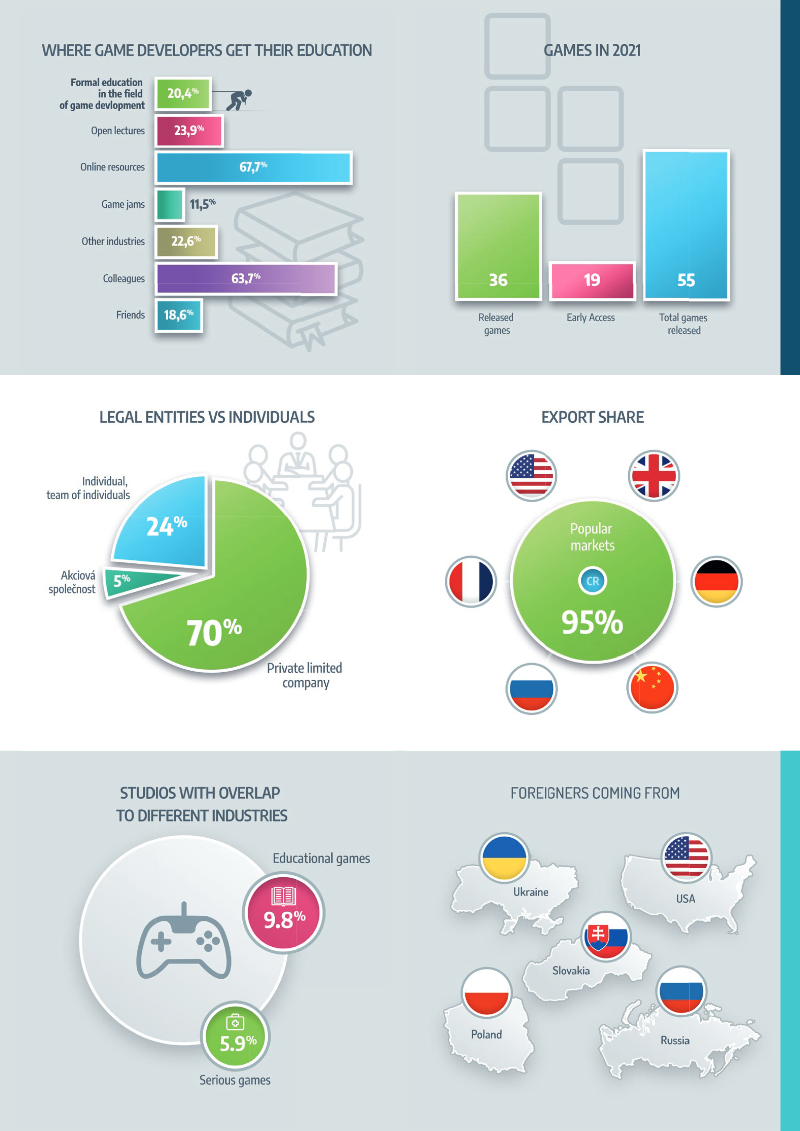
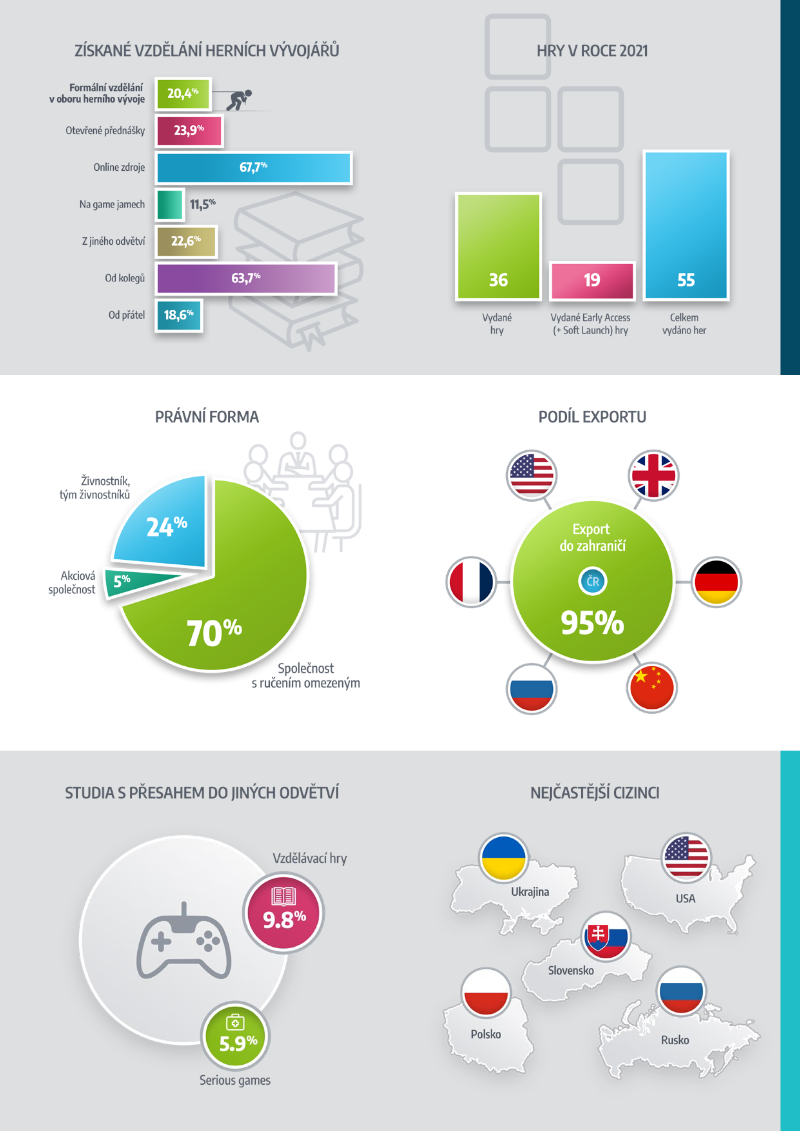
- 02The sector is highly export-oriented, with 95 percent of the 135 active studios generating revenue from international markets.See it on page 3
- 03The industry is dominated by small-to-medium enterprises, as 76 percent of studios employ fewer than 10 people.See it on page 2
- 04Development activity is geographically concentrated in major urban centers, with 53 percent of studios located in Prague, 23 percent in Brno, and 5 percent in Ostrava.See it on page 2
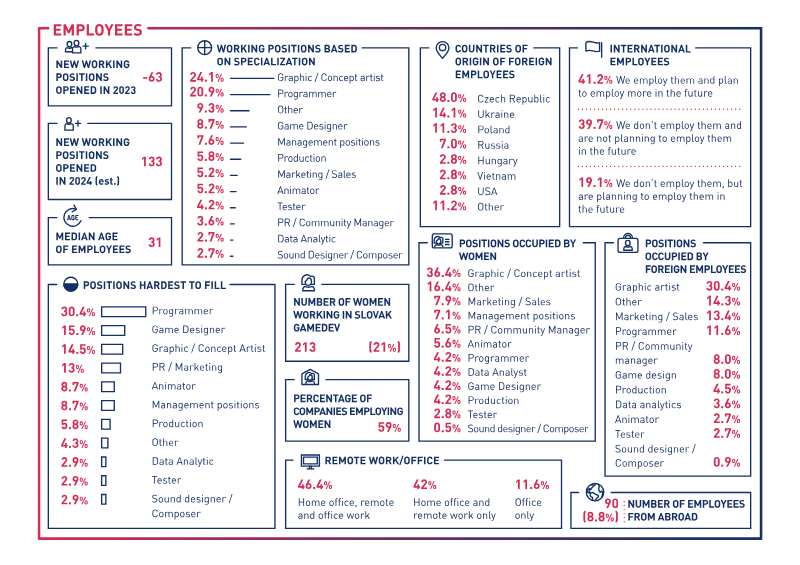
- 05The workforce is highly internationalized, with foreign nationals—primarily from Slovakia, Ukraine, and the EU—making up 31 percent of total employees.See it on page 4
- 06Educational gaming has emerged as a significant sector, accounting for nearly 10 percent of total studio output.See it on page 3
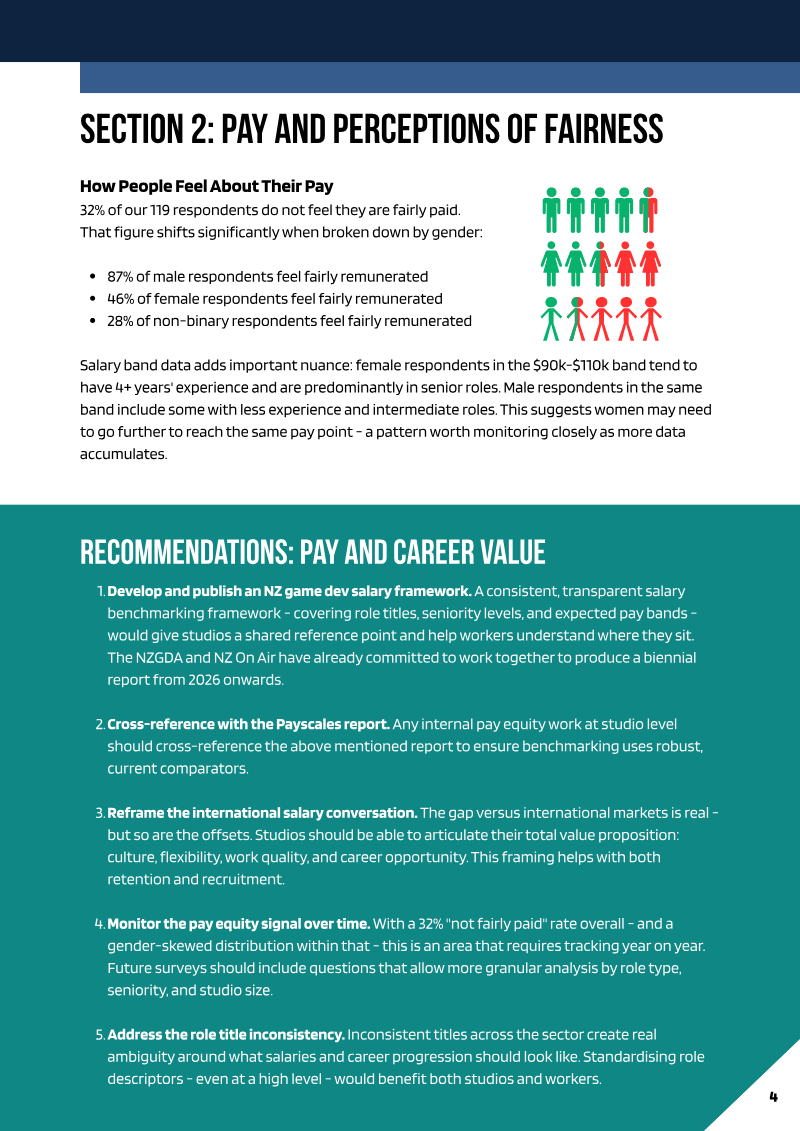
- 07The industry maintains a high level of academic qualification, with 50 percent of staff holding university degrees, though the workforce remains 81 percent male.See it on page 4
Ask AI about this report
Summary
The Czech game development industry demonstrated robust growth and structural maturity throughout 2022, characterized by a steady expansion of the studio ecosystem and significant financial performance. With a total of 135 active game studios operating within the country, the sector continues to benefit from a consistent influx of new entrants, as evidenced by the establishment of 45 new studios between 2018 and 2021. The industry is heavily export-oriented, with 95 percent of companies generating revenue from international markets, underscoring the global competitiveness of Czech-developed software.
Financially, the sector achieved a total revenue of 2.08 billion CZK, marking a 14 percent increase compared to previous reporting periods, while tax contributions reached 395 million CZK. The industry is predominantly composed of small-to-medium-sized enterprises, with 76 percent of studios employing fewer than 10 people. Geographically, the sector remains concentrated in major urban hubs, with 53 percent of studios based in Prague, followed by Brno at 23 percent and Ostrava at 5 percent. The majority of these entities are structured as limited liability companies, reflecting a stable corporate foundation for ongoing development projects.
The workforce is highly internationalized, with foreign nationals comprising 31 percent of total employees, primarily sourced from Slovakia, Ukraine, and the European Union. Professional development remains decentralized, with 67.7 percent of industry professionals relying on online resources and 63.7 percent gaining expertise through peer-to-peer knowledge sharing. While the industry maintains a strong focus on core game development, there is a notable diversification into educational gaming, which accounts for nearly 10 percent of studio output. The workforce composition remains predominantly male at 81 percent, and the educational background of staff is heavily skewed toward higher education, with 50 percent holding university degrees.