Key insights
5 slides
Context
Gamification is a potent tool for enhancing academic participation and engagement.
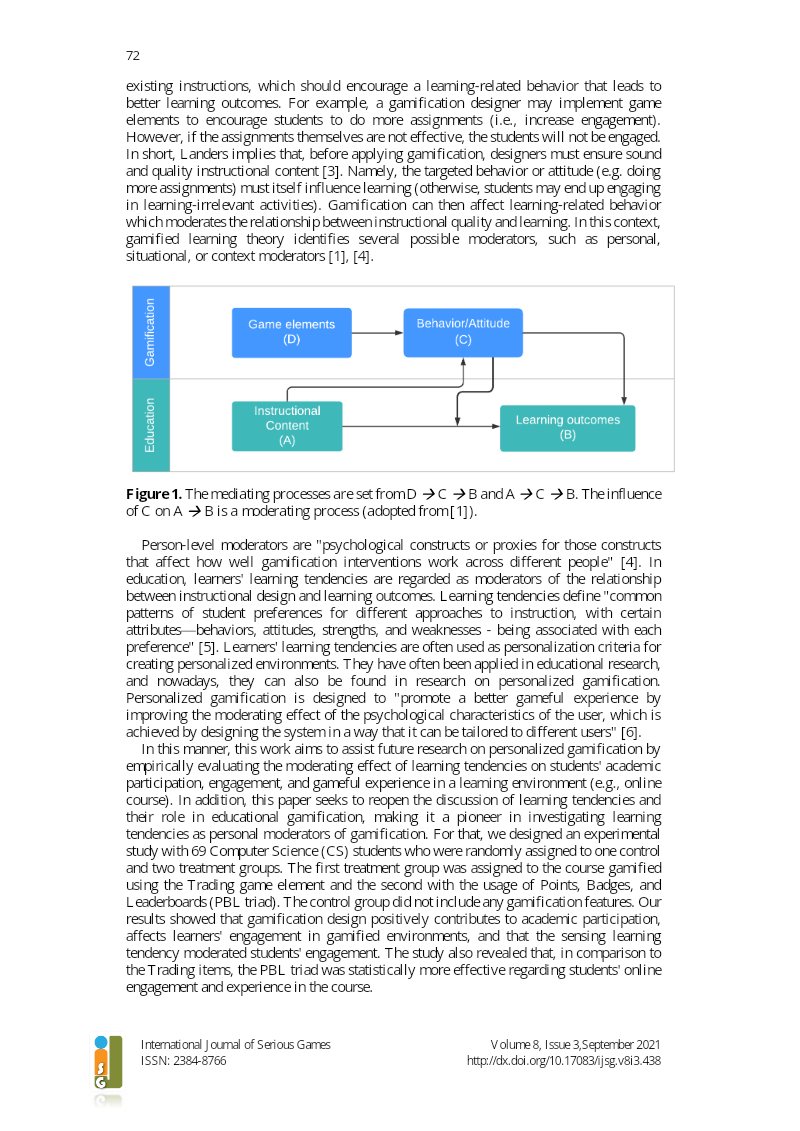
Gamification serves as a pedagogical tool. Its efficacy is contingent upon the specific learning tendencies of the student population.
Key Finding. Gamification effectiveness is not universal; it is moderated by individual cognitive profiles.
1 / 5
- 01Gamification effectiveness is not universal; it is moderated by individual cognitive profiles, meaning interventions must be tailored to specific learner tendencies to achieve results.See it on page 2
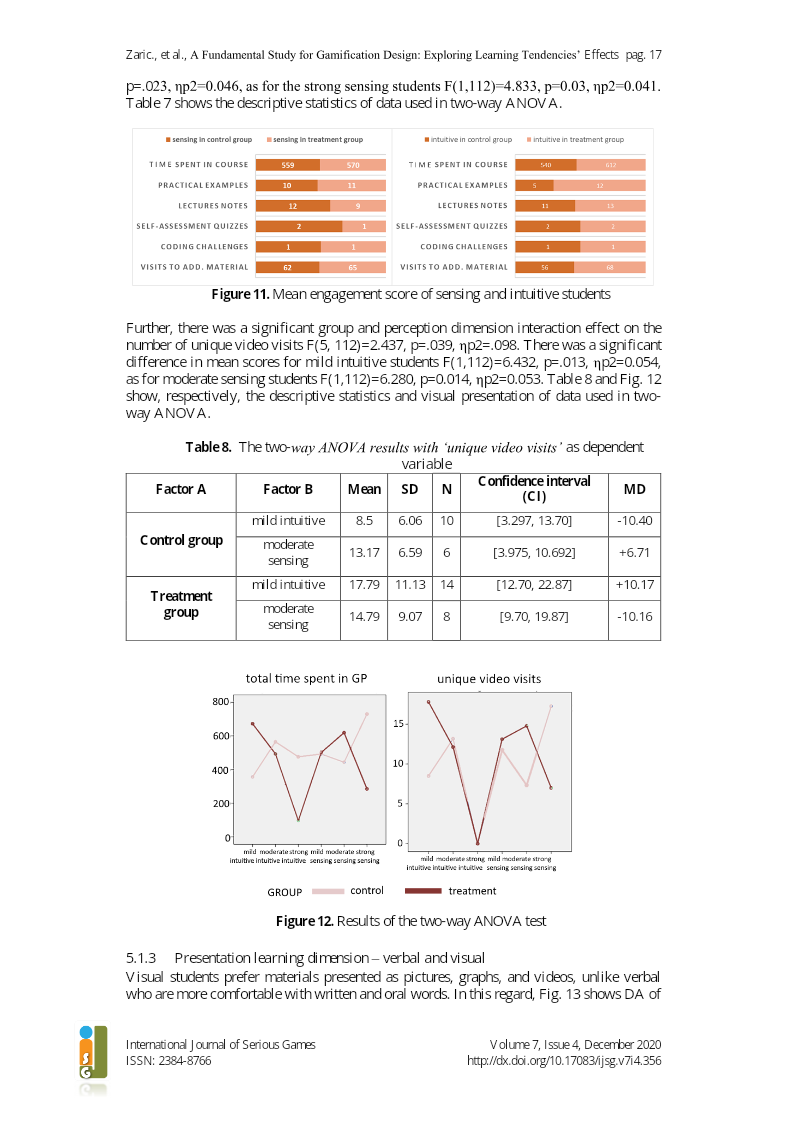
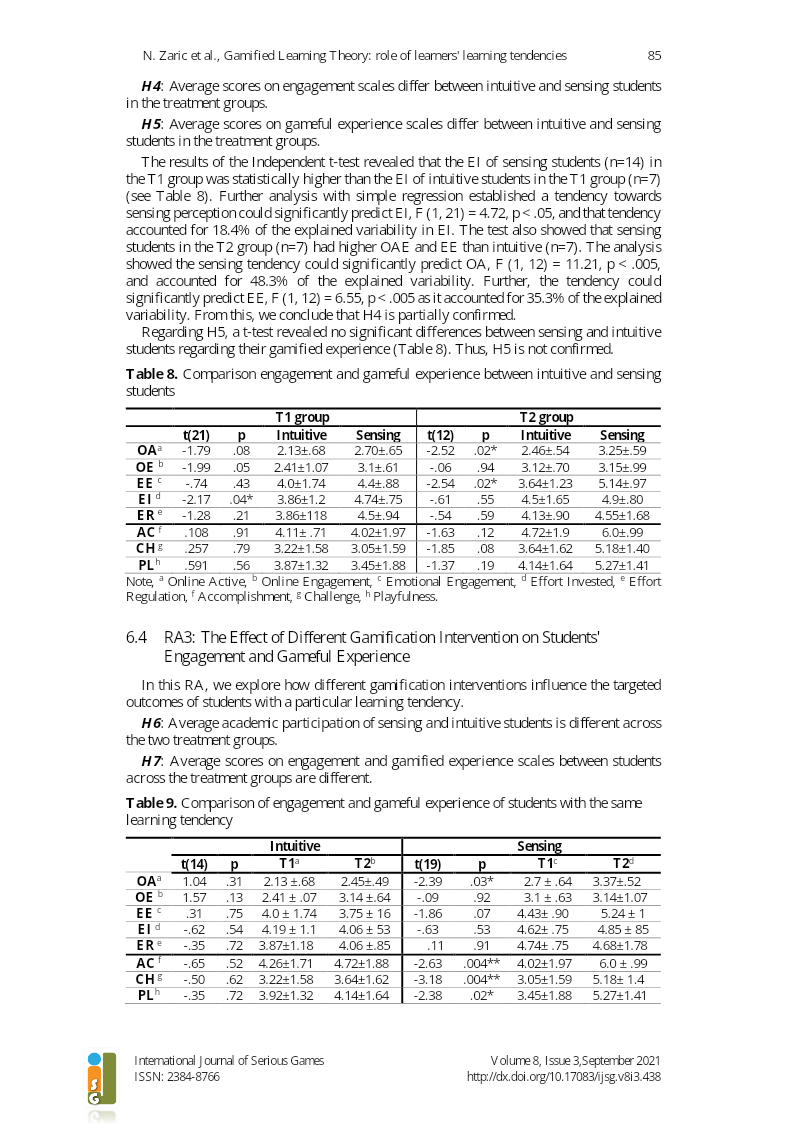
- 02Students with sensing learning tendencies show significant improvements in cognitive, behavioral, and emotional engagement through gamified interventions, especially in subjects they typically avoid.See it on page 15
- 03Intuitive learners demonstrate little to no significant change in participation levels when exposed to gamified elements, indicating that gamification is not a one-size-fits-all solution.See it on page 13
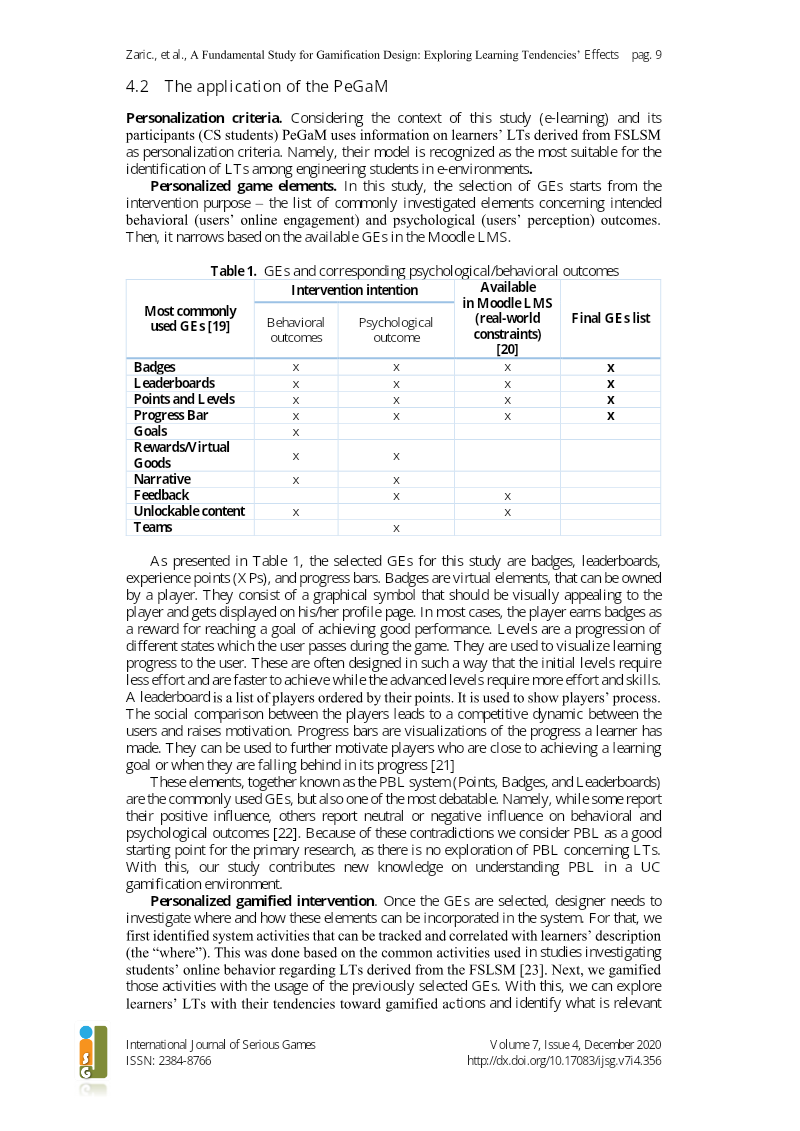
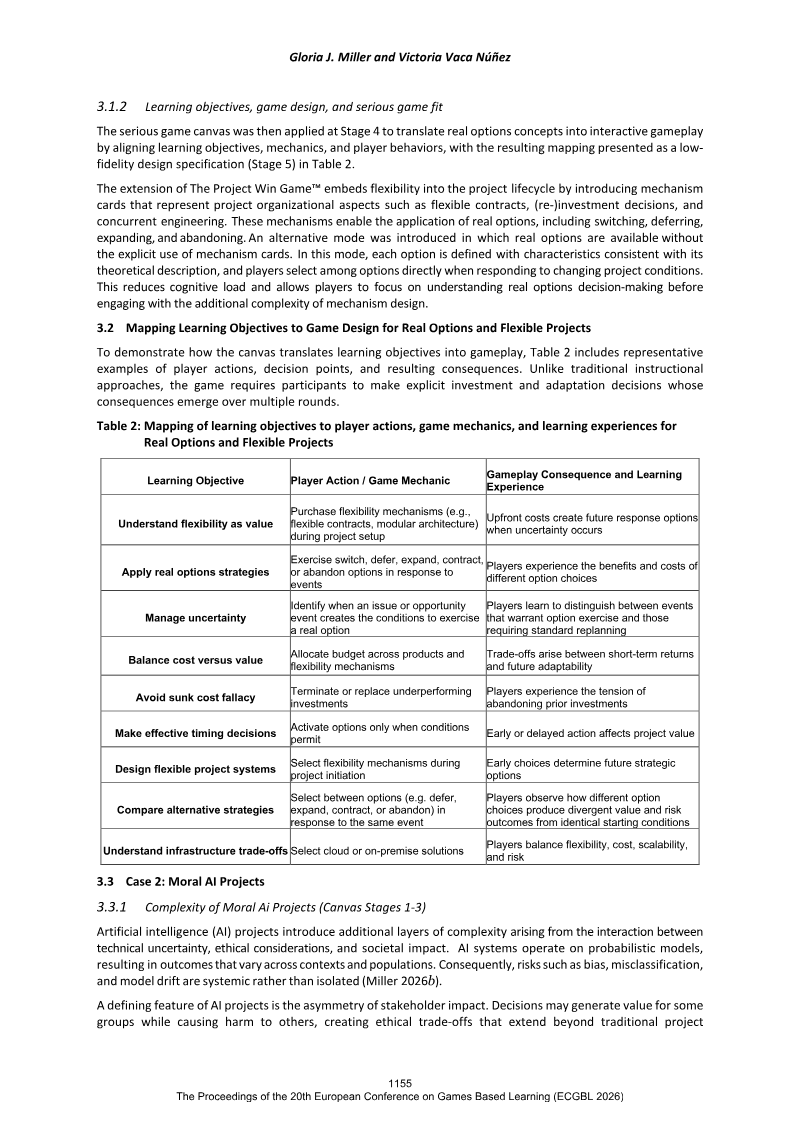
- 04The traditional gamification triad of points, badges, and leaderboards is statistically superior to item-trading mechanics in fostering a high-quality student experience.See it on page 2
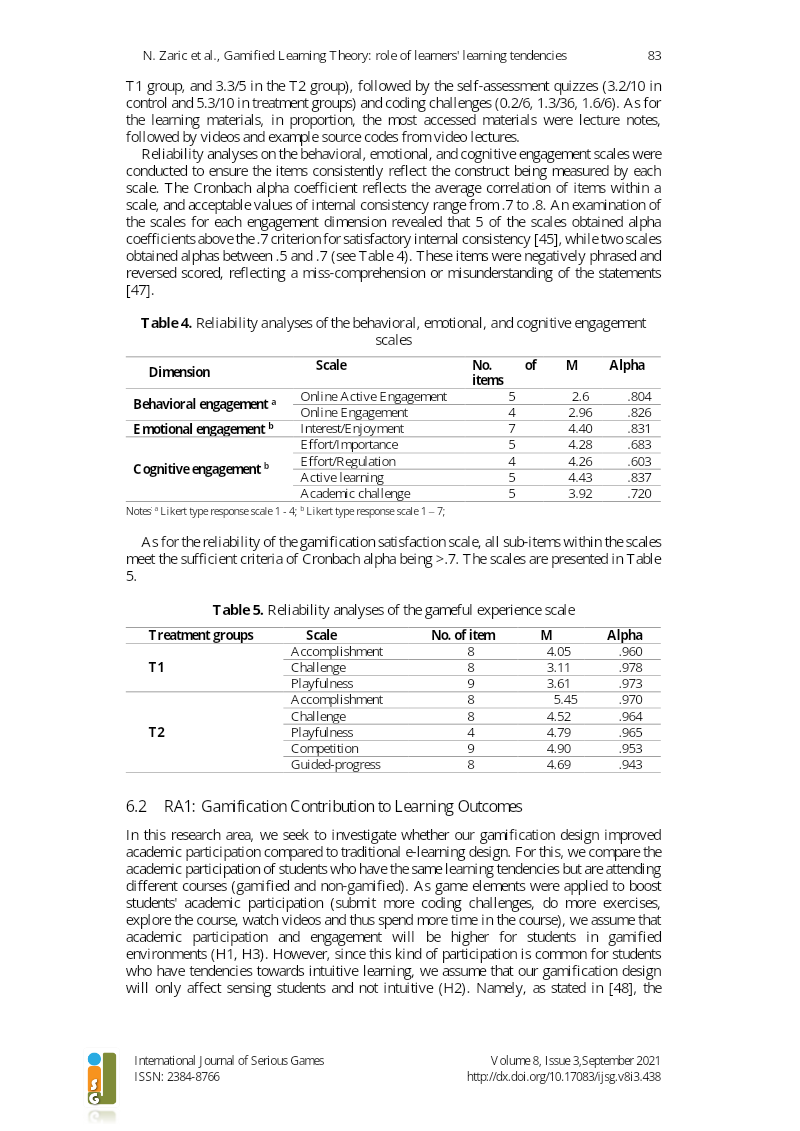
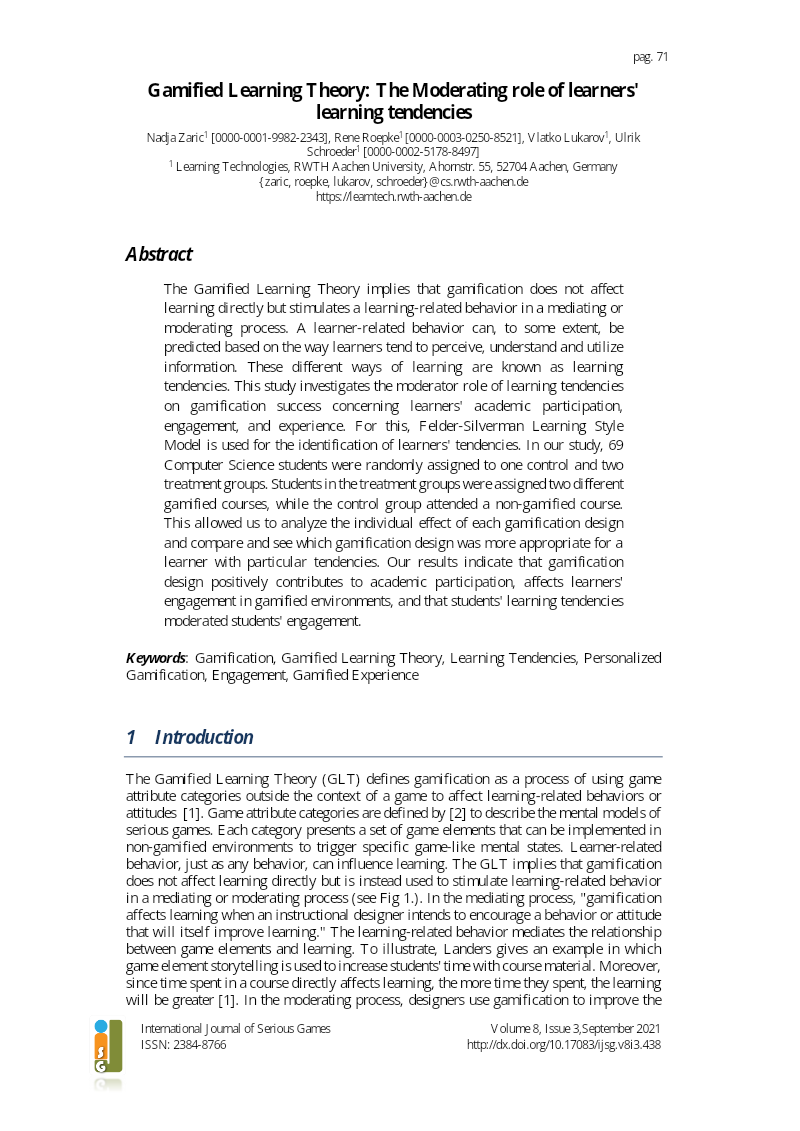
- 05Research conducted on a cohort of 69 computer science students confirms that gamified design must align with psychological predispositions to drive meaningful behavioral change in higher education.See it on page 1
Ask AI about this report
Summary
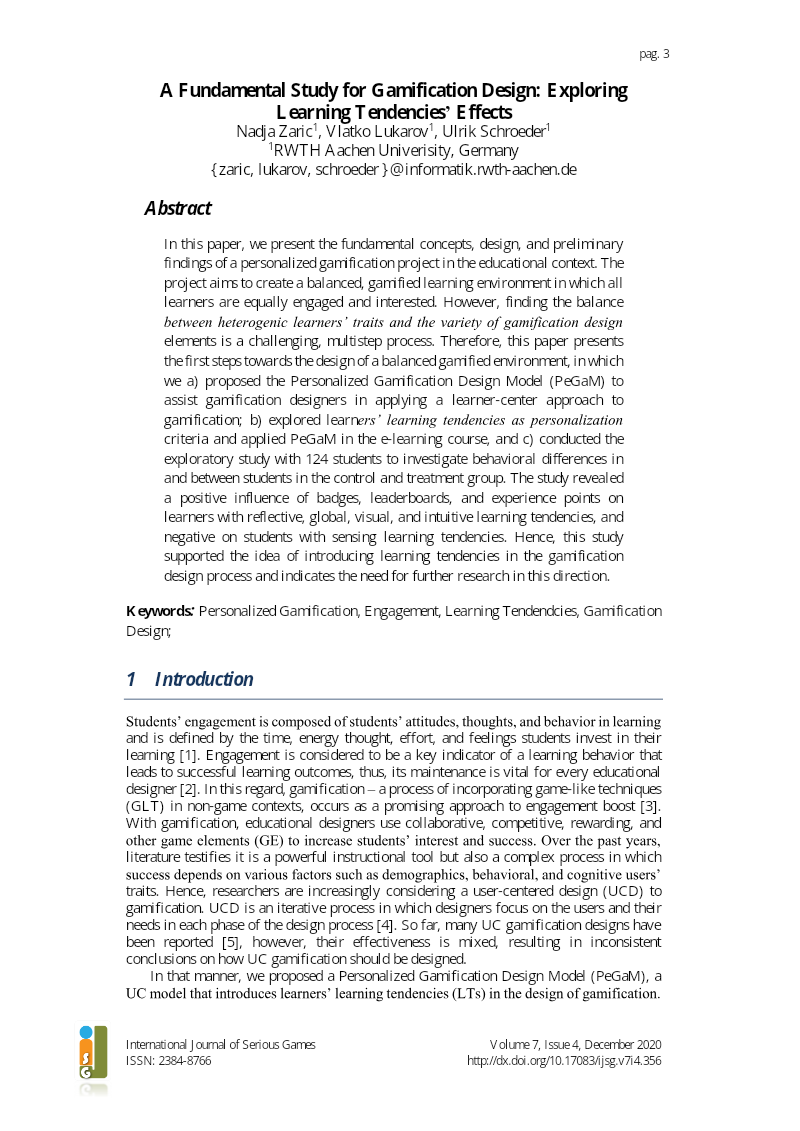
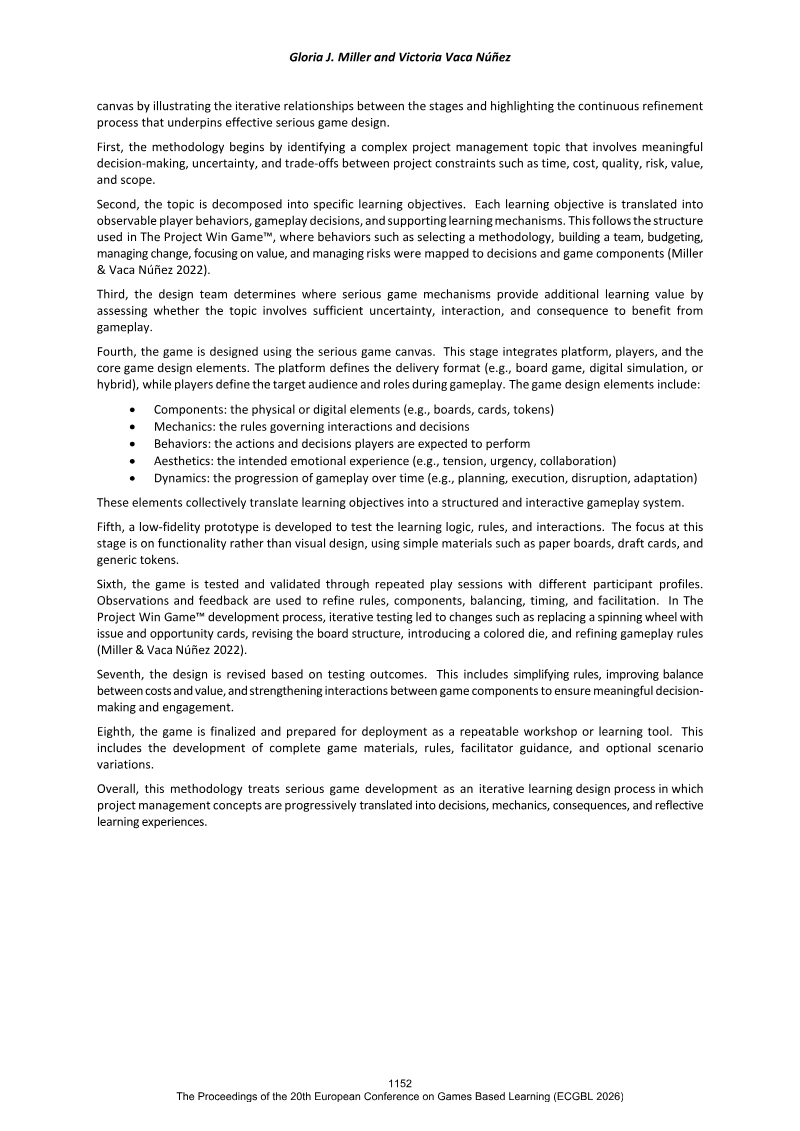
Gamification serves as a potent pedagogical tool for enhancing academic participation and engagement, though its efficacy is fundamentally contingent upon the specific learning tendencies of the student population. By applying the Felder-Silverman Learning Style Model to a cohort of 69 computer science students, research confirms that gamified interventions do not produce uniform results across all learners. Instead, individual cognitive profiles act as critical moderators, determining whether a student will respond positively to game-based stimuli.
The findings indicate that students with sensing learning tendencies experience significant improvements in cognitive, behavioral, and emotional engagement when exposed to gamified elements, particularly in academic areas they typically avoid. In contrast, intuitive learners show little to no significant change in participation levels, suggesting that gamification is most effective when it targets specific, malleable behaviors rather than serving as a universal solution. Furthermore, the structural design of the gamification matters; the traditional triad of points, badges, and leaderboards proves statistically superior to item-trading mechanics in fostering a high-quality student experience.
These results validate the core tenets of Gamified Learning Theory, which posits that instructional design must be tailored to the psychological predispositions of the learner. By integrating these insights into Moodle-based environments, educators can move beyond one-size-fits-all approaches. Ultimately, the successful implementation of gamification requires a nuanced understanding of how specific game mechanics interact with individual learning styles to drive meaningful behavioral change in higher education settings.