1 free read left. Create a free account for unlimited reading + AI research.
Create free accountWhitepaper International Journal of Games and Social Impact
1 free read left. Create a free account for unlimited reading + AI research.
Create free accountWhitepaperInternational Journal of Games and Social Impact
The paper argues that emotional well-being should be a stated aim of instructional design, not a byproduct of learning.
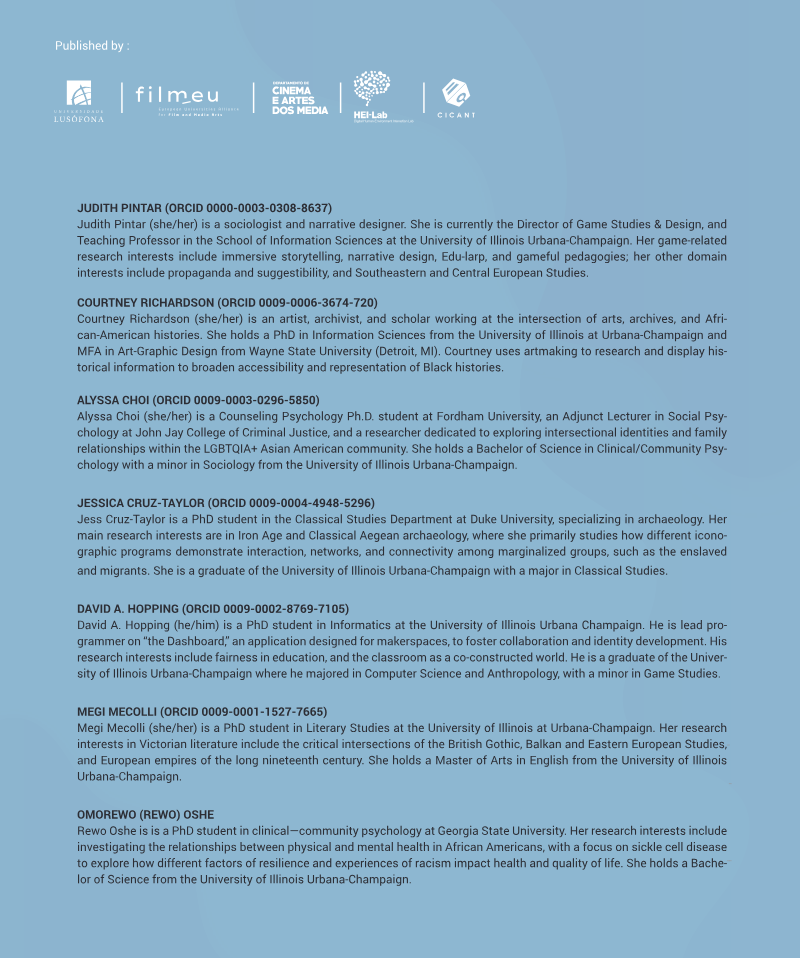
Pintar et al.'s "Gameful Pedagogy: Towards a Students' Bill of Rights" argues that student emotional well-being should be an explicit goal of instructional design, not a byproduct of learning. Drawing on Graham Nelson's "Players' Bill of Rights," the authors reframe course elements as game mechanics and propose a Students' Bill of Rights intended to connect inclusive design frameworks such as Universal Design for Learning with the lived experiences of students. The work is grounded in nine focus group sessions conducted between April and July 2021 with 22 undergraduates at the University of Illinois, a small, single-institution sample that the authors themselves acknowledge limits generalizability.
The findings center on how course structure and instructor behavior shape students' emotional states. Students reported feeling excluded when instruction catered only to already-prepared learners, when syllabi and policies were vague, or when assessments rewarded memorization and speed over mastery. Conversely, transparent policies, responsive instructors, flexible deadlines, meaningful assignment choice, and opportunities for feedback made courses feel fair, supportive, and effective. Across the data, exclusion and powerlessness were linked to heightened anxiety and disengagement, which in turn made failure more likely, while fairness, agency, and skillful teaching were associated with confidence and persistence.
From these results, the authors propose a 14-point Students' Bill of Rights, adapted from video game player rights such as fairness, agency, and resilience, and organized into categories including inclusion, confidence, effectiveness, and engagement. The framework positions classroom well-being as a matter of respect, dignity, and bodily autonomy, and thus as a social justice concern. The paper further contends that faculty who interpret student distress as a sign of personal inadequacy should have that assumption challenged, and it calls for continual feedback and iterative refinement of course design to sustain these goals.
International Journal of Games and Social Impact · 2026
International Journal of Games and Social Impact · 2026
International Journal of Games and Social Impact · 2026
International Journal of Games and Social Impact · 2026
International Journal of Games and Social Impact · 2026
International Journal of Games and Social Impact · 2026
International Journal of Games and Social Impact · 2026
International Journal of Games and Social Impact · 2026
International Journal of Games and Social Impact · 2025
International Journal of Games and Social Impact · 2025
International Journal of Games and Social Impact · 2025
International Journal of Games and Social Impact · 2025



European Conference on Games Based Learning (ECGBL) · 2026
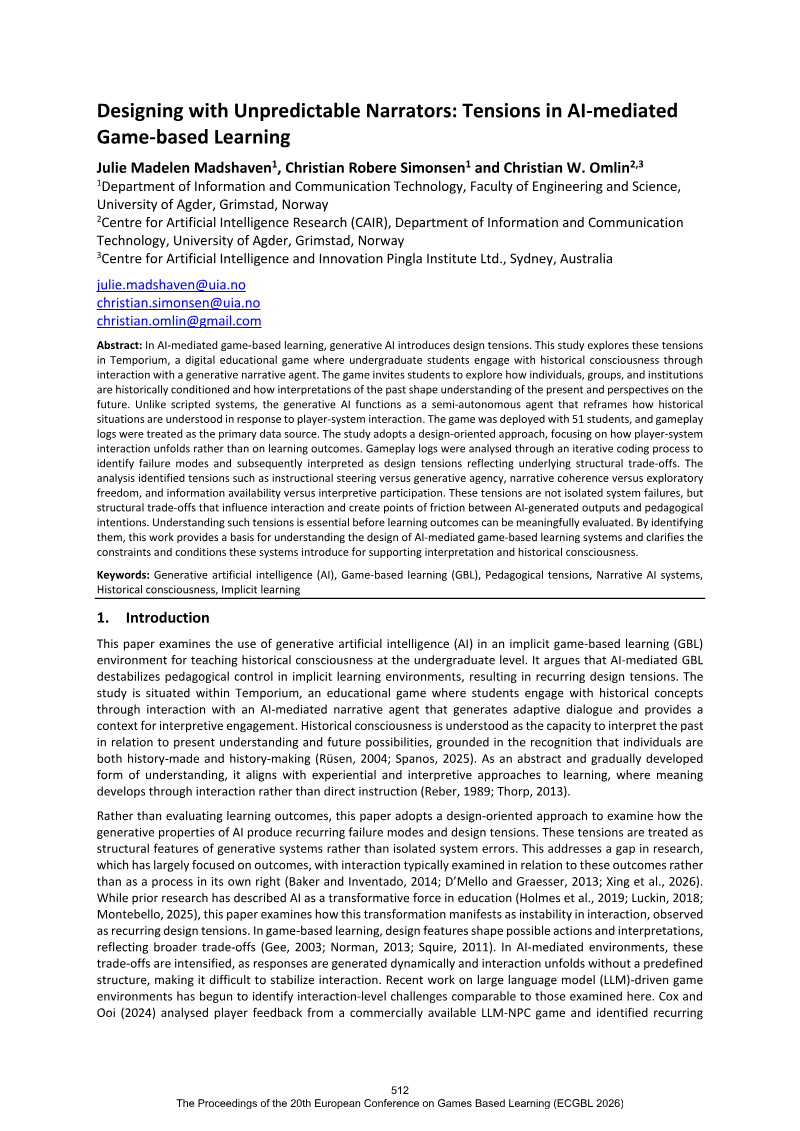
European Conference on Games Based Learning (ECGBL) · 2026



DiGRA · 2026