Loading the document
Key insights
5 slides
The core conflict
Educational games must balance engagement with pedagogical efficacy.
The Flow Framework addresses this by integrating key theories.
Key integration. The framework integrates flow theory, constructivist learning principles, and cognitive load theory to reconcile the conflict between engagement and pedagogical efficacy.


1 / 5
- 01Educational games achieve optimal quality by balancing challenge and skill through a dynamic difficulty adjustment that aligns with the learner's evolving mastery.See it on page 8
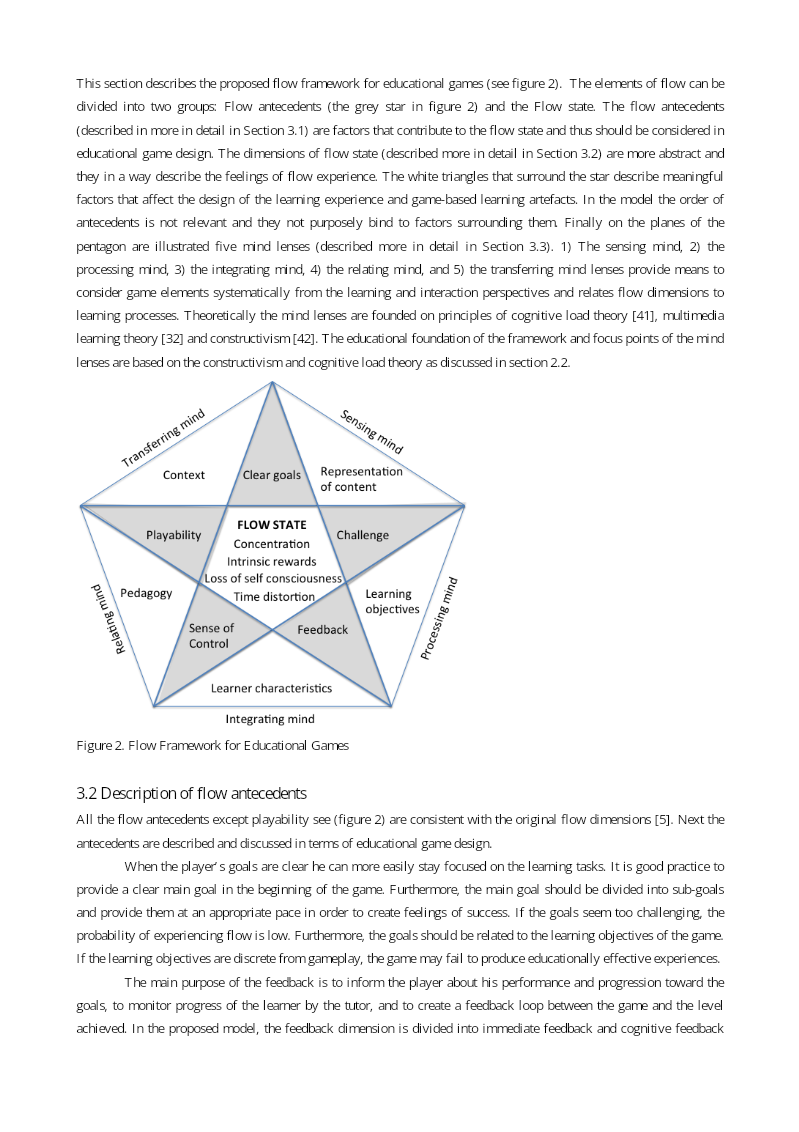
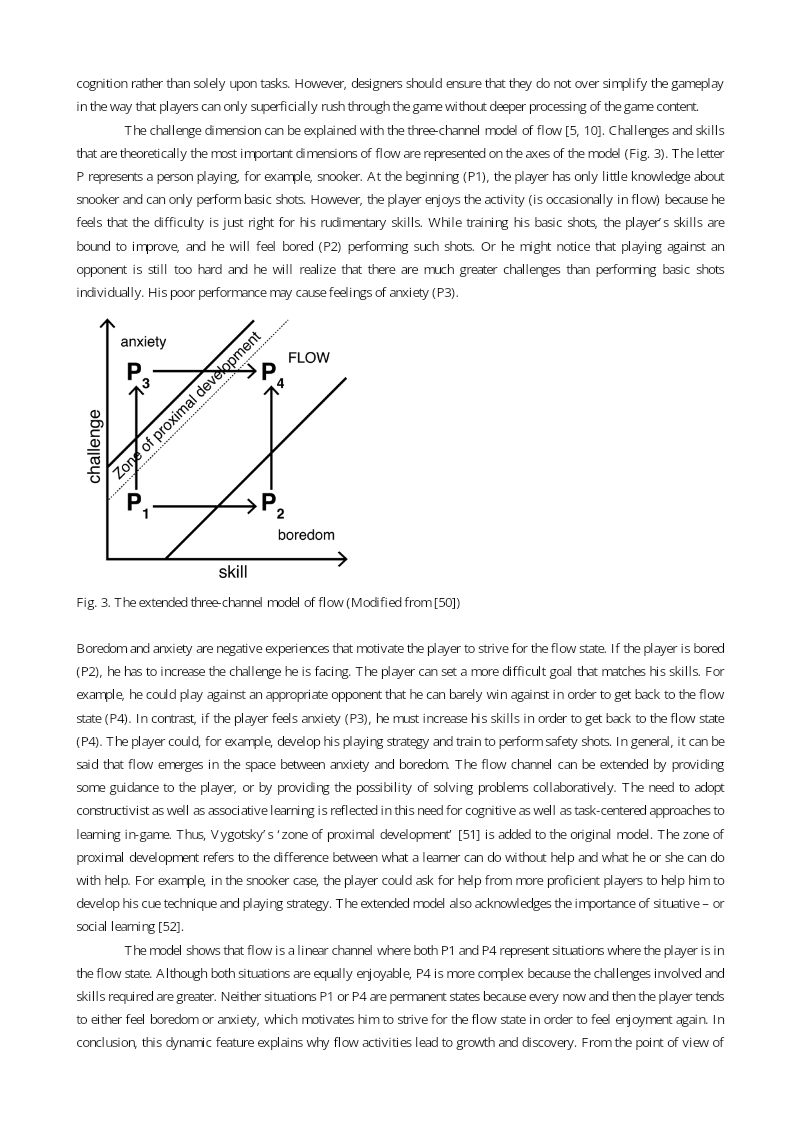
- 02The framework integrates Csikszentmihalyi’s flow theory, constructivist learning principles, and cognitive load theory to reconcile the conflict between engagement and pedagogical efficacy.See it on page 7
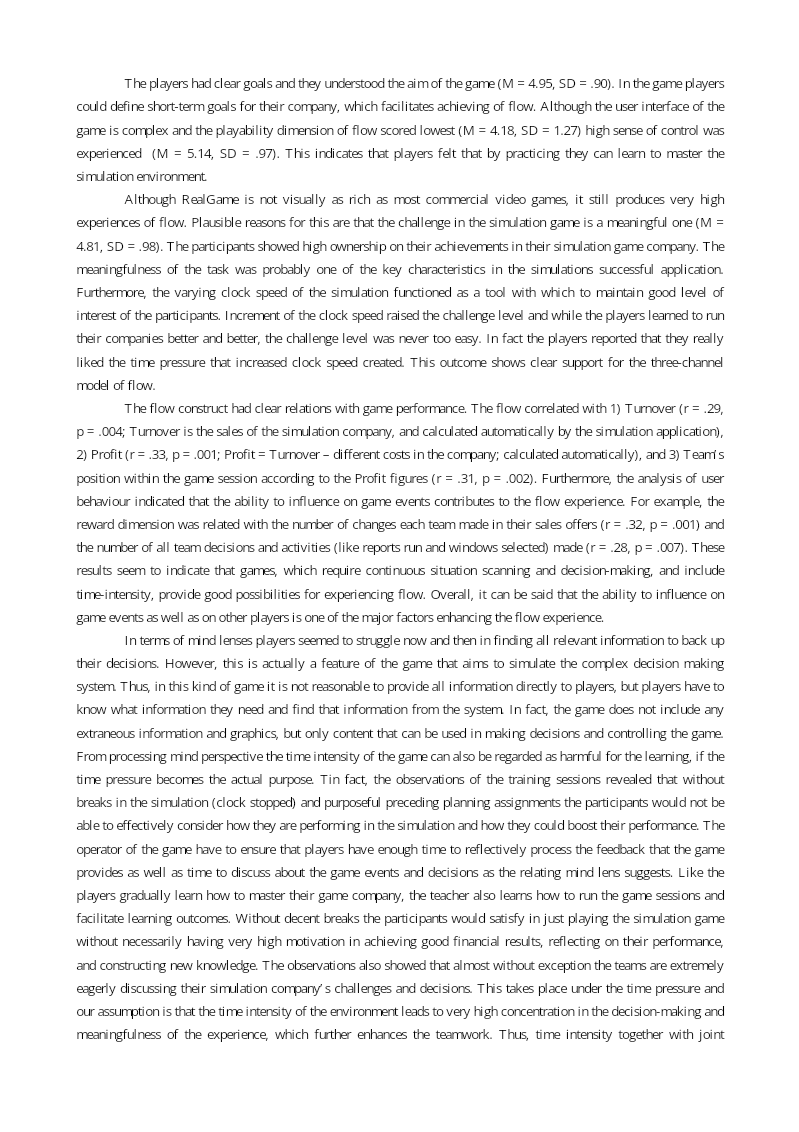
- 03Empirical validation using a nine-item flow questionnaire confirmed that adjustable simulation speeds and time-intensive decision-making are critical for maintaining user focus.See it on page 17
- 04Designers should prioritize reflective processing over automatic gameplay mechanics to effectively manage cognitive load and promote knowledge transfer.See it on page 6
- 05The three-channel model of flow is most effective when combined with supplementary metrics to identify specific design shortcomings and assess overall engagement.See it on page 9
- 06Successful design requires incorporating scaffolding and social interaction to foster collaborative learning and support mastery-oriented goals.See it on page 12
Ask AI about this report
Summary
The Flow Framework for Analyzing the Quality of Educational Games establishes a structured methodology for reconciling the often-conflicting demands of engagement and pedagogical efficacy. By synthesizing Csikszentmihalyi’s flow theory with constructivist learning principles and cognitive load theory, the framework provides designers with a roadmap to balance challenge and skill while preventing working memory overload. The primary thesis posits that educational games achieve optimal quality when they facilitate a state of flow, characterized by clear goals, a strong sense of control, and a dynamic adjustment of difficulty that aligns with the learner’s evolving mastery.
Empirical validation of this approach, conducted through the analysis of a business simulation game, confirms that these dimensions are critical to the user experience. Quantitative data from a nine-item flow questionnaire revealed high engagement levels, with participants reporting that time-intensive decision-making and adjustable simulation speeds were instrumental in maintaining focus. The findings suggest that the three-channel model of flow effectively captures the subjective quality of the learning experience, particularly when designers prioritize reflective processing over purely automatic gameplay mechanics.
The framework emphasizes that successful educational game design must move beyond simple entertainment to foster collaborative learning and knowledge transfer. By incorporating scaffolding and social interaction, designers can better manage cognitive load and promote mastery-oriented goals. While the framework serves as a robust tool for assessing overall engagement, it functions best when integrated with supplementary metrics to pinpoint specific design shortcomings. Ultimately, this approach offers a comprehensive strategy for developers to create serious games that are both intellectually rigorous and deeply immersive, bridging the gap between theoretical instructional design and practical game development.