1 free read left. Create a free account for unlimited reading + AI research.
Create free accountWhitepaper International Journal of Serious Games
1 free read left. Create a free account for unlimited reading + AI research.
Create free accountWhitepaperInternational Journal of Serious Games
These two states are positively correlated but serve different functions in the educational process. Relying on a single metric is insufficient for evaluating educational outcomes.
They are like two different engines in a car, both necessary but each driving a different function.
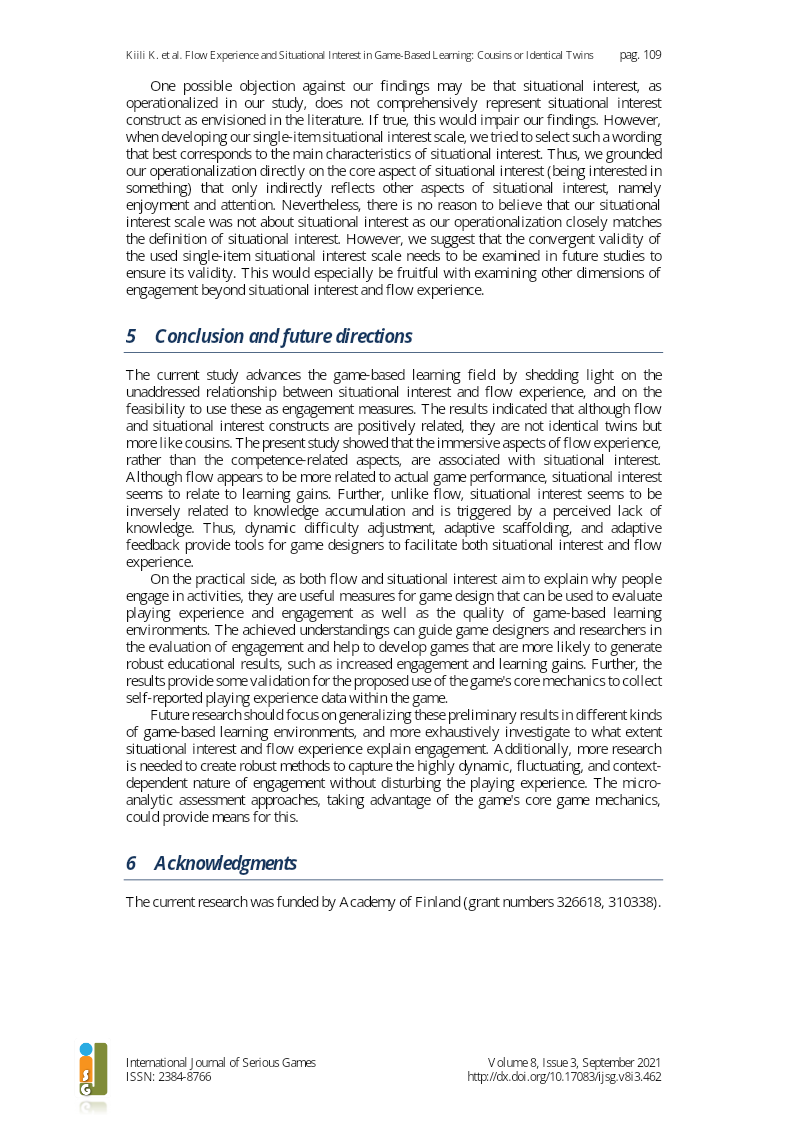
Dual metrics. Effective game-based learning requires a dual-measurement approach that tracks both flow and situational interest to capture the full spectrum of student engagement.
Distilling the key insights…
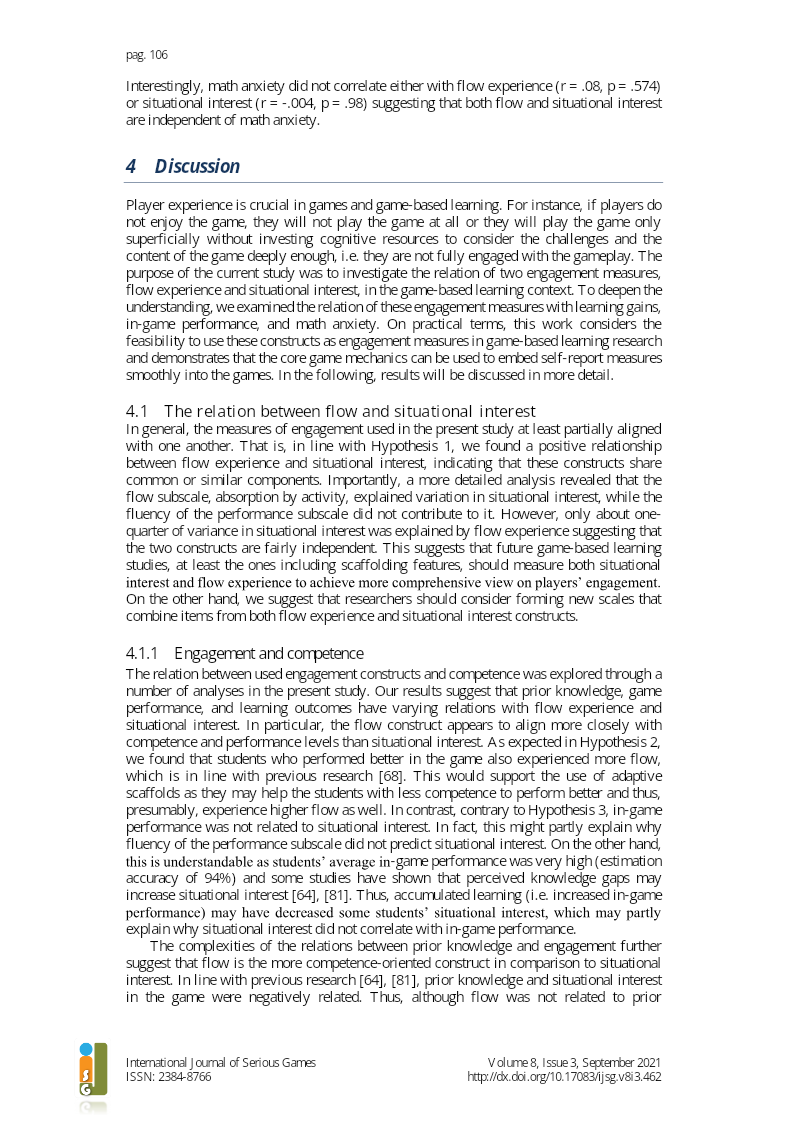
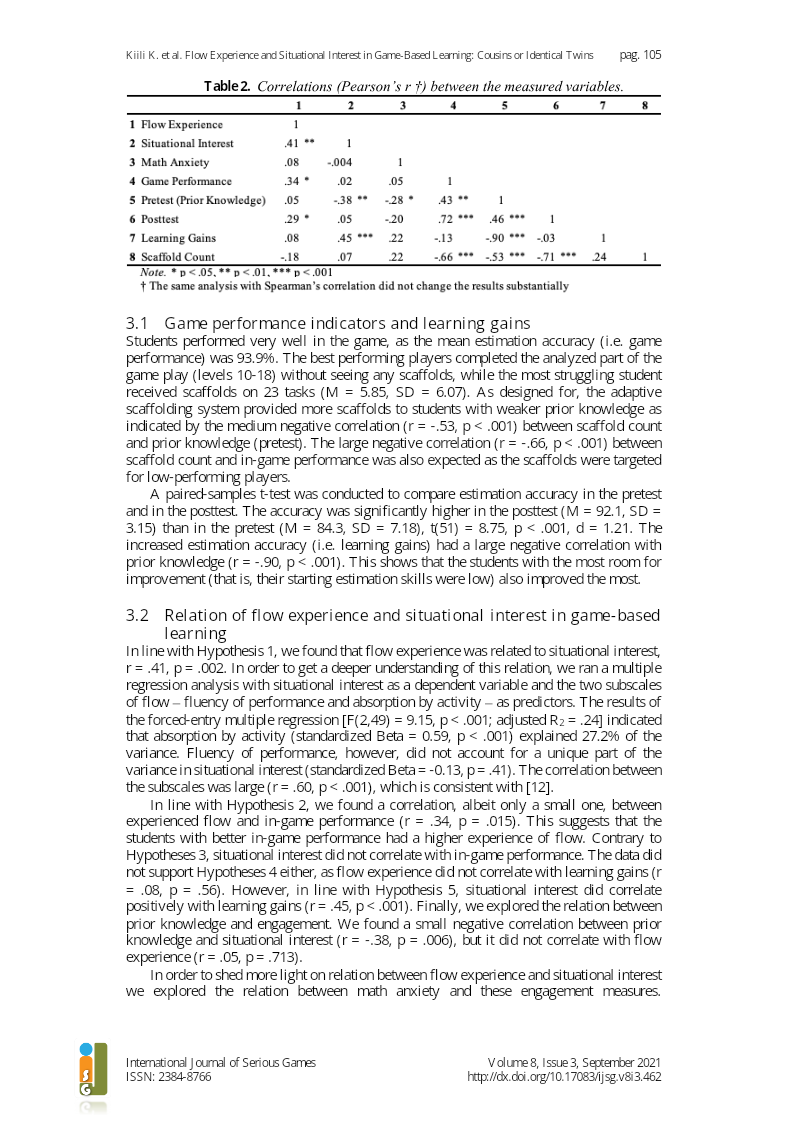
Engagement in game-based learning environments is driven by two distinct psychological constructs: flow experience and situational interest. While these states are positively correlated, they serve different functions in the educational process. Flow experience is primarily characterized by a sense of absorption and competence, correlating strongly with in-game performance and the mastery of mechanics. Conversely, situational interest is triggered by perceived knowledge gaps and serves as a more reliable predictor of actual learning gains. Recognizing these differences is essential for educators and developers, as relying on a single metric fails to capture the full spectrum of student engagement.
The research, conducted among 52 students utilizing an adaptive math game focused on fractions, highlights the necessity of a dual-measurement approach. By employing microanalytical, in-game self-report measures, the study demonstrates that engagement can be assessed without disrupting the learning flow. These findings suggest that while flow is an indicator of how well a student interacts with the game’s difficulty, situational interest is the primary engine for cognitive development and knowledge acquisition.
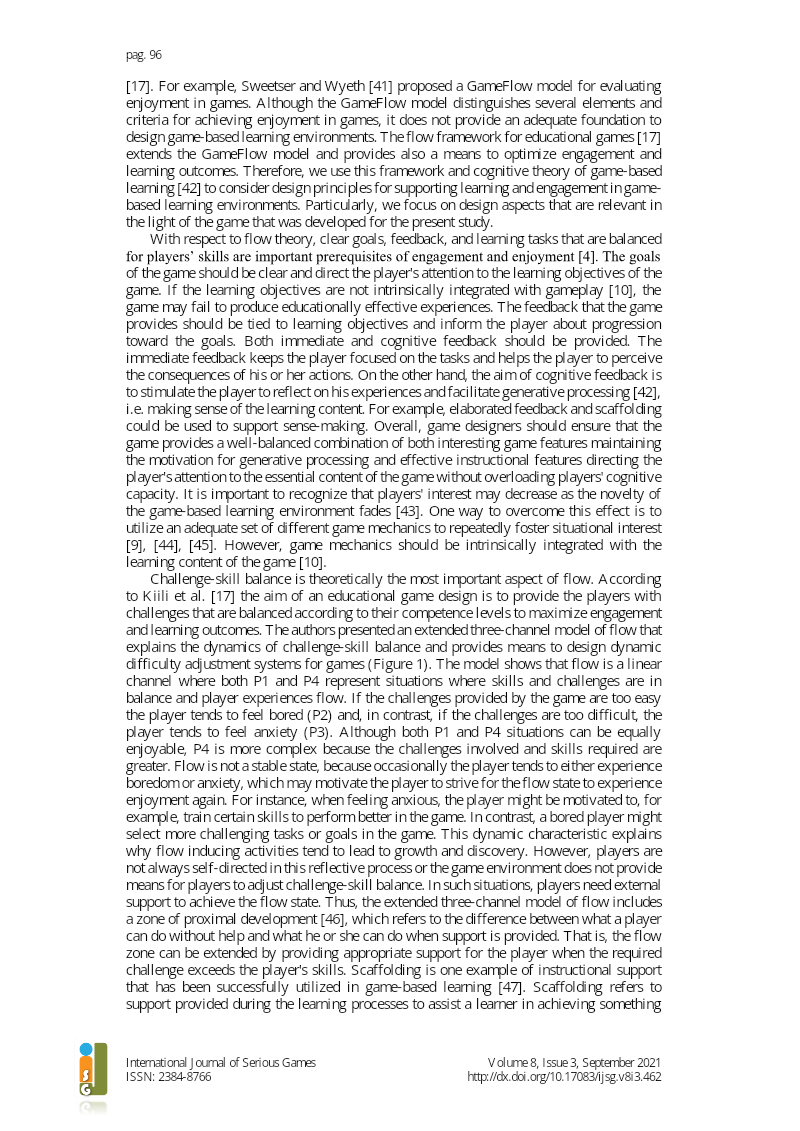
To optimize educational outcomes, game designers should implement adaptive scaffolding and dynamic difficulty adjustments that cater to both constructs. By balancing challenges to maintain flow while simultaneously highlighting knowledge gaps to stimulate interest, developers can create environments that support both struggling and high-performing students. Ultimately, integrating these two metrics provides a more comprehensive assessment of student engagement, ensuring that digital learning tools effectively bridge the gap between entertainment and academic achievement.
International Journal of Serious Games · 2026
International Journal of Serious Games · 2026
International Journal of Serious Games · 2026
International Journal of Serious Games · 2026
International Journal of Serious Games · 2026
International Journal of Serious Games · 2026
International Journal of Serious Games · 2026
International Journal of Serious Games · 2025
International Journal of Serious Games · 2025
International Journal of Serious Games · 2025
Serious Games Society · 2025
International Journal of Serious Games · 2025
European Conference on Games Based Learning (ECGBL) · 2026