1 free read left. Create a free account for unlimited reading + AI research.
Create free accountArticle DiGRA
1 free read left. Create a free account for unlimited reading + AI research.
Create free accountArticleDiGRA
Egenfeldt-Nielsen frames exploration as a foundational drive in computer games. The paper proposes a framework for analyzing it through two complementary optics.
Egenfeldt-Nielsen's paper argues that exploration is a foundational drive in computer games and proposes a framework for analyzing it through two complementary optics. The "system position" concentrates on rules and logic, where exploration concludes once the rules are internalized and become predictable, while the "player position" treats games as subjective sites of meaning and interpretation, where exploration remains open-ended. Drawing on George Kelly's "man-as-scientist" theory, the author contends that games provide safe environments for testing and revising mental constructs, and that every game begins with a tension that gradually subsides through play.
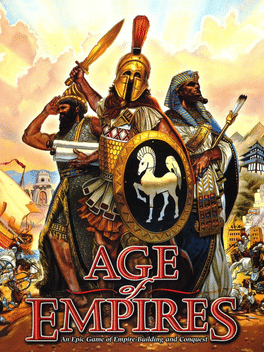
Central to the argument is the observation that players construct their experience by reinterpreting the tension set up by a game's rules, setting, and story. Meaning-oriented exploration is illustrated through narrative-driven titles such as Myst, while rules-oriented exploration is exemplified by chess and Age of Empires II. A telling case involves the Brits' town-centre strategy in Age of Empires II, which produced an imbalance that a patch resolved by adding a stone cost. This example demonstrates that rules cannot be evaluated in isolation and must be tested in combination, a point that supports the claim that modern games increasingly blend both forms of exploration and allow players to select their preferred optic.
The paper further distinguishes physical rules from game rules, noting that players in an Age of Empires playtest mistook the fog of war for a water barrier rather than recognizing it as a mechanic designed to make scouting meaningful. The author also reads cheating as a competing form of exploration, in which some players seek effortless progress while others pursue mastery and control. The work's principal contribution is an analytic framework for treating games as learning experiences, grounded in the view that the system and player positions are complementary rather than separate. The analysis is conceptual and theoretical in nature and contains no quantitative data.