1 free read left. Create a free account for unlimited reading + AI research.
Create free account
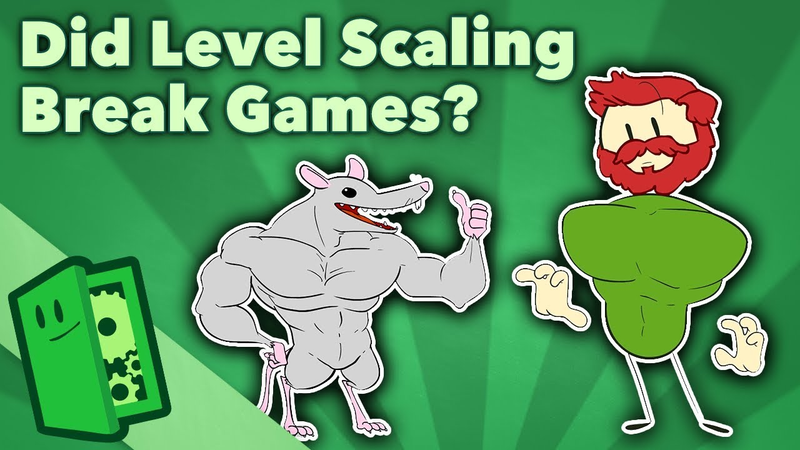
Did Level Scaling Break Games? - Leveling in Open World Design - Extra Credits
Key insights
6 takeaways- 01Level scaling is intended to balance player freedom with consistent challenge, but blanket implementation often undermines the core RPG progression fantasy by making character growth feel static.
- 02Uniform scaling flattens the open-world experience, stripping away the sense of danger and mystery by ensuring enemies remain equally difficult regardless of the player's level.
- 03The Elder Scrolls IV: Oblivion serves as a primary case study for failed scaling, where the system penalized non-combat skill progression and created narrative dissonance by populating the world with low-level enemies wearing rare, high-value armor.
- 04Effective design, as demonstrated in The Elder Scrolls V: Skyrim, utilizes scaling as a surgical tool rather than a universal rule to maintain world variety.
- 05Developers should apply scaling only to specific, narratively significant encounters while allowing generic enemies to remain static to preserve the player's sense of power.
- 06The ultimate goal of scaling should be to ensure narrative threats remain credible throughout the journey without sacrificing the player's agency to explore the game world.
Ask AI about this video
Transcript
Imagine you're playing an RPG. That's not too hard. Hey, good job. Wow, brain graphics are sweet. At level one, you can kill a rat in three hits. But then at level 10, despite your acquired strength, those same rats still take three hits. What gives? Well, you are stronger, but so are the rats. This is called level scaling, and on the surface, it seems kind of like a feel-bad scenario. But if so, why do some games utilize it? Level scaling is a relatively new term for the feature where enemies in a game world grow stronger in parallel with the player. It's most often seen in RPGs, especially open-world ones like Assassin's Creed Odyssey and of course Oblivion. Don't worry, we're going to get to that one later. But the reason level scaling became a popular solution for these games is because unlike in a linear game, designers have no idea where players might go, making it impossible to determine what kind of encounters are appropriate for any given area. And putting too many barriers
based around level progression kind of defeats the purpose of being open world. Thus, level scaling was introduced as a way to ensure players always have an appropriate challenge regardless of where they end up. A system to deliver dynamic difficulty no matter where the players wander is a great idea in theory. It ensures that newbies don't accidentally meander into high-level areas or that experienced players aren't stuck waiting through a sea of feeble monsters. And some games like Guild Wars even scale players down for quests so that there's never any content high-level players feel like they missed out on. But in practice, level scaling can cause a lot of problems of its own. Allowing players to access everything right off the bat isn't really what we should be aiming for because an open world doesn't need to just feel open, it also needs to feel like a world. When you can go anywhere from the get-go and be presented with roughly the same level of difficulty, things tend to feel all the same. And this can squander a lot of world-building potential. For instance, Morrowind's Red Mountain wouldn't nearly be as mysterious and imposing at the
start of the game if a level one adventurer could run up its slopes with impunity and find only weak rats guarding the doors of the final dungeon. When a game is about becoming more powerful, as most RPGs are, level scaling can also destroy this fantasy because it never feels like you're actually getting stronger. If a rat at level 10 takes the same amount of effort to defeat when you were at level one, it doesn't really seem like you've become a hardened adventurer, does it? And it can totally break the immersion. And nowhere is that illustrated more than in The Elder Scrolls Oblivion. Told you we'd get here. Oblivion has kind of become a poster child for how not to do level scaling. Your character in Oblivion has access to many skills which have little to no practical combat use, such as bartering or speechcraft. But every time you use these abilities to level up, each enemy in the game also levels up and does get stronger in combat. Therefore, those non-combat abilities you're using actually make you comparatively weaker in the world each time you gain a level. By the mid-game, all but the most dedicated combat classes end up woefully underpowered for
the high-level enemies spawning literally everywhere. And this also made the game's rather lacking dungeon variety seem even more limited because the same small handfuls of enemy types kept popping up no matter where you were. But Oblivion goes even further by also scaling loot rewards. Players learned it was best to avoid quests until they were a higher level to get the best loot. But this meant that they spent the majority of the early game missing out on useful items and interesting quests. And of course, Oblivion enemies also infamously wielded scaled equipment as well, which wreaked havoc on both the narrative and the end-game economy. It's pretty ridiculous to see highway bandits wearing full suits of supposedly priceless armor extorting travelers for a few coins on a bridge. So, how can level scaling be done better? Well, the biggest mistake is over-reliance on it and we can look back at Oblivion to see the problem when imprecise blanket scaling is applied to the whole world. However, Hey, you. You're finally awake.
Skyrim was much more successful in its approach by only applying level scaling to specific encounters. Enemies that are supposed to be powerful, regardless of level, scale with you. But, many generic enemies, like our good friend the mudcrab here, don't. Plus, most enemies stop scaling after a certain point. So, players never become hopelessly outclassed, no matter where they end up. And because the lower-tiered enemies still do spawn where appropriate, there's much more variety in the enemies and locations around the world. Level scaling is often derided or ignored as a design approach. But, that doesn't mean we should forget we have it in our tool belt. Most of the reasons people tried to implement level scaling originally did really seem sound on the surface. They just ended up being the exact opposite of why we should use it at all. So, the real lesson of the last 15 years is that we shouldn't use level scaling to make games feel more open. Instead, we should use it to make our worlds feel more alive. Level scaling should be used to make important characters still feel important late in the game and make narrative threats feel like real threats
as you play. If you missed an early boss by wandering around the rest of the world and NPCs are still talking about how threatening and powerful that boss is, whenever you finally get around to finding this globally known big bad, if you can just bop Skully McDeathface on the snoot real quick and kill them instantly, your narrative immersion is going to be shot. But, if just those bosses that are always supposed to be powerful within your narrative scale with the player, they'll always feel like the important antagonists they're supposed to be. It's important to learn from the successful implementation of level scaling and understand that it's a scalpel, not a chainsaw. And blanket level scaling just ends up making the world feel more generic and samey. But, if judiciously applied in specific cases, it can help us solve a long-standing problem in open-world design. How to keep players challenged without removing the freedom to forge their own path.
Summary
Level scaling in open-world RPGs serves as a mechanism to balance player freedom with consistent challenge, ensuring that users encounter appropriate difficulty regardless of their chosen path. While intended to prevent players from wandering into insurmountable obstacles or trivializing early-game content, the implementation of this system often undermines the core progression fantasy of the genre. When enemies scale uniformly with the player, the sense of character growth is diminished, as the effort required to defeat basic foes remains static throughout the experience.
The primary critique of blanket level scaling is that it flattens the world, stripping away the sense of danger and mystery associated with high-level areas. The Elder Scrolls IV: Oblivion serves as a cautionary example, where scaling mechanics penalized non-combat skill progression and created narrative dissonance, such as low-level bandits appearing in high-value, rare armor. This approach often leads to a repetitive, homogenized experience where the world feels less like a living environment and more like a mathematical construct.
More successful design strategies, such as those seen in The Elder Scrolls V: Skyrim, utilize scaling as a surgical tool rather than a universal rule. By applying scaling only to specific, narratively significant encounters while allowing generic enemies to remain static, developers can maintain a sense of progression and world variety. Ultimately, the most effective use of level scaling is not to force uniformity across an entire map, but to preserve the perceived power and importance of key antagonists, ensuring that narrative threats remain credible throughout the player's journey without sacrificing the player's agency to explore.



















Comments