
MIDI Manufacturers Association
The MIDI Manufacturers Association is a trade organization for the MIDI music technology standard. It publishes technical specifications and recommendations, including the Interactive XMF file format and a report on mobile audio technology.
Documents
Game Audio Curriculum Guideline
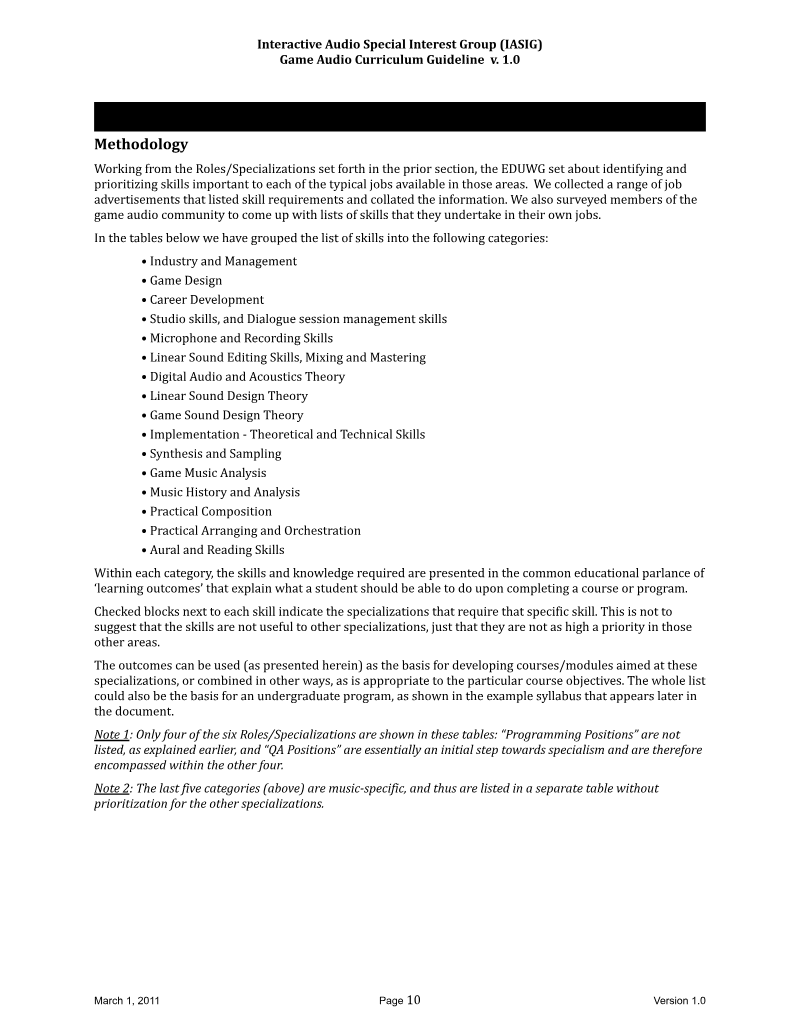
The game audio industry faces a persistent talent gap caused by the unique intersection of traditional linear media production and complex, non-linear technical implementation.
- The game audio industry suffers from a persistent talent gap caused by the difficulty of bridging traditional linear media production with complex, non-linear technical implementation.
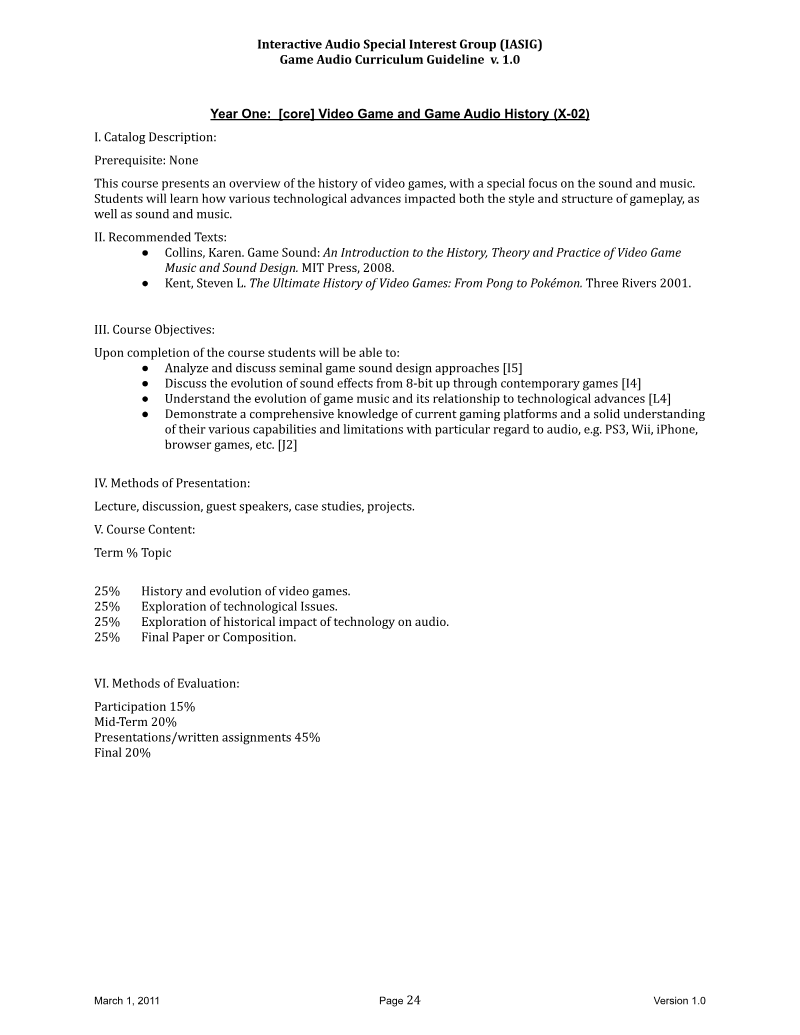
- A standardized 120-credit, four-year undergraduate curriculum framework has been proposed to provide a consistent roadmap for higher education institutions in the United States.
- The curriculum prioritizes a constructivist pedagogical approach that emphasizes core principles and adaptability over software-specific training to ensure graduates can navigate evolving technologies.
Interactive XMF: File Format Specification
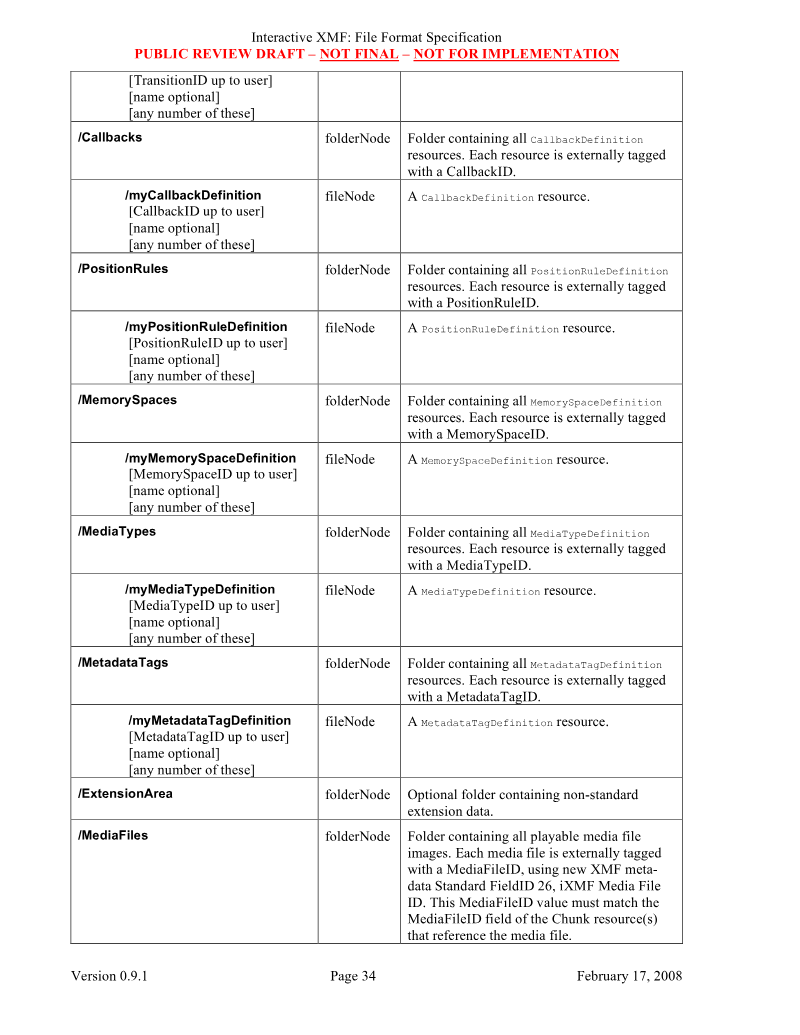
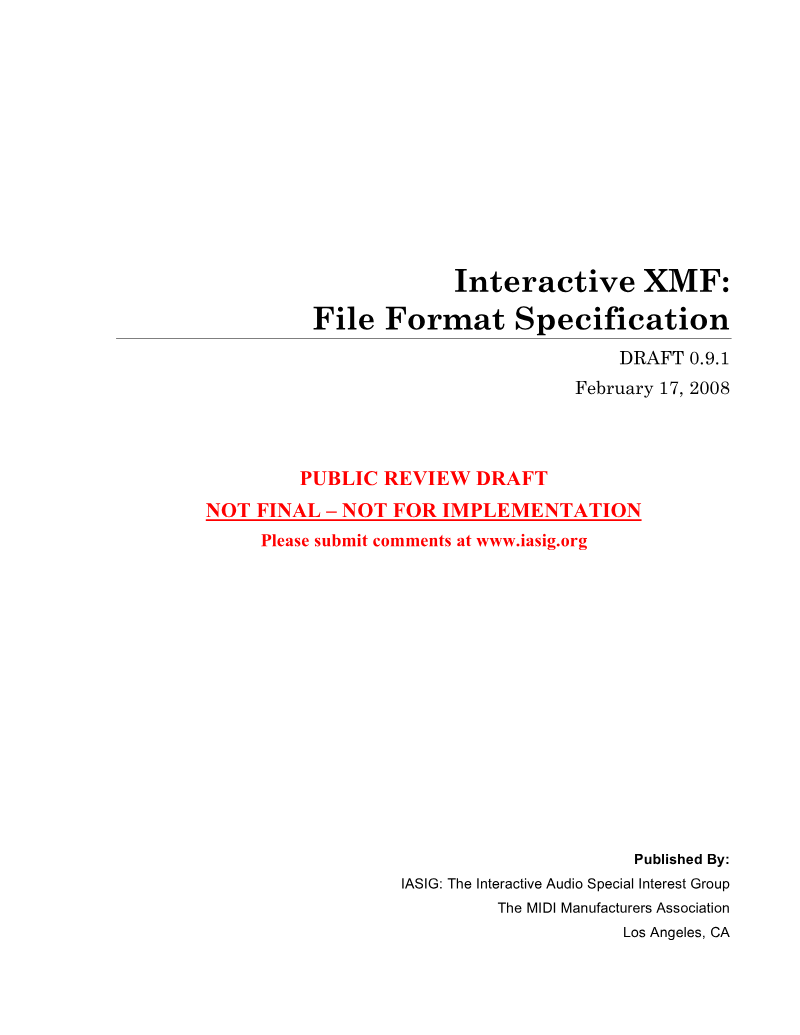
Interactive XMF (iXMF) serves as an open, interoperable standard for adaptive audio in gaming and interactive media.
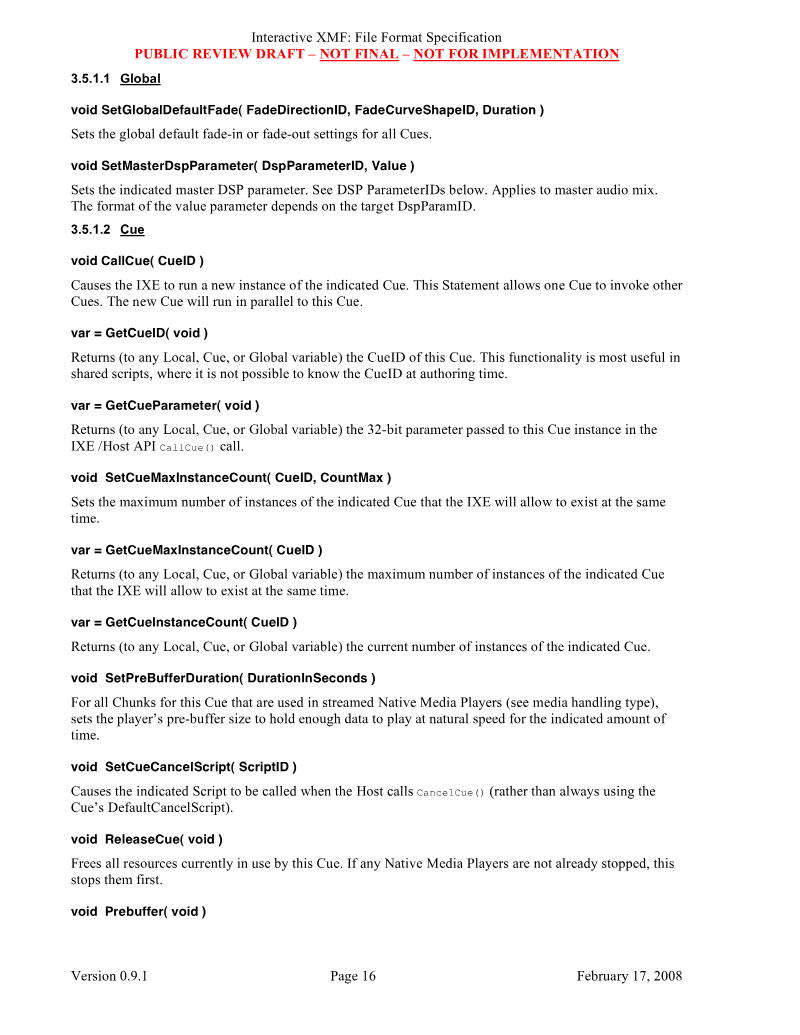
- Interactive XMF (iXMF) is an open, interoperable file format that bundles MIDI, digital audio, and scripting into a unified structure for dynamic, event-driven game audio.
- The iXMF Engine utilizes a stack-based expression processor to manipulate 32-bit signed integer variables across global, cue-specific, and instance-specific scopes.
- Developers can implement complex, non-linear audio through a built-in scripting language that supports conditional logic, DSP parameter adjustments, and memory management.
Mobile Audio Technology: Report and Recommendations
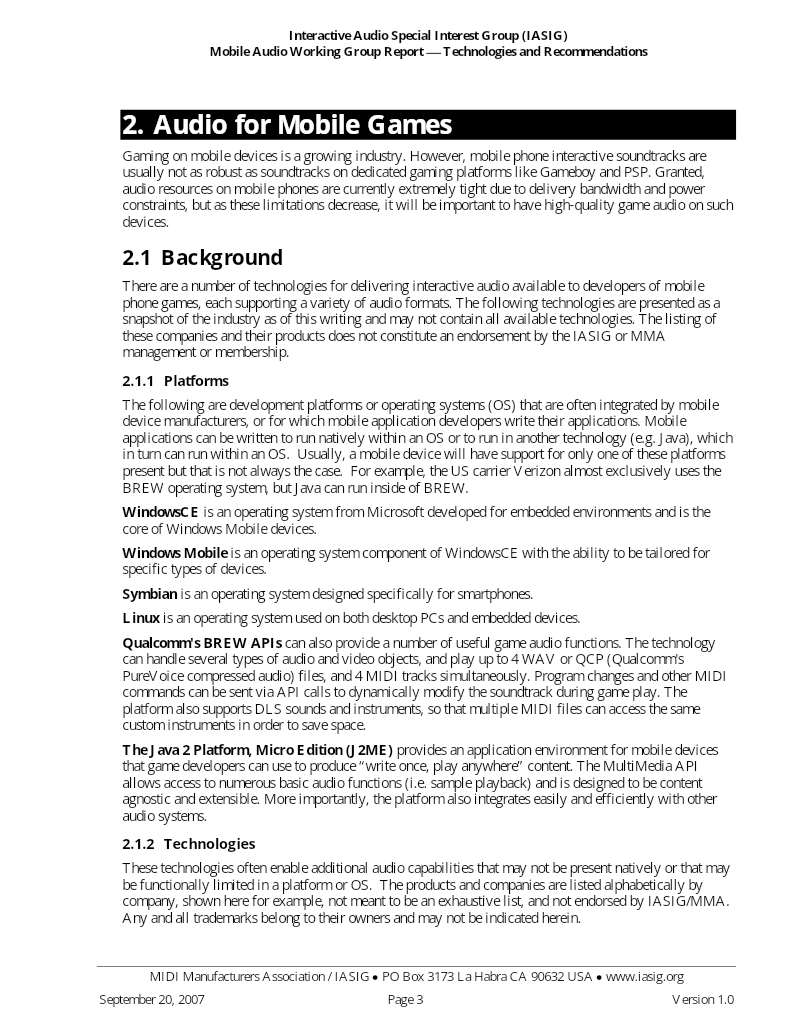
The mobile audio industry faces significant operational challenges due to extreme market fragmentation, characterized by the existence of over 50 file formats and 400 distinct device implementations.
- The mobile audio industry is hindered by extreme fragmentation, involving over 50 file formats and 400 distinct device implementations that inflate development and quality assurance costs.
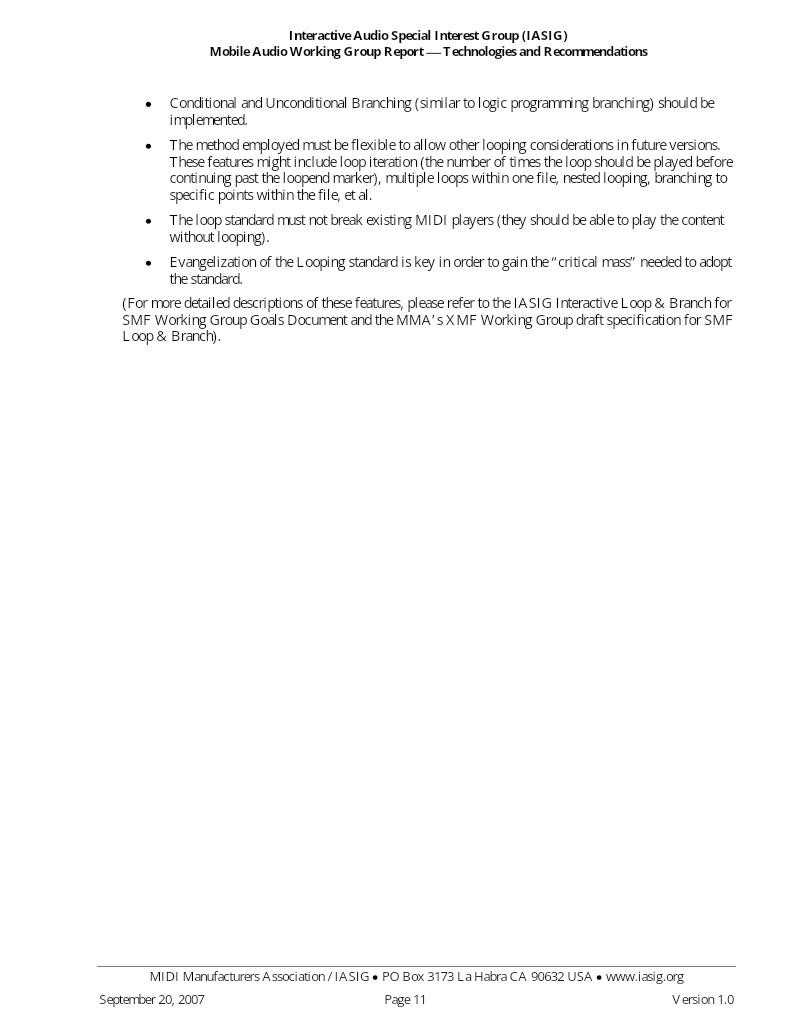
- To achieve cross-platform interoperability, the industry must transition to non-proprietary standards, specifically adopting SP-MIDI, General MIDI, and the XMF format.
- Standardizing APIs such as JSR-234 and OpenSL ES is essential to provide developers with consistent access to advanced features like Digital Signal Processing and 3D audio.
Interactive Audio on the Web: Review and Recommendations
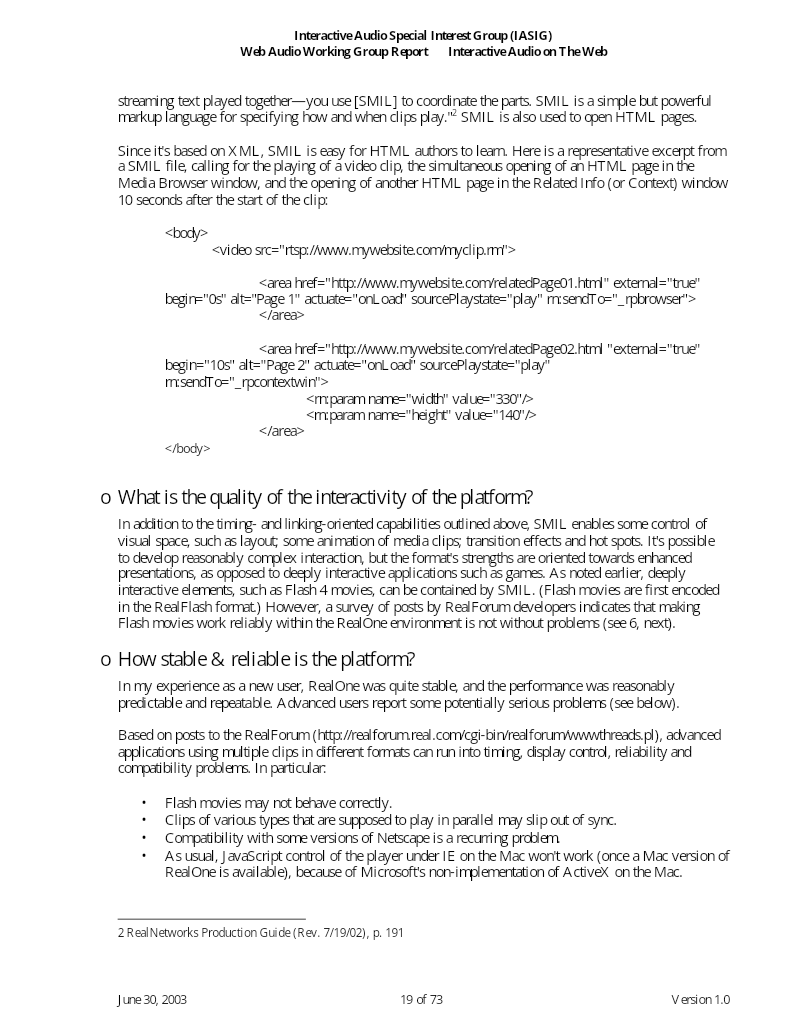
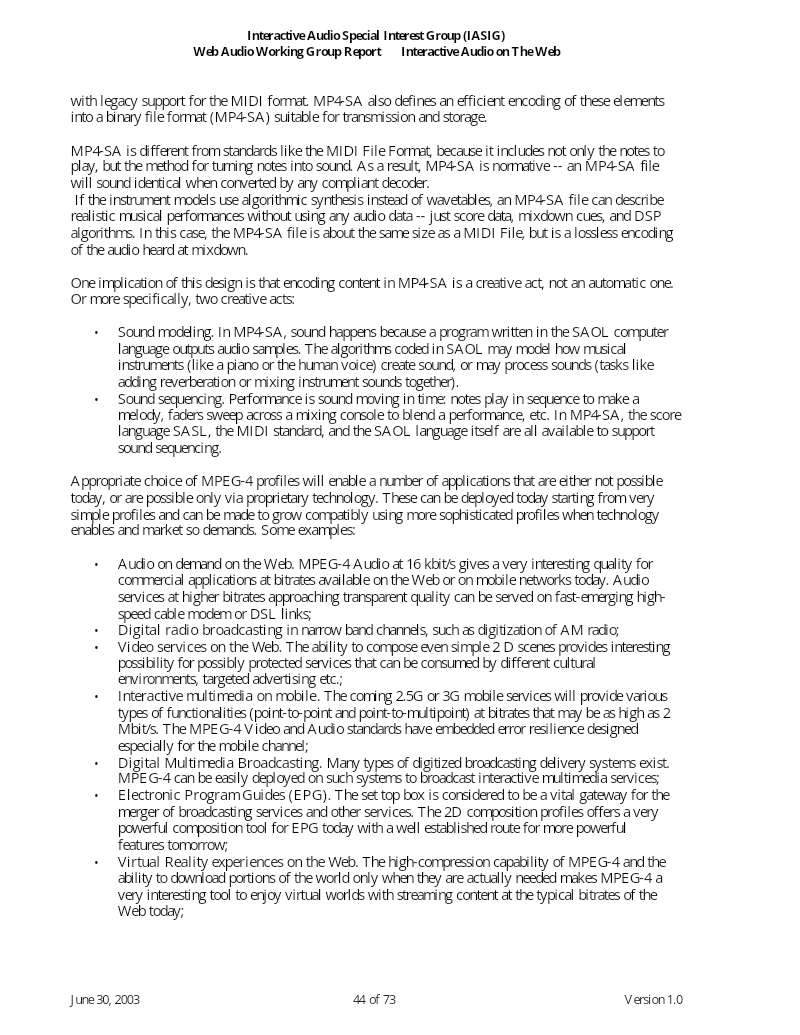
The web audio landscape in 2002 is defined by extreme fragmentation, characterized by a reliance on incompatible, vendor-specific technologies that hinder the development of consistent interactive experiences.
- The 2002 web audio landscape is defined by extreme fragmentation, forcing developers to rely on incompatible proprietary technologies like Macromedia Flash, QuickTime, RealOne, and Java.
- Macromedia Flash is currently the most viable and ubiquitous tool for interactive web audio, despite its lack of native digital signal processing and advanced sequencing capabilities.
- Advanced platforms like Java Sound and Beatnik offer superior synthesis and real-time manipulation but are marginalized by high barriers to entry and inconsistent browser integration.
3Dxp: DirectSound 3.0 Extension API
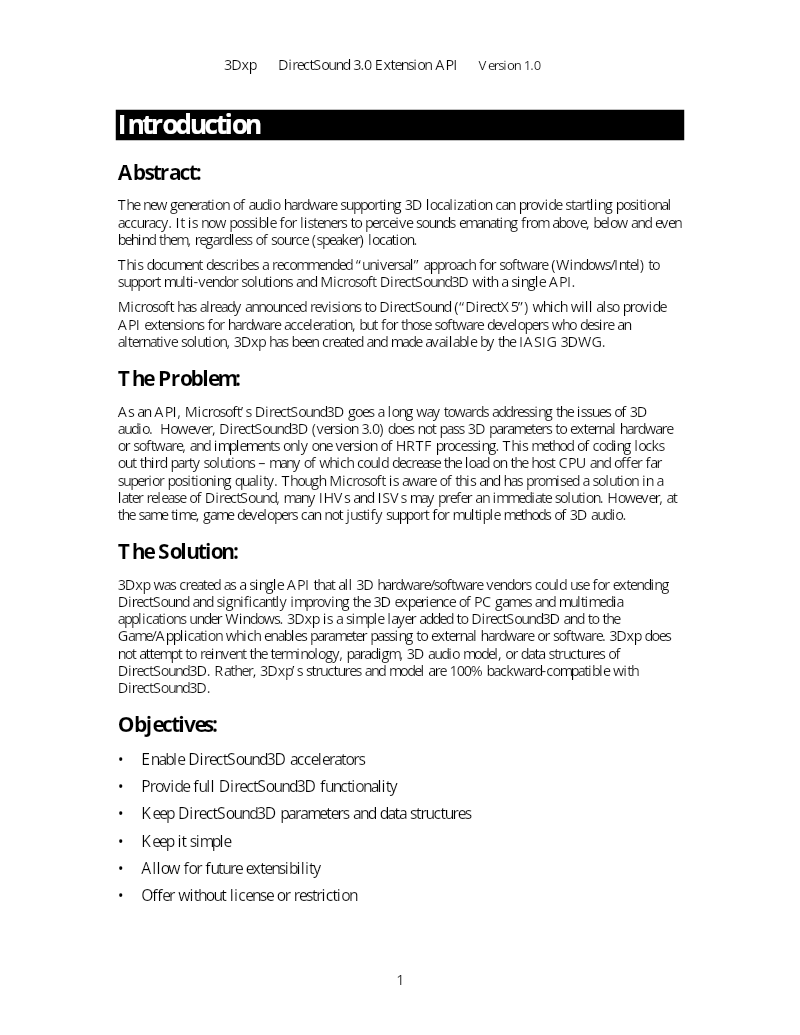
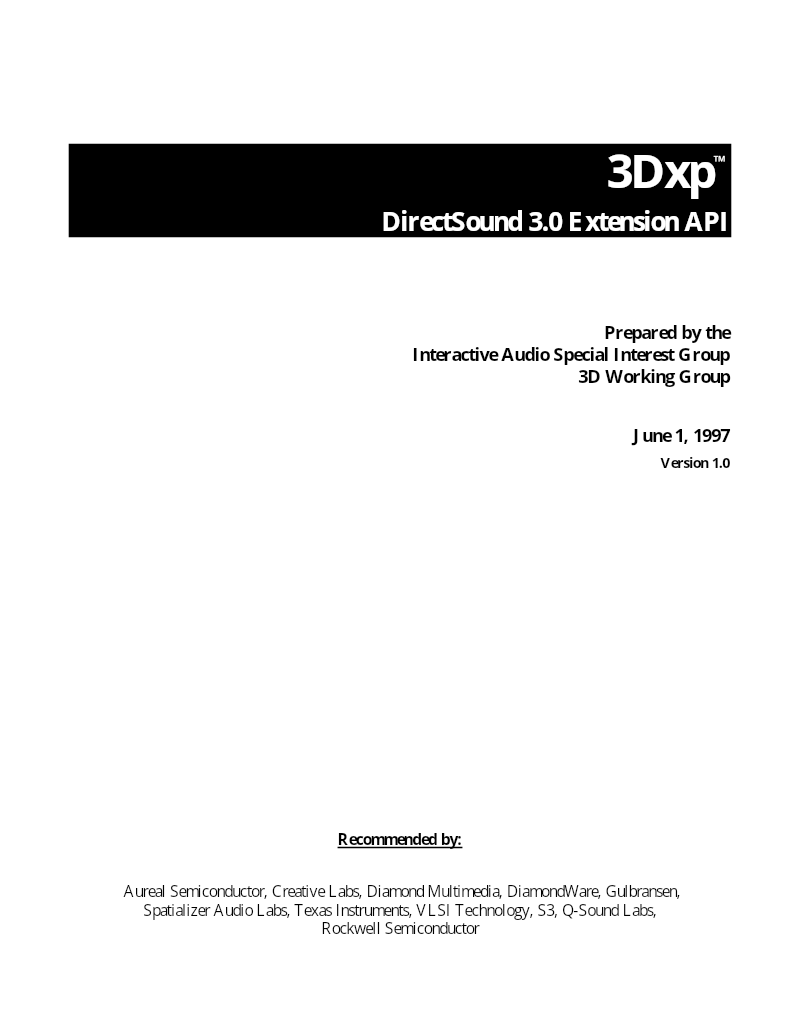
The 3Dxp API, developed by the Interactive Audio Special Interest Group’s 3D Working Group in 1997, serves as a standardized extension to Microsoft’s DirectSound 3.0.
- The 3Dxp API was introduced in 1997 as a standardized extension to Microsoft’s DirectSound 3.0 to enable hardware-accelerated 3D audio positioning on Windows PCs.
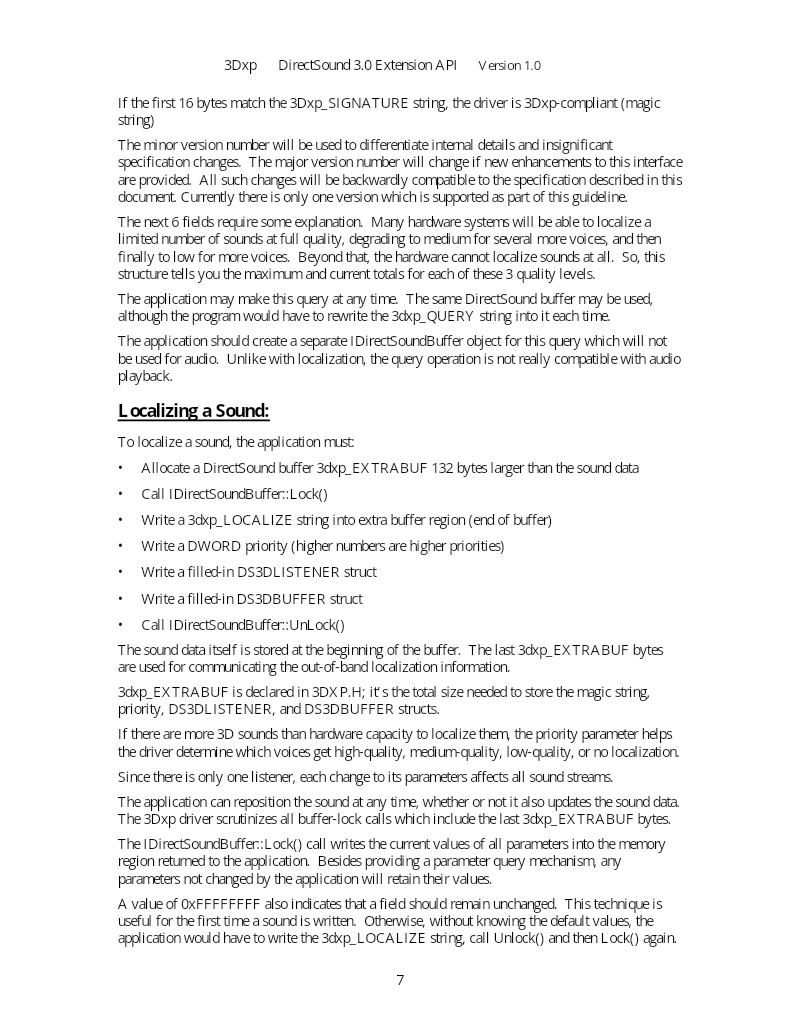
- The API functions by appending a 132-byte data structure to standard DirectSound buffers, allowing developers to pass 3D parameters like position, velocity, and cone orientation to external renderers.
- A reference wrapper enables automatic detection of 3Dxp-compliant drivers, proprietary solutions such as Aureal’s A3D, or a fallback to standard DirectSound3D.