Key insights
5 slides
The solution
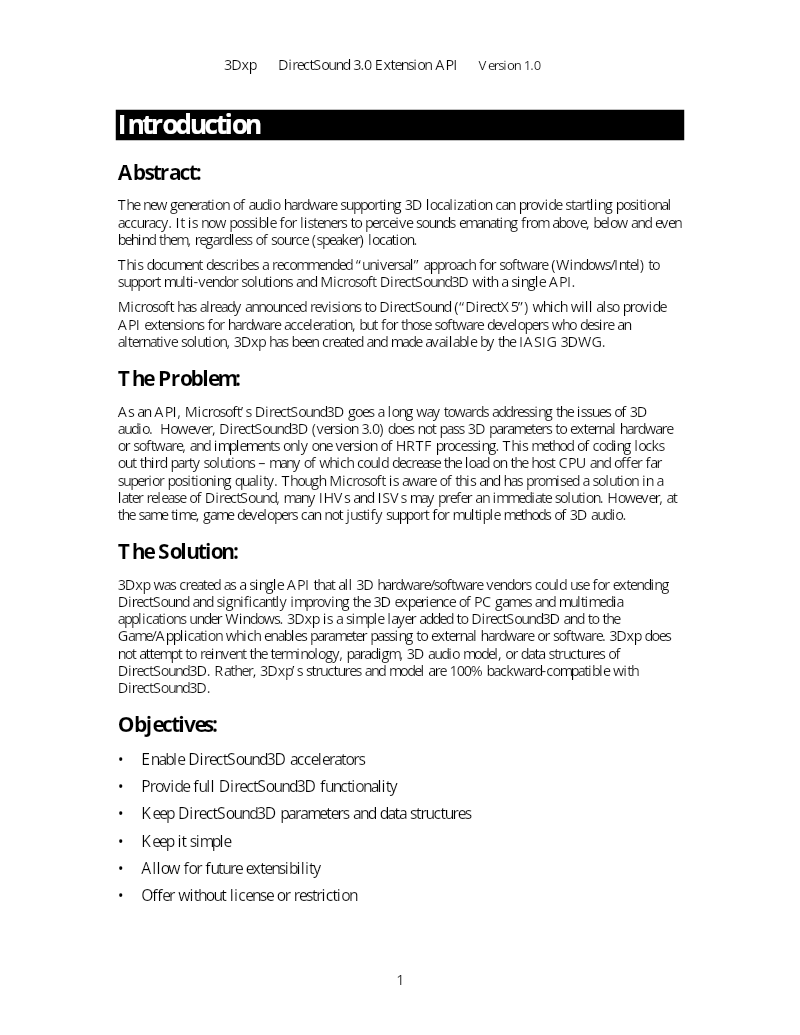
The 3Dxp API was introduced in 1997 as a standardized extension to Microsoft’s DirectSound 3.0.
This extension aimed to enable hardware-accelerated 3D audio positioning on Windows PCs. It provided a unified method for developers.
1 / 5
- 01The 3Dxp API was introduced in 1997 as a standardized extension to Microsoft’s DirectSound 3.0 to enable hardware-accelerated 3D audio positioning on Windows PCs.See it on page 5
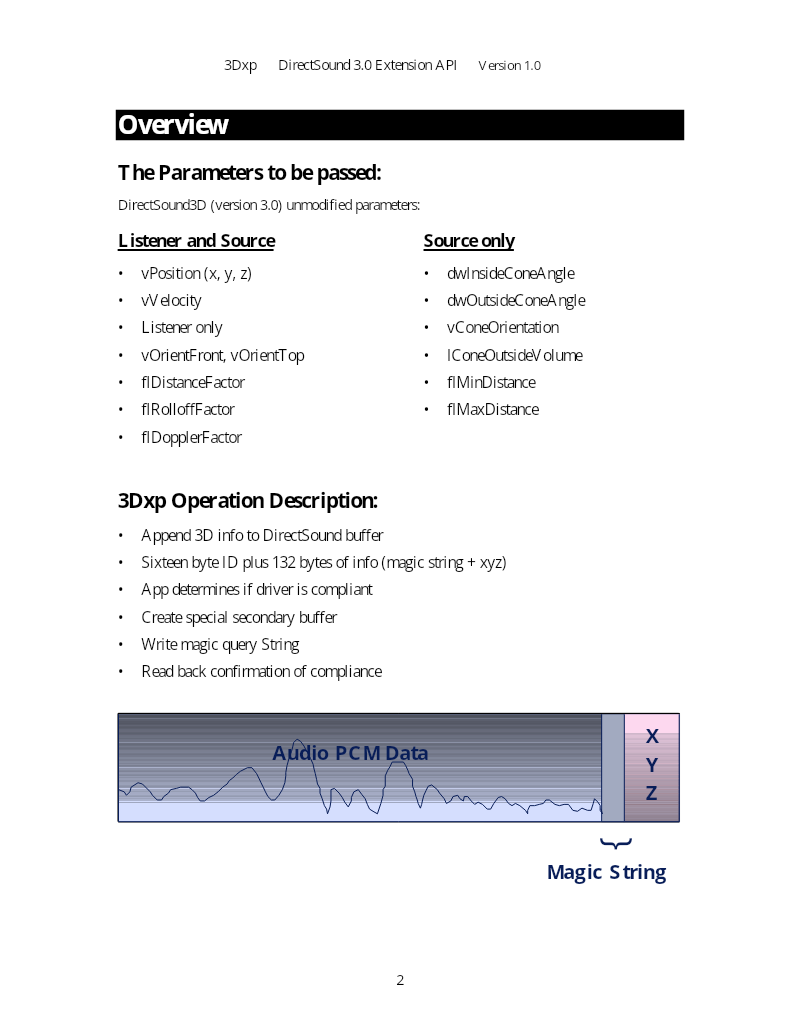
- 02The API functions by appending a 132-byte data structure to standard DirectSound buffers, allowing developers to pass 3D parameters like position, velocity, and cone orientation to external renderers.See it on page 6
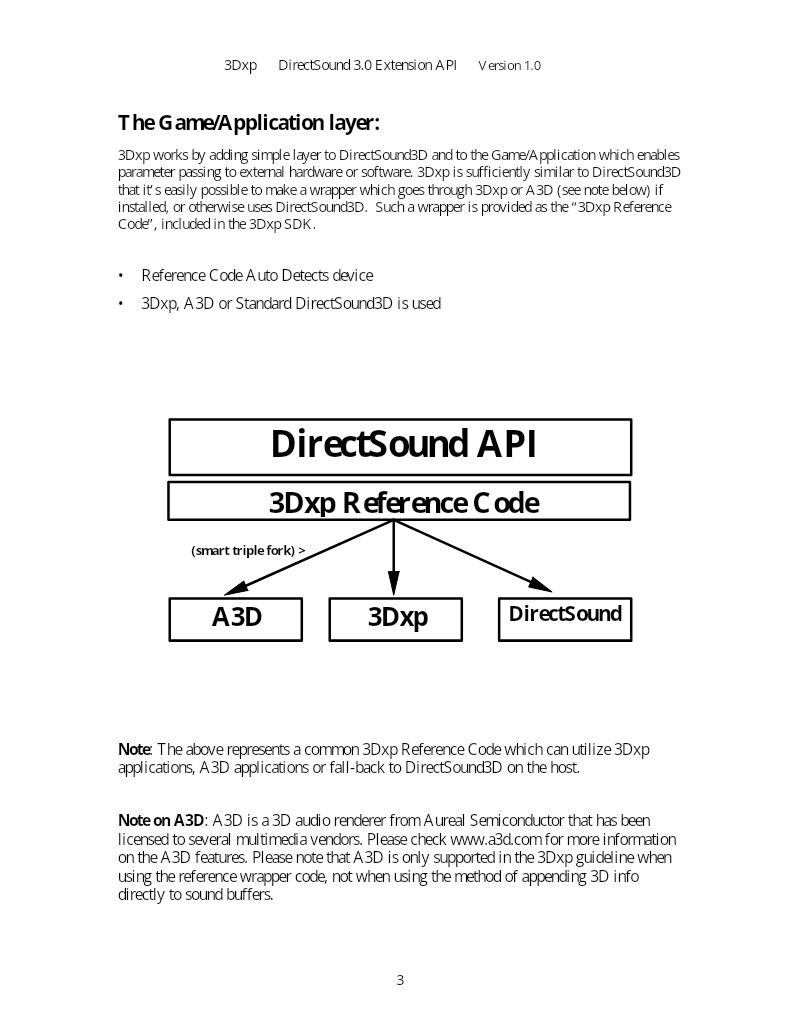
- 03A reference wrapper enables automatic detection of 3Dxp-compliant drivers, proprietary solutions such as Aureal’s A3D, or a fallback to standard DirectSound3D.See it on page 7
- 04The framework allows drivers to manage hardware resources dynamically by categorizing sound processing into high, medium, and low quality tiers based on system capacity.See it on page 11
- 05This lightweight implementation was designed to bypass the limitations of native DirectSound 3.0, which lacked robust support for third-party hardware acceleration at the time.See it on page 5
- 06The API provides a unified method for developers to implement high-fidelity 3D audio without requiring a complete overhaul of existing audio code.See it on page 5
Ask AI about this report
Summary
The 3Dxp API, developed by the Interactive Audio Special Interest Group’s 3D Working Group in 1997, serves as a standardized extension to Microsoft’s DirectSound 3.0. Its primary purpose is to provide software and hardware developers with a unified method for accelerating 3D audio positioning on Windows-based PCs. By functioning as a lightweight layer that sits atop existing DirectSound structures, the API enables developers to pass 3D parameters—such as position, velocity, and cone orientation—to external hardware or software renderers without requiring a complete overhaul of their existing audio code.
The technical implementation relies on appending a 132-byte data structure to the end of standard DirectSound buffers. This structure contains a "magic string" to verify driver compliance, along with essential 3D parameters. The API includes a reference wrapper that allows applications to automatically detect and utilize 3Dxp-compliant drivers, proprietary solutions like Aureal’s A3D, or fall back to standard DirectSound3D if no specialized hardware is detected. This approach ensures backward compatibility while allowing developers to bypass the limitations of the native DirectSound 3.0 API, which at the time lacked robust support for third-party hardware acceleration.
The documentation provides comprehensive guidelines for both game developers and hardware vendors, including sample code for driver lock and unlock sequences. By defining specific quality tiers—high, medium, and low—the API allows drivers to manage hardware resources dynamically based on system capacity and sound priority. This framework was intended to move the PC industry toward a common standard for high-fidelity, multi-vendor 3D audio, offering a practical, immediate solution for developers seeking superior performance and positional accuracy prior to the release of subsequent Microsoft DirectX updates.