1 free read left. Create a free account for unlimited reading + AI research.
Create free account
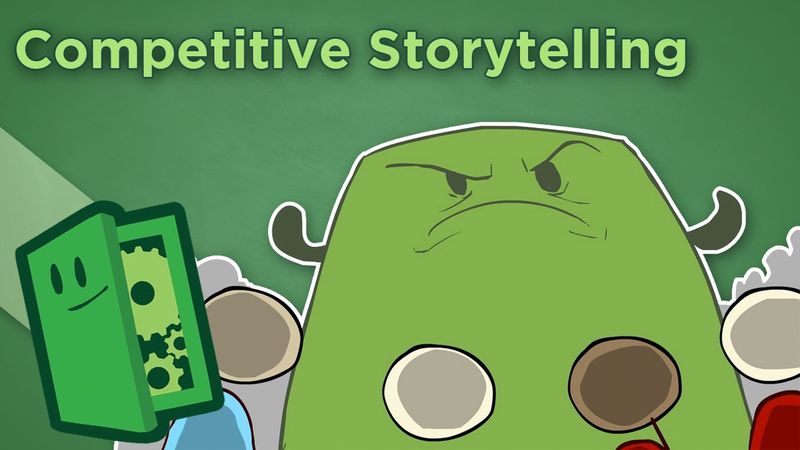
Competitive Storytelling - How to Create Narrative in Multiplayer Games - Extra Credits
Key insights
6 takeaways- 01Competitive multiplayer games struggle to implement traditional narrative arcs because the requirement for a fair, repeatable play environment necessitates a game-state reset after every session.
- 02The cyclical nature of competitive matches prevents the persistent environmental changes and character growth essential to conventional storytelling.
- 03Integrating narrative goals into competitive gameplay risks misaligning player incentives, as individuals may prioritize story objectives over the core goal of winning.
- 04Narrative-driven tasks can lead to suboptimal team performance and player frustration, undermining the collaborative integrity of the competitive arena.
- 05Meta-level events that allow community actions to influence future content updates represent a high-risk design strategy for bridging the gap between narrative and competition.
- 06Designers are shifting away from grand, overarching plots in favor of non-traditional storytelling frameworks that exist alongside, rather than in opposition to, the mechanics of competitive play.
Ask AI about this video
Transcript
[Music] [Music] this year James ended up working on a lot of competitive multiplayer games from ccgs to mobos to Shooters and time and again the same question came up why do these games in general fail on delivering narrative So today we're going to dig into that question and explore the challenges of creating strong narrative arcs in competitive multiplayer experiences that said we're going to be doing more outlining and elucidating the question than giving straight up answers this time around as a lot of the possible solutions James came up with are unfortunately still under NDA so why don't we get better storylines in our competitive experiences it's not that they lack emotive engagement I mean the thrill of victory or the anguish of defeat runs deep in these types of games and it's not that they don't have epic moments we've all told a friend about that amazing game we had or that awesome play we saw somebody make and it's not even that the companies working on these things don't care about narrative or don't think that's what the experience
is about it's simply that these games present a number of challenges to delivering on narrative as in some ways the things that traditionally make narrative strong clash with the core experiences of these types of games first and foremost is that narrative is about change it's about transition growth and a progression of events this is directly at odds with the fact that short session multiplayer games basically have to wipe the Slate clean after each match sure between rounds you might get some incremental Buffs to your character with a leveling system or some such but for each match to be fair for each match to play out the way that designers intend and thus create a satisfying Arena to compete in these matches have to exist in isolation the state of the world has to reset after each match on the simplest level imagine a match of Battlefield where the level didn't reset where the stage started up in whatever state the last teams had left it buildings destroyed Vehicles all over the place Health packs lying where they may this tells a very real narrative when you step onto that field you feel the ghosts of old battles you see the impact of shells and you can probably even make out where there was a glorious charge or a heroic Last Stand
but imagine playing on that map it' make for a terrible play experience or at least certainly worse than if the level had started in its proper State a one team would have a clear Advantage you'd have no way of knowing where to find good cover or to pick up the vehicles you wanted and so on so clearly that's out of the question competitive games would lose the fine tuning that makes them great by carrying over even basic persistence in the world to say nothing of the characters but what if we went a different way what if we approached it the way we outlined back when we talked about narrative and MMOs doing story shifts and discreet increments at fixed times I mean these games are being patched constantly anyway often adding new characters or places to the world so why not involve the player and bring narrative into ongoing events that the players participate in for example you could run an event where character a and character B are Rivals over the next 4 months you aggregate your data take your metrics and the character that defeats the other character more often gets some addition to the game that relates to them a new Zone based on their Homeland a new set of cards that focuses on their faction or the champion that ties into their narrative Arc this seems well and good none of these things have to be game-breaking or even affect play
functionally the designers can have already designed all the content that was going to be added and then just reskin it to fit the narrative change so no matter who wins mechanically it doesn't change the game at all the problem though comes in when you take into account player Behavior you see now you've potentially incentivized something other than winning the match imagine you're playing a mooba and you're in there all jazzed up to win a game but the character rivalry event I described is going on now imagine that one of the players on your team just loves one of the champions in the Rivalry event and wants to make them win wants to make sure that they get new content for that champion so there you are with your team trying to win this thing but that other player just keeps wandering off to hunt their rival trying to rack up as many kills as they can for The Meta event and they may successfully kill that other character like 10 times before the game's over but your team ends up losing anyway because you've essentially been playing four on five for the entire game this is an incredibly frustrating experience for the other four players on the team it's exactly the experience you don't want your players to have this leaves little Avenue for delivering story in this manner either there are ways you can make it work but they're scarce and they
have to be very carefully crafted there are other avenues especially out of game avenues that have potential but narrative outside of play is Never Enough by itself and so having to build a narrative around a resetting game State without having that narrative in any way influence how players play becomes an incredibly tough problem all I'm allowed to say for now in terms of solutions is that so far I believe we're looking to the wrong places there are other vectors of narrative delivery other than what we think of traditional Grand narrative or overarching story that may serve us better to cre create a meaningful narrative experience in our multiplayer competitive games alas that's as much as we can say about it at the moment hopefully this at least helped frame the question and started some gears turning see you next week
a [Music]
Summary
Competitive multiplayer games face a fundamental structural conflict when attempting to integrate traditional narrative arcs. While these titles often succeed in generating emotive engagement through the thrill of competition and the creation of emergent, player-driven stories, they struggle to implement formal, developer-led narratives. The primary obstacle is the requirement for a fair, balanced, and repeatable play environment, which necessitates resetting the game state after every session. This cyclical reset prevents the accumulation of persistent environmental changes or character growth, both of which are essential components of traditional storytelling.
Attempts to bridge this gap through ongoing, meta-level events—such as community-driven rivalries that influence future content updates—often introduce significant design risks. When narrative goals are tied to specific in-game actions, players may prioritize these objectives over the core competitive goal of winning the match. This misalignment of incentives can lead to suboptimal team performance and frustration among participants, as individual narrative pursuits undermine the collaborative nature of multiplayer gameplay. Consequently, designers must navigate the delicate balance between fostering a cohesive story and preserving the integrity of the competitive arena.
The challenge of narrative integration remains a complex design hurdle, as traditional methods of storytelling often clash with the mechanical requirements of competitive play. Rather than relying on conventional grand narratives or overarching plots, the industry is increasingly looking toward alternative vectors of narrative delivery. Future solutions likely lie in exploring non-traditional storytelling frameworks that can exist alongside, rather than in opposition to, the resetting nature of competitive multiplayer sessions, ensuring that narrative elements enhance the experience without compromising the fairness or functionality of the game.


















Comments