1 free read left. Create a free account for unlimited reading + AI research.
Create free accountWhitepaper DiGRA
1 free read left. Create a free account for unlimited reading + AI research.
Create free accountWhitepaperDiGRA
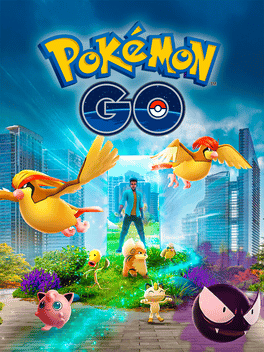
Local governments can layer custom activities such as scavenger hunts, raffles, and participatory street art onto Pokémon GO. The author calls this a 'ludo mix'.
This study examines how city governments in the United States appropriated and remixed Pokémon GO to serve local goals beginning in 2017, focusing on the contrasting tactics of two American cities in staging "open streets" events. The central argument is that mainstream games create a new opening for municipal agency, since local governments can layer custom activities, scavenger hunts, raffles, and participatory street art onto a game whose design is controlled globally by its developer. The author frames this as an emerging "ludo mix" in which location-based play intersects with longstanding questions of public space, neighborhood cohesion, and civic governance.
The research draws on a six-month series of interviews with city staff and Niantic collaborators conducted during 2017 and 2018, along with participant observation at each city's culminating event and tracking of player discourse across message boards, social media, and Discord. Impact is assessed against city goals such as revenue for local businesses, shifts in the balance between residents and visitors, and connections between player communities and civic associations. One event reportedly drew around 30,000 players within a larger gathering of 100,000 attendees, while the other city deliberately chose a smaller scale to preserve control over local history.
Findings suggest that city leaders can assert meaningful agency through partnership with the game company, and that equity goals, such as adding content about marginalized northside neighborhoods and investing in inclusivity, can be pursued at the local level. The author cautions, however, that both efforts were largely top-down and risk reinforcing existing power structures. Early tradeoffs emerge around how much power is shared with the company and with residents, and the study finds that the framing of a remix may matter as much to municipal satisfaction as specific game placement. The work concludes by proposing design principles grounded in community-level tactics rather than technology affordances alone.
Each row is a game or company this document names, each column a document, oldest first. A mark means that document names it. Select a row to see those documents.

DiGRA · 2026

DiGRA · 2026



DiGRA · 2026



DiGRA · 2026



DiGRA · 2026



DiGRA · 2026



DiGRA · 2026



DiGRA · 2026

DiGRA · 2026



DiGRA · 2026



DiGRA · 2026

DiGRA · 2026
Game Developers Conference · 2021