1 free read left. Create a free account for unlimited reading + AI research.
Create free accountArticle Eludamos: Journal for Computer Game Culture
1 free read left. Create a free account for unlimited reading + AI research.
Create free accountArticleEludamos: Journal for Computer Game Culture
The authors argue that the order in which categorizations appear shapes how players engage with combat and its moral positions.
Categorizations of World War II in Videogames examines how contemporary games frame the Second World War and invite players to take part in its virtual military action. Drawing on membership categorization analysis, the study looks at 17 singleplayer titles released since 2000 across first-person shooters, strategy games, and flight simulations. Its central argument is that games do not simply depict the war but categorize it, and that the order in which these categorizations appear shapes how players are led to engage with combat and the moral positions it offers. The authors identify eight categorizations (historical, emotional, WWII of subjects, acting-out, aesthetic, managing, technological, and heroic), with each genre tending to favor particular ones while individual games often combine several.
The analysis traces a sequence of stages that moves players from spectator to involved combatant. Introductory footage, often black-and-white and archival in style, establishes a "historical WWII" in which Nazis and fascists are cast as aggressors and players are invited to sympathize with victims from a distant vantage. An "emotional WWII" stage then introduces a named character with a personal backstory to build empathy and moral commitment, followed by a "WWII of subjects" stage in which mission briefings address the player directly as a participant under command. Genre-specific modes such as acting-out, aesthetic, and managing answer the player's questions of what the game is and how they can take part, while technological and heroic framings, which present enemy hardware as artefacts to master and missions as tests of individual skill, serve as practical tools for progression.
The study's conclusions are primarily qualitative and rest on example games rather than systematic quantitative data. The authors contend that the cumulative sequencing of these categorizations prepares players to accept military violence, sanitizes representations of death, and directs attention away from human victims. The work is notable for adapting a method developed for human categories to the study of game design.

Eludamos: Journal for Computer Game Culture · 2026

Eludamos: Journal for Computer Game Culture · 2026

Eludamos: Journal for Computer Game Culture · 2026

Eludamos: Journal for Computer Game Culture · 2026

Eludamos: Journal for Computer Game Culture · 2026

Eludamos: Journal for Computer Game Culture · 2026

Eludamos: Journal for Computer Game Culture · 2026

Eludamos: Journal for Computer Game Culture · 2025

Eludamos: Journal for Computer Game Culture · 2025

Eludamos: Journal for Computer Game Culture · 2025

Eludamos: Journal for Computer Game Culture · 2025

Eludamos: Journal for Computer Game Culture · 2025
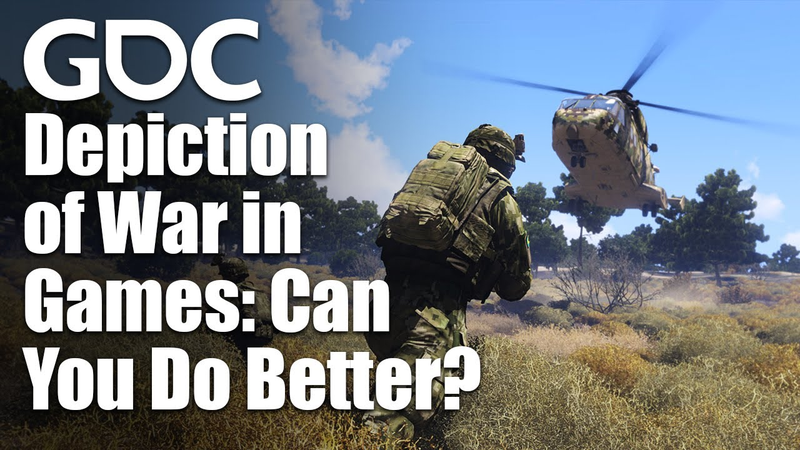
Game Developers Conference · 2020