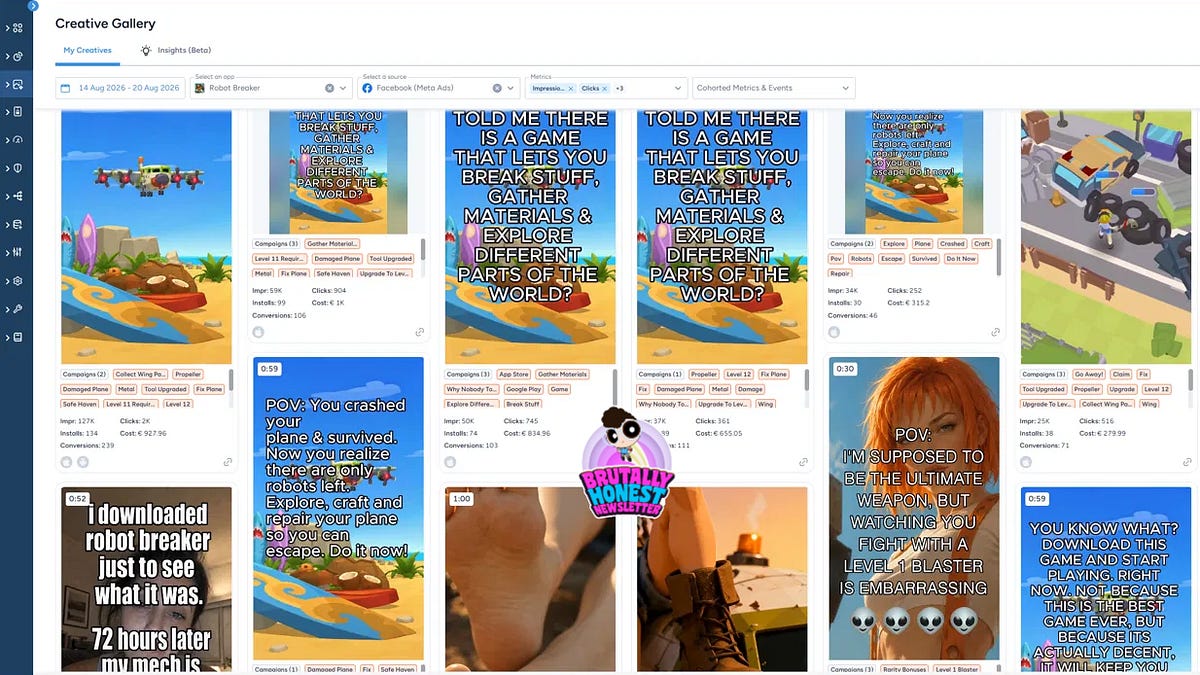
This analysis explores the evolving landscape of mobile user acquisition (UA) in the wake of Apple’s App Tracking Transparency (ATT) framework. The primary thesis centers on the necessity of high-impact creative strategies to overcome the loss of granular targeting data. By focusing on the structural components of mobile advertisements, the findings suggest that the first four seconds of a creative—the hook—are the most critical for audience retention. This must be followed by "meat," which utilizes gameplay recordings or altered gameplay to showcase unique selling points, and a clear call-to-action to drive user conversion.
The scope of the commentary covers the global mobile gaming industry, with specific focus on the European market and major industry players like Playtika and Rovio. It highlights a significant shift in corporate strategy, noting that some major publishers have suspended new game launches due to the challenging marketing environment and the perceived decline of the traditional free-to-play model. This reflects a broader industry sentiment that the post-IDFA landscape has fundamentally altered the feasibility of scaling new titles.
Methodologically, the insights are derived from professional consultancy experience and qualitative industry observations. The analysis warns against unethical practices in the sector, such as the use of sexist imagery in advertising and the intellectual property disputes that arise when publishers reject creative concepts only to implement them later without compensation. Ultimately, the findings conclude that while the technical aspects of UA have become more difficult due to privacy changes, success now relies heavily on creative innovation and navigating a consolidated, high-risk market.