1 free read left. Create a free account for unlimited reading + AI research.
Create free accountWhitepaper North Carolina State University
1 free read left. Create a free account for unlimited reading + AI research.
Create free accountWhitepaperNorth Carolina State University
This investigation examines the visuo-temporal tradeoffs made by esports athletes in the multiplayer online battle arena (MOBA) game Dota 2. The primary objective is to understand how players balance visual fidelity against temporal performance—specifically frame rate and latency—to gain a competitive advantage. The study explores whether players consciously sacrifice visual quality, such as texture resolution and lighting effects, to achieve the higher frame rates and lower input lag generally associated with improved gaming performance.
The methodology involved a pilot survey of 43 Dota 2 players recruited via Reddit. Participants submitted their in-game configuration files, which contain over 450 settings, and completed a three-question subjective survey regarding their intent when adjusting settings to improve performance. The analysis focused on 15 specific configuration settings known to impact visual or temporal detail. While the sample size is small and not representative of the millions of global Dota 2 players, the data provides a preliminary look at common configuration trends within the esports community.
Key findings indicate a strong preference for temporal performance over visual quality. Over 80% of participants disabled VSYNC, a setting that reduces latency and increases frame rate at the cost of visual tearing. Furthermore, players consistently reported that they would reduce shadows and textures first to improve performance, while rarely choosing to reduce screen resolution. The study also highlights a significant degree of confusion among players regarding the impact of the hundreds of available settings, suggesting that the current interface for managing these configurations is overly complex. The findings suggest that while players prioritize temporal detail, they do so with varying levels of understanding, and there is a clear need for future, larger-scale research to validate these trends and provide better guidance for both developers and competitive gamers.
Each row is a game or company this document names, each column a document, oldest first. A mark means that document names it. Select a row to see those documents.
Karlsruhe Institute of Technology · 2025



Zurich University of Applied Sciences · 2026
ACM CHI PLAY · 2023
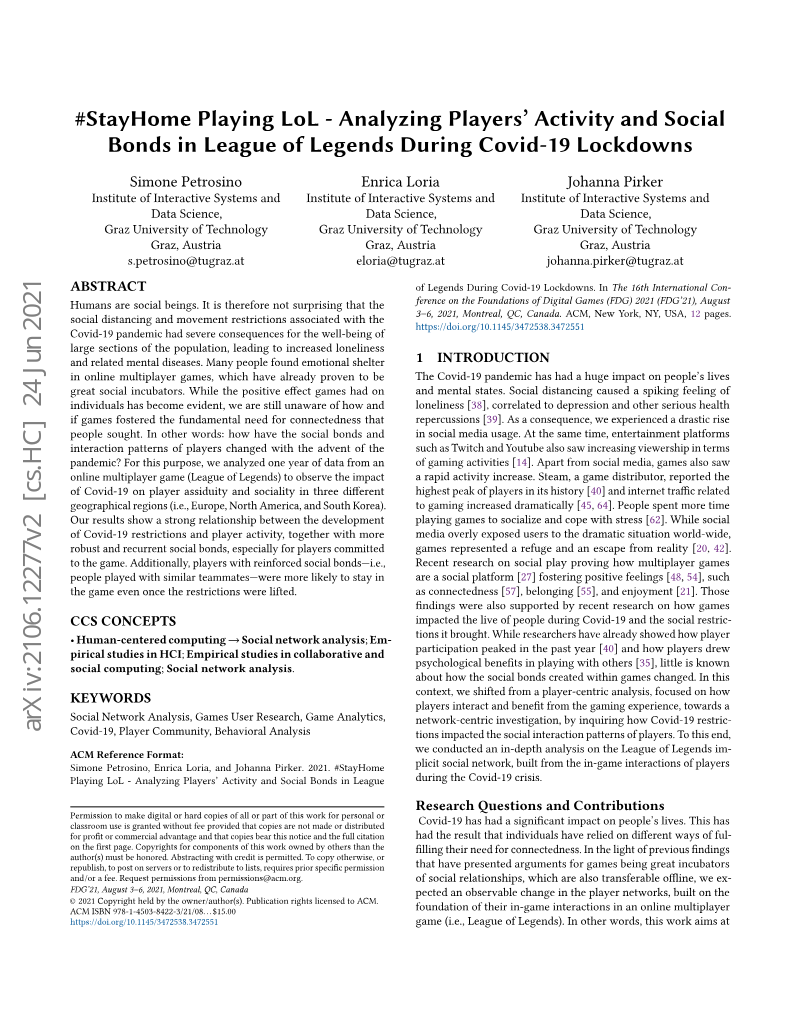
Graz University of Technology · 2021

DiGRA · 2016
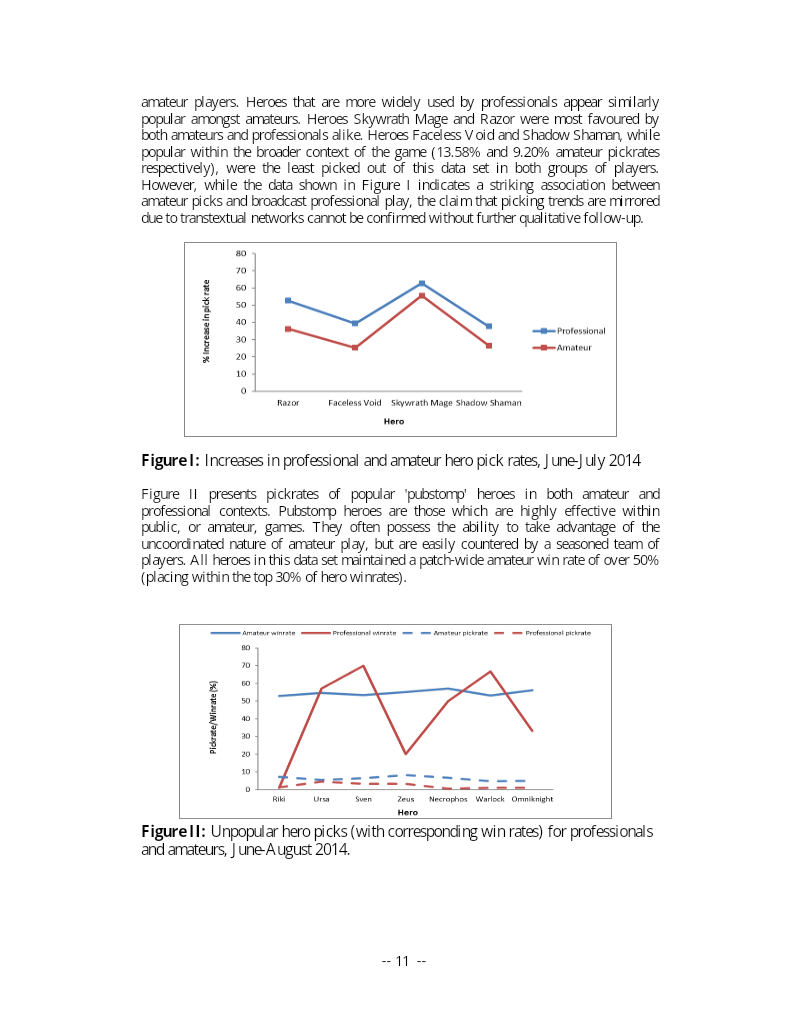
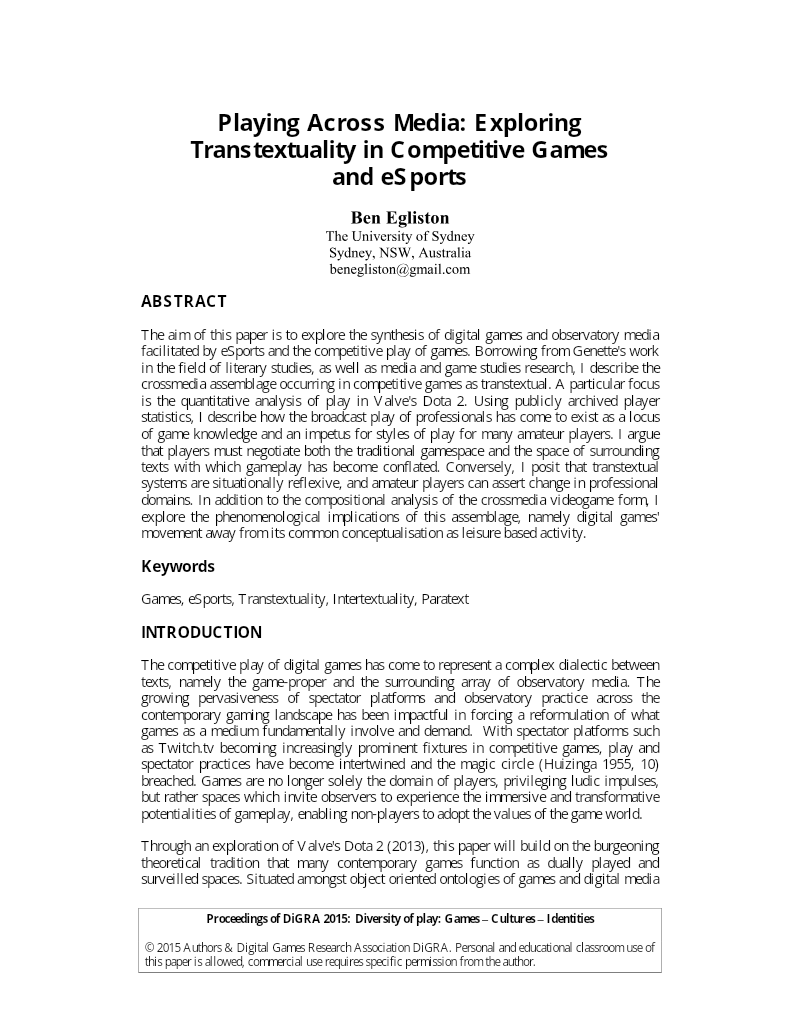
DiGRA · 2015

DiGRA · 2014

Replay. The Polish Journal of Game Studies · 2026
DiGRA · 2026
DiGRA · 2026

Extra Credits · 2026

Palgrave Macmillan · 2026