1 free read left. Create a free account for unlimited reading + AI research.
Create free accountWhitepaper Pullup Entertainment
1 free read left. Create a free account for unlimited reading + AI research.
Create free accountWhitepaperPullup Entertainment
Distilling the key insights…
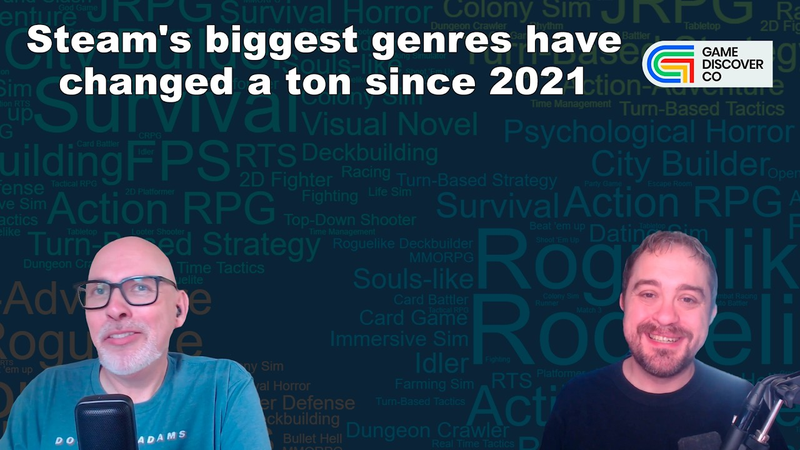
The research introduces a novel algorithmic approach for clustering video games into coherent groups, each assigned a distinctive name based on Steam tags. The primary objective is to facilitate market segmentation and benchmarking for researchers and developers by organizing large, heterogeneous sets of games into meaningful categories. Unlike traditional clustering methods that prioritize inter-cluster separation, this approach focuses on high intra-cluster similarity and the ability to assign a descriptive, over-represented tag to each group.
The methodology centers on a newly defined metric called the naming score, which utilizes Cohen’s h to measure the over-representation of a specific tag within a cluster compared to the broader set of games. The algorithm employs K-means clustering, optimized through the use of tag priority—a measure of a tag's essentiality to a specific game—and a hierarchical selection of "capital tags." These capital tags are categorized by rank to reduce noise and improve clustering quality. The process was tested on various subsets of Steam games, including broad categories and specific genres like Racing, Puzzle, and Rogue-like, using data sourced from the SteamSpy API.
Key findings demonstrate that incorporating tag priority and utilizing normalized, weighted capital tags significantly outperforms standard K-means clustering. The algorithm successfully produces coherent, interpretable clusters that align with community perceptions of game genres. While the method is highly effective, it requires games to possess at least one capital tag, though this limitation is negligible as 99.7% of games with at least 2,000 reviews meet this criterion. The study concludes that this automated, explainable approach provides a robust framework for market analysis, with potential for future refinement by allowing clusters to be defined by multiple tags rather than a single identifier.
Pullup Entertainment · 2026

Pullup Entertainment · 2026

Pullup Entertainment · 2026
Pullup Entertainment · 2026
Pullup Entertainment · 2026

Pullup Entertainment · 2026
Pullup Entertainment · 2026



Pullup Entertainment · 2025

Pullup Entertainment · 2025
Pullup Entertainment · 2025
Pullup Entertainment · 2025
Pullup Entertainment · 2025

Thomas Brush · 2025