1 free read left. Create a free account for unlimited reading + AI research.
Create free account
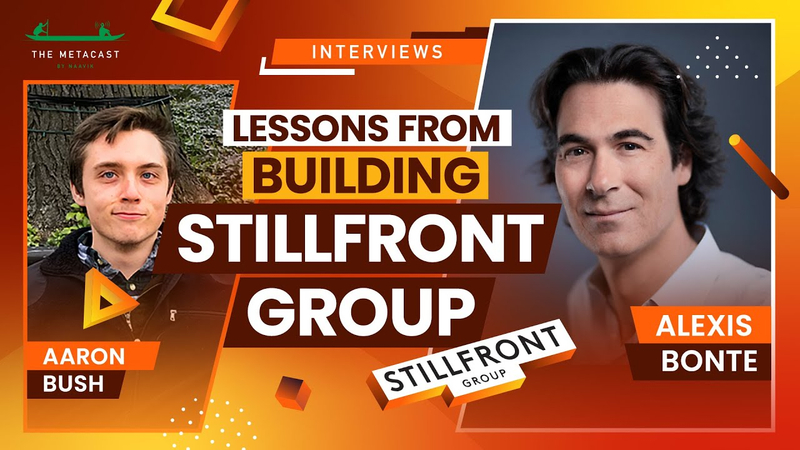
Alexis Bonte: Stillfront’s Strategy, Synergies & Future - The Metacast by Naavik
Key insights
6 takeaways- 01Stillfront leverages a centralized marketing hub and shared technical infrastructure to enable smaller studios to achieve economies of scale and cross-studio synergies.
- 02Stillfront Group manages a decentralized network of 23 game studios and 1,600 employees, utilizing an inverted pyramid model that centralizes administrative, legal, and HR functions to preserve studio creative autonomy.
- 03The company’s M&A strategy prioritizes the acquisition of profitable, experienced studios within evergreen verticals like sports and role-playing games to ensure long-term operational stability over high-risk ventures.
- 04The current gaming market is shifting away from speculative Web3 investments toward sustainable R&D and industry consolidation, favoring established teams with proven track records.
- 05Stillfront maintains performance by minimizing corporate bureaucracy and fostering a culture of trust, prioritizing operational efficiency alongside creative innovation.
- 06The organization is actively diversifying its geographic portfolio, with a specific strategic focus on expanding into the Japanese market to mitigate industry-wide volatility.
Ask AI about this video
Transcript
[Music] hold up [Music] hi everyone and welcome to the metacast by novik a podcast in which we export the business and future of video games I'm Aaron Bush and today I have the absolute pleasure of talking to Alexis bont Alexis is the CEO of stillfront group a global and growing group of gaming Studios that publishes primarily on mobile and the web and he is also an active board member and investor among other accolades and at navic we've been long time followers of still front so I'm really looking forward to diving in and learning more today Alexis welcome oh thank you Aaron very very happy to uh to have the chance to speak with you and
uh I'm an Avid Reader of uh of navic so uh always always great to uh also uh speak with you and I was very happy to actually meet you in person uh not that long ago yeah that was fun at Gamescom well I guess to start Alexis could you quickly just tell us your games industry story and how you know how that led to joining still front and then we'll we'll dive in a bit more on all things still front later in the conversation yeah sure I mean I'm I'm actually um uh you know I'm part of this kind of generation that that they grew up playing games you know I started with the Spectrum 48k then let me get 500 uh you know it was the most exciting purchase I ever made and saved years for it was a was a pc286 so I could play Wing commander and uh so you know I'm definitely a big games fan you know I have way too many one more terms of civilization uh so that's that's really you know clearly a passion uh for me uh video games
um and then I actually went into uh um a different direction I became an entrepreneur I uh started a a company out of business school um that was called tradeokay.com when I was uh 21 years old uh that didn't work out um but you know it was two years intense MBA I call it uh but um it still resulted in a in an exit to to ipsos a few years after so we were quite lucky but that gave me the opportunity to meet uh the people at lastmed.com so the founder of lastman.com for people who don't know it was kind of the Expedia of Europe was one of kind of the first large you know internet um success stories um it also got battery line was the last company to uh to IPO before the bubble burst back in 2000 so the idea I think we iPod in April April March 2000 and then the mobile right after right after us and uh and so I was part I was not a Founder at lastminute.com it was what we called you
know founding team you know part of the founding team so which means you know one of the first uh employees there and uh was very lucky you know we we had a very crazy roller coaster ride I think we were one of the first unicorns in Europe after the IPO I think we were worth uh the companies were like 1.1 billion dollars and we're making less Revenue than the pub where we had our meetings um and then fast forward you know to September 11 2001 uh you know the whole tourism industry you know completely crashed and and stopped uh and are I think our market cap we had 88 million dollars in the bank and our market cap was 48 million we were worth less than half wow the cash we had in the bank but just at that time the business started to take over and started to work because the airlines are giving us uh you know uh stock the hotel started giving us rooms to sell the whole business basically started working when we were everyone
thought we were dead I think people were calling us last minute.bomb uh which was interesting uh and then fast forward um a few years we sold the company 2005 to saber for uh 1.1 billion dollars uh so that time I you know um uh became financially independent and uh and decided to pursue my childhood dream which was to start a game studio so I did a few Angel Investments here and there very bad ones because I didn't know how to invest so lost the big part of what I made in last minute.com in bad Investments so if you want to know how to do bad Investments uh ask me I've learned a bit since then but that first phase of Angel investment was really bad uh but one of the things I wanted to do was to do video games and uh I got quite early into the kind of the basically I got very frustrated because I said I'm going to start playing again because I didn't have time to play I realized I couldn't play any games on my PC because my PC was not powerful enough so I had to buy a new pc then there was all the int piracy stuff and I
I think I lost my car that was in the box so I could even play the game that I bought and I saw these strategy games they should be online right and so when I didn't know better and decided you know what I'm gonna find a team to help me do a civilization uh on the browser with real people and that game is called erepublic.com uh it was very full of flows you know I co-designed that uh with a team of we were six people within six months for the beta uh and um I mean it was so badly programmed that we were hacked by 4chan within three days of uh releasing it and they've filled they replaced every image with a Pokemon uh then we fixed it and we stuck with it and it in time it's a game that was been played by more than 10 million people uh is actually still going uh there's an incredible committee around it much smaller now you know about 50 000 people play it but still not profitable and running game and that was the foundation
uh of the Republic Labs uh after that I tried to design other games that were all unsuccessful and realized that maybe I was a better manager than a game designer so surrounded myself with other people that knew what they were doing and eventually were able to uh to successfully uh pivot into mobile games and start doing 4X strategy games uh within historical context because we couldn't afford an IP so we thought hey what's an IP everybody understands and it's cheap and so we started doing you know age of Lords which is a Medieval theme for X strategy game then after that we did a World War II game uh called World at War and and that that time you know the studio started becoming you know very you know very profitable growing quite fast and we got sponsored by all The Usual Suspects you know the ubisofts the vivendes the EAS who approached us to um to acquires um and um and at the time um I realized that you know I'd seen you
know I started the same time or a bit before you know people like lcat supercell or Ricardo with King you know we're all friends and clearly you know in Republic I had a nice business that was profitable but it was never going to be by itself the next supercell the next king and I know what a billion dollar business looks like and that's not what we had with the Republic so I realized that I I need to basically either sell this or join forces with other people to make this bigger and that's how you know I ended up um meeting still front gotcha no thanks for sharing that story and fun fact when I was doing my research for this conversation I stumbled across your YouTube channel uh including your your 60 second Pitch for e-republic from 2008 along with you know introducing your beta and things like that uh but it was a fun um it was fun to see I did that pitch from hospital really yeah yeah I was I was I was just out of a really bad operation and uh and
I did and I was basically I think I two days after the operation I was in a really bad state but I had to do the pitch so that's when I did the pitch oh man well whatever the case I'm sure you're you're 14 years ago self would be um proud of where you ended up today um maybe surprised of some of the the twists and turns that uh that have happened along the way but I guess to to Zoom forward to still front um we don't need to go through all the history there if anything I just kind of like to zoom to to the present and just catch people up to speed about like what exactly still front is today so I guess Alexis could you just paint the picture of what is still fraud in 2022 yeah I mean so still from today is um 23 game studios across the world um a thousand six hundred people uh game professionals uh that work in those Studios
um still uh you know uh quite a light um headquarter team although we have strengthened the the team headquarter you know we we are strong Believers that that really the the studios are are are where you know the core and where the town needs to be where big Believers in the fact that you need to keep decisions as close as possible to the players as possible so we have this kind of inverted pyramid uh kind of system you know similar to supercell where you're trying to have as many as much of the decisions possible with the game teams the studio heads are there to you know get you know a lot of the game teams to uh to basically do their job and at headquarters you know we're kind of you know providing support governance to to the two heads and also more and more you know uh what we call kind of growth acceleration finding collaborations finding synergies and that's really the one of the things that is least understood about so front is that we work extremely hard on synergies and collaborations across the studios that's the thing that actually convinced me to
um to join still from when uh when I was when I was at the Republic it was the fact that I was going to access get access to this all of this collective intelligence in terms of shared knowledge uh at the beginning but also potentially you know game engines you know stronger you know uh marketing Talent things that I could not have by being a small Studio but at the same time I really enjoy having a small Studio but but I wanted to be able to punch like a large studio and that's why we're trying to uh to create here so front and that we've been basically building on uh more and more gotcha well let's break that down um in a couple ways I guess first just to poke a bit deeper into the centralization versus decentralization lens could you talk a bit more about that what that really means in practice like what exactly is centralized versus what exactly is decentralized and
so why is that so the first thing we try to I don't like to say the word centralized because then actually you're seeing even the way we centralize with it differently but let's say let's for for simplicity's day let's say centralized the first thing we try to centralize is all the boring stuff at least all the boring stuff if you're a game maker I don't think it's boring uh if you do it well so for example everything that's like related to finance for example uh you know a lot of those Studios that we that we've acquire you know to be you know some of them will be 30 40 50 people studios in certain cases candy writer only acquire them where there was a stand about 10 of them uh you know they're they don't necessarily have a very strong Finance function and they're definitely not necessarily ready to be part of a public company so for that we have also actually distributed system so we have a financial Hub in the US and we have a financial help in Europe and they will basically depending on the studio cover from a hundred percent to fifty percent of
all kind of the Finance and Accounting uh needs and all this sort of stuff so that's that's the first thing same thing for legal and all those sort of stuff so that's kind of all the kind of the the administry stuff uh we try and get out of the way of the studios when necessary and and kind of you know help to help them collaborate um one thing where we realized and we did do it at the beginning that was necessary uh was uh and that's the more exciting stuff and that we're just starting with it it's all kind of the talent stuff so um you know certain Studios you know they will have a few you know HR or Talent professionals some students won't have it but there's clearly there's a clear need of coordination across our Studios there's a clear need to you know really help you know not just in terms of recruitment the career paths and all this sort of stuff and that's something we uh we uh just recruited a hand of talent uh she's called the disaster she used to work with me at lastminute.com actually so I'm very happy that uh while
she was happy to work with me again and um and she's basically going to help me you know make sure that we get all of the talent teams working together in the in a closer way right now it was do it was happening in the more kind of informal shared knowledge way and we're gonna have it's kind of much more like centralized collaboration uh way of doing this we still keep the talent you know at the studio levels but we make sure that it works together so that's another way let's go into stuff that really has a more clearly direct impact in terms of in terms of numbers and revenues uh so another thing that we're that we've been doing since the beginning since we've acquired good game studio so good game studios at quite a large marketing team that was very very strong in Performance Marketing definitely you know they were able to work with much more channels than most of our other Studios were able to work most of our other Studios had maybe one or two or three marketing professionals not 20 or 30. um so what we did is uh we basically set up the um the good game studios team as
a marketing Hub that is able to provide a variety of services mostly Performance Marketing but now we want to extend that to other things like go to market and other things that you need uh to all of our Studios and so some of our Studios use the marketing app completely and that's completely outsourced their marketing to uh to the marketing out but that's always challenging because as you know you want the you want the marketing team to be as close as possible to the game team so that doesn't necessarily mean that they are working in Hamburg so that's where we have to be careful but and and also and some studios will just you know Outsource working with certain channels because as you know since idfa one of the really important things and what the big challenges for startups is whereas before you were able to scale a new game just by using Facebook and then extending to other channels now if you want to launch a new game successfully you probably have to work with 20 different marketing channels so that's something that we're able to to give to to all of our students so that's a another part is the marketing app and then maybe just to focus on the most
important ones that are one which is very simple is engine shares uh so uh doing games is difficult is super hard uh as you know most often than not you know you're going to start a prototype and uh you're gonna have to kill prototype after prototype you're gonna do a soft launch and the game looks great and then they will be missing all the kpis are great except one kpi you can't fix it and you just simply can't launch the game and scale it and some studios who know will you know will try for a year two years three years and might not succeed right well the advantage we have is we have engines game engines that we know work and that we know function and sometimes our Studios that have this this game engines don't have the capacity to do other versions of that game maybe another historical theme or for another Market a good example is the grand strategy engine that we have for bytro which is a a different type of strategy game is different to Forex is quite unique actually quite special um and well that engine has been used by
an artist studio called Dorado uh to create you know actually one what what is one of our latest uh success uh you know larger success games a game called Collective nation that is a game that you know is doing tens of millions of Euros uh since launch and that's again that was only possible because you know we could do the engine share and we have other engine chairs uh of this kind um another thing that we've been doing is for example bitlife is a very successful game from Candy writer candy Wright is a small team they didn't really have the ability it's a it's a word based game with a very complex language so look it's not a simple localization to turn into another languages it's actually you have to reprogram and do a lot of work there and so good game studios was able to take the midlife engine and do a Spanish version the Portuguese version that will be doing all the versions of that game and with many many other examples of that and that's really one of the key is as to why in what is a difficult Market you know according to many many uh and
Analysis it's actually the mobile games Market at least in the Western countries has been declining this year I think it's temporary I think we'll return to growth next year but it's been declining and we've been able to actually beat the market in terms of growth barely it's been very difficult but we've been able to um you know to have positive organic growth in the last two quarters awesome there's a lot there to unpack so thanks for thanks for walking through all of that um yeah I mean I I've noticed too that like what is often misunderstood about still fronts just sort of Lies like in that that model that you describe just being different from what many other teams across the games industry have seen and it's probably one of those things that it's hard to really get a get a good grasp on um from the outside without like experiencing some of like the actual like synergies that that you laid out like once you're in it what like you know you like then you start to get
the feeling of oh now I can focus on the things that matter most to my team oh now I can focus more efficiently on um you know whether it's UA or whether it's you know whatever function because of the support from the parent company allowing it to be structured a bit more differently um to to enable you know all these teams not have to focus on it themselves um and I imagine too even for for you um and you know the rest of the leadership team you probably didn't have all the answers you know both at the very beginning but even you know just over the past few years it's been a learning journey of how do you manage this kind of business in this industry and so I'm curious if you have any like top learnings from the past few years on how you've like improved on this the system over time yeah I mean it's it's completely correct you know we keep learning on and it's and it's really
difficult to do I mean quite honestly it is not easy to do uh you know we're definitely at the opposite spectrum of a Dutch of Bankers just adding Studios you know that's definitely not what we're doing uh you know each time so the way we do it first is every single Studio that we've acquired um everything all you know um uh Studio that's kind of join the stillfront group um we we've always been thinking okay what can this bring to the puzzle that we don't have what is the piece of the puzzle that we're missing so take for example six waves right Japan is one of the biggest markets in games uh it was minuscal for us in terms of revenues we couldn't really break through we had one of our games uh big farm mobile Harvest which was doing okay I think it was about eight percent of Revenue was was coming from Japan but none of our other games could break into Japan or in Japan so we ended to fight Japan as a market that would be interesting and then if we're able to break into it if we found the right way to break into
it you know that could bring you know a lot of value to our other Studios right because wet games which potentially could get in and so that six waves is uh specialized on publishing uh you know other Studios games in Japan um and they're actually just happens they do Forex strategy games which is something which is you know very close to our Earth because that's where we all started uh at least the the initial uh studio so we could understand that very well and obviously you know when they do publishing deals with third party with third parties you know they have to give a percentage of their revenues to that third party um so we're going to continue doing that but we're going to add to that to six ways well now why don't you do you know why don't you publish you know uh our own games in Japan as well and all of that Revenue share stairs within the group so we improve your margins and we allow our games to break into Japan so that's one way that we were able to do it uh but of course that's full of difficulties there's some games that we
thought would work in Japan and then six five sales is actually you know this kind of game is never going to work in Japan so a lot of your assumptions you need to know a lot of your assumptions are probably going to be wrong and you need to discuss them up front uh with the studios and then some things you know won't work so another thing that that we we did this we know we never for Studio to say oh you've got to work with the marketing Hub now because you know it's going to be much better we spend a lot of time to convincing uh we we do like like your marketing that Hub does a free other of what they're doing and say hey we think we could help you with these channels and all that and and what you learn is sometimes you know the students say well thanks but no thanks we're not going to do it and then you learn it maybe and then you see Ash they lose six months and then they go back to marketing up and they do it's like maybe we should have been a bit more decisive a bit more insistent with the studio and um so I think maybe that's one of the learnings is it's very difficult to get the right balance between not forcing a studio to do something and also when you really know that they're missing out on
something how do you how do you make them see faster uh that this is the right thing to do without ever falling into a situation where they lose ownership and responsibility because the day the studio heads and the game teams lose the ownership and the responsibility of what they're doing and they feel like they're only doing what I tell them to do or the people work with me tell them to do that's the way that's the data model breaks right and I'm sure there's a balance to yeah the balance there is pretty pretty difficult to strike sometimes especially now that you have 23 Studios just like even trying to like figure out like how you manage all of those pieces and make sure that like you're thinking you know you're thinking like thoughtfully about like each one um seems like a big big growing task but the part that I want to double click into a bit more like is on that cultural side of things I'm curious um what it means to be part of the stillfront family and that's a phrase that I've heard you know thrown out a
lot even with the latest six waves acquisition like all of the the press releases and such were you know excited to welcome six waves to the stillfront family um and so I'm curious how do you Foster that culture of togetherness while still enabling all these teams to operate mostly autonomously still mostly entrepreneurially um but still is one team it's very difficult um the way we do it is through a lot of work so obviously you know I have a team that helps me uh so um they're all like very experienced uh you know VP SVP level you know industry professionals uh uh that have been you know working in this for a long time so uh in the US I have Amy you know she's um ex um Activision and she's helping me kind of you know provide the support and governance mostly to the US Studios uh in Alex in in in in in in kind of you know in Europe you know uh we have Armin
uh Busan who's the ex CFO CPO Vino games and he's helping me you know with mostly the European Studios then I have for the rest of the world I have Alex all who's ex Google Play and XY was helping me with with those students as well so so they basically are on almost kind of uh daily contact uh or at least weekly contact with with the key people in the studios to make sure that you know that the things are going the right way to make sure they're not missing any collaboration opportunities and all this sort of stuff so that's really a day-to-day work making sure that they speak with each other uh so that's kind of you know the the the the kind of I would say the top-down kind of work and obviously we have the the usual stuff you know it's the uh we have a tool called still base it sounds really basic but we have a still base in there we have it goes from uh onboarding you know a mini onboarding mini game that explains to you what it means to be part of the cell phone family part of the public company uh to uh an address book with
everyone's picture because if I get an email from Aaron at I don't know where I mean there's a thousands 600 people I might not know where Aaron is I go to the writers book and I have the list of not only what you do but actually your skill sets what you're very good at and all this sort of stuff so so that helps as well and then we have what we call uh you know regular meeting so we're actually uh going very soon to Jordan uh 70 of us so all the kind of all the studio exacts and we're gonna meet uh at what we call stillcon in uh in Jordan we do we have two we do that twice a year uh where all of the execs meet and then we do that also uh we started doing that also by uh line so we had a marketing uh team meeting uh in Amberg a few weeks ago where all of the marketing professionals from different Studios got together uh and we're doing a one for line of operations specialists in a few weeks so we get the we get the companies and the guys from the from the from different Studios to actually meet physically not just of course we have the slack groups and all that but I'm a
big believer uh in people have to meet and you know have a beer together do something together in order to uh to to then they can go back to remote hybrid whatever it is but they need to meet from time to time so we we really you know work very hard in doing this and I've actually just sent today the agenda for silicon in Jordan and that's something that has gone through 10 iterations making sure that these workshops it's not just you know your organ and I saying here's the strategy and here's what we're doing actually every studio is talking we're actually you know it's probably 10 you're gonna night talking and 80 or 90 you know the studios talking about specific important things that help everybody gotcha that's really interesting I'm personally like just obsessed and love talking about like structure and like how to manage you know growth in large teams under you know when you're trying when you have like unique objectives and you're offer operating a bit differently
so it's all super fascinating to me um to watch you guys um execute and figure this out um so so yeah great job so far on figuring out how to do this and we're still learning and we're making mistakes the key thing is not it's not the problem is not that we make mistakes who will always make mistakes is realizing that we made the mistake quickly and fixing it quickly and that you can do it by having a a culture of openness trust humility and zero politics I am completely allergic to politics the moment I see something that remotely looks like politics I take my bazooka and I shoot it uh so we're so that's another thing I think the politics is the death of companies so that's something that we've been very very careful about you know making sure that everybody gets very direct and very Frank feedback uh in terms of how we're doing things not always easy and sometimes it's uh and sometimes it can it can be hard but uh I think it's the only way to uh to work is only the respect this is the
only respectful way to work with people right right yeah that's great advice uh shoot your politics with a bazooka I love it um so let's go ahead um and talk about M A which um has been a Cornerstone of still front strategy over the past decade or so at this point um I guess just to set off that part of the conversation just at a high level what does stillfront look for in its Acquisitions any checklist points what what makes you look at a company and say that one would be great for the still front group yeah I think the first thing that we look at is uh what are we missing you know in terms of uh you know game vertical where we like to be I mean we're quite weak for example in sports in the sports vertical you know um like racing vertical RPG vertical also could be better uh so you know very interested in game verticals where you can have Evergreen games so that's really the key
for us so that's why you've seen us stay away from hyper casual I think that's very hard to manage it gives you a lot of volatility so we went into casual games where we tried to avoid the hyper volatile counter games that you get with with Hyper control so that's the first thing we look at our geography as well is this is this is this acquisition going to allow us to enter a new geography and then basically bring a quarterfolio of games you know we now have something like 74 games in active portfolio can we bring some of our games there and get some extra growth for our Studios so so that's another thing so game drawer geography and then there's some very clear things that we look at you know a lot of us you know still still love our Studios they're still managed by the founders entrepreneurs and myself as you know I'm a game founder we we're all shareholders of stillfront none of us is a majority shareholder you know there's many Studio ads actually right now that more shares than I have in still front um and uh but we hold this right so so it's hard money uh so we treat it like our money so
we're quite uh demanding uh for anyone that joins the family and this is where it becomes the family because again it's our money um and uh it's the shareholders money and our money because we're shareholders um and and here what we do is um we look for um game studios that have a lot of experience I think that's there's nothing that replaces experience so I'm always very careful when I see a game Studio that uh has massive immediate success on their first game and you know and and and try and sell right away they've never had a figure I've tried to stay away from those Studios because I know that they're gonna have failure this is this is the nature of the business you know you're gonna have successes and failures no matter what happens and the good teams are the teams that have been through success and failure and they have been able to stick together and then have another success right so that's what I look for uh this other thing that we look for is um uh
profitable Studios uh this is a very hard business it's very difficult to become profitable as we all know once you break through it's an amazing business a great business but to get there is a very high bar and it's a very exclusive Club of students have been able to to not only be profitable be profitable for several and several years so that's the other thing that we look for because that means that that's clear that's people that know what they're doing if you find that and the final thing which is the most important is are these people is this someone that I will trust and will trust me and will have the humility to listen if we give feedback because yes we want to give you as much autonomy as possible but that doesn't mean that you do whatever you want uh uh and it is important we yes we don't have a green lighting process but if you have a pet project and it is a product project and I tell you it's a bad project uh uh listen because
um and yes I'm not going to force you to close it down but if a few of us tell you it's a bad project and your peers from other Studios tell you this looks like a pet project the kpis are not there I mean the game team should take the decision to to kill the game and are they are these teams that are going to listen to that I think that's important right and you know as as we mentioned still front's been doing this for about a decade now and over the past few years has accelerated its pace of deals um as the company has grown too and you know as the market was more favorable to um a faster pace of deals too um I'm curious what the team has learned um about successful M A in the process I think you you just shared a great list of features that you look for but through like any mistakes or just as you've gone along how how have you and the stillfront team improved in m a and ways other teams can learn from yeah I think uh first of all I think
that you know it's a market where they're still quite a lot of good M A opportunities um I think there's been a there's been a correction there's a correction in the market that we saw obviously in the public in the public companies you know we've all had a big haircut on our on our multiple evaluations I think the private markets um always take a bit more time to react to that but I think now we're uh we're seeing a situation where the private markets have caught on to that and you're seeing opportunities that more reasonable valuations versus you know where we were today so I think there's there's this ongoing opportunities in m a n we're still looking at a lot of opportunities and I think there's good companies uh uh uh potentially um what I've learned is and what we've learned collectively is um don't rush it get to know the teams some of the teams that became part of the family we've been speaking for with since I joined and they generally now so they've been there maybe three years before they join us and then it's not the right timing and we correct and or it's not the right valuation or not the
right pricing but we keep on talking so these things can take years it's about building the relationship understanding you know who it is so that's the first thing that that is important the second thing which I where I think we've been quite disciplined especially when you know evaluations were getting a little crazy is if you have troubles you know justifying the numbers and and if the the numbers that you get from the team you know make sure that ignored investment banker numbers because the investment banker will always show you an hockey stick just ignore that do your own scenarios do your own numbers from what you know you know discuss that with the team and understand that and if you can't get evaluation that makes sense versus what you think the company is capable of even with your health versus what the investment banker uh you know is telling you that the company will do just walk away uh and I think we've been quite disciplined in in doing that I mean we've made 18 Acquisitions some Acquisitions right now I know look much more successful than others
um but I don't think it's you can judge an acquisition in the first year and the first two years uh after the acquisition I think you need to judge an acquisition after five years uh and that's when you know if it's if it's worked out uh or not I mean we we're quite open for example about you know super free not not performing very well um right after the acquisition and now you know in the past three quarters they've launched you know for I think three games in a row that have been successful um so you know it's it's it's it's it's constant it's constant work uh that you need to do so that's I think it's another learning is you know the the the company that you acquire that just kills it six months after acquisition doesn't mean that it's okay it's all good just let it go it's gonna be fine and the company that's not doing so well six months after the acquisition that doesn't mean that that's uh that's that's that's an acquisition where you made a mistake if you st if you made your homework before and if you paid the fair price for it I mean unless which can happen you know unless something massive happens that that breaks you
know your uh your assumptions then you know there's no reason why you should be able to make that a successful acquisition gotcha what about on the like after the acquisition closes any best practices lessons learned about now that a team is in how do you successfully integrate them get them up to speed with how still front operates um it might be easier for you guys than other teams considering the level of autonomy that you give but even so any any Lessons Learned there yeah I know I mean so we we have an onboarding process that's actually quite old by now because it's it's 18. uh Acquisitions at least since I've since I've since I've joined um I think I think the learning there is um you know be very very disciplined about your onboarding process uh one thing I think where it was where was definitely more challenging is the Acquisitions we made during the covet period where we're not able to meet face to face uh the founders or their go and
see the founders face to face uh During the onboarding period I think that's a lot more challenging a lot of stuff gets Lost in Translation so um I'm not saying you know hopefully we'll never have a situation like that again uh but uh definitely you know you need to be foot on the ground meet the studios be with them that's why I spend so much time on airplanes and so does my team is uh you know we try and go and visit the studios very regularly uh FaceTime uh is important there's a lot of stuff that you can do over Zoom email but then you know there's the intangible stuff uh in any mnadl is super super important so uh so I think some of the challenges that we had uh more recently were definitely linked to the fact that we were not able to meet face to face because that creates communication issues and also stuff and all that that's that actually get sold in a in in an hour or two hours if you just face to face
right um last question on m a um from me um you know just from you know putting my investor hat on having you know studied a bunch of other you know more acquisitive oriented companies in the past one thing I've noticed is that you know as a company acquires and grows in order to you know continue moving the needle in the same way um obviously organic growth is a part a part of that formula for sure but it often means that the teams need to either acquire more companies or acquire bigger companies or some mix of that in order to to continue growing at you know whatever whatever pace you're you're looking for in public markets but obviously when you do that that comes with risk right um you know accelerating the pace of Acquisitions or the size of deals means there are just more pieces to think about and more places to go wrong so I'm curious from your lens you know as a public company is now you know acquired
18 businesses and is larger than than you used to be how do you think about mitigating those risks or thinking about the opportunities there yeah I think it's about making sure that you're scaling at the right speed at the speed where your team and the processes and tools can absorb I think this this one of the things so that's why we've um you know we famously say that we you know we want to be light at that quarter level but we have recruited quite actively you know a team to basically allow us to be to scale there better um we also you know we've always been about two legs you know with the m a lag and we have the organic growth lag um and and it's very important to you know to make sure that that that that that we're putting the effort that we need to put in terms of making sure that we have this organic growth engine you know working for us it's a people forget that you know it's we have you know we've we have a lot of very mature games right so the fact that we are mature in
terms of uh you know they've been around for a long time uh so it's it's it's it's it's it's pretty um so I think people have have not really realized that it's pretty exceptional that we've been able to grow faster than the market you know with games that have been around in certain cases for you now seven eight nine ten years right so clearly that's that that that engine is working and of course you know with 23 games you've always gonna have a game which has a an issue and you're always going to have a game that works so hopefully you hope that things balance out and over a year full year over over two years it always balances out but you always have a quarter always harder because maybe well the score you were unlucky yet three three he had problems with three games and and and and you didn't have a good surprise with one game and the next quarter you have a good surprise with three games so that that's something that you'll never be able to fully control uh but what you what I can't control is is how we grow over the long term and kind of improving the processes there and all that and in terms of m a um I think again it's about discipline
um I think if we're able to have this long-term stable organic growth uh then the pressure to do bigger ever bigger M A deals I take you know ever more risks is not really there uh that much and sometimes a small M A Deal could in our case if you do synergies could have a big bang so um if you look at you know um let's look at the small acquisition so a studio called Babel which is actually acquire the same time as it was required I think that's a student when it was acquired who's making I think three four million dollars of revenues but it was a publisher in the Middle East and by being part of stillfron we're able to basically get that publisher to get access to games and you know and marketing you know uh resources that he definitely didn't have before and now that's you know that's that's the studio that's you know this girl close to 10x since then and that's a big impact so sometimes you don't have to do a very
big M A acquisition to have a big impact if that makes any sense if you have your synergies lined up in the right way so that's how we're trying to think about it uh if you think about that's how we think about you know planning having different pieces of the puzzle and sometimes yeah we'll take a bit more risk on certain things you know we're still entrepreneurial right um before talking about the future of still front and other things that you're excited about really quickly I just want to to touch on um just the notable changes in the mobile games industry that we've seen obviously you mentioned idfa that's that's definitely been one of the big um influences lately but I'm curious how still front it thinks about adapting to the headwinds in the mobile games industry um you know where you see opportunity to to double down what you are or are not worried about but just love your your take on what's going on and how you're thinking about moving forward through this
I mean first of all I think we're incredibly lucky to be working in this industry I mean it's an amazing industry I mean what kind of industry is there in the world where you can have a team of five seven ten fifteen people that create a product again that can be played worldwide by millions tens of millions hundreds of millions of people and can generate you know Millions tens of millions hundreds of millions of revenues I mean that's pretty incredible it's very hard to get uh and I think it's become harder and you need more things to get there but it's still possible you still see it I think that's the first thing that to me you know that's that's the thing that keeps me excited uh all the time is the incredible reach that just a few talented people can have and the number of people that you can impact and quite frankly you know just you know you know create hobbies for people which is super cool you know because just give people you know fun and entertainment and create a hobby for them and something that I enjoy doing and create relationships within them so to me
that's really the the fundamental thing that drives me is is that is the ability to to do that and touch many people with fun products fun games and we all have I know for you maybe a Forex strategy game you know might not be a lot of fun but for the people it's super and foreign and and for me you know a a Mastery game might not be you know my idea fun but for someone else it's their idea of fun so I think that's that's really that's really incredible I think the things that that in terms of the industry uh I think there's a few things that are happening uh the first thing is um VC money is drying up a little bit for the normal free to play Studios and I think that's if you link that with you know the the difficulty to scale for new games I think that's making it a bit more difficult if you're not a super talented team uh a very strong team to basically launch a new studio and and create it but the flip side of that is if you're a super
talented team that's really good that knows what they're doing you've got less competition so I think you can do I think there's it's an opportunity as well um so that's one side of the equation uh I think the other side is obviously you know the gold rush around web3 is now we know is kind of you know uh quieted down as we entering into a crypto winter some people actually saying it's not a crypto winter it's a crypto Ice Age I don't know what's going to happen uh and I think that's actually a good thing because you had a lot of confusion a lot of very bad teams doing you know crap uh uh but when you think about it you know some of the fundamentals behind you know uh you know doing web 3 games which is about you know the the whole idea of you know ownership and uh you know generating things around you know you generated content and potentially getting rewarded for the content that you create and also stuff are really interesting so um as an investor you know I mean I've invested in a lot of startups that I think are the more serious ones that are
working in the space and it's a space I'm looking at very very closely um obviously so I think there there's a lot of opportunities there's still a lot of cash because the the VCS have raised a lot of money and are interested investing but you know they're no longer investing over the weekend you're going to have to go through DD now which is you know what I had to go through when I started my company well I come to the real world so I think that's that's another um uh interesting aspect uh that I think is going to develop and um yeah and in terms of uh I think we're going to continue seeing consolidation uh and we're going to continue seeing um m a uh maybe not as Big M A as we saw in the past two years you know uh because first of all the big targets is less big targets but I think we're going to continue seeing uh seeing seeing a bit of that and there's going to be opportunity to do that the thing I personally worry about and and it's challenging is um is the the creativity you know it's so difficult to break through uh with the game and make it work that you know for us obviously it's a lot easier to
have a success by you know it used to be you know as you know you know 80 you know you know 20 Innovation 80 standing on the shoulder of giants right right and I think that was the right balance to do a successful game right for a long long time and then if you put the engine into that we're probably at the 90 10 but um how do we make sure that we also are able to do this like more creative games that have sort of break throughs that you want to have so that's that's one of the things I worry about I don't think it's a problem right now immediately for us but it's something that I said definitely keeps me awake at night in terms of how can we make sure that we get that right balance in terms of innovation that allows us to to you know to continue succeeding in in the market and I think that's linked to Talent that's linked to empowerment that's linked to giving them the right tools that's linked to trust and to knowing that you can fail which is one of the advantages of being I think being part of stillfront is is you know we're we're you know we're a very profitable company
uh we have very positive cash flow uh so you know we're in a situation where we can't take we can't take some of the risks that maybe would be harder to take if you weren't in that environment gotcha um and looking forward into the into the future if you had to call out maybe one or two things about what you're excited about and still front's future that we haven't discussed yet uh what would you call out I mean I'm going to be honest it's it's it's I think we've just scratched the surface I love it I honestly think you know we're we're just getting started in terms of what you can do with um with leveraging Talent where it is right with this this approach of this mix of you know uh of being of of having you know centralized tools and centralized processes and coordination but you know but that that leverages you know local talent and having talent collaborate and do things together I think we're just at
the beginning of that and and also in terms of in terms of tool sets uh of things that that you know if you look at it you know in our in our marketing app we're great at Performance Marketing but there's a lot of stuff that have changed in terms of go to market that we can build up and and do better uh I mean I just have an endless list of task list of things to do the hard thing is to prioritize you know what is going to make the most difference uh next uh in terms of you know really helping helping our growth so but if I had to to kind of you know zoom in uh in terms of I think what's exciting um I think we have a real opportunity in terms of you know bringing games to Japan right now with six waves uh which we're working on and I don't know if the first one or the second one or the third one is going to work out but uh we'll probably have a
few faders before we get it right but I think eventually we'll get it right because we just have the knowledge and we have the deeper for the follow YouTube to do that so I think that's quite exciting um I think uh I've quite overlooked uh acquisition that we made is Joe Walker uh George is really interested in uh games company basically it's an app uh which one we parted I think that about 27 games in the App notes about 40 games in the App so it's really an ecosystem with you know the whole Cross promo that people are talking about getting people to play several games and all that we've got that with Joe Walker and I can see the kpis and I see how well that that company is performing and how strong it is in the mini region and that is very exciting to me because there's a lot of insights there that I can take and I say okay jaywalker could potentially be a mini version of what the whole cell front could be in the future if we do this right obviously differently but it's giving us a lot of insight so that I'm very excited about as well
awesome yeah I'll have to pay more attention to that too that sounds exciting um we don't really have time to do this this last question justice but I just want to ask you can give me your rapid fire response um you know through through preparing for this interview I noticed that um you you're on the board of the tazos foundation and um on LinkedIn you say a lot of your like early stage investing has an emphasis on web3 which you also just briefly hit on um I'm curious what do you need to see in order for still front to make its first move into into that space or do you think that's not going to happen we'd just love to hear your quick take on that was telling you that we're not working on this already oh okay awesome well maybe we'll just leave it there then and uh well it'll be a good tease for for everyone um Alexis please don't end line with it we're doing r d around this okay okay good
good to know the deadline we're a public company you have to be careful about what we say but obviously we have uh we're doing r d and we have teams that are looking into the space very seriously awesome well that's great to hear um and just wrapping up if listeners want to learn more about still front or best follow you where's the best place to do that I mean they're uh they're welcome to uh reach out to me on LinkedIn or on Twitter I'm at Alexis bont uh on Twitter uh and obviously you know they can they can they can always email me at Alexis stillfront.com awesome well Alexis thank you again for joining me today always love learning more about still front um hearing about what you've learned from from operating this business with the great team that you have so thanks again for coming on and I look forward to to watching where you all take the business next thank you Aaron thank you very much
awesome and to all of our listeners if you enjoyed this episode please make sure to give us a like subscribe five stars it would mean a lot we'll put the links to all things Alexis and stillfront and the episode description below and of course we'll drop some links to novice resources as well so thanks for listening and we'll catch you next time [Music]
Summary
Stillfront Group operates as a decentralized network of 23 game studios, employing 1,600 professionals under a structure designed to preserve creative autonomy while providing the governance of a public entity. By centralizing administrative functions—including finance, legal, and human resources—the company allows individual development teams to focus on player-centric decision-making. This inverted pyramid model is supported by a centralized marketing hub and shared technical infrastructure, which enable smaller studios to leverage cross-studio synergies and compete effectively at a larger scale.
The company’s growth strategy centers on disciplined mergers and acquisitions, targeting profitable, experienced studios with a proven track record in evergreen verticals such as sports and role-playing games. Rather than pursuing high-risk, volatile ventures, leadership prioritizes cultural alignment and long-term operational stability. This approach is complemented by a focus on organic growth and the strategic expansion into new geographic markets, most notably Japan, to diversify the portfolio and mitigate industry-wide market fluctuations.
While the broader gaming industry currently faces headwinds due to reduced venture capital funding and increased barriers to scaling, these conditions favor established, talented teams. The sector is moving past the speculative interest in Web3, shifting instead toward sustainable R&D and continued consolidation. Moving forward, the focus remains on building robust cross-promotion ecosystems and balancing operational efficiency with creative innovation. By maintaining a culture of trust and avoiding corporate bureaucracy, the organization aims to sustain its performance and navigate the evolving competitive landscape of the global gaming market.




















Comments