1 free read left. Create a free account for unlimited reading + AI research.
Create free accountArticle Replay. The Polish Journal of Game Studies
1 free read left. Create a free account for unlimited reading + AI research.
Create free accountArticleReplay. The Polish Journal of Game Studies
Distilling the key insights…
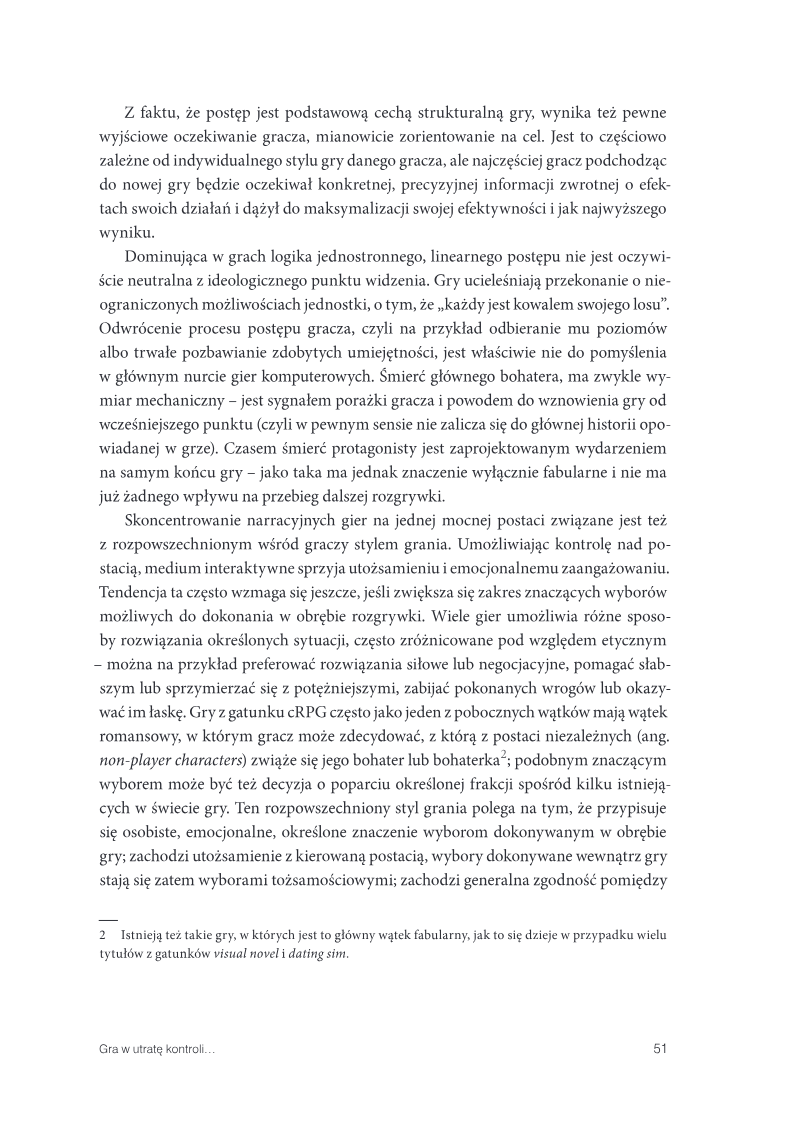
The provided text introduces the concept of "game-satires" (gropowiastki) as a new analytical category for digital games. Drawing inspiration from the literary tradition of philosophical satires, the author defines these works as titles that impose a specific, creator-defined sequence of events and challenges to convey a particular moral or philosophical thesis. This category serves as a functional alternative to the binary classification of software as either "games" or "non-games," a distinction often used to marginalize titles that prioritize narrative or social commentary over traditional ludic challenges.
Unlike "game-stories" (gropowieści), which offer players significant freedom and narrative polyphony, game-satires are characterized by a more rigid structure that guides the player toward a predetermined conclusion. The scope of this category encompasses various genres, including adventure games, autobiographical titles, newsgames, and walking simulators. By framing these works as game-satires, the author argues that they can be more effectively integrated into artistic and academic discourse, moving beyond the pejorative labels often applied to them by segments of the gaming community.
The analysis utilizes a qualitative approach, examining specific titles such as The Secret of Monkey Island, Paranoïak, When Rivers Were Trails, Event[0], and Dys4ia to demonstrate how procedural rhetoric functions within these games. By contrasting these examples with "pure games" like Minecraft—which lack a fixed narrative line—the author establishes a clear distinction based on the presence of authorial intent and structured storytelling. Ultimately, the thesis posits that recognizing game-satires as a legitimate category allows for a more nuanced understanding of how digital games communicate complex ideas and social critiques through their mechanical and aesthetic frameworks.
Each row is a game or company this document names, each column a document, oldest first. A mark means that document names it. Select a row to see those documents.
Replay. The Polish Journal of Game Studies · 2026
Replay. The Polish Journal of Game Studies · 2026



Replay. The Polish Journal of Game Studies · 2026
Replay. The Polish Journal of Game Studies · 2026
Replay. The Polish Journal of Game Studies · 2026
Replay. The Polish Journal of Game Studies · 2026
Replay. The Polish Journal of Game Studies · 2024
Replay. The Polish Journal of Game Studies · 2024
Replay. The Polish Journal of Game Studies · 2024
Replay. The Polish Journal of Game Studies · 2024
Replay. The Polish Journal of Game Studies · 2024
Replay. The Polish Journal of Game Studies · 2024
Uniwersytet Jagielloński · 2014