1 free read left. Create a free account for unlimited reading + AI research.
Create free accountArticle Eludamos: Journal for Computer Game Culture
1 free read left. Create a free account for unlimited reading + AI research.
Create free accountArticleEludamos: Journal for Computer Game Culture
The analysis draws on Deleuze's account of the cinematic time image to frame the game. It argues the game invites reflection on mediated temporality rather than offering an unmediated depiction of it.
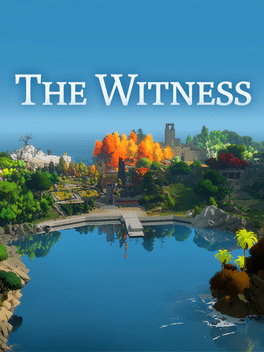
"A Game on Time: The Witness and the Temporality of the Digital Image" argues that Thekla, Inc.'s The Witness (2016) should be understood as a game about time rather than a pure image of it. Drawing on Deleuze's account of the time image in cinema, the analysis contends that the game's artificial, non-progressing time, in which the sun never moves, works less as a representation of temporality than as a phenomenological mirror that prompts players to reflect on how digitally mediated time is becoming their own. The central claim is that the game invites reflection on mediated temporality rather than offering an unmediated depiction of it.
The theoretical foundation draws on Husserl, Stiegler, Heidegger, Ricoeur, and Hui. A key argument is that digital media "short-circuit" human consciousness by placing the future into the present through what the analysis calls "tertiary protention." On this view, video games operate in a futural mode unlike narrative media, which is why The Witness is framed as a game on time. The island's ruined pavilion and degraded structures estrange the player's sense of inherited, pre-existing time, foregrounding historicality and what the analysis terms sky-time.
The analysis finds that the game's architecture, puzzles, and Temple of the Sun collectively reveal a digital world lacking a coherent sense of the past, shaped by temporal logic encoded in its design. Features such as players recording puzzle patterns with pen and paper, which forces them to step outside the game, and the secret ending, which exposes the game's lingering influence on perceptions of the real world, are read as evidence of this effect. Drawing on Fink's concept of play as a "symbol of the world," the work concludes that the game carries its play-world relations into waking life and thereby functions as a mirror for human temporality. The sources, spanning media theory, film philosophy, and time theory, situate the study within broader debates about technology, memory, and cinematic or digital time.
Each row is a game or company this document names, each column a document, oldest first. A mark means that document names it. Select a row to see those documents.

Eludamos: Journal for Computer Game Culture · 2026

Eludamos: Journal for Computer Game Culture · 2026

Eludamos: Journal for Computer Game Culture · 2026

Eludamos: Journal for Computer Game Culture · 2026

Eludamos: Journal for Computer Game Culture · 2026

Eludamos: Journal for Computer Game Culture · 2026

Eludamos: Journal for Computer Game Culture · 2026

Eludamos: Journal for Computer Game Culture · 2025

Eludamos: Journal for Computer Game Culture · 2025

Eludamos: Journal for Computer Game Culture · 2025

Eludamos: Journal for Computer Game Culture · 2025

Eludamos: Journal for Computer Game Culture · 2025

Thomas Brush · 2026