Monetization & Live Ops
Revenue models, in-game economies, retention and live operations.
260 documents


PayPal · 2020
ReportEurope and Esports: High Engagement and Even Higher Potential
The study demonstrates that European esports audiences are expanding rapidly, with a projected 92 million viewers by the end of 2020 and a year‑over‑year growth of 7.4 %. Enthusiasts—those watching professional content more than once a month—total 33 million, while occasional viewers comprise the remaining 59 million. Revenue forecasts show a global market of nearly €974 million in 2020, rising to €1.6 billion by 2023, with Europe mirroring this trajectory. Survey data from 10,175 respondents aged 18‑45 across ten Western and Northern European countries reveal that esports engagement is not confined to the youngest cohort; only 33 % of 18‑20 year olds are regular enthusiasts, whereas the 21‑25 age group leads in engagement. Geographic variation is pronounced: Finland shows a 52 % enthusiast rate among 18‑20 year olds, compared to 21 % in the UK. COVID‑19 lockdowns increased viewership in markets with stricter restrictions, and 62 % of respondents in Spain and the UK expect continued higher viewership post‑lockdown. Gender analysis indicates that 32 % of the audience are women, primarily occasional viewers. Nonetheless, female participation in competitive play is rising, with 60 % of respondents acknowledging growth in women’s involvement. Women spend money on esports products at a comparable rate to men (46 % vs 38 %) and favor physical merchandise, whereas men lean toward digital items such as skins and premium passes. The research underscores strong cross‑sport interest, with 64 % of viewers also supporting a favorite sports team, and highlights the strategic opportunity for brands to engage this growing, diverse, and monetarily active audience.
Liftoff · 2020
Report2020 Mobile Gaming Apps Report
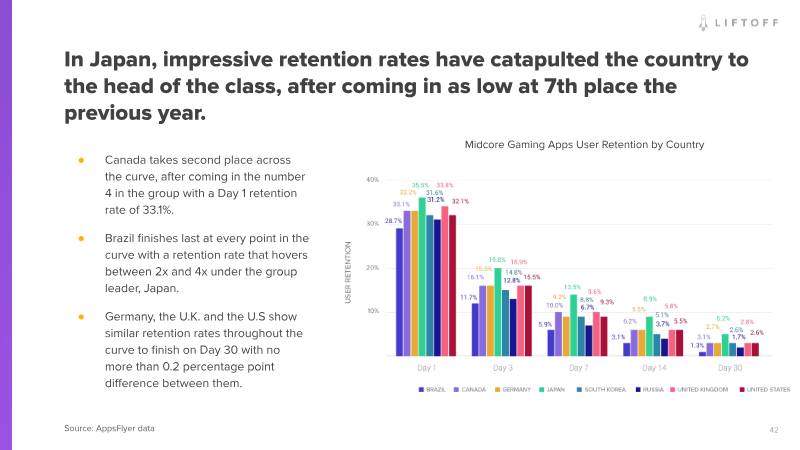
The global mobile gaming market is projected to surpass $100 billion in revenue in 2020, fueled by a 2.6 billion-person player base and a 24% surge in daily in-app payments. While the average cost per install has reached a record low of $1.47, the industry faces a tightening conversion landscape where install-to-purchase costs have risen by 24% and conversion rates have dropped to 3.3%. Midcore and strategy games have emerged as the most efficient segments, offering the highest 30-day return on ad spend at 39.5% while maintaining low acquisition costs, particularly on the Android platform. Geographic performance varies significantly, with Japan and North America established as the premier markets for user retention and monetization. Japan consistently outperforms global benchmarks, doubling the retention rates of its regional peers and exceeding return on ad spend targets by over 10 percentage points. While the Asia-Pacific region as a whole delivers high returns, it is characterized by the highest acquisition costs. In contrast, the EMEA region, specifically the United Kingdom, provides a high-value alternative by balancing affordable install costs with strong returns. Emerging markets like Brazil offer the lowest entry costs globally but present high risks due to poor long-term retention and low conversion. The hyper-casual sector is expected to reach $3 billion in 2020, though market saturation is driving a shift toward hybrid monetization models to combat declining long-term engagement. Across all genres, platform choice remains a critical strategic factor; iOS provides a slight advantage in return on investment but requires four times the acquisition spend of Android. Furthermore, while paid user acquisition drives initial engagement in midcore and social casino categories, organic users continue to demonstrate superior long-term loyalty, highlighting the ongoing importance of organic growth strategies in a competitive global landscape.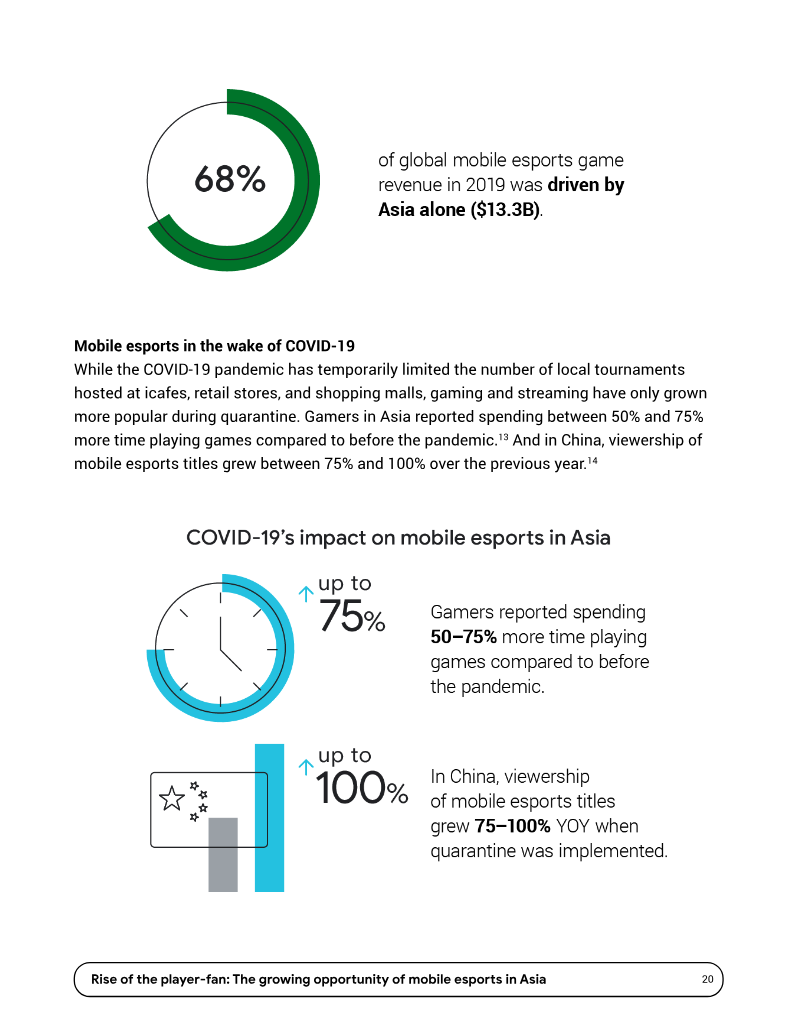
Newzoo · 2020
ReportLevel Up: A Guide to Succeed in Asia’s Gaming Market
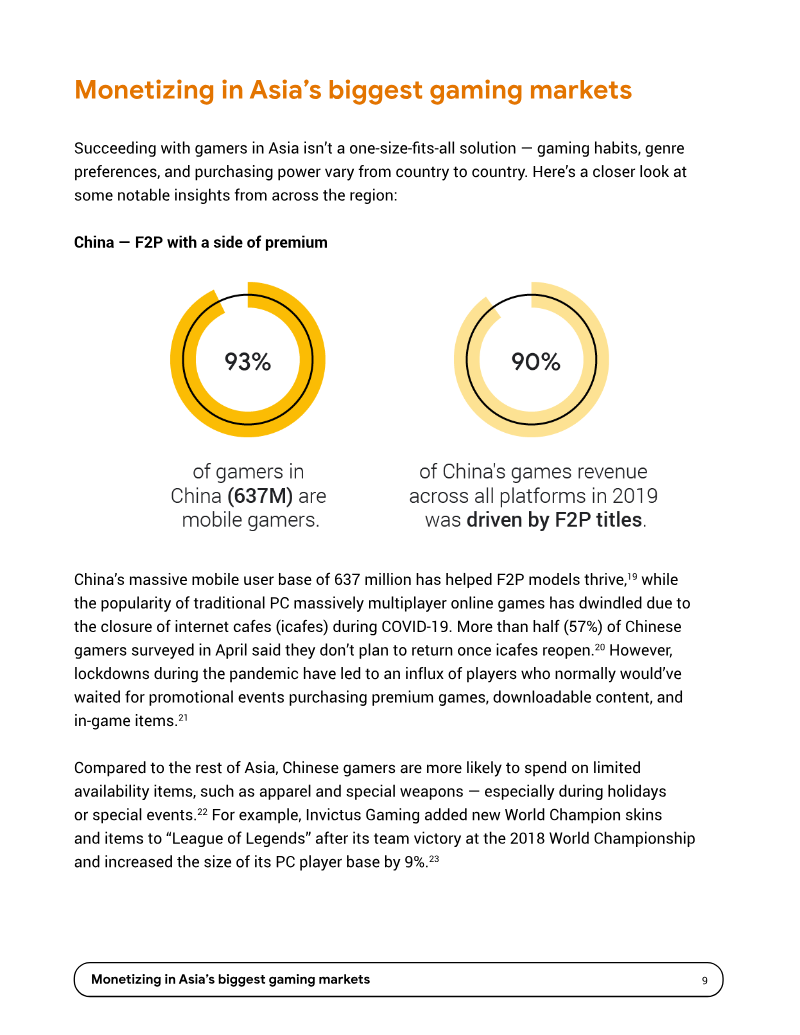
Asia has established itself as the epicenter of the global gaming industry, driven by a mobile-first population exceeding 1.5 billion players. The region’s market is characterized by the dominance of free-to-play models, which account for nearly 99% of mobile revenue and all top-grossing titles. While China and Japan lead in total revenue, Japan maintains the highest value per user with an average revenue per download of $12.84. Growth is increasingly fueled by the female demographic, which expanded to 500 million players by 2019 and contributes nearly 40% of total mobile gaming revenue. This shift necessitates more inclusive storylines and diverse development teams to capture a demographic that is currently outgrowing its male counterpart. The competitive landscape is defined by the rapid ascent of mobile esports, with Asia generating 68% of the sector's global revenue. Southeast Asia, in particular, has seen a 244% increase in tournament prize pools, signaling a transition from casual play toward complex, competitive genres like MOBAs and Battle Royales. Despite high interest, a significant gap remains between esports viewership and active participation, representing a massive untapped opportunity for developers. Success in these markets requires sophisticated monetization strategies, such as hybrid models combining gacha mechanics, battle passes, and rewarded video ads to accommodate varying income levels across the territory. Navigating the Asian market demands deep localization that extends beyond language to include cultural customs, religious sensitivities, and technical optimization for diverse hardware. While Japan and South Korea remain dominated by local developers and legacy RPG franchises, India and Southeast Asia offer high-growth potential for international titles that provide "lite" versions for accessible play. To achieve long-term engagement, developers must leverage local influencers and community-driven gameplay, ensuring that titles resonate with the specific pop culture trends and infrastructure capabilities of each unique sub-region.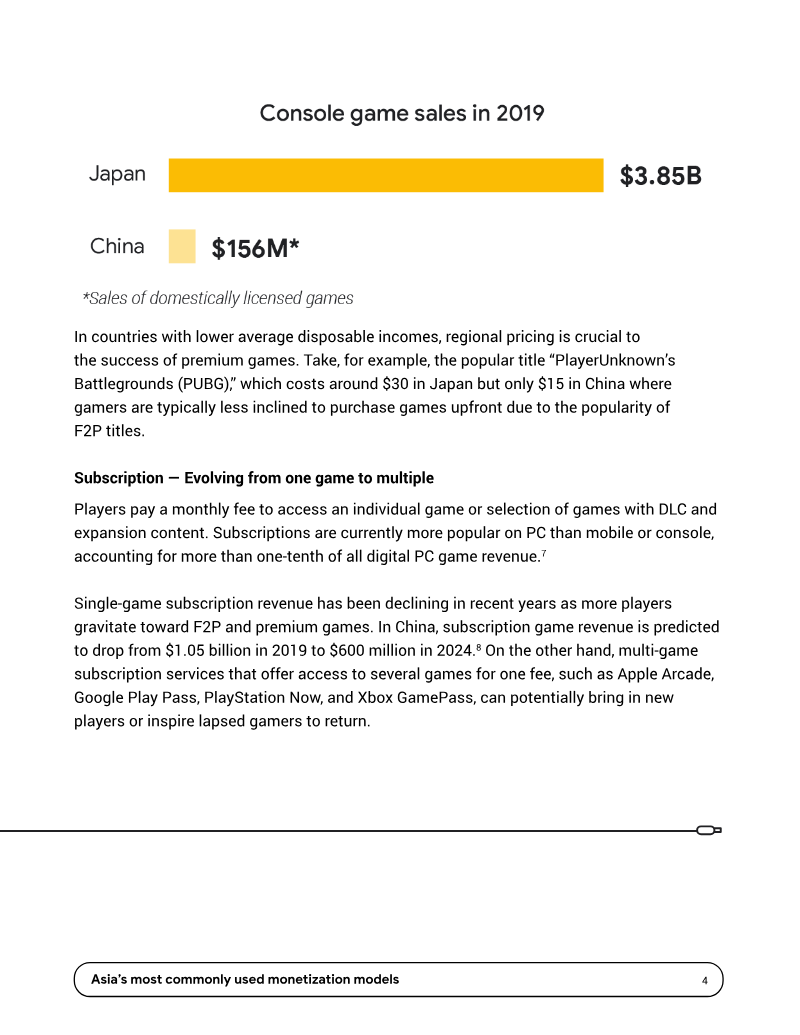
Niko Partners · 2020
ReportFrom Playing to Paying: The Art of Monetizing Games in Asia
This analysis examines the evolving landscape of game monetization across Asia, focusing on how developers adapt revenue models to meet the demands of a maturing market. The central thesis posits that while free-to-play (F2P) remains the dominant force, the rise of hybrid models and advanced mechanics like battle passes and gacha are essential for capturing the increasing purchasing power of Asian gamers. The scope covers major markets including China, Japan, South Korea, India, and Southeast Asia, utilizing 2019 and 2020 data to highlight shifts accelerated by the COVID-19 pandemic. Key findings underscore the overwhelming success of the F2P model, which accounted for 98.5% of all mobile games revenue in 2019. In China, 100% of the top-grossing mobile titles utilized F2P. However, regional nuances are significant; Japan represents the most valuable mobile market with a revenue per download of $12.84, compared to a regional average of $1.53. While premium models remain a staple in console-heavy Japan, emerging markets like India are "leapfrogging" traditional stages by quickly adopting sophisticated F2P mechanics, such as battle passes, which were featured in half of India’s top-grossing games by early 2020. The methodology relies on a combination of proprietary consumer panels exceeding four million users, developer interviews, and market modeling. The conclusions suggest that developers must move toward hybrid monetization—blending in-app purchases with rewarded ads—to mitigate economic risks and appeal to diverse player segments. By aligning monetization with core gameplay rather than interrupting it, publishers can sustain long-term engagement in a region where player motivations range from high-spend competition to time-intensive casual play.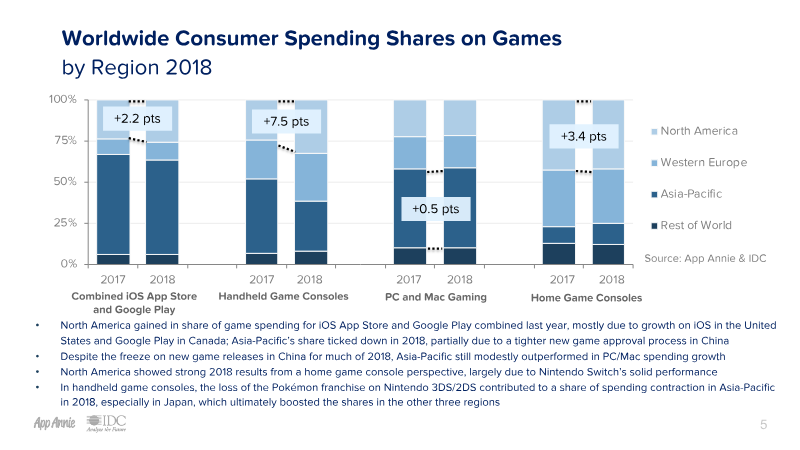

data.ai · 2019
ReportGaming Spotlight 2018 Review
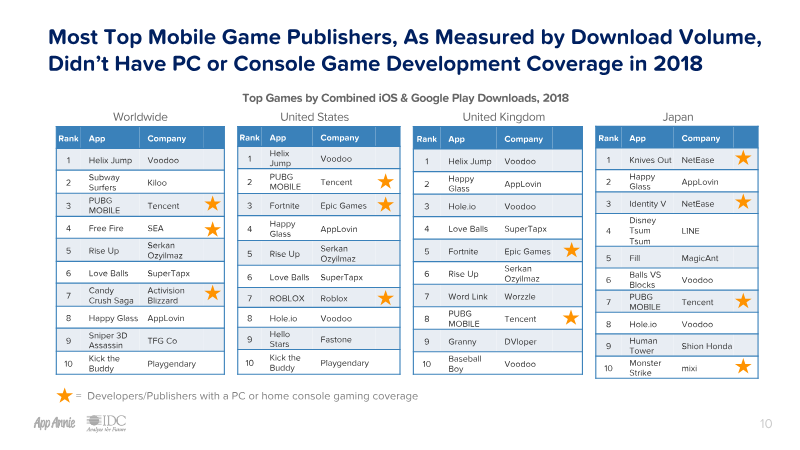
The 2018 Gaming Spotlight Review analyzes the global gaming landscape, focusing on the shifting dynamics between mobile, PC, and console platforms. The report establishes that mobile gaming has solidified its dominance, with consumer spending in 2018 exceeding the combined totals of home consoles, PC/Mac, and handheld consoles by nearly 20%. This represents a significant shift from 2016, when mobile spending trailed these combined categories by 14%. The analysis covers global markets with specific emphasis on North America, Asia-Pacific, and Western Europe, utilizing consumer spend data from app stores and retail tracking. A primary finding is the maturation of mobile gaming into a platform for sophisticated, hardcore experiences. While games accounted for only 35% of total app downloads, they generated 75% of total consumer spend on the iOS App Store and Google Play. The market is increasingly bifurcated between hyper-casual titles that monetize through advertising and hardcore-leaning multiplayer games. In 2018, three of the top five grossing mobile games featured real-time multiplayer elements, such as Battle Royale and MOBA mechanics, reflecting a trend where mobile experiences now rival traditional console and PC gameplay. Geographically, the Asia-Pacific region remained the leader, accounting for over 55% of global mobile game spending despite a nine-month freeze on new game approvals in China. In North America, the Nintendo Switch drove strong home console performance, while the handheld market faced contraction as franchises like Pokémon migrated from the Nintendo 3DS to more modern platforms. Methodologically, the report compares 2018 data against historical benchmarks from 2014–2017 and incorporates a 2018 survey of U.S. gamers, which revealed a 3.5% increase in hardcore-leaning players compared to 2015. The conclusion highlights that publishers with PC or console backgrounds are increasingly dominant in mobile monetization, holding seven of the top ten spots for consumer spend.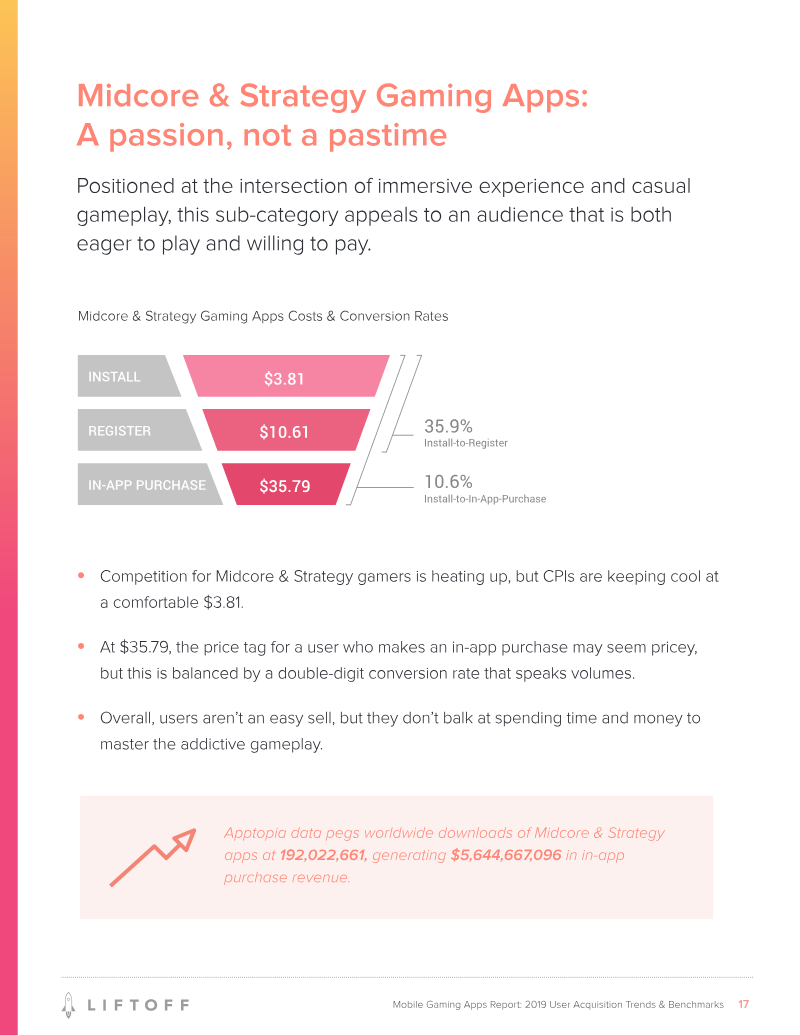

Newzoo · 2019
ReportMobile Gaming Apps Report: 2019 User Acquisition Trends & Benchmarks
The 2019 mobile gaming landscape is defined by a period of unprecedented consumer spending, with gaming apps accounting for 74% of total app store revenue. While the market continues to expand, user acquisition costs have escalated, reaching an average of $35.42 to acquire a single paying user. This environment necessitates a strategic approach to platform and regional selection, as Android currently offers a more cost-effective reach than iOS. Seasonal trends also play a critical role in performance, with the third quarter emerging as a peak period for high conversion rates and optimized acquisition costs. Geographically, the market presents a stark contrast between established and emerging territories. North America, Japan, and South Korea remain the most expensive regions for acquisition but continue to lead in long-term retention and in-app purchase revenue. Conversely, Russia, Brazil, and the broader EMEA region offer high-value opportunities characterized by lower registration costs and strong initial conversion rates. While these emerging markets provide a lower barrier to entry, they often struggle with deep-funnel engagement and monetization compared to the high-yield but competitive Asian and North American markets. Genre-specific data reveals that Social Casino and Hyper Casual games are the primary drivers of early engagement, with Social Casino apps achieving a category-leading 14.3% install-to-purchase conversion rate despite high acquisition costs. Hyper Casual games have solidified their position through ad-supported models and high Day 1 retention, effectively targeting non-traditional gamers in markets like Colombia and Turkey. Meanwhile, Midcore and Strategy titles demonstrate the greatest potential for long-term revenue and sustained engagement, particularly within the EMEA region, where they outperform North American benchmarks in conversion efficiency.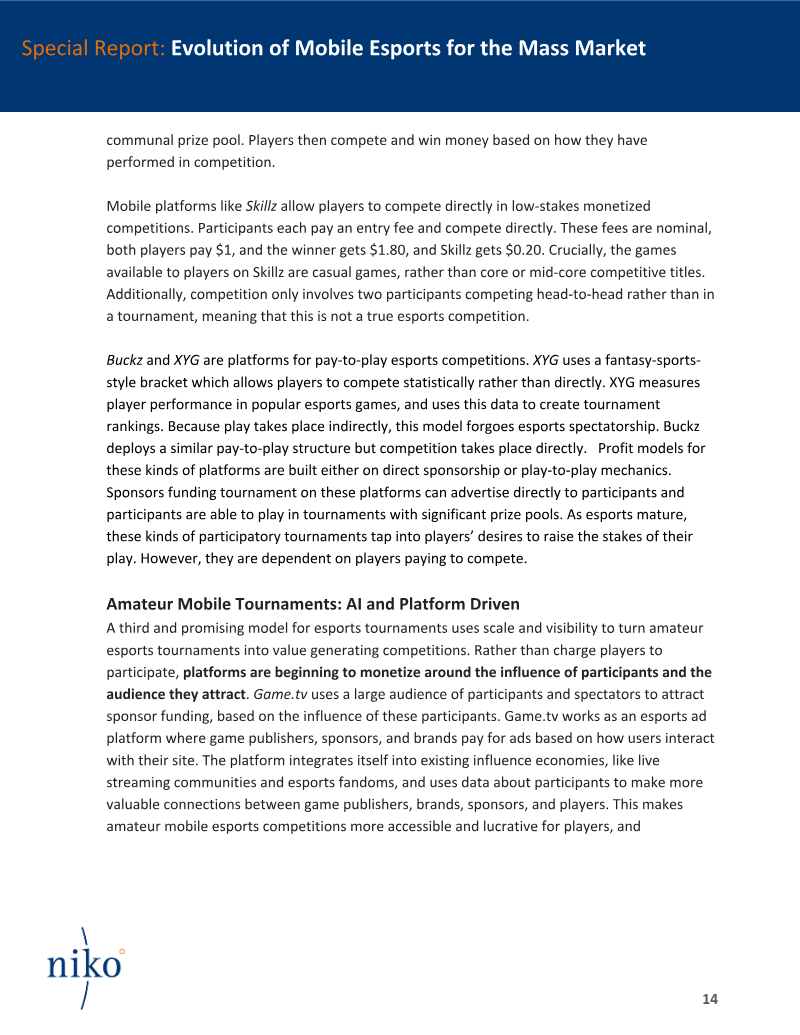
Niko Partners · 2019
ReportEvolution of Mobile Esports for the Mass Market
Mobile esports is positioned to become the primary catalyst for growth in the digital games industry over the next five years, leveraging a global player base of 2.53 billion that already surpasses the combined reach of PC and console gaming. In 2018, mobile esports titles generated $15.32 billion in revenue, representing over a quarter of the total mobile market. This expansion is driven by high smartphone penetration and a fundamental shift from high-profile spectator events toward a pervasive ecosystem of regional and online-only competitions. By lowering barriers to entry, the sector has successfully attracted a more diverse and gender-balanced audience than traditional competitive gaming platforms. The industry is currently transitioning from a publisher-funded marketing tool into a scalable mass-market powerhouse. While professional PC esports historically dominated revenue, mobile esports is rapidly closing the gap, fueled by sophisticated monetization strategies including media rights, sponsorships, and microtransaction-based models like season passes. Asia serves as the epicenter of this evolution, with China and Southeast Asia hosting the most concentrated markets for competitive mobile titles. Significant investments from traditional sports franchises and the expansion of media rights into mainstream cable television further signal the professionalization and maturation of the sector. Technological advancements in 5G and cloud gaming are disrupting the historical dominance of PC titles by delivering high-quality competitive experiences on accessible hardware. This technological shift, combined with strong government support in Asian markets, has led to explosive growth, exemplified by a 44.5% revenue increase in top Belt and Road markets during the first half of 2019. As industry leaders establish franchised leagues and record-breaking prize pools, the mobile esports model is proving more sustainable and participatory than its predecessors. Ultimately, the sector’s massive reach and superior monetization capabilities ensure its trajectory to overtake PC esports as the dominant global competitive gaming format.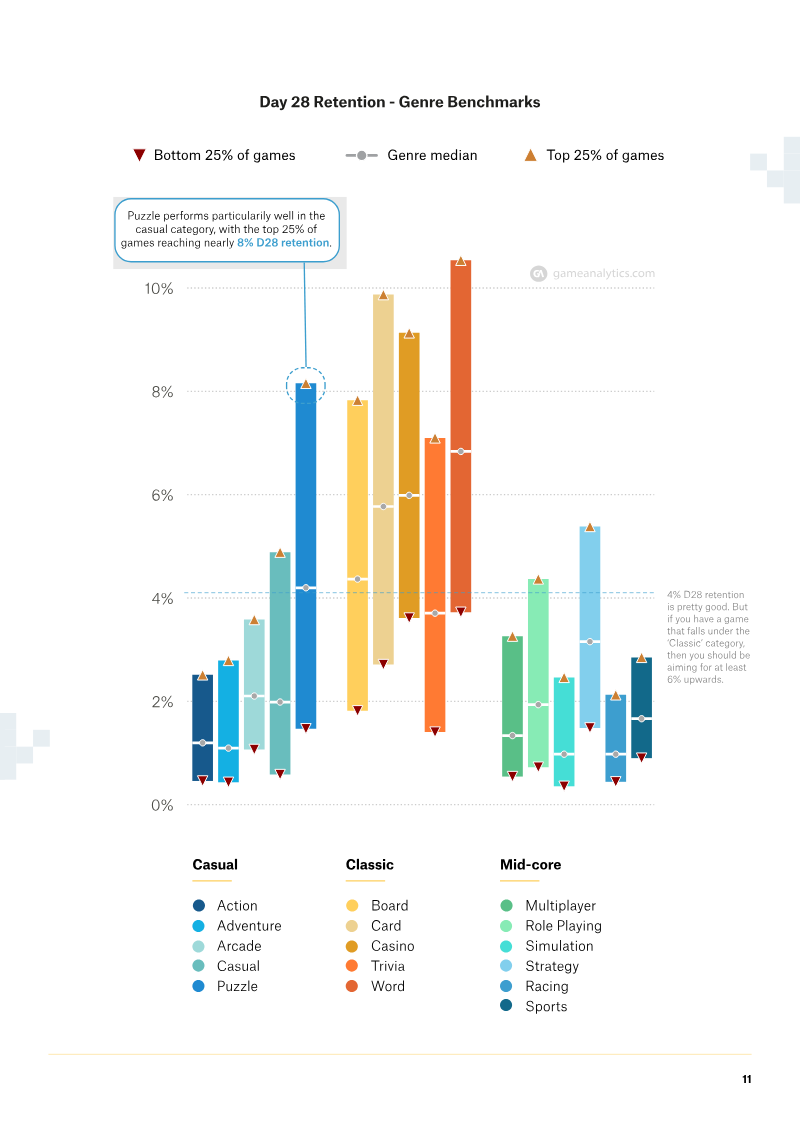
GameAnalytics · 2019
ReportMobile Benchmarks Report GameAnalytics
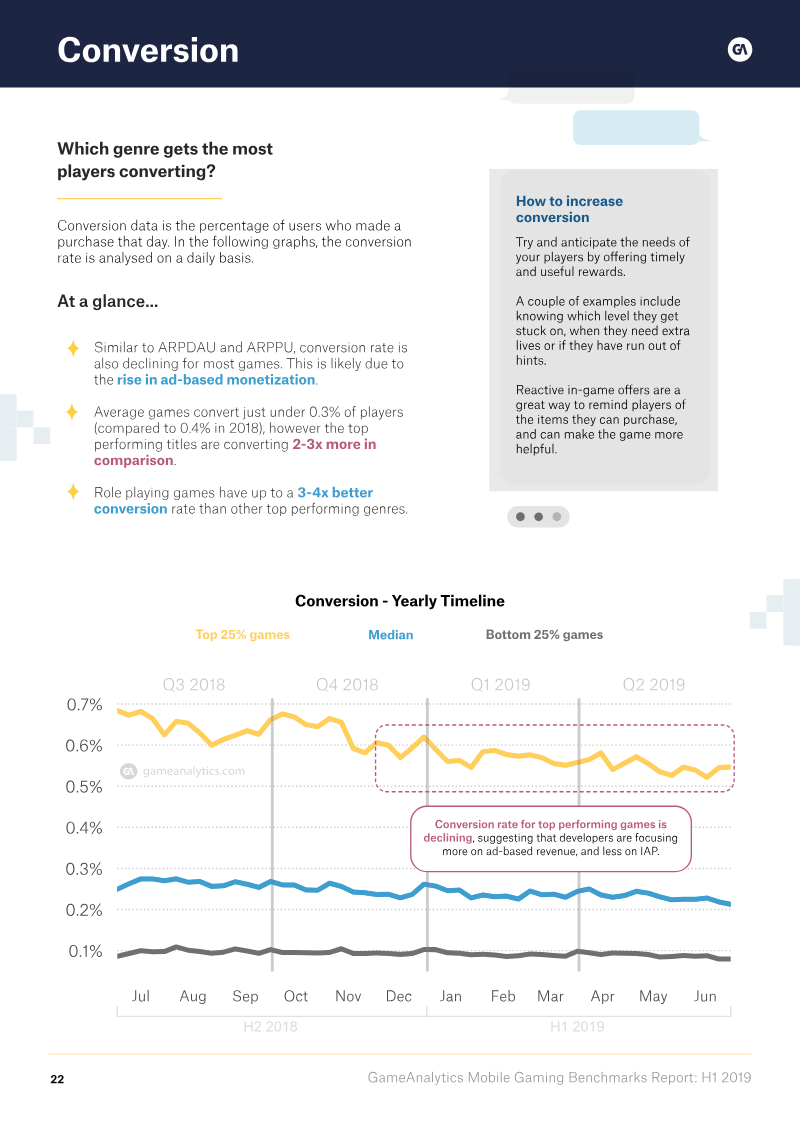
The mobile gaming landscape in the first half of 2019 reflects a significant structural shift as developers increasingly pivot from in-app purchases toward ad-based monetization models. Analysis of 100,000 titles and 1.2 billion monthly active users reveals a 15-20% year-over-year decline in Average Revenue Per Paying User (ARPPU) and Average Revenue Per Daily Active User (ARPDAU). While the median ARPDAU sits at $0.02, hyper-casual games maintain viability through advertising, supported by median eCPMs of approximately $5.00. Despite these shifts, Mid-core genres like Strategy and Role-Playing Games continue to dominate financial performance, yielding the highest conversion rates and revenue generation across the industry. Engagement metrics remain the primary indicator of long-term success, with top-performing titles aiming for a 35% Day 1 retention rate and a 4% Day 28 retention rate. Classic genres, specifically Card and Casino games, lead the market in player stickiness, boasting session lengths that can reach 22 minutes compared to the broader median of 4-5 minutes. Geographic trends further highlight the rising prominence of the Chinese market, where over 60% of the population engages in mobile gaming and median eCPMs have climbed to $3.90, nearly rivaling established Western markets like the United States. Industry leaders utilize these benchmarks to streamline publishing pipelines, often requiring a minimum 50% Day 1 retention rate to greenlight titles for further optimization. Success in this competitive environment relies on the integration of real-time data, remote configuration, and advanced player segmentation to manage game lifecycles. By monitoring key performance indicators and error logs through automated dashboards, publishers can identify high-potential titles early and refine gameplay mechanics to meet the rigorous standards of the current mobile ecosystem.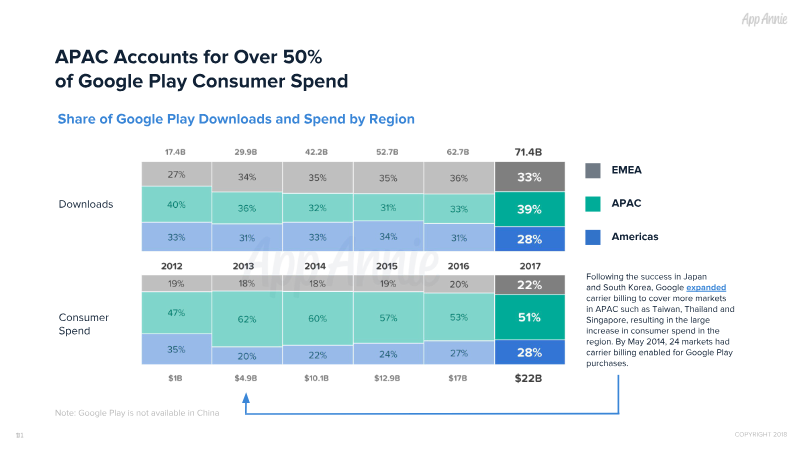

data.ai · 2018
Report10 Years, 10 Highlights of Google Play
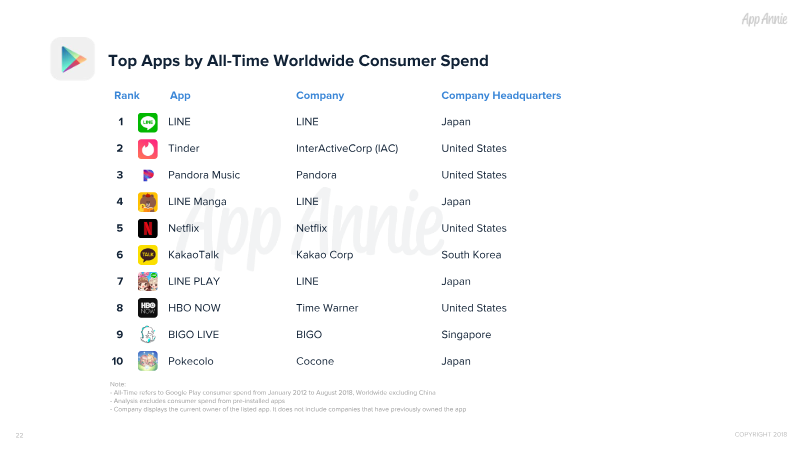
This analysis examines the ten-year trajectory of the Google Play Store, detailing its growth from January 2012 through August 2018. During this period, the platform facilitated nearly 330 billion downloads and generated over $85 billion in consumer spend. By August 2018, the ecosystem supported over 2.8 million available apps, with more than 5,000 individual titles surpassing $1 million in lifetime consumer spend. The findings exclude pre-installed applications and focus on worldwide performance, excluding China. Geographic data reveals a significant divide between volume and monetization. India leads the world in total downloads with 36.9 billion, followed closely by the United States and Brazil. However, Japan represents the largest market by consumer spend, contributing $25.1 billion, which significantly outpaces the United States at $19.3 billion and South Korea at $11.2 billion. This revenue growth was heavily influenced by the 2012 introduction of in-app subscriptions and a 2017 policy change that reduced developer transaction fees for long-term subscribers, resulting in a 55% year-over-year increase in spend between 2016 and 2017. The gaming sector remains a primary driver of engagement and revenue. Subway Surfers and Candy Crush Saga are identified as the most downloaded games of all time, while Monster Strike and Puzzle & Dragons lead in total consumer spend. Outside of gaming, Facebook-owned properties dominate the download charts, while communication and entertainment apps like LINE, Tinder, and Netflix lead in revenue. The analysis concludes with a forecast that Google Play consumer spend will reach $42 billion by 2022, representing a 90% increase from 2017 levels, driven by the continued evolution of video streaming, social platforms, and subscription-based monetization models.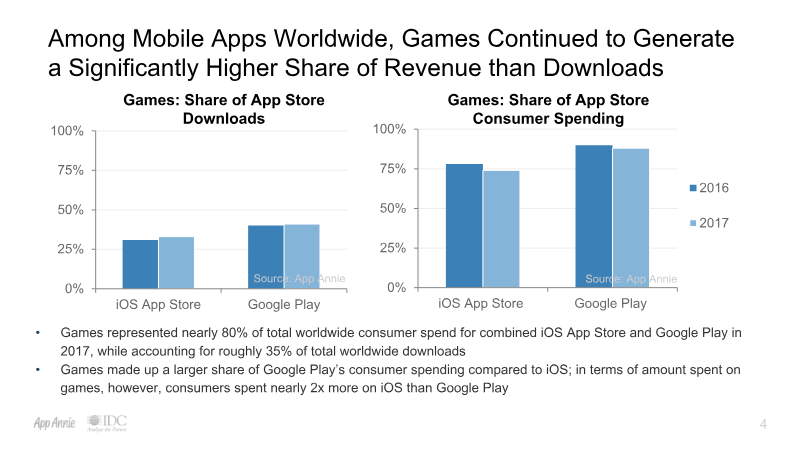


App Annie · 2018
ReportGaming Spotlight 2017 Review
The global gaming industry experienced a significant shift in 2017 as mobile gaming solidified its dominance over traditional platforms. Mobile consumer spending exceeded the combined total of home consoles, PC, Mac, and handheld consoles by more than one-third, representing a substantial increase from the single-digit margin recorded in 2016. While games accounted for less than 40% of total mobile app downloads, they generated nearly 80% of combined consumer spend on the iOS App Store and Google Play. This growth was primarily driven by the Asia-Pacific region, particularly China, Japan, and South Korea, which accounted for over 60% of all mobile game spending. A critical trend identified throughout the year was the rise of live player-versus-player (PvP) and cooperative gameplay. For the first time in mobile history, the top two grossing games on both major app stores featured live PvP elements, a shift influenced by PC gaming heritage and the rising popularity of esports. In the United States, survey data from 3,991 gamers revealed that those engaging in live PvP or co-op modes skewed younger and male, played more hours per week, and were significantly more likely to spend money on titles compared to those playing single-player or turn-based games. The handheld console market also reflected this shift toward multiplayer engagement, with four of the top five grossing titles supporting live PvP or co-op. Despite the continued strength of the Nintendo 3DS in 2017, the industry began transitioning toward hybrid and mobile platforms, evidenced by major franchises like Pokémon moving away from dedicated handhelds. Analysts concluded that the maturation of live multiplayer engagement, bolstered by the emergence of the battle royale genre, would remain the primary driver for industry growth and monetization moving into 2018.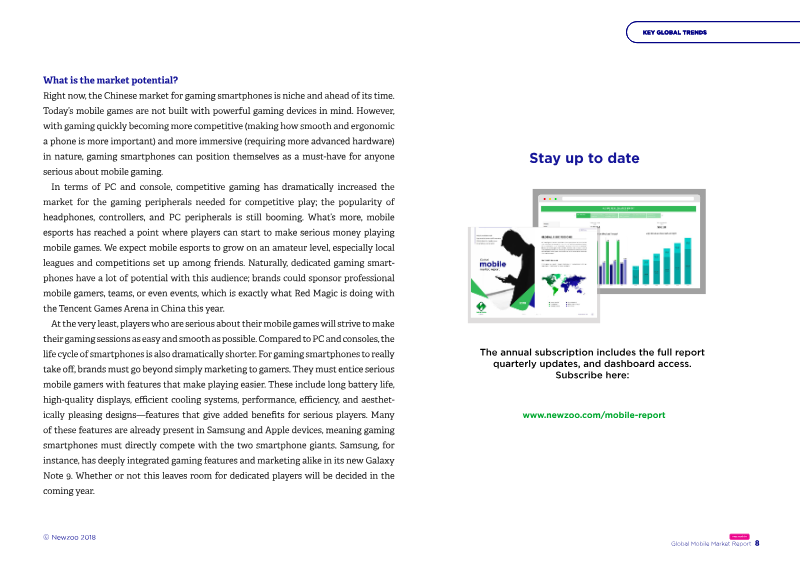

Newzoo · 2018
ReportGlobal Mobile Market Report 2018
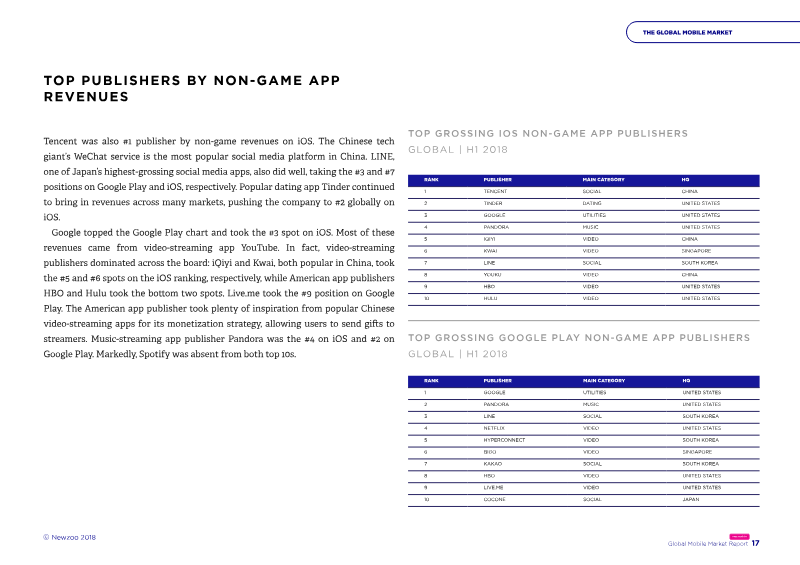
The global mobile market is undergoing a significant transformation characterized by a shift toward immersive, competitive gaming experiences and the integration of high-engagement subscription services. With global app store revenues reaching $92.1 billion in 2018, mobile gaming remains the primary economic driver, accounting for 76 percent of total expenditures. This financial growth is supported by hardware manufacturers who are increasingly developing dedicated gaming smartphones to meet the demands of high-performance software, particularly within the expansive Chinese market. Simultaneously, major media and technology firms are pivoting toward original video content to capture consumer attention, mirroring the subscription-based models popularized by leading streaming platforms. The industry’s expansion is underpinned by a robust increase in global smartphone adoption, which is projected to reach 3.8 billion users by 2021. This growth is heavily concentrated in the Asia-Pacific region, which continues to serve as the primary catalyst for global market penetration. While Samsung and Apple maintain their status as the dominant hardware manufacturers, the software landscape remains highly competitive, with casual gaming publishers and video-streaming services leading their respective revenue categories. These insights are derived from a comprehensive analytical framework that monitors the top 100 global markets, representing 98.5 percent of the world’s smartphone users. By integrating historical data, socio-economic indicators, and telemetry from over 400 million active devices, this intelligence provides a precise view of evolving consumer behaviors. The continuous refinement of these predictive models ensures that stakeholders can effectively navigate the rapid technological and economic shifts defining the mobile ecosystem as it matures into a central pillar of global digital entertainment.

DEV – Asociacion Espanola de Empresas Productoras y Desarrolladoras de Videojuegos · 2018
Whitepaper