Monetization & Live Ops
Revenue models, in-game economies, retention and live operations.
258 documents

data.ai · 2021
ReportInnovate to Win on the Next Level with Hybrid Genre Games
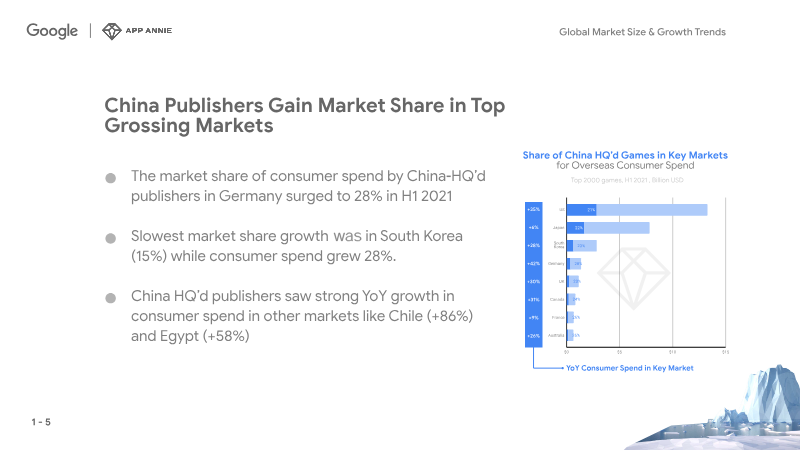
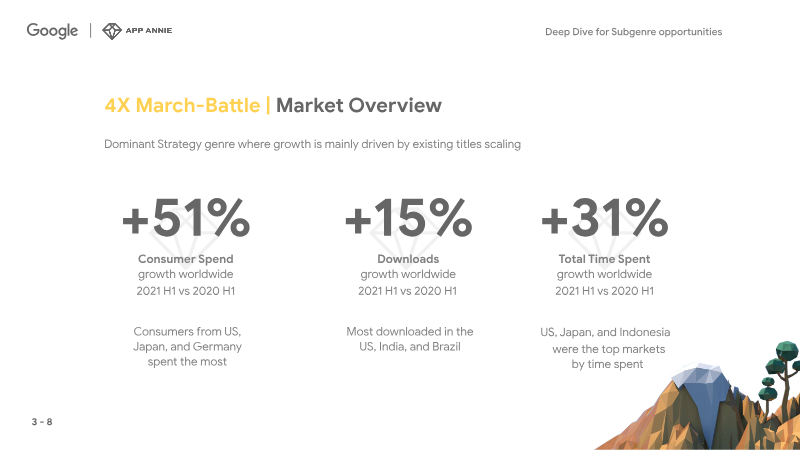
The global mobile gaming landscape has entered a period of sustained growth following the pandemic, with overseas consumer spending reaching $36 billion in the first half of 2021. This represents a 73% increase since 2018, a trend largely spearheaded by China-based publishers who now command a 23% share of the international market. To sustain this trajectory, the industry is shifting toward hybridization, a strategy that blends core mechanics from disparate subgenres to broaden player demographics and optimize revenue streams. By integrating casual elements like farming or social multiplayer features into hardcore frameworks, developers are successfully diversifying their monetization models beyond traditional structures. Market performance in early 2021 reveals that while Strategy, RPG, and Match subgenres remain the primary revenue drivers, high-growth categories such as Luck Battle and Merge-Saga are emerging as significant leaders. The 4X March-Battle subgenre, in particular, saw a 51% year-over-year increase in consumer spend, fueled by strong performance in the United States, Japan, and Germany. Additionally, the Idol Training subgenre experienced an explosive 129% surge in spending, highlighting the rising influence of Asian cultural themes and "Nijigen" aesthetics in the global market. Despite these gains, the industry faces challenges from evolving user privacy policies, which contributed to a 12% contraction in Puzzle RPG spending. In response, successful developers are increasingly utilizing hybrid tactics such as Gacha monetization, home design meta-layers, and social connectivity to maintain engagement. The transition toward these multifaceted game designs suggests that the future of mobile gaming lies in the ability to merge deep, mid-core progression systems with accessible, casual mechanics to capture a more diverse and resilient global audience.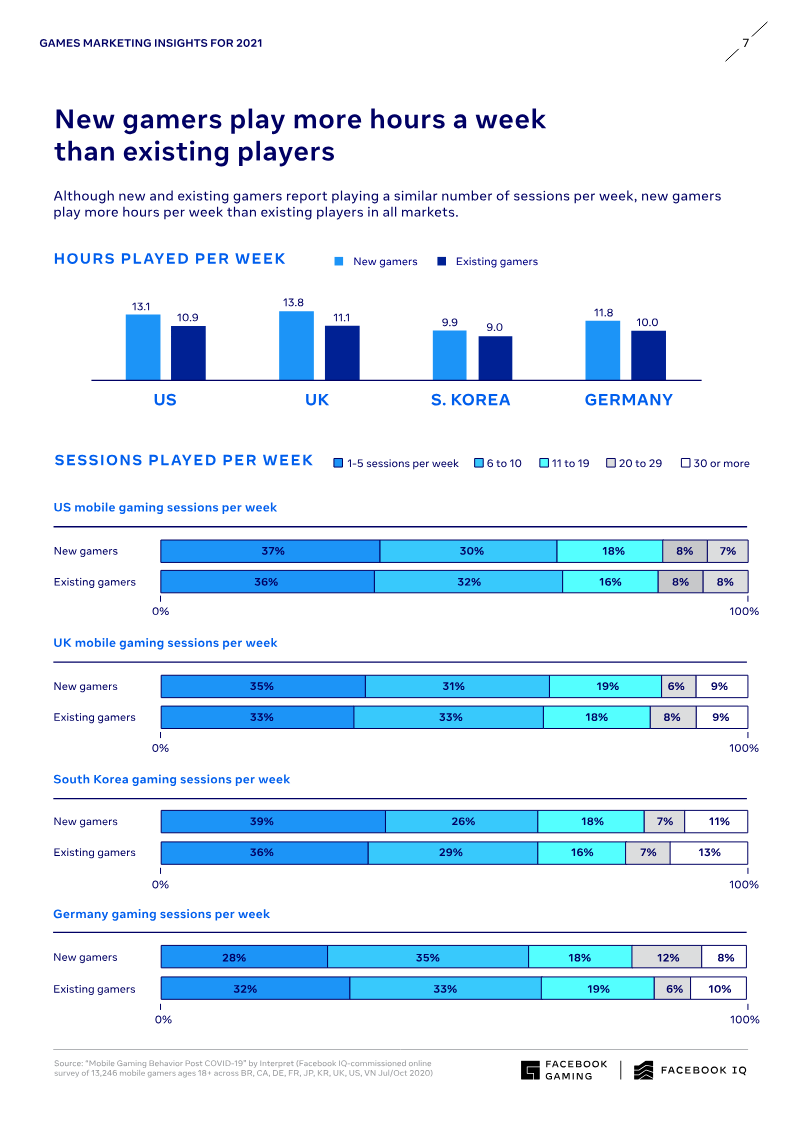
Meta · 2021
ReportGames Marketing Insights 2021
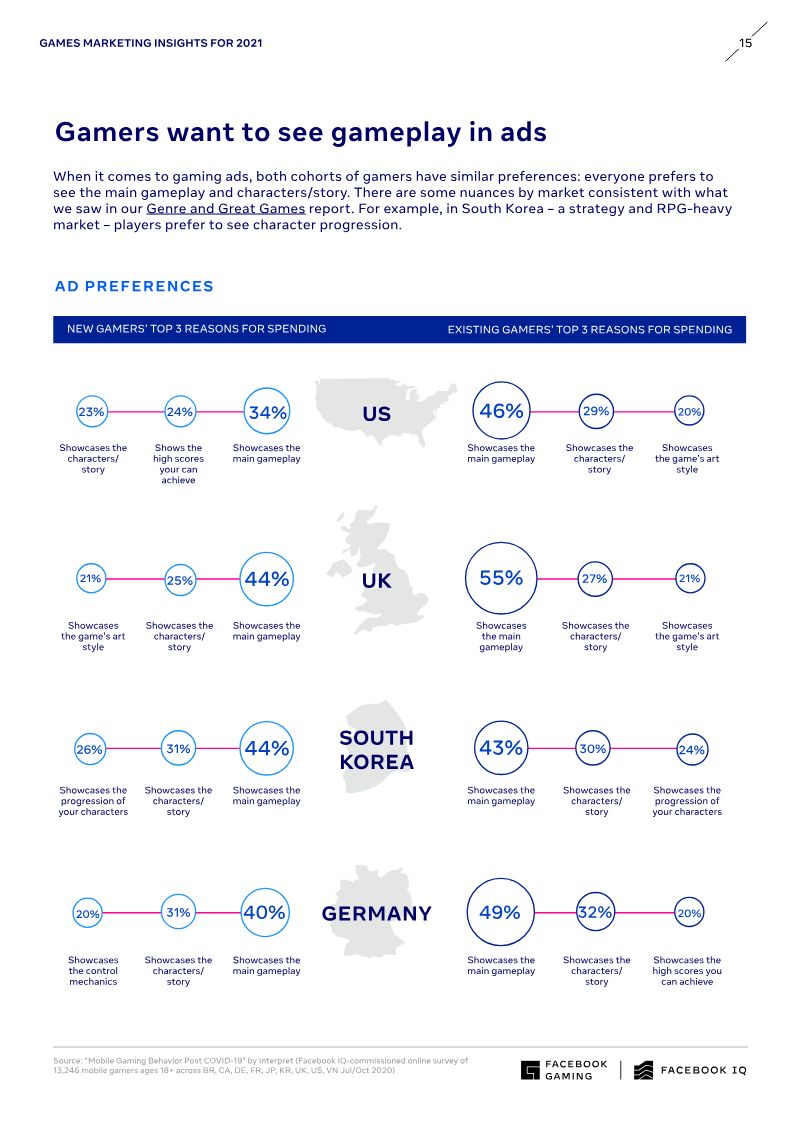
This analysis examines the profound shifts in the global gaming landscape triggered by the COVID-19 pandemic, focusing on the emergence of a massive new player demographic. Based on a July 2020 survey of over 13,000 respondents across nine global markets—including the US, UK, Germany, and South Korea—the findings highlight a permanent expansion of the mobile gaming audience. These "new gamers," who began playing after the initial outbreak, are generally younger than existing players and demonstrate "core" gaming behaviors, such as a higher propensity for multiplayer engagement and a preference for complex genres. Data indicates that while both new and existing players increased their weekly gaming hours, their financial behaviors diverged. New gamers are significantly more likely to spend money on in-game purchases and report higher monthly expenditures than veteran players. Conversely, existing players reported spending less than they did pre-pandemic, despite their increased engagement. Across all cohorts, there is a clear preference for free-to-play, ad-supported monetization models. In terms of discovery, the research underscores the critical role of brand familiarity; less than 25% of players in Western markets tried games they had never heard of, suggesting that mobile marketing is increasingly mirroring the IP-driven strategies of the console industry. The scope of the industry extends beyond active play into community and content consumption. Live-streaming platforms saw record growth, with Facebook Gaming surpassing one billion hours watched in Q3 2020. Furthermore, the rise of digital commerce has fundamentally altered purchasing habits, with 89% of global consumers expressing concern about physical retail, driving a shift toward mobile-first discovery and online game acquisition. The analysis concludes that developers must adopt mixed monetization strategies and foster out-of-game communities to retain this expanded, platform-agnostic audience.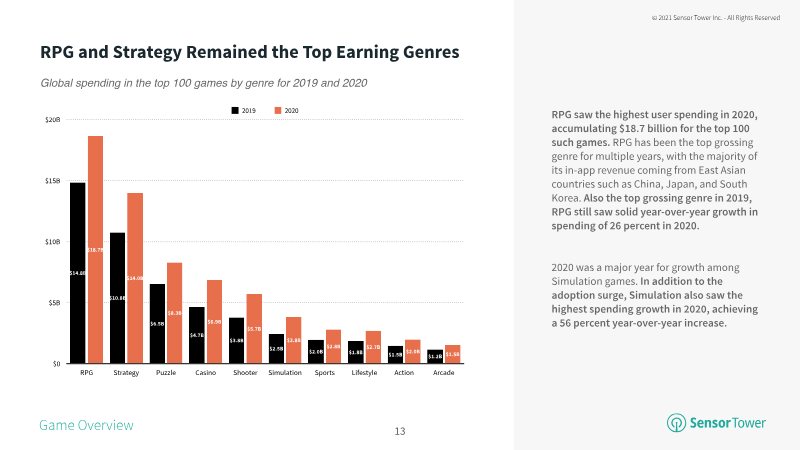

Sensor Tower · 2021
ReportMobile Game Taxonomy Report 2021
The mobile gaming landscape underwent a transformative shift in 2020, catalyzed by global lockdowns that accelerated adoption across all major categories. Hypercasual games emerged as the dominant force in volume, experiencing a 123% year-over-year increase to reach 6.3 billion downloads and surpassing the Arcade genre. While Simulation games led the market in spending growth with a 56% increase, the RPG and Strategy genres maintained their financial stronghold, generating half of the total global revenue among top-performing titles. This period of growth was further bolstered by the migration of players from physical venues to mobile Casino platforms and the massive commercial success of high-fidelity releases like Genshin Impact. Visual and thematic trends shifted toward more sophisticated presentations as the market matured. Although 2D Cartoon remained the most prevalent art style, 3D Realistic aesthetics dominated mid-core segments, and Isometric perspectives gained significant traction within the Hypercasual space. Thematic preferences evolved rapidly, with Fashion and Crime themes growing by 109% and 69% respectively. Notably, the viral success of Among Us spurred a resurgence in Space-themed content and influenced the Puzzle genre to adopt more mid-core characteristics. Innovation in 2020 was defined by cross-genre experimentation and a move toward higher production values in traditionally casual categories. The Fashion genre serves as a primary example of this evolution, transitioning from 2D Side POV styles toward 3D Cartoon aesthetics and First Person perspectives. Developers are increasingly finding success by blending disparate elements, such as integrating Military and Combat Arena themes into Puzzle mechanics. This trend suggests a broader industry movement toward hybrid-casual models that combine accessible gameplay with the deeper engagement and thematic complexity typically found in mid-core titles.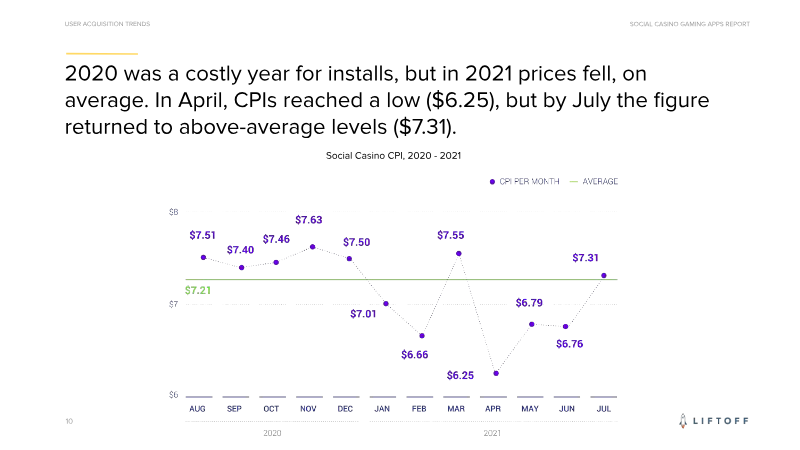

Liftoff · 2021
ReportSocial Casino Gaming Apps Report
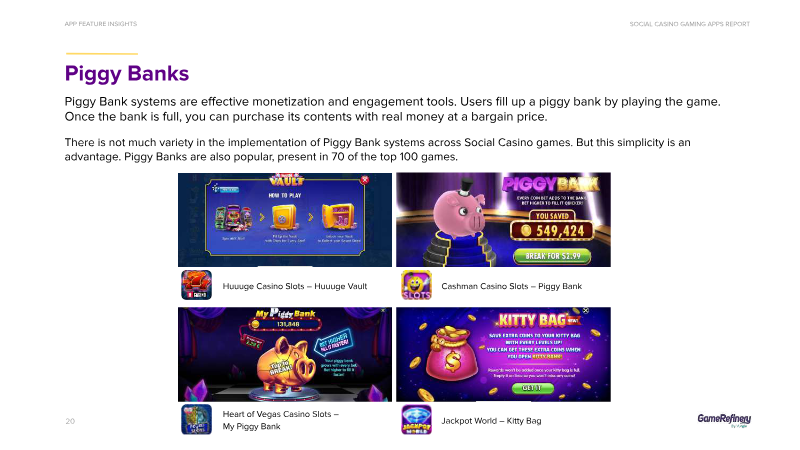
The social casino gaming market experienced significant growth and transformation between August 2020 and August 2021, driven largely by global social distancing measures. While the segment reached a global gross gaming revenue of $6.2 billion in 2020 with a projected increase to $7.5 billion by 2026, the market has become increasingly saturated. High barriers to entry mean that established titles dominate the top rankings, while new entrants struggle to scale. The analysis draws on 83 billion impressions and 12 million installs to provide a comprehensive look at acquisition costs, retention strategies, and player motivations. Financial data indicates a widening gap between platforms. The average cost-per-install (CPI) on iOS rose to $11.09, making it over twice as expensive as Android, which saw its CPI decrease to $5.00. Despite these costs, the sector maintains healthy performance metrics, with Day 7 return-on-ad-spend (ROAS) averaging 11.12% and Day 30 ROAS reaching 25.18%. Geographically, Latin America offers the lowest acquisition costs at $1.43 per install, though North America remains the primary target for high-value returns. To combat rising costs and market saturation, developers are increasingly integrating sophisticated "mid-core" features to deepen engagement. Album collectibles are the most prevalent mechanic, appearing in 74% of top games, followed closely by special side-modes and piggy bank monetization systems. Battle passes have seen the most dramatic growth, jumping from 5% to 36% adoption in a single year. These features cater to a unique player demographic that is evenly split by gender but skews older, with nearly half of all users over the age of 45. Successful titles now focus on a "meta-driven" experience, utilizing guild mechanics and narrative elements to move beyond simple slot or bingo loops.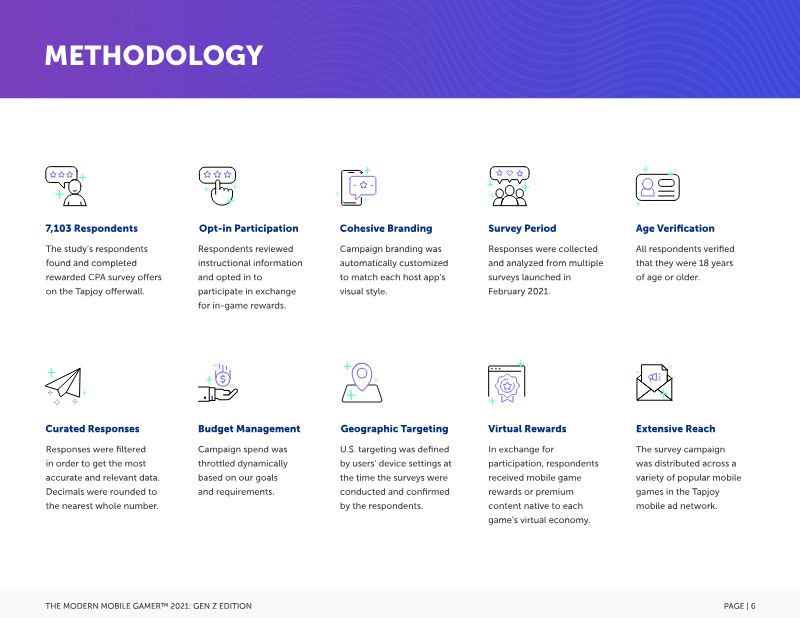
Tapjoy · 2021
ReportThe Modern Mobile Gamer: 2021 Gen Z Edition
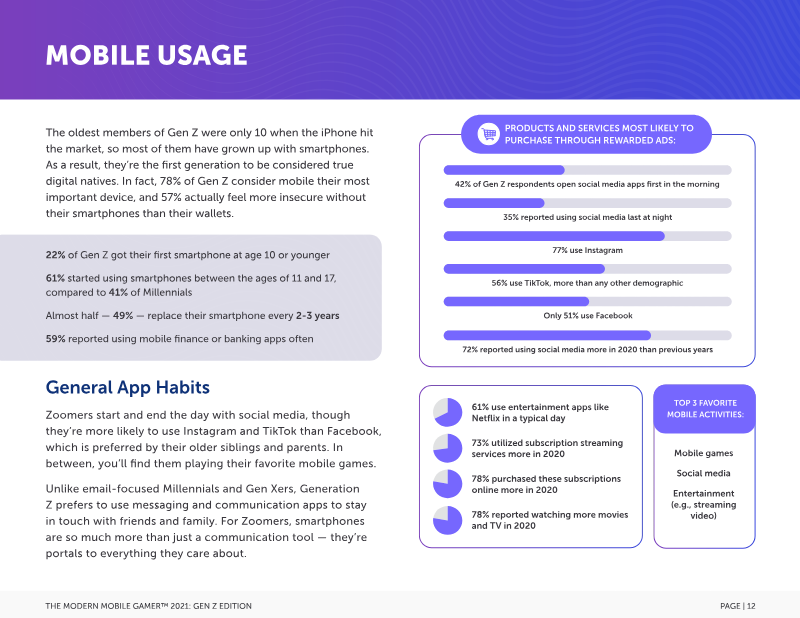
This analysis examines the mobile behaviors, gaming habits, and advertising preferences of Generation Z, defined as individuals born in 1997 or later. Based on a February 2021 survey of 7,103 U.S. consumers aged 18–24 on the Tapjoy network, the findings characterize this demographic as "digital natives" who view the smartphone as their primary device for entertainment, social connection, and commerce. The study utilizes opt-in participation and rewarded survey methodology to gather data on a generation that currently represents $140 billion in buying power. Key findings indicate that Gen Z is heavily invested in the mobile ecosystem, with 86% using mobile as a gaming platform—significantly higher than the 42% who use consoles. The COVID-19 pandemic accelerated these trends, as 71% of respondents reported playing more mobile games in 2020. Beyond gaming, the demographic is highly active in mobile commerce; 68% shop via mobile one to four times per week, frequently purchasing to-go food, retail items, and subscription services. Socially, Gen Z favors Instagram and TikTok over Facebook and increasingly rejects traditional gender stereotypes in marketing. The research concludes that Gen Z has a unique, high-standard relationship with advertising. They largely reject intrusive, non-skippable, or inauthentic content, preferring ads that offer a value exchange. Consequently, 54% of respondents prefer rewarded ads over other formats, and 53% engage with rewarded mobile game ads—outperforming engagement rates on Instagram (38%) and TikTok (23%). To successfully reach this audience, brands must prioritize humor, social and environmental awareness, and opt-in experiences that respect the user's digital autonomy.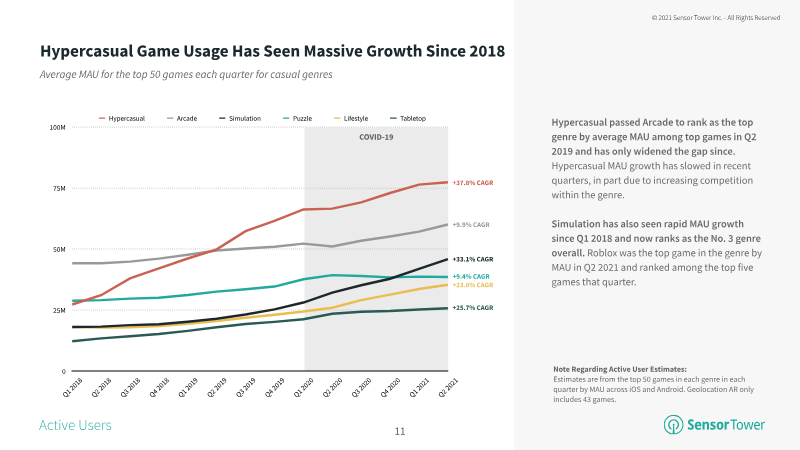
Sensor Tower · 2021
ReportThe State of App Engagement 2021: An Analysis of Key Global App Usage Trends in 2021
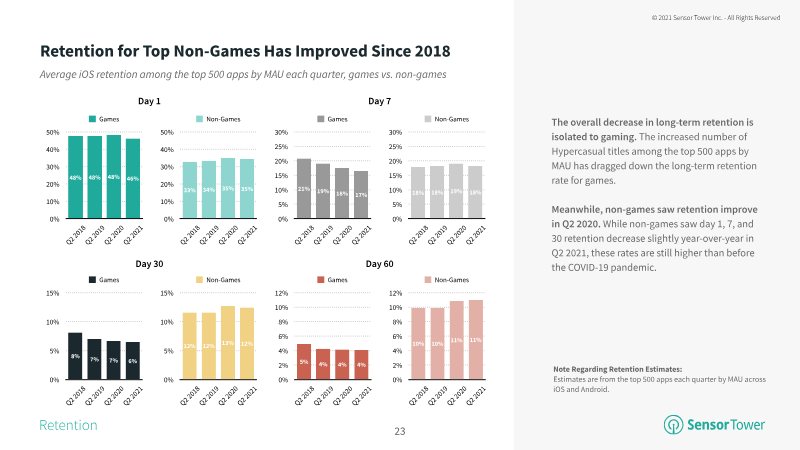
Global app engagement experienced a significant upward trend between 2018 and 2021, catalyzed by the COVID-19 pandemic. Monthly active users (MAU) for the top 500 apps grew at a compound annual growth rate of 12 to 14 percent, with the average top app gaining approximately 10 million MAU annually. While a spike in engagement occurred during 2020 lockdowns, growth rates and time spent largely normalized by the second quarter of 2021, though they remained above pre-pandemic levels. The analysis covers worldwide usage on iOS and Android across various categories and game genres. Business, Education, and Medical apps emerged as the fastest-growing categories due to shifts in remote work and remote learning. Conversely, Travel and Navigation suffered the most significant declines, though they began a slow recovery as restrictions lifted. In the gaming sector, Hypercasual titles dominated MAU and weekly active user metrics, while the Shooter genre led in daily active users. Engagement depth varies significantly by category and platform. Social Networking apps see the highest frequency of use, averaging nearly 10 sessions per day on Android, whereas Entertainment apps lead in daily time spent at approximately 30 minutes. Within gaming, mid-core genres like Strategy and RPG command the highest engagement, with users averaging about one hour of play per day. A strong correlation exists between time spent and revenue per download, particularly in mid-core and Casino genres. Retention trends reveal a divergence between games and non-games. While non-game retention improved during the study period, overall game retention—specifically day 30 metrics—was dragged down by the proliferation of Hypercasual titles, which prioritize high user acquisition over long-term loyalty. Tabletop games remain an outlier in the gaming category, maintaining the highest long-term retention and daily time spent among casual genres. Data for this analysis was sourced from Sensor Tower’s Usage and Store Intelligence platforms, benchmarking the top 100 to 500 apps per category.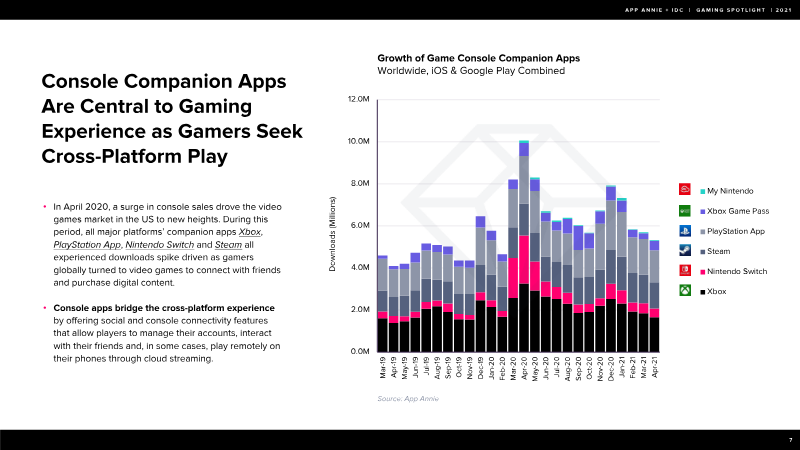

data.ai · 2021
ReportGaming Spotlight 2021: The Year in Review
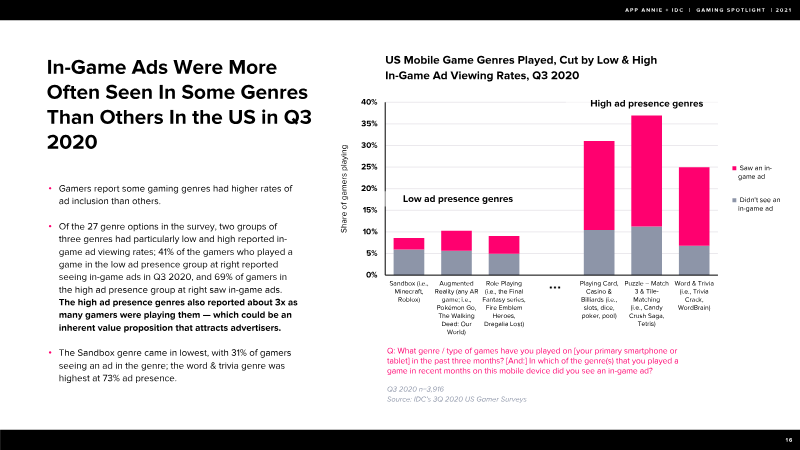
Mobile gaming has solidified its position as the primary driver of digital games consumption, with global spending projected to extend its lead to 2.9 times that of PC/Mac and 3.1 times that of home consoles in 2021. This growth is underpinned by a significant surge in engagement during the COVID-19 pandemic; by Q1 2021, global users were downloading over 1 billion games per week, a 30% increase over pre-pandemic levels. Consumer spending followed a similar trajectory, reaching $1.7 billion per week, up 40% from late 2019. While the Asia-Pacific region maintains nearly half of the global market share, North America and Western Europe saw the most significant growth in mobile spending during the period. A central thesis of the market analysis is the convergence of mobile and console experiences. High-performing titles like Roblox and Genshin Impact demonstrate that cross-platform play and real-time social features are no longer novelties but essential drivers of long-term engagement. This trend is supported by the rising popularity of console companion apps and the expansion of PC gaming, with Steam reaching a record 26.85 million peak daily concurrent users in early 2021. Additionally, the rise of game livestreaming on platforms like Twitch and Discord has created new avenues for monetization and community building. Regarding monetization, survey data from over 3,300 US gamers indicates a shift in sentiment toward in-game advertising. While video ads remain divisive due to their full-screen nature, rewarded video and playable ads have achieved net positive sentiment because they offer an immediate value exchange, such as in-game currency or a trial experience. However, the data warns of ad oversaturation; gamers in high-saturation genres, such as word and trivia games, report significantly more negative opinions of ads compared to those in low-saturation genres like sandbox games. The findings suggest that publishers must balance ad frequency with format quality to mitigate churn.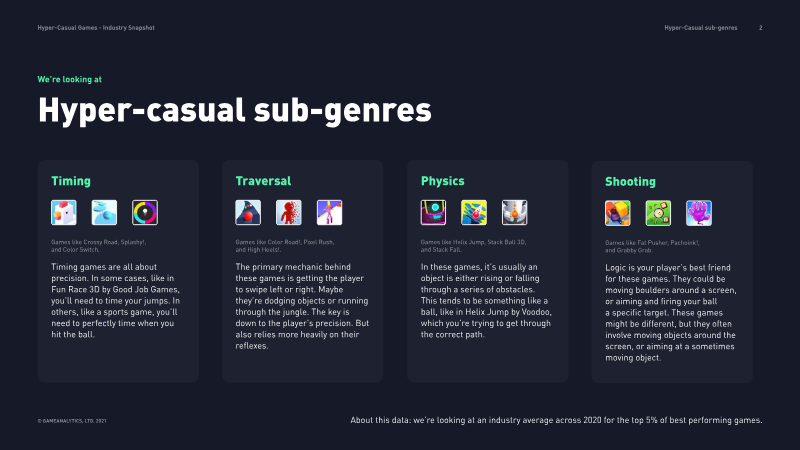

GameIntel · 2021
ReportDeconstructing the Superstars: The Metrics Behind Hyper-Casual Games 2020 Industry Snapshot
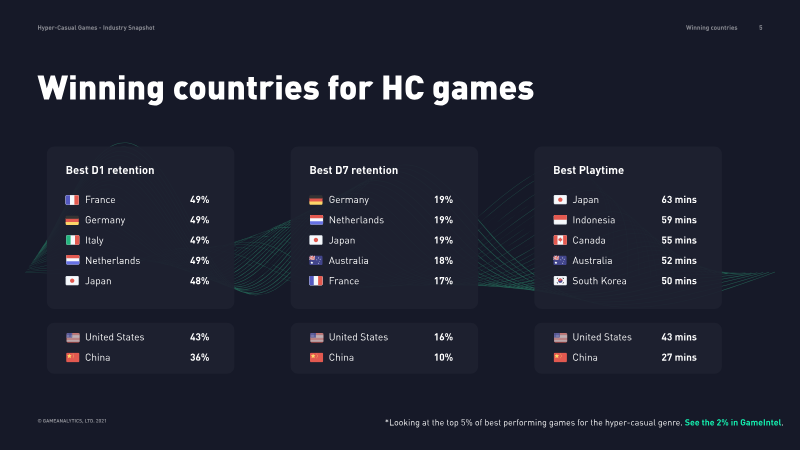
This industry snapshot provides a detailed analysis of the hyper-casual mobile gaming sector throughout 2020, utilizing aggregated data from a network of over 140,000 integrated games and two billion monthly players. The primary thesis centers on identifying the specific performance benchmarks and mechanical traits that define "superstar" titles within this high-growth category. By segmenting the genre into four distinct sub-genres—Timing, Traversal, Physics, and Shooting—the analysis offers granular insights into the mechanics and player behaviors that drive commercial success. Key findings highlight significant geographic variations in player engagement and retention. European markets, specifically France, Germany, Italy, and the Netherlands, lead in Day 1 retention at 49%, while Germany, the Netherlands, and Japan share the top spot for Day 7 retention at 19%. Despite lower retention rates compared to European counterparts, Japan exhibits the highest average playtime at 63 minutes, significantly outpacing the United States at 43 minutes and China at 27 minutes. These statistics underscore the importance of localized performance expectations for developers targeting global audiences. The analysis concludes with actionable strategic recommendations for game development, emphasizing that successful hyper-casual titles must be short, simple, and satisfying. A critical threshold for viability is identified at 40% Day 1 retention; titles falling below this mark are typically deemed unpromising, necessitating either rapid iterative sprints or abandonment. The study advocates for a forgiving gameplay design—often incorporating multiple lives or low-difficulty curves—to cater to the "snackable" nature of the genre. By examining 2020 hits like High Heels! and Slap Kings, the findings illustrate that low production effort combined with high-impact mechanics remains the dominant model for hyper-casual market leaders.


CyberAgent · 2020
Presentation2Q FY2020 Presentation Material: January to March 2020
CyberAgent achieved record-high financial performance during the second quarter of fiscal year 2020, with consolidated sales reaching 129.1 billion yen and operating profit surging 45.3% year-over-year to 12.4 billion yen. This growth was primarily anchored by the Game Business, which generated 44.8 billion yen in revenue. Success in this segment was driven by high-profile anniversary events for established titles like Granblue Fantasy and the strong market debut of KonoSuba: Fantastic Days. By the end of the first half, the company had already secured between 63% and 72% of its full-year profit targets, though projections for the remainder of the year remain cautious due to anticipated declines in advertising demand stemming from the COVID-19 pandemic. The media segment, centered on the ABEMA streaming platform, demonstrated significant momentum as stay-at-home orders accelerated user adoption. ABEMA reached 52 million downloads and grew its premium subscriber base to 676,000, with a clear trajectory toward one million subscribers by the end of the calendar year. While the segment still operates at a loss, these losses narrowed to 4.2 billion yen as sales rose nearly 19%. Monetization efforts are diversifying beyond traditional advertising into subscriptions and related services, such as the WinTicket betting platform, which saw transaction volumes double quarter-on-quarter to 3.5 billion yen. Strategic priorities for the future focus on balancing short-term gains with long-term operational stability. In the gaming sector, the emphasis remains on high-quality development and extending the lifecycle of existing intellectual properties. Simultaneously, the media division is pivoting toward a multi-faceted revenue model to ensure the sustainability of its expanding digital ecosystem. Despite the broader economic uncertainty introduced by global health trends, the current fiscal trajectory suggests a robust foundation built on digital entertainment and diversified media services.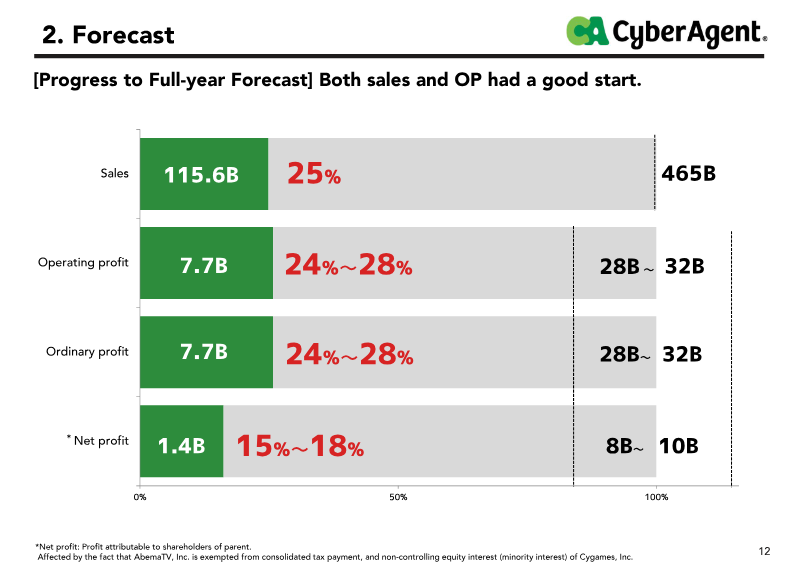


CyberAgent · 2020
Presentation1Q FY2020 Presentation Material: October to December 2019
Financial performance for the first quarter of fiscal year 2020, covering October to December 2019, reflects a period of strategic investment and steady growth across core digital segments. Net sales reached 115.6 billion yen, representing approximately 25% of the full-year forecast of 465 billion yen. Operating income and ordinary income both stood at 7.7 billion yen, tracking toward an annual target range of 28 billion to 32 billion yen. Profit attributable to owners of the parent was 1.4 billion yen, fulfilling roughly 15% to 18% of the projected 8 billion to 10 billion yen annual goal. The gaming segment maintained momentum through the performance of established titles and new releases. Key contributors included the third anniversary of Princess Connect! Re:Dive and the ongoing success of Granblue Fantasy and BanG Dream! Girls Band Party. New market entries such as Kick-Flight and the global expansion of Monster Strike further diversified the portfolio. In the media sector, the Abema platform demonstrated significant scaling, reaching 48 million downloads by the end of the quarter. Weekly active users showed consistent upward trends, supported by diverse programming including news, sports, and original reality content like Weekend Homestay. Strategic focus remains on the medium- and long-term monetization of the media business. The revenue model is evolving to balance advertising and subscription income with expanding peripheral businesses, such as the WinTicket betting service. This diversification aims to accelerate the path to profitability for the streaming segment. Geographically centered in Shibuya, Japan, the organizational strategy emphasizes integrated reporting and a unified corporate culture to drive innovation across advertising, gaming, and digital media services.


PayPal · 2020
ReportEurope and Esports: High Engagement and Even Higher Potential
The study demonstrates that European esports audiences are expanding rapidly, with a projected 92 million viewers by the end of 2020 and a year-over-year growth of 7.4%. Enthusiasts—those watching professional content more than once a month—total 33 million, while occasional viewers comprise the remaining 59 million. Revenue forecasts show a global market of nearly €974 million in 2020, rising to €1.6 billion by 2023, with Europe mirroring this trajectory. Survey data from 10,175 respondents aged 18-45 across ten Western and Northern European countries reveal that esports engagement is not confined to the youngest cohort; only 33% of 18-20 year olds are regular enthusiasts, whereas the 21-25 age group leads in engagement. Geographic variation is pronounced: Finland shows a 52% enthusiast rate among 18-20 year olds, compared to 21% in the UK. COVID-19 lockdowns increased viewership in markets with stricter restrictions, and 62% of respondents in Spain and the UK expect continued higher viewership post-lockdown. Gender analysis indicates that 32% of the audience are women, primarily occasional viewers. Nonetheless, female participation in competitive play is rising, with 60% of respondents acknowledging growth in women’s involvement. Women spend money on esports products at a comparable rate to men (46% vs 38%) and favor physical merchandise, whereas men lean toward digital items such as skins and premium passes. The research underscores strong cross-sport interest, with 64% of viewers also supporting a favorite sports team, and highlights the strategic opportunity for brands to engage this growing, diverse, and monetarily active audience.
Liftoff · 2020
Report