Monetization & Live Ops
Revenue models, in-game economies, retention and live operations.
258 documents

CyberAgent · 2021
PresentationFY2021 Presentation Material
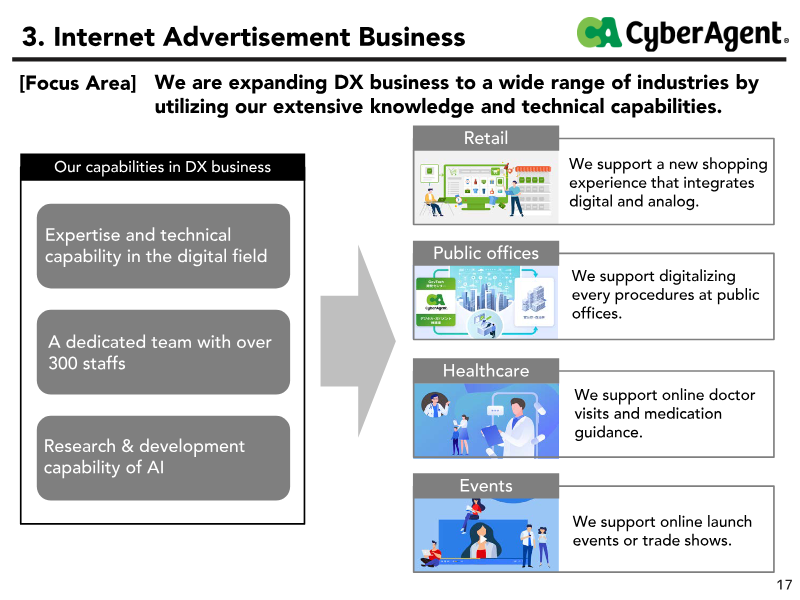
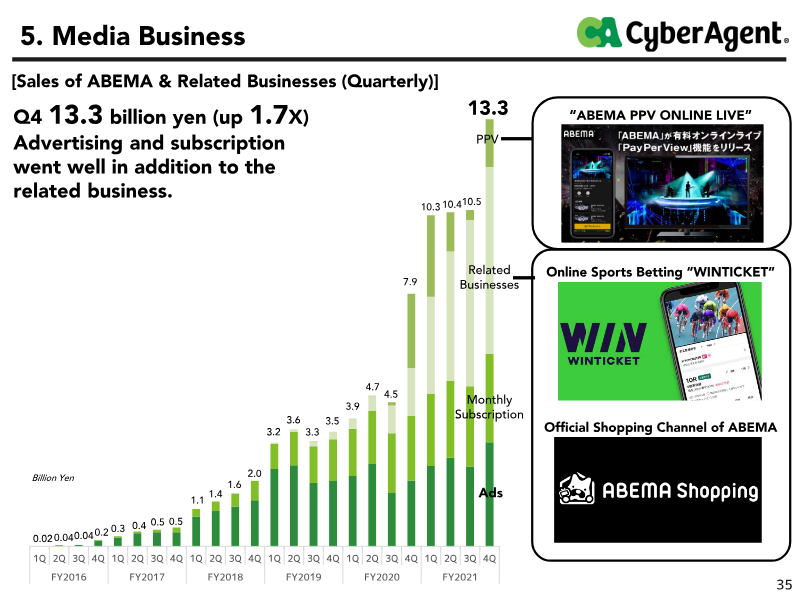
CyberAgent achieved record-breaking financial performance in fiscal year 2021, characterized by consolidated sales of 666.4 billion yen and a more than threefold increase in operating profit to 104.3 billion yen. This surge was primarily catalyzed by the Game business, which experienced 68.6% year-over-year growth following the massive commercial success of Uma Musume Pretty Derby. While the Game segment provided the most significant profit contribution, the Internet Advertisement business maintained steady double-digit growth, and the Media segment narrowed its operating losses through the expansion of ABEMA and the WINTICKET betting platform. The strategic focus for the period centered on leveraging high-performing assets to fund long-term growth initiatives. WINTICKET emerged as a critical driver within the Media segment, capturing 25% of the Keirin online betting market and tripling its transaction volume. Simultaneously, the company utilized profits from its established advertising and gaming pillars to invest in ABEMA’s digital transformation and content offerings, including pay-per-view services. This diversification strategy aims to stabilize the inherent volatility of the gaming industry, which led to the omission of specific earnings forecasts for the upcoming fiscal year. Future growth is predicated on a robust pipeline of high-profile intellectual properties and strategic partnerships with industry leaders such as Nintendo, SEGA, and Bandai Namco. Upcoming releases, including titles based on the Final Fantasy VII and Jujutsu Kaisen franchises, are expected to sustain the momentum established in 2021. By aligning its corporate purpose with digital innovation and cross-media expansion, the organization seeks to transition from a gaming-heavy profit structure toward a more balanced ecosystem where media and advertising provide consistent, long-term value.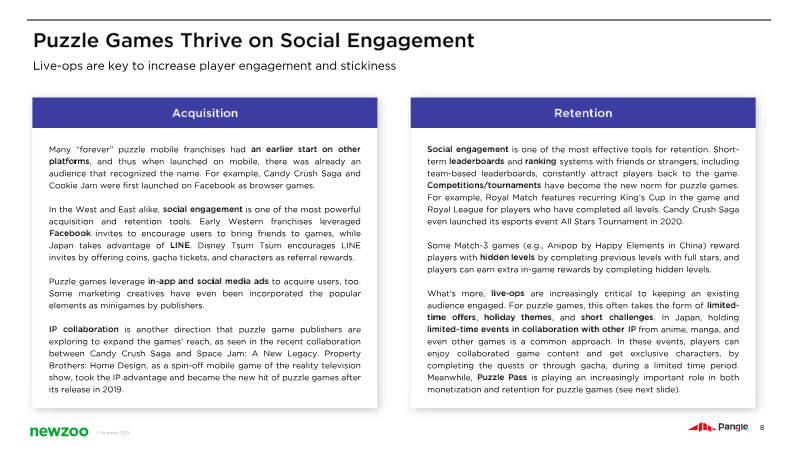
Newzoo & Pangle · 2021
ReportMobile Game Genre Report: Puzzle Games
This analysis examines the mobile puzzle game market, contrasting dynamics between Western and Eastern regions with a focus on the United States, United Kingdom, Japan, and South Korea. In 2021, mobile emerged as the primary gaming platform globally, with puzzle games representing a significant 8% of total mobile game revenues, totaling $6.9 billion in 2020. The United States leads as the largest market for the genre ($2.0 billion), followed by Japan ($1.2 billion) and China ($0.9 billion). While puzzle games are the most popular genre across all surveyed markets, regional player behaviors and monetization preferences vary significantly. In the West, players favor casual experiences and show a higher tolerance for in-app advertising (IAA). Conversely, Eastern markets, particularly Japan, demonstrate a higher propensity for in-app purchases (IAP) and deeper engagement with character collection, progression mechanics, and "gacha" systems. Demographically, puzzle gamers worldwide skew female and hold mid-to-high incomes, though players in the East tend to be younger and more highly educated than their Western counterparts. The findings highlight a shift toward hybrid monetization models that combine IAP, IAA, and subscription-based "Battle Passes." While classic Match-3 remains the dominant subgenre, developers are increasingly integrating "meta" elements such as narrative, decoration, and RPG mechanics to drive retention. Successful global expansion requires localized user acquisition strategies; for instance, Japanese players respond better to longer intervals between ads and collaborative events with popular anime IPs, whereas U.S. marketing often benefits from performance-based ads and localized creative content. The data suggests that while the core appeal of puzzle solving is universal, long-term commercial success depends on tailoring the in-game economy and social engagement tools to specific regional expectations.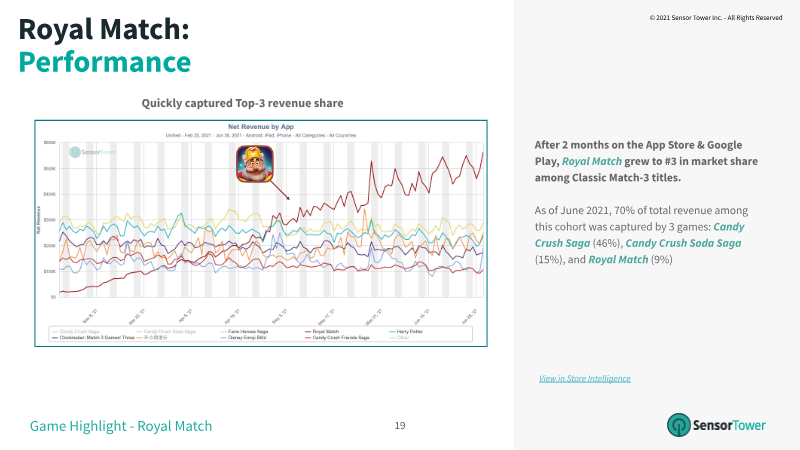
Sensor Tower · 2021
ReportCasual Puzzle Category Review 2021
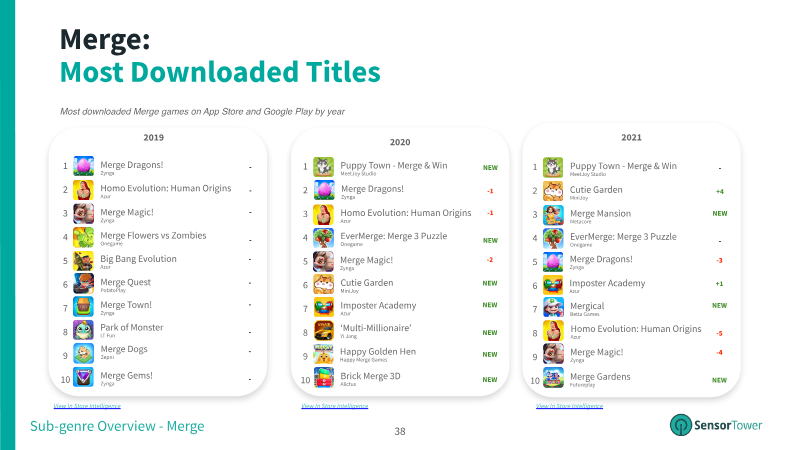
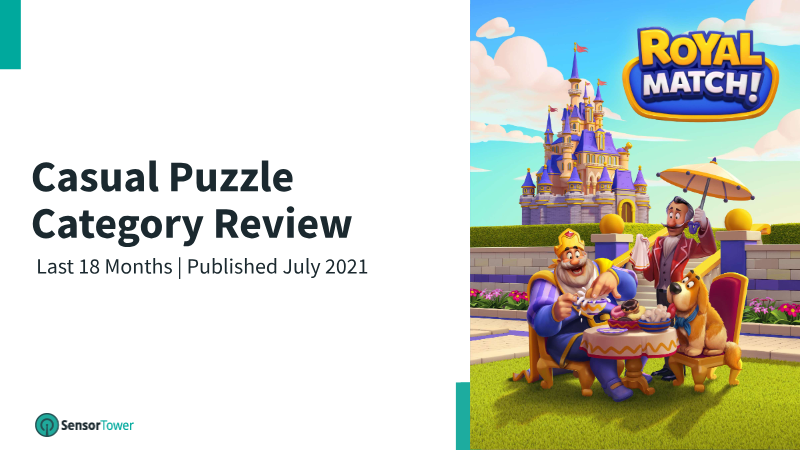
The casual puzzle market experienced a period of significant expansion and structural transformation between 2020 and mid-2021, characterized by a 17% increase in monthly revenue and a surge in successful new releases. While legacy giants like Activision Blizzard and Playrix maintain a combined 58% revenue share, the competitive landscape is shifting as the Puzzle & Decorate sub-genre surpasses Classic Match-3 as the industry’s primary revenue driver. This evolution is defined by the rise of titles like Project Makeover and Royal Match, which have successfully disrupted established hierarchies through superior Day-1 retention rates and the integration of narrative-driven 3D customization and fluid gameplay mechanics. The Merge sub-genre represents the most aggressive growth area, posting a 498% four-year compound annual growth rate. This segment’s 44% revenue increase over 18 months was largely propelled by Merge Mansion and EverMerge, which utilized innovative "merge-2" mechanics and substantial user acquisition investments to erode the market share of previous leaders like Zynga. Despite this volatility, the Puzzle & Decorate segment remains highly consolidated, with Playrix and AppLovin controlling 88% of total downloads and revenue, illustrating the high barrier to entry for sustained market dominance. In contrast to the rapid fluctuations of the Merge and Match-3 segments, the Hidden Objects category maintains a steady 13% four-year growth rate, dominated by June’s Journey. This title accounts for over half of the sub-genre's revenue despite a disproportionately low download share, highlighting the high monetization potential of its core audience. Across all casual puzzle segments, the most successful titles are increasingly those that integrate sophisticated decoration metas and narrative episodes, suggesting that future market leadership depends on blending traditional puzzle mechanics with deep, meta-driven player engagement.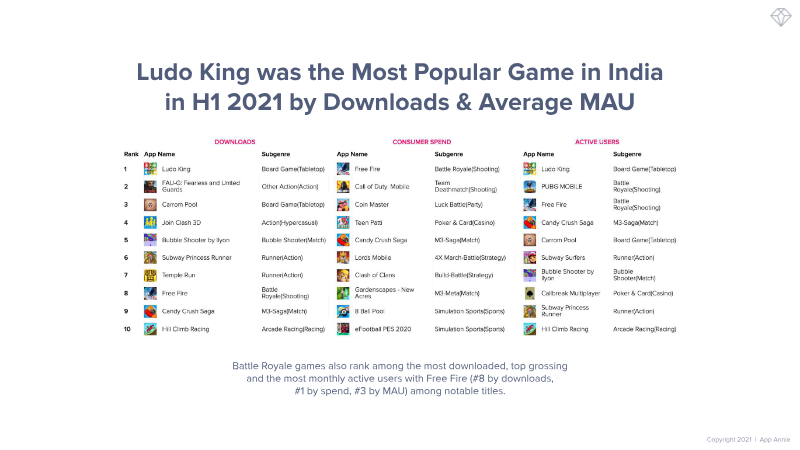


data.ai · 2021
ReportIndia: Mobile Market Spotlight: A Booming Mobile Economy
This analysis examines the rapid expansion of India’s mobile economy, focusing on user behavior, app categories, and market growth between 2019 and mid-2021. Utilizing proprietary intelligence data, the findings characterize India as one of the world’s most mobile-first markets, ranking second globally in total app downloads. In 2020, Indian users downloaded 24 billion apps, a 28% year-over-year increase, and spent a total of 651 billion hours on Android devices. Driven by the COVID-19 pandemic, average daily time spent per user rose from 3.3 hours in 2019 to 4.8 hours by the third quarter of 2021. Mobile gaming represents a significant pillar of this growth, with India becoming the largest market for game downloads in the first half of 2021, accounting for nearly one-fifth of global installs. While titles like Ludo King and Free Fire dominate active user and spend charts, homegrown publishers represent only 7.6% of the top 1,000 downloaded games, suggesting a major opportunity for local development. Additionally, monetization strategies are evolving, with a 15% increase in top-grossing games adopting hybrid models that combine in-app purchases with advertising. The financial services sector has also seen a dramatic transformation. Hours spent in investment and trading apps grew by 65% in 2020, led by platforms like Upstox Pro and WazirX. The Unified Payments Interface (UPI) continues to drive the market, with transaction volumes doubling year-over-year by mid-2021. Emerging segments such as "Buy Now Pay Later" and merchant utility apps like Khata Book are gaining significant traction. Beyond finance and gaming, the report highlights surging engagement in digital-first shopping, video streaming services like MX Player and Netflix, and a growing demand for mental health resources through meditation apps.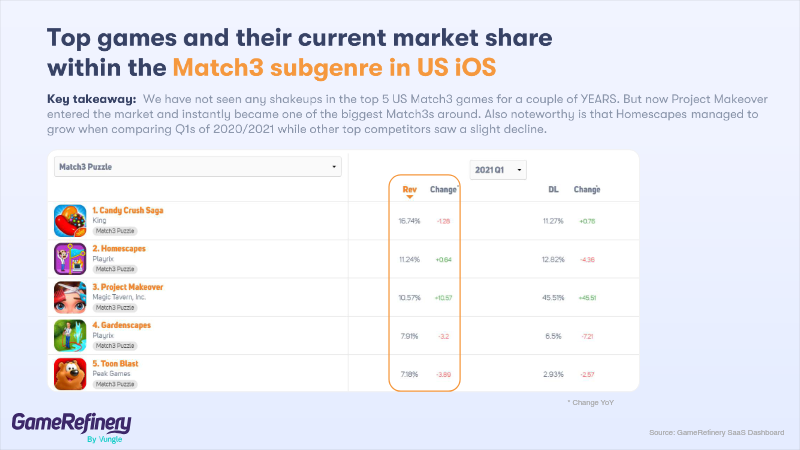
GameRefinery · 2021
ReportMatch3 Genre Snapshot: US iOS (May 2021)
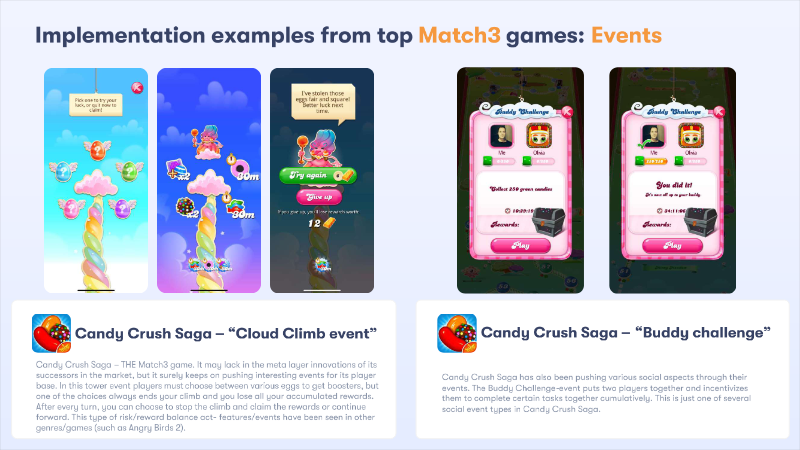
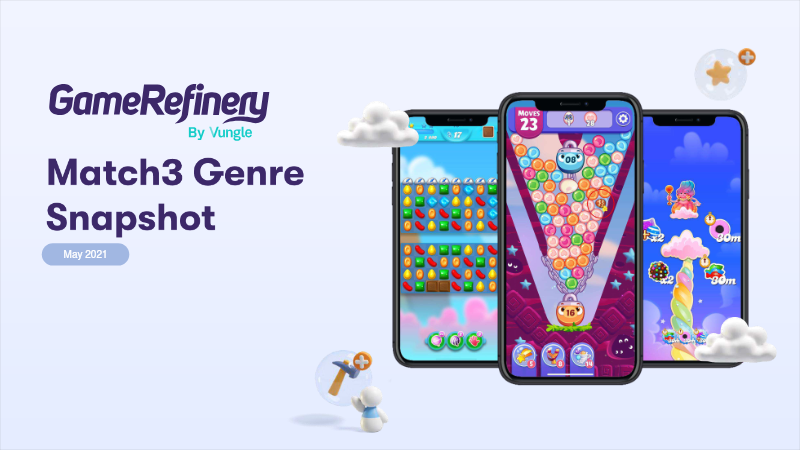
The Match3 subgenre represents the largest individual segment of the US iOS mobile gaming market, accounting for approximately 16% of total market revenue as of May 2021. While the category has long been dominated by established titles that have maintained chart positions for years, recent market shifts indicate a move away from traditional swapping mechanics. Notably, none of the new Match3 titles entering the top 500 grossing rankings over the last 18 months utilize standard swapping gameplay, signaling a diversification in core mechanics and the rising importance of meta-layers. Meta-elements, particularly those focused on decoration and customization, have become essential components for modern success in the genre. Successful megahits like Royal Match and Project Makeover demonstrate the effectiveness of combining core puzzle gameplay with deep progression systems and sophisticated monetization strategies. Data indicates that recurring live events, special event rewards, and limited-time in-app purchase offers have the highest impact on revenue. Furthermore, social features such as guild mechanics and "send/ask help" systems are increasingly vital for driving engagement and retention. Player motivation analysis, based on a survey of over 7,000 mobile gamers across English-speaking Western markets, reveals distinct psychological drivers within the genre. While "Thinking and Solving" remains the primary driver for traditional titles like Candy Crush Saga, newer successful entries increasingly lean into "Customization and Decoration" and "Role-playing and Emotions." This shift reflects a broader industry trend where loss aversion mechanics and social competition are leveraged to enhance the player experience and maximize lifetime value in a highly competitive landscape.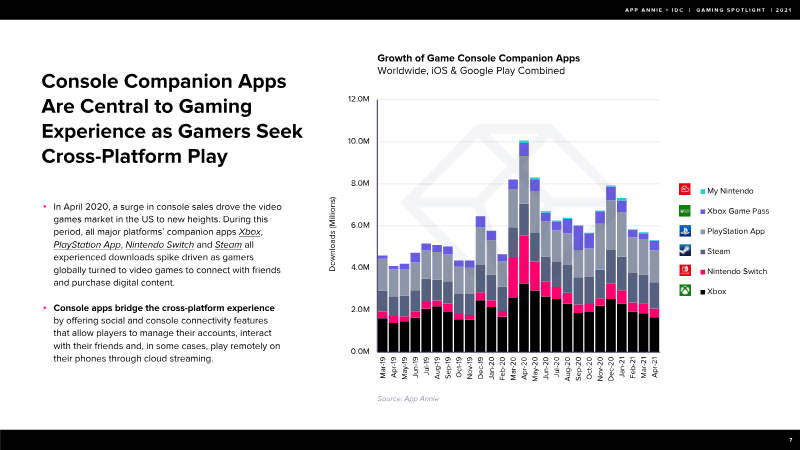

App Annie · 2021
ReportGaming Spotlight: 2021 Review
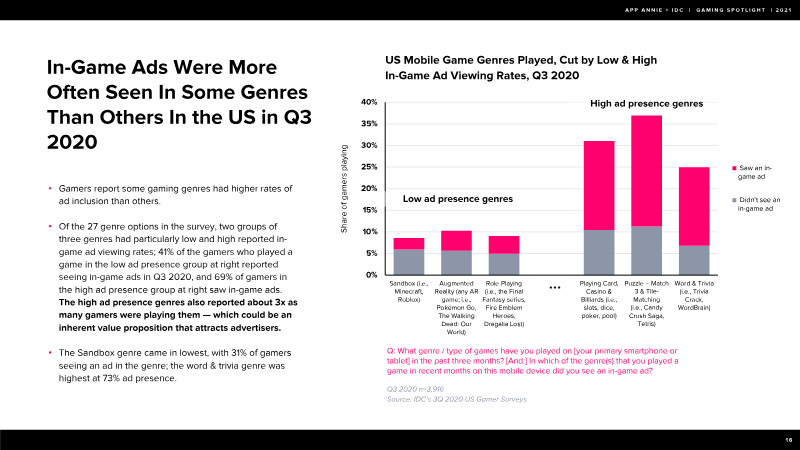
The 2021 Gaming Spotlight provides a comprehensive analysis of the global digital gaming landscape, emphasizing the dominance of mobile gaming and the increasing integration of cross-platform experiences. The primary thesis posits that mobile gaming has become the central driver of industry growth, with its global lead over home consoles projected to reach 3.1x by the end of 2021. This shift is supported by data indicating that mobile game downloads and consumer spending in Q1 2021 increased by 30% and 40%, respectively, compared to pre-pandemic levels in late 2019. The analysis highlights a significant evolution in player behavior, where social connectivity and cross-play capabilities have become essential for long-term engagement. High-grossing titles such as Roblox and Genshin Impact exemplify this trend, leveraging cross-platform features to scale rapidly across mobile, PC, and console environments. Furthermore, the report notes that console companion apps have become vital tools for managing accounts and maintaining social connections, reflecting a broader trend of merging mobile and console experiences. Methodologically, the findings rely on market intelligence from App Annie and consumer survey data from IDC, which polled over 3,300 US gamers regarding their attitudes toward in-game advertising. The research reveals that while overall sentiment toward in-game ads improved between 2019 and 2020, player reception is highly dependent on the ad format. Rewarded video and playable ads, which offer a direct value exchange, consistently outperform traditional banner and video ads in user sentiment. The data warns that ad oversaturation, particularly in high-frequency genres like word and trivia games, correlates with more negative player sentiment and potential churn. Ultimately, the industry is trending toward casual, session-based gaming, with hyper-casual and simulation genres seeing the most significant growth in download market share.

AudioMob · 2021
ReportAudio Ad Engagement in Mobile Games
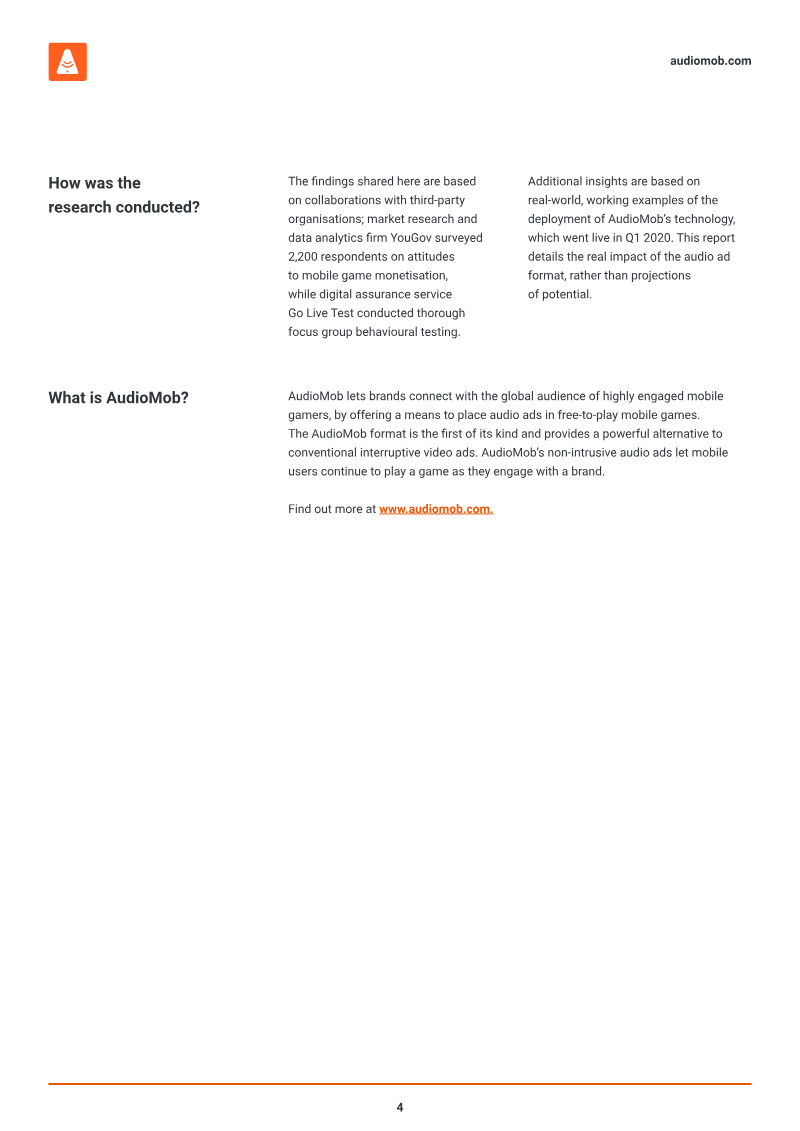
This analysis examines the efficacy of in-game audio advertising as a non-intrusive alternative to traditional video and banner formats within the mobile gaming industry. The primary thesis posits that audio ads maintain player engagement and retention by allowing gameplay to continue uninterrupted, thereby fostering a more positive brand association compared to conventional, disruptive advertising models. Research findings are derived from a combination of market surveys and behavioral testing. A YouGov survey of 2,200 respondents highlights that 86% of UK adults dislike video ads, while 28% identify audio ads as their preferred monetization model. Behavioral testing conducted by Go Live Test confirms that 100% of participants continued playing during audio ad delivery and achieved 100% brand recall when ads were paired with a companion banner. Furthermore, the data indicates a significant engagement advantage, with audio ads achieving a click-through rate (CTR) of approximately one click per 1.4 listens, vastly outperforming the 0.08% average CTR typical of static banners. The effectiveness of this format is further validated by a Warner Music Group case study targeting 18-to-30-year-olds in the United States. The campaign achieved a 1.78% CTR—representing a 1,000% increase over traditional banner standards—and an ad completion rate exceeding 75%, significantly higher than the 4% to 8% industry standard for skippable video ads. Additionally, the campaign recorded a 1.8% bounce rate on the destination page, suggesting high intent among users who engaged with the audio format. These findings suggest that audio advertising offers a viable solution for developers and brands seeking to monetize a global audience of 2.8 billion mobile gamers without compromising the user experience. By integrating seamlessly into the background of gameplay, audio ads mitigate the frustration associated with screen-blocking video ads, ultimately driving higher engagement and more favorable brand outcomes.


SocialPeta Data Research Institute · 2021
ReportWhite Paper on Global Mobile Games
The white paper argues that mobile-game advertising has entered a new phase of intensity and sophistication, driven by rapid creative growth, the dominance of video formats, and evolving privacy regulations. In 2021 ad creatives surged by 200% YoY while CPMs rose 34%, with video ads now accounting for over 85% of spend. The market continues to expand, projecting more than 70 000 advertisers by 2023, yet advertiser growth has slowed post-pandemic to just 5% YoY. Android remains the primary platform, hosting roughly two-thirds of advertisers, and high-spending Tier 1 markets—particularly the United States, Japan, and Korea—retain their status as key targets for publishers. Geographically, the United States shows a casual-game bias among advertisers (26% of spend) but still supports high-spending titles such as Free Fire and Subway Surfers. China’s landscape is shifting from RPGs to casual titles, with puzzle games capturing the largest creative share. In the Middle East, strategy and shooter games like Rise of Kingdoms and PUBG Mobile dominate downloads and revenue, whereas the CIS market displays a more diversified mix of strategy, shooter, and casual titles. Across all regions, vertical video ads—especially 30–34 second formats with end-card elements—outperform horizontal variants for mid- and hard-core titles, achieving conversion rates around 0.15%. Playable ads also deliver significant lift for mid-core games. Privacy changes from Apple and Google have accelerated a shift toward probabilistic attribution models such as SKAN, compelling advertisers to prioritize creative design over granular targeting. Hybrid monetization platforms that blend bidding and non-bidding networks are gaining traction, while developers increasingly adopt innovative in-app purchase mechanics (limited-time offers, battle passes) and social features (chat, PvP, guilds) to enhance engagement and retention. These trends collectively underscore a mobile-gaming ecosystem that is more video-centric, privacy-aware, and focused on long-cycle strategy titles in high-engagement markets.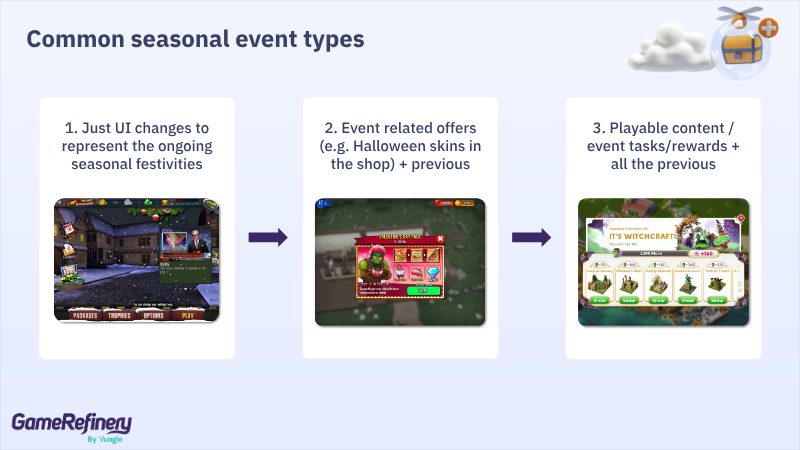

GameRefinery · 2021
ReportIn-Game Events Snapshot
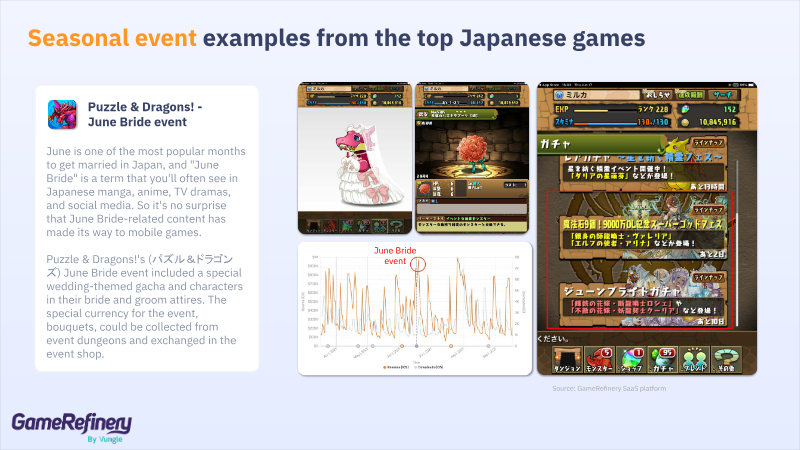
The snapshot presents a comprehensive overview of in-game event strategies across the global mobile gaming market, focusing on seasonal and promotional collaboration events. It establishes that 90% of the top-grossing 100 mobile titles deploy seasonal events, while 40% of US iOS top-100 games feature brand collaborations. These events are highlighted as key drivers for player re-engagement, new user acquisition, and revenue spikes, with examples such as Sky: Children of the Light’s Kizuna AI partnership and Genshin Impact’s Lantern Rite event, which each generated multi-million daily revenue surges. The report details the taxonomy of events—UI changes, limited-time offers, playable content, and special bundles—and identifies profitable revenue streams: time-limited skins, character drops, themed currency, and gacha mechanics. Seasonal calendars list major holidays (Christmas, Lunar New Year, Halloween) and region-specific observances (Double Five in China, Sakura season in Japan), underscoring the importance of cultural relevance. Geographic scope covers North America, China, and Japan, with data on event adoption rates: 51% of Chinese top-100 games and 62% of Japanese top-100 games use promotional collaborations, compared to 42% in the US. Methodology relies on GameRefinery’s SaaS platform, aggregating revenue and event data from thousands of titles. Key conclusions emphasize that events remain a differentiator for high-performing games, offering scalable monetization and cross-brand synergy. The snapshot recommends that developers evaluate event fit against audience demographics, content alignment, and potential for brand partnership to maximize engagement and revenue.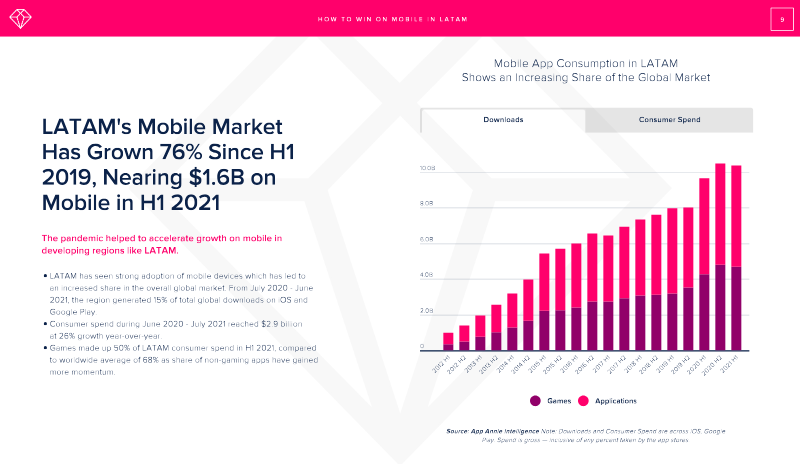

App Annie · 2021
ReportHow to Win on Mobile in LATAM: 2021
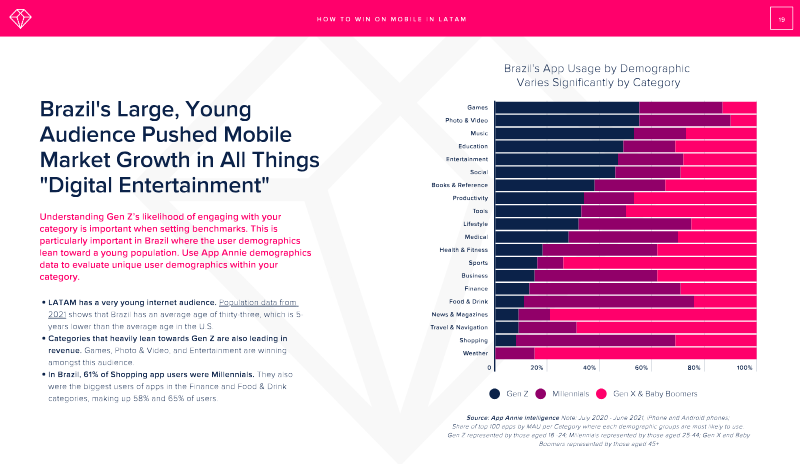
The analysis focuses on Latin America’s mobile ecosystem from July 2020 to June 2021, revealing a region that has accelerated digital adoption and monetization amid the pandemic. Mobile downloads surged 76% year-on-year, reaching roughly 21 billion across iOS and Google Play, while consumer spend climbed 26% to $2.9 billion. Android dominates downloads (≈89%) yet iOS retains a higher spend share, commanding 56% of total consumer expenditure. Brazil and Mexico together generate 73% of regional downloads, with Brazil’s per-capita income lower than Uruguay’s but still driving significant spend growth. Gaming remains a key driver, accounting for 50% of LATAM consumer spend—below the global average of 68%. Brazil leads in both downloads (4.6 billion) and revenue ($557 million), with Chile showing a strong spend-to-download ratio. Non-gaming verticals such as Finance, Shopping, and Entertainment also expanded; finance apps grew 36% YoY in Brazil, while shopping app downloads rose 30%. Entertainment became the largest spend category in four of six major markets, reflecting limited Smart TV penetration and a shift to mobile streaming. User engagement metrics underscore high daily time spent, with Brazil averaging 5.4 hours per user and Mexico 4.8 hours—up 32% and 36% respectively from two years prior. Social, tools, and business categories saw the largest increases in sessions and minutes, indicating opportunities for productivity and contactless payment solutions. Demographic analysis shows a youthful audience: 61% of shopping app users in Brazil are Millennials, and Gen Z dominates photo-video and entertainment segments. Overall, the report highlights LATAM as a high-growth mobile market with distinct platform dynamics, strong gaming and finance opportunities, and an emerging preference for mobile-first entertainment and productivity apps.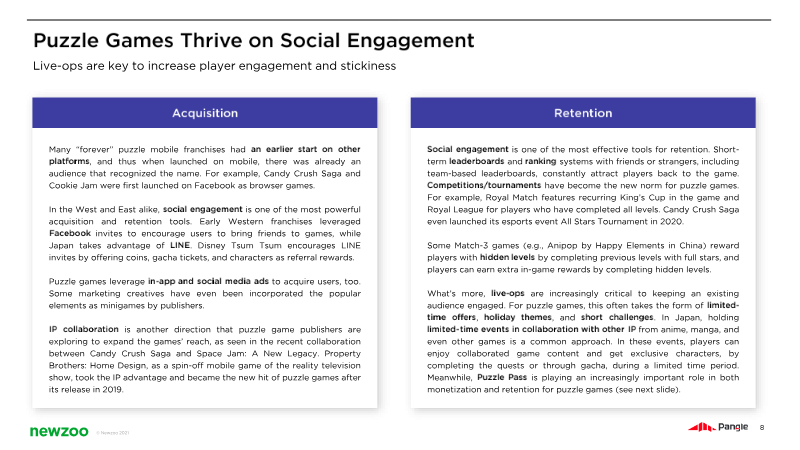
Newzoo · 2021
ReportMobile Game Genre Report: Comparing & Contrasting Eastern and Western Markets 2021
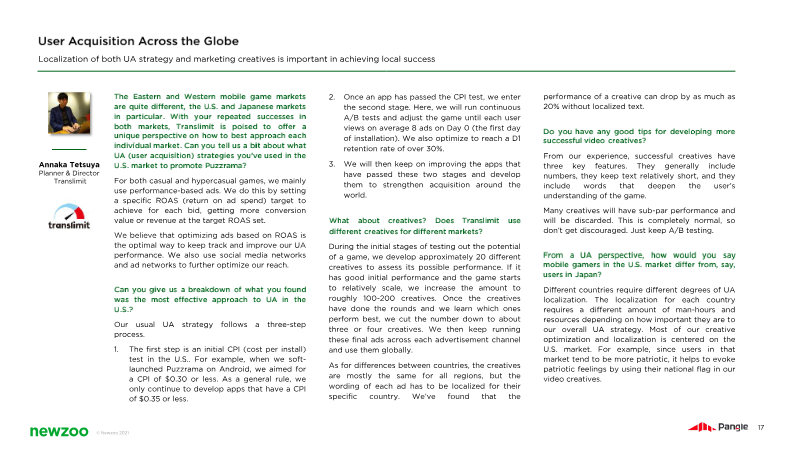
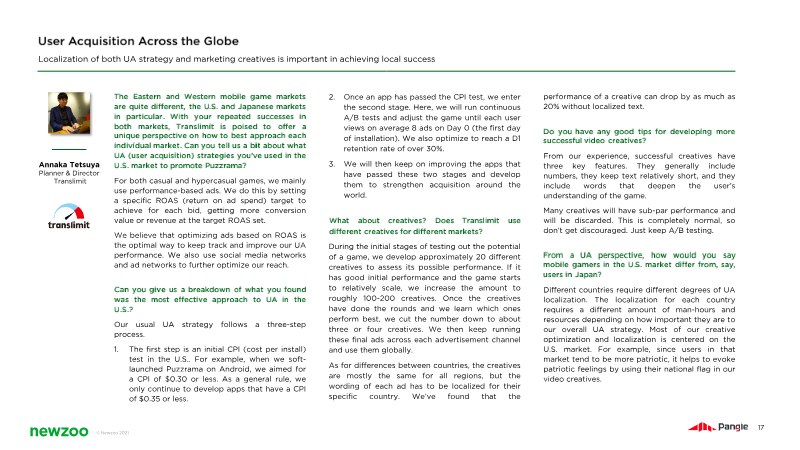
This report examines the mobile gaming landscape in 2021, focusing on the strategic differences between Eastern and Western markets regarding genre popularity, monetization, and user acquisition. While mobile is the leading gaming platform globally by revenue and player count, market dynamics vary significantly between regions. The United States remains the largest market for puzzle games, followed by Japan and China, though Western markets generally favor casual genres like puzzle and arcade, whereas Eastern markets demonstrate a higher preference for competitive, immersive titles such as Battle Royale and role-playing games. Key findings indicate that while puzzle games are popular globally, their implementation differs by region. Western titles often emphasize narrative and decoration, while Eastern titles frequently integrate deeper economies, character collection, and gacha mechanics. Monetization strategies also diverge; Western players show a higher tolerance for in-game advertising, leading to an IAA-focused revenue model. Conversely, Japanese players exhibit a greater willingness to engage in in-app purchases, resulting in a more balanced or IAP-heavy approach. Live-ops, including limited-time events and social engagement features, are identified as critical tools for retention in both regions, though the specific content—such as collaborations with anime or manga in Japan—is tailored to local cultural interests. The analysis relies on industry data and expert insights, including case studies from developers like Translimit. Methodology involves comparing consumer behaviors, demographic profiles, and revenue streams across key markets. The report concludes that successful global expansion requires rigorous localization of marketing creatives and user acquisition strategies. Developers are encouraged to utilize A/B testing and performance-based ad optimization to navigate the distinct preferences of Western and Eastern audiences, ensuring that both gameplay mechanics and monetization models align with regional expectations.
Pangle · 2021
Report