Marketing & User Acquisition
Campaigns, ad creatives, app store optimization and the cost of a player.
235 documents

Adjust
WhitepaperA Deep Dive into Deep Links: The All-in-One Handbook for Mobile App Marketers, Developers, and Product Managers
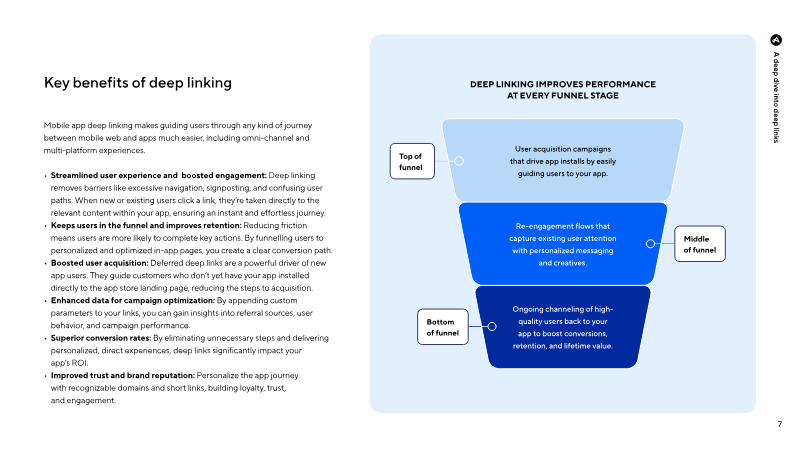
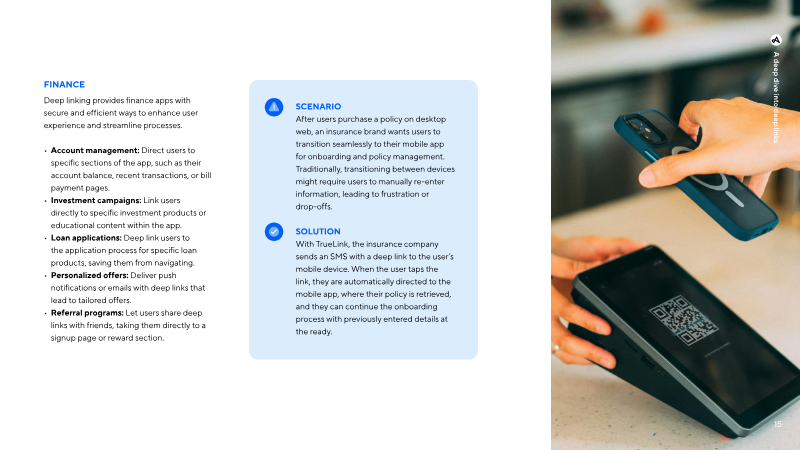
Deep linking serves as a foundational strategy for mobile growth, functioning as a critical mechanism to bridge the gap between web and app environments. By directing users to specific in-app content rather than generic landing pages, this approach effectively minimizes friction throughout the user funnel. The primary thesis posits that a robust, standardized linking infrastructure is essential for modern mobile marketing, as it directly correlates with higher activation, improved retention rates, and more precise attribution across diverse digital touchpoints. The current landscape of mobile marketing faces significant technical fragmentation, exacerbated by the recent deprecation of legacy services like Google’s Firebase Dynamic Links. To address these challenges, centralized solutions such as Adjust’s TrueLink provide a scalable framework for managing direct, deferred, and contextual links. These tools enable automated link generation and sophisticated cross-platform routing, ensuring that user journeys remain uninterrupted whether they originate on mobile, desktop, or connected television environments. By standardizing these interactions, organizations can maintain consistent performance and data integrity across the entire ecosystem. These strategies are particularly impactful within high-growth verticals such as e-commerce, gaming, and finance, where the quality of the initial user experience dictates long-term engagement. Data indicates that implementing comprehensive linking platforms not only streamlines the transition for brands migrating from deprecated services but also enhances the granular measurement capabilities required for data-driven decision-making. Ultimately, the integration of a unified linking architecture is a prerequisite for scaling app growth, as it transforms fragmented traffic sources into cohesive, high-converting user experiences that support sustained business objectives.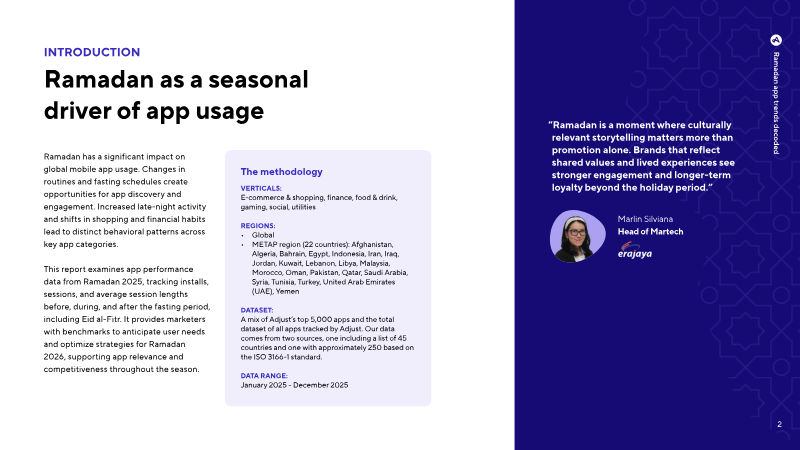

Adjust
ReportRamadan App Trends Decoded: Benchmarks and Insights for 2026
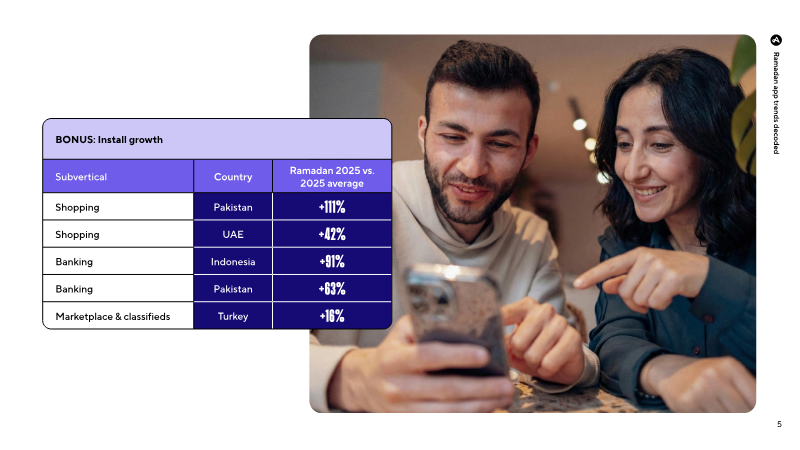
This analysis examines mobile app performance trends during the 2025 Ramadan season to provide strategic benchmarks for 2026. By tracking installs, session counts, and session lengths across seven key verticals—including e-commerce, finance, gaming, and social—the findings highlight how shifting consumer routines during the fasting period and Eid al-Fitr create distinct opportunities for user acquisition and engagement. The scope covers global data with a specific focus on the METAP region, encompassing 22 countries such as Saudi Arabia, Indonesia, Pakistan, and the UAE. Data indicates that Ramadan acts as a significant driver of mobile activity, with average daily installs in the METAP region rising 11% during the month compared to the preceding two weeks. Session counts also saw a 6% increase during the period. Engagement patterns varied by vertical; gaming and social apps emerged as primary drivers of session growth, while e-commerce experienced significant spikes in specific markets like Pakistan and the UAE. Notably, session lengths for gaming apps remained the longest across all regions, averaging 35.6 minutes during Ramadan. The analysis emphasizes that Ramadan should be treated as a phased growth cycle rather than a single peak. While overall install growth reached 10% during Ramadan and climbed to 13% in the post-Eid period, performance varied significantly by country and category. The findings suggest that marketers should avoid uniform regional strategies, instead utilizing country-level benchmarks to guide budget allocation. Success during this season requires sustained, conversion-focused activity that extends through Eid al-Fitr, alongside a focus on high-intent engagement windows, particularly during late-night hours, to maximize user retention and long-term loyalty.

Adjust
ReportThe Shopping App Insights Report: 2025 Edition
The global e-commerce landscape, currently valued at $6.42 trillion, is undergoing a significant transformation as marketers navigate economic volatility and evolving consumer expectations. While the first half of 2025 saw a 14% year-over-year decline in total app installs, session growth remains resilient, signaling a shift toward deeper engagement rather than mere acquisition volume. Success in this environment requires a transition from broad-reach tactics to sophisticated, omnichannel strategies that leverage artificial intelligence for hyper-personalization and predictive modeling. Performance data from the first half of 2025 reveals a strategic pivot toward paid user acquisition and re-engagement, with the global reattribution share rising to 0.18 and the paid-to-organic ratio climbing to 0.54. Regional performance is increasingly polarized; while Thailand and Brazil have emerged as high-growth markets, other regions like the UAE and Saudi Arabia have experienced notable contractions. Marketplace apps continue to lead in session volume, yet dedicated shopping apps maintain a stronger hold on new install acquisition. Despite competitive engagement metrics, the industry faces challenges with a 13% decline in day-one retention and rising costs per install. To counter these trends, developers are diversifying partner ecosystems and utilizing tools such as deep linking and smart banners to reduce friction in the user journey. Sustainable growth now depends on prioritizing long-term retention through data-driven, localized experiences rather than relying on seasonal traffic spikes. By integrating AI-powered measurement and analytics, businesses can better optimize their return on investment and maintain a competitive edge in a privacy-first, global marketplace.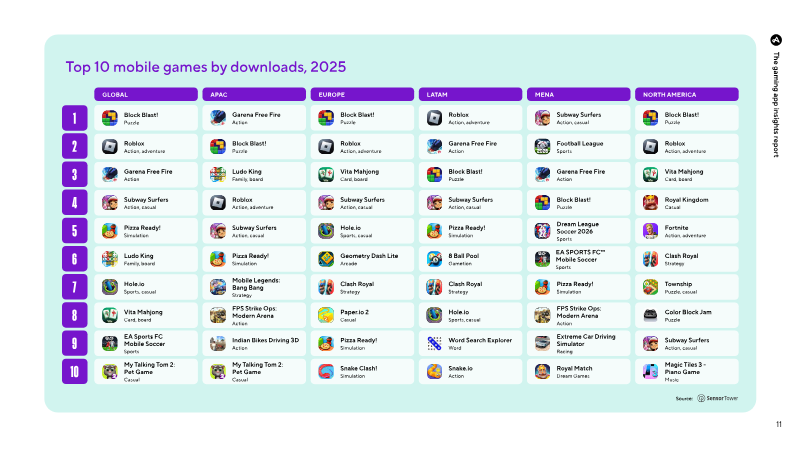

Adjust
ReportThe Gaming App Insights Report: 2026 Edition
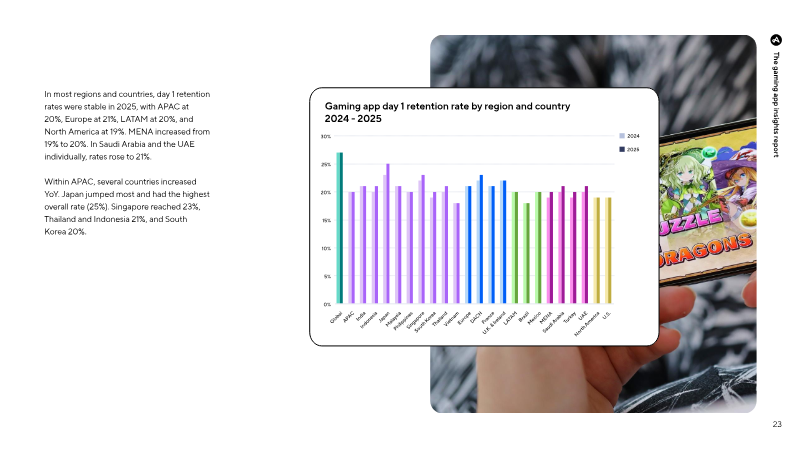
The mobile gaming industry is undergoing a fundamental strategic transition, moving away from a reliance on high-volume user acquisition toward a model centered on long-term retention and high-value player engagement. This shift is driven by a challenging economic environment characterized by a 33% increase in global cost-per-click and a 30% rise in cost-per-install throughout 2025. To mitigate these rising expenses, studios are consolidating their marketing efforts, reducing the average number of advertising partners per application to focus on high-performing channels that promise superior return on investment. Technological innovation serves as a primary lever for this transformation, with generative artificial intelligence and machine learning now integral to creative production and audience targeting. These tools allow developers to optimize ad performance and refine engagement tactics in an era where data privacy remains a critical factor. Notably, App Tracking Transparency opt-in rates on iOS reached 39% in early 2026, providing studios with more reliable data to fuel their direct-to-consumer strategies. This data-driven approach is increasingly vital as the industry seeks to balance the dominance of hyper-casual titles, which still account for 29.1% of installs, with the superior session-to-install ratios found in action and puzzle genres. The global landscape reflects a maturing market where session lengths and day-1 retention rates remain stable despite the broader cost pressures. While hyper-casual games maintain the largest share of installs, the industry is clearly pivoting toward hybrid monetization and cross-platform experiences to sustain growth. By prioritizing long-term progression over rapid acquisition, developers are successfully navigating a period of rising costs, ensuring that engagement remains robust even as the industry shifts toward more sustainable, value-based growth models.


Adjust
ReportMobile App Trends 2026: Japan Edition
The Japanese mobile application market maintains a robust, iOS-dominant trajectory, characterized by a 4% year-over-year increase in total installs during the first half of 2026. This growth is underpinned by a maturing digital ecosystem where mobile integration has become deeply embedded in daily life. Legislative shifts, specifically the Mobile Software Competition Act, are actively reshaping the landscape by incentivizing developers to diversify their distribution and payment strategies, thereby fostering a more competitive and sustainable environment for long-term growth. Financial and gaming sectors serve as the primary catalysts for this expansion. Stock trading applications have experienced a 90% surge in installs, bolstered by the participation of younger investors and the influence of tax-advantaged programs like NISA. Simultaneously, gaming engagement has intensified, highlighted by a 113% increase in card game sessions. These sectors are not only attracting new users but are also achieving higher retention rates and longer session durations, indicating that users are increasingly comfortable managing complex financial and recreational activities through mobile interfaces. The entertainment sector continues to evolve through cross-media synergy, particularly between anime, manga, and short-form content. While OTT streaming services recorded a 15% revenue increase in 2025 and maintain high engagement levels with average session lengths exceeding 36 minutes, the digital manga industry is pivoting toward low-friction content models to better capture younger demographics. Based on aggregated data from January 2024 through May 2026, these trends suggest that success in the Japanese market now requires a strategic focus on high-frequency engagement and the ability to adapt to shifting regulatory and consumer preferences.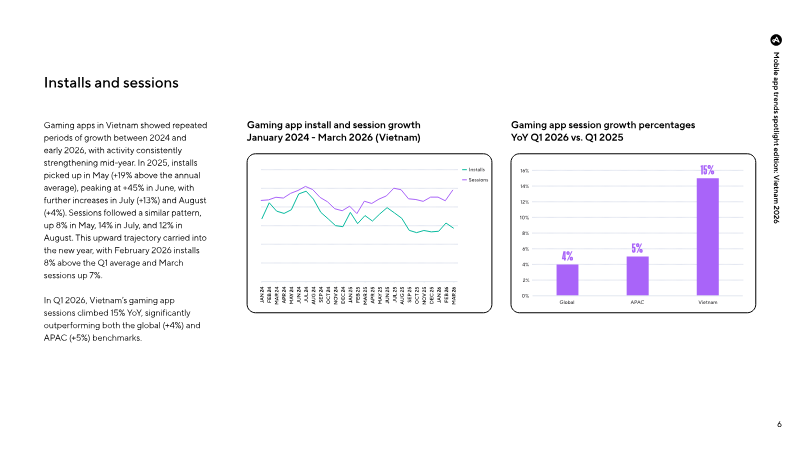

Adjust
ReportMobile App Trends: Vietnam 2026
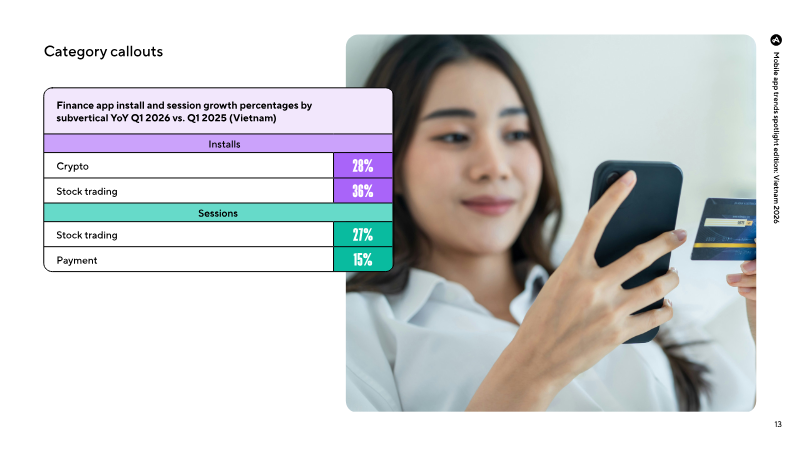
The mobile app market in Vietnam is experiencing significant expansion, driven by a digitally native population, high smartphone penetration of 84%, and near-universal 4G coverage. As of 2025, the country ranked 11th globally for app downloads, totaling 2.88 billion. The primary objective for marketers in this region is to navigate increasingly complex regulatory environments and sophisticated user behaviors to convert high engagement into sustainable revenue. This analysis utilizes aggregated, anonymized data from apps tracked by Adjust between January 2024 and March 2026 to benchmark performance across the gaming, finance, and entertainment sectors. Gaming remains the most dominant vertical, with 1.29 billion downloads in 2025. Vietnamese studios are increasingly pivoting toward hybrid-casual and midcore titles to improve monetization, resulting in a 15% year-over-year increase in session growth during Q1 2026, which significantly outperformed global and APAC benchmarks. Finance apps are also seeing accelerated growth, with mobile payment volumes rising 34.4% in early 2026. This sector is consolidating around dominant super apps, though stricter biometric and identification regulations have raised the barrier to entry. Meanwhile, the entertainment sector is characterized by a surge in short-form drama content, which saw a 271% year-over-year increase in downloads by late 2025. Despite strong growth in installs and session frequency, retention remains a challenge. Gaming retention in Vietnam trails global averages, and finance app session lengths have slightly decreased as users shift toward more efficient, embedded financial services. Success in the Vietnamese market now depends on balancing aggressive user acquisition with high-quality, stable digital experiences that align with local habits. Marketers are encouraged to leverage precise data measurement to navigate a non-linear user journey and comply with evolving local regulations, such as the 2024 Decree 147.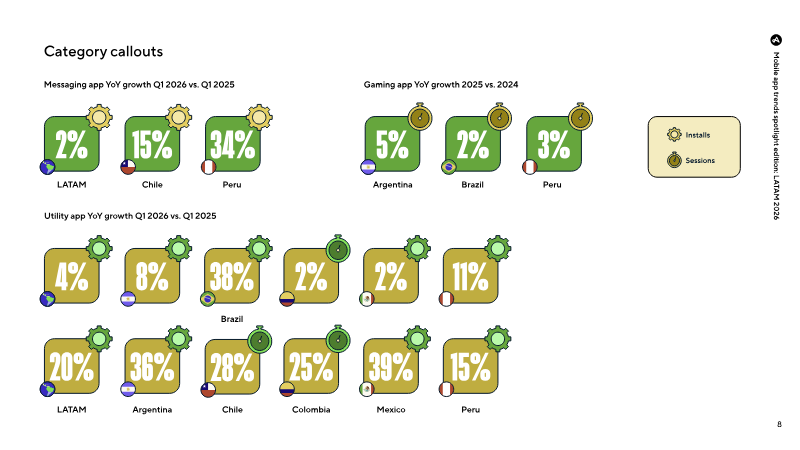
Adjust
ReportMobile App Trends: LATAM
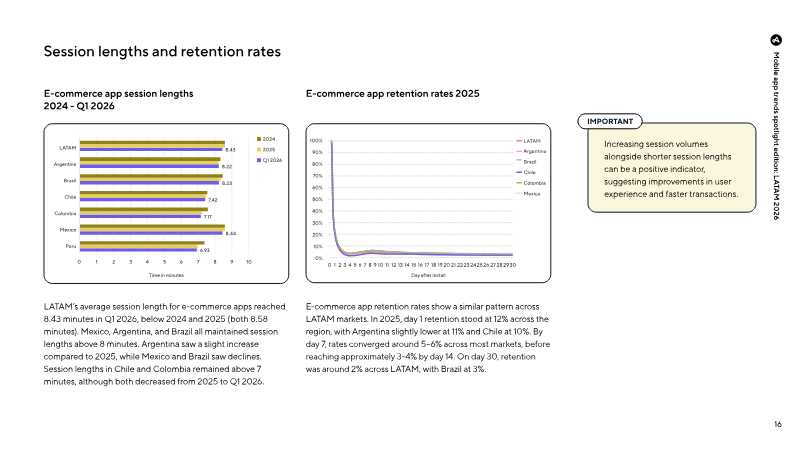
The Latin American mobile app market is experiencing robust growth, driven by a highly mobile-first population and rapid economic digitalization. With smartphone penetration projected to reach 93% by 2030, the region’s app development sector is forecast to reach $56.1 billion by 2034. This growth is particularly pronounced in the finance and e-commerce sectors, where the adoption of super apps, buy-now-pay-later models, and real-time payment systems like Brazil’s Pix have fundamentally altered consumer behavior. Data collected between January 2024 and March 2026 indicates that user engagement remains high, with regional App Tracking Transparency (ATT) opt-in rates reaching 49% in Q1 2026, significantly outpacing the global average of 38%. Brazil leads the region in opt-in rates at 54%. Overall app performance in the region showed consistent year-over-year gains, with Q1 2026 seeing notable spikes in session activity, particularly in Peru and Chile. Finance apps, in particular, saw a 34% year-over-year increase in sessions during Q1 2026, while e-commerce apps benefited from strong seasonal shopping events that drove significant install and session volume. Methodologically, the analysis utilizes aggregated, anonymized data from a subset of 5,000 top-performing apps alongside a broader dataset tracked by Adjust across 45 to 250 countries. While the region shows strong growth, the report emphasizes that success is not uniform across countries. Marketers are encouraged to move beyond last-click attribution models, instead adopting cross-platform, cross-device measurement and deep-linking strategies to navigate non-linear user journeys. By focusing on personalized, data-driven engagement, developers can better optimize retention and maximize lifetime value in this complex, high-growth mobile ecosystem.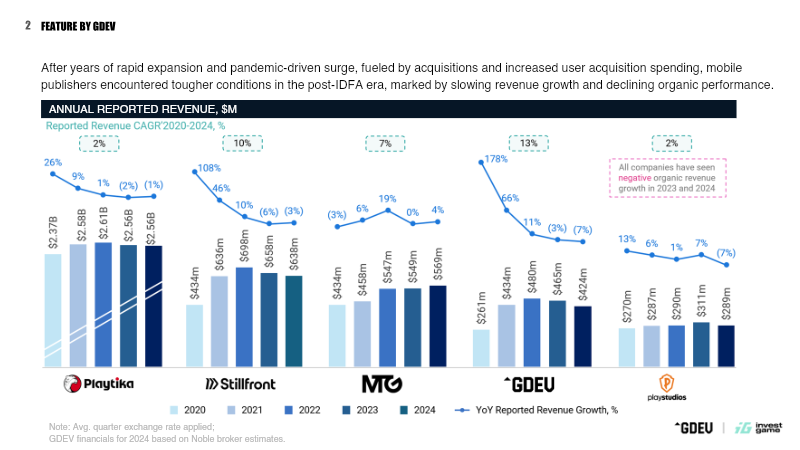

InvestGame
ReportPublic Mobile Gaming Publishers: Resilience & Adaptation in a Shifting Landscape
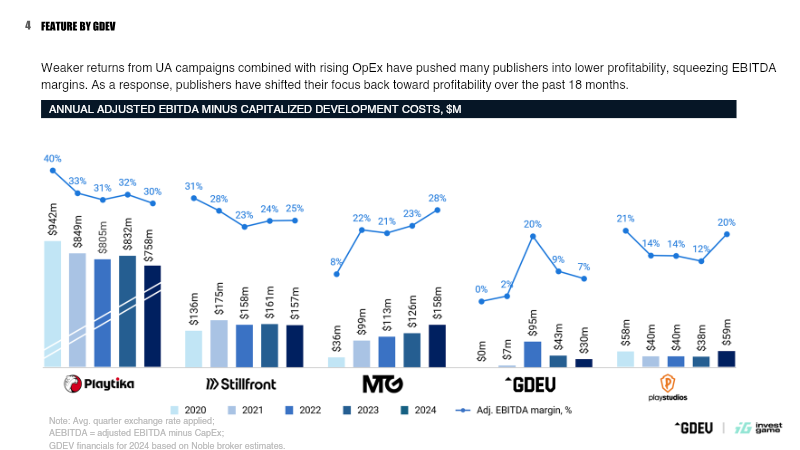
The analysis examines the post-IDFA mobile gaming landscape, focusing on revenue dynamics, user acquisition spending, profitability trends, and market valuation shifts across key publishers. Data reveal that annual reported revenue growth has slowed markedly, with many companies experiencing negative organic revenue and overall declines in 2023-24. User acquisition expenses have surged, reaching peaks of $40 million for some firms, yet returns from these campaigns have weakened, driving higher operating expenses and compressing EBITDA margins. Consequently, publishers are pivoting from aggressive scaling toward profitability, reflected in tighter cost controls and a renewed emphasis on player retention and lifetime value. Daily active user metrics illustrate the broader market contraction, with average DAU figures falling across the sector. Valuation impacts are stark: aggregate market capitalisation for major publishers has fallen by more than 50% since January 2022, and most stocks remain below their pre-IDFA peaks. An exception is MTG, whose disciplined mergers and acquisitions strategy and operational efficiency yielded 9% organic growth in Q4 2024, translating into a 50%+ share price increase and outperforming the S&P 500. The study covers global mobile gaming publishers over a 2022-2025 timeframe, drawing on quarterly financial statements and market data. Methodology includes analysis of reported revenue, user acquisition spend, EBITDA adjustments for capitalised development costs, and market cap changes. The findings underscore a sector in transition, where resilience hinges on profitability focus, retention strategies, and disciplined capital allocation.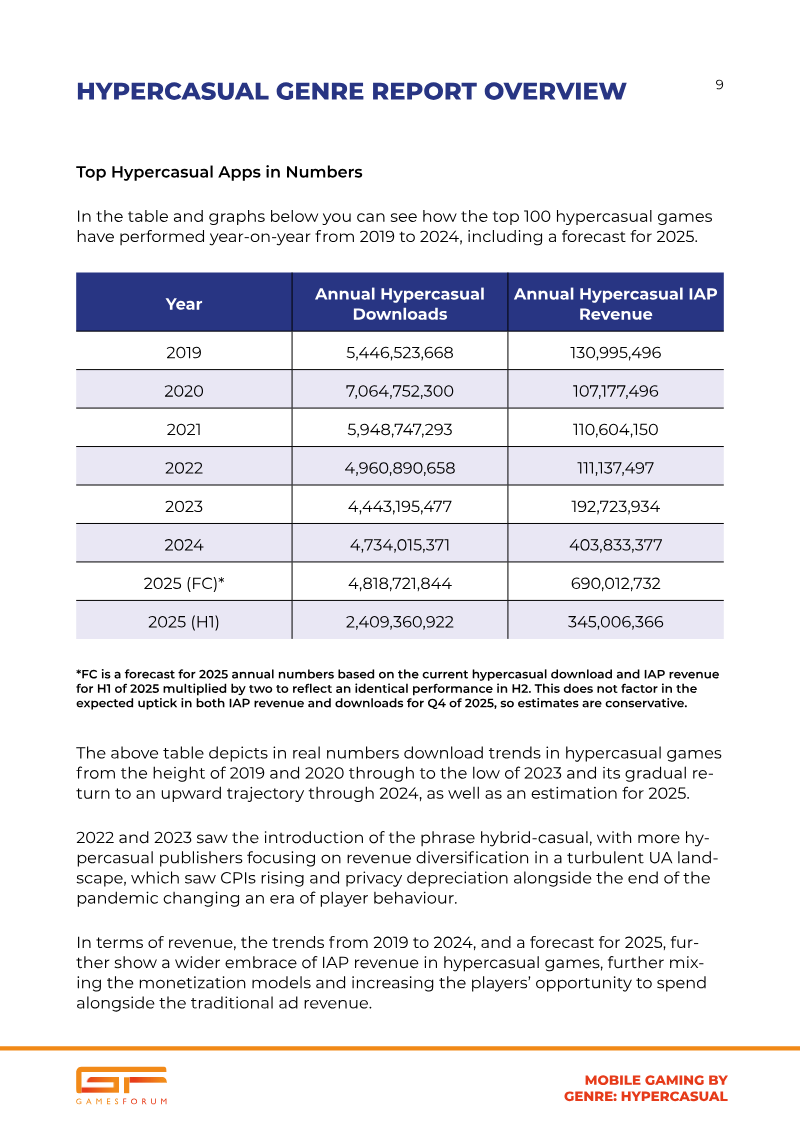


Gamesforum
ReportMobile Gaming by Genre: Hypercasual
The hypercasual segment continues to dominate mobile gaming revenue, with the top 100 titles achieving 5.48 billion downloads and $345 million in in-app purchase (IAP) revenue during the first half of 2025—double the figures from 2024 and the highest ever recorded for this genre. Leading publishers such as AZUR GAMES, Supersonic Studios, and Voodoo have secured billions of lifetime downloads and are increasingly adopting hybrid monetization models that blend advertising with growing IAP streams. This shift signals a clear trend toward revenue diversification while maintaining the ultra-light, rapid-development ethos that characterizes hypercasual games. Projected revenue for 2025 is expected to reach $690 million across the top 100 titles, a doubling of the H1 figure and an increase from $403 million in 2024. The analysis attributes this surge to the genre’s evolution toward hybrid-casual, where light meta-progression and deeper monetization extend player engagement beyond the typical 30–60 second sessions. Key performance indicators remain ultra-low cost per install (CPI), high Day-1 retention around 40%, and creative-driven user acquisition. Hybrid titles aim to lift Day-7 retention into the teens, thereby boosting lifetime value (LTV). Case studies of Mob Control, Color Block Jam, and Pizza Ready illustrate successful pivots to hybrid-casual models. Each title combined strong user experience design, staged monetization (ads plus IAPs), and data-driven acquisition strategies. Tactics such as adaptive market positioning, psychological ad hooks like the Zeigarnik effect, and seamless ad integration into gameplay produced multi-million installs, daily revenues exceeding $250 k, and sustained top-chart performance. These examples underscore that balancing simplicity with depth, timing releases to genre trends, and iterating creatives regionally are critical for scaling hybrid-casual titles.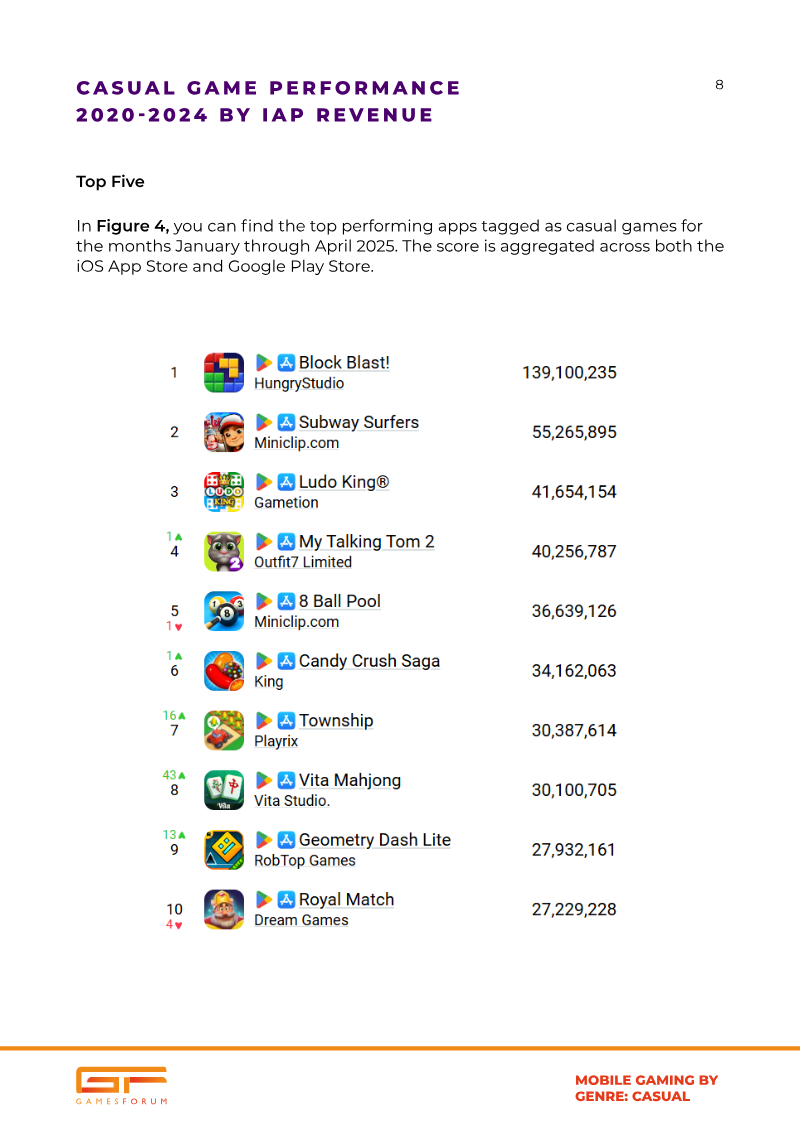

Gamesforum
ReportMobile Gaming: Casual
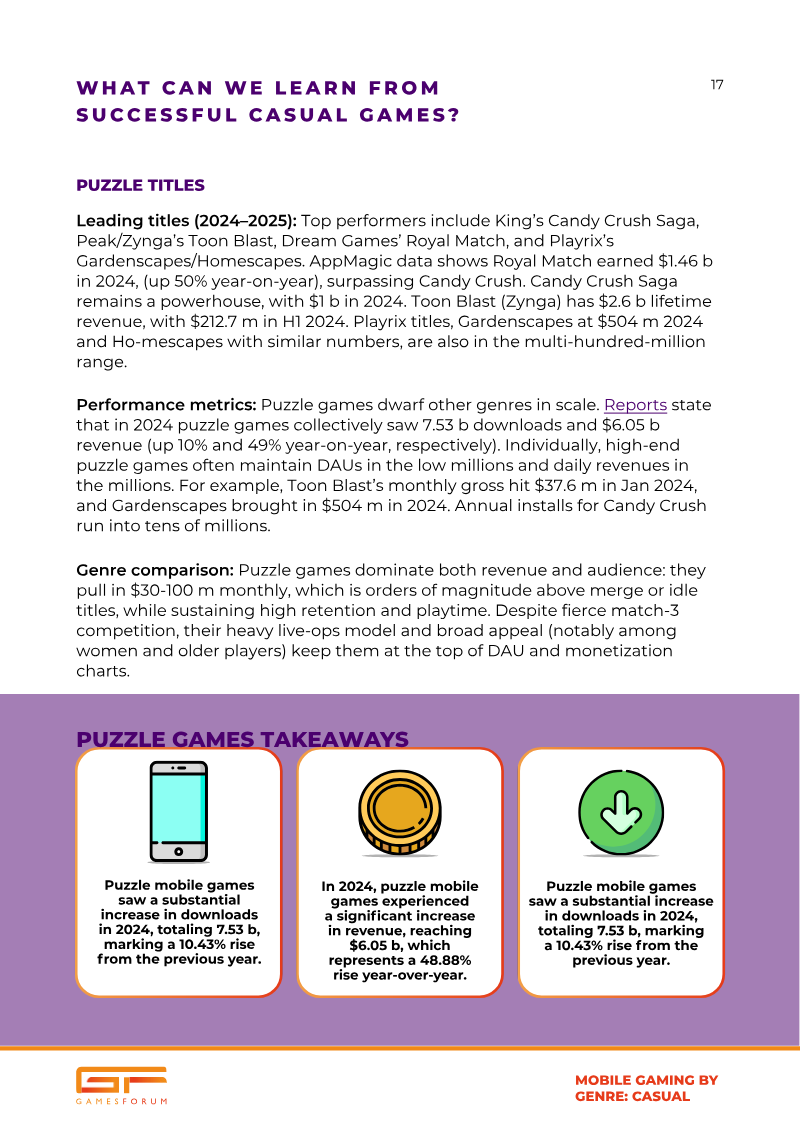
The analysis demonstrates that casual mobile gaming has entered a phase of mature monetization and strategic diversification. Download volumes peaked at 17.3 billion in 2020, dipped to 15.5 billion by 2024, and are projected to rebound to 16.4 billion in 2025, while in-app purchase (IAP) revenue has risen from $16.8 billion to an expected $22.9 billion by year-end 2025, indicating a higher revenue per user. Leading titles now blend advertising, IAPs, and brand partnerships to create multiple income streams, with celebrity-driven campaigns further amplifying user acquisition and lifetime value. In early 2025, Royal Match topped the earnings list with $540 million in IAP revenue, followed by Monopoly Go! at $431 million and Candy Crush Saga at $421 million. These leaders illustrate divergent monetization models: Royal Match and Monopoly Go! rely exclusively on IAPs, whereas Candy Crush Saga incorporates ads. Playrix’s suite of games—Township, Gardenscapes, Homescapes, and Fishdom—collectively generated $554 million, underscoring the potency of hybrid strategies and the enduring value of established franchises. Celebrity endorsements have proven effective at generating short-term spikes. Royal Kingdom’s A-list television campaign produced a 112% download surge, while Supercell’s WWE-inspired “Clashamania” yielded $2.15 million in single-day IAP revenue for Clash of Clans. However, long-term return on investment hinges on sustained engagement and lifetime value; Scopely’s “Friendship Pays” campaign achieved payback within 120 days, whereas Royal Kingdom’s lift suggests a longer monetization horizon. These findings highlight that high-profile campaigns must be coupled with robust retention loops and rigorous LTV measurement to justify multi-million dollar spend. Overall, the casual mobile gaming sector is characterized by a shift toward higher monetization per download, diversified revenue models that combine ads and IAPs, and a strategic use of celebrity partnerships to accelerate growth. Success increasingly depends on balancing short-term acquisition tactics with long-term retention and monetization strategies across global markets, primarily in North America, Europe, and Asia-Pacific.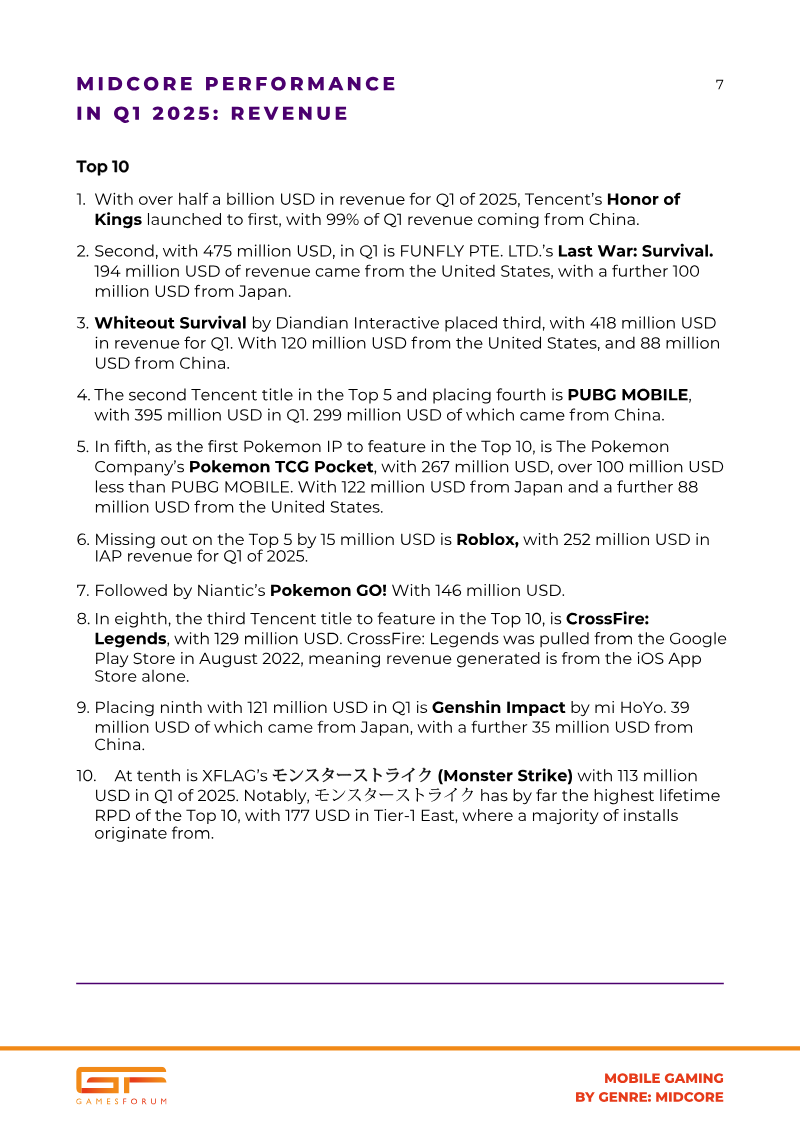

InvestGame
ReportMobile Gaming by Genre: Midcore
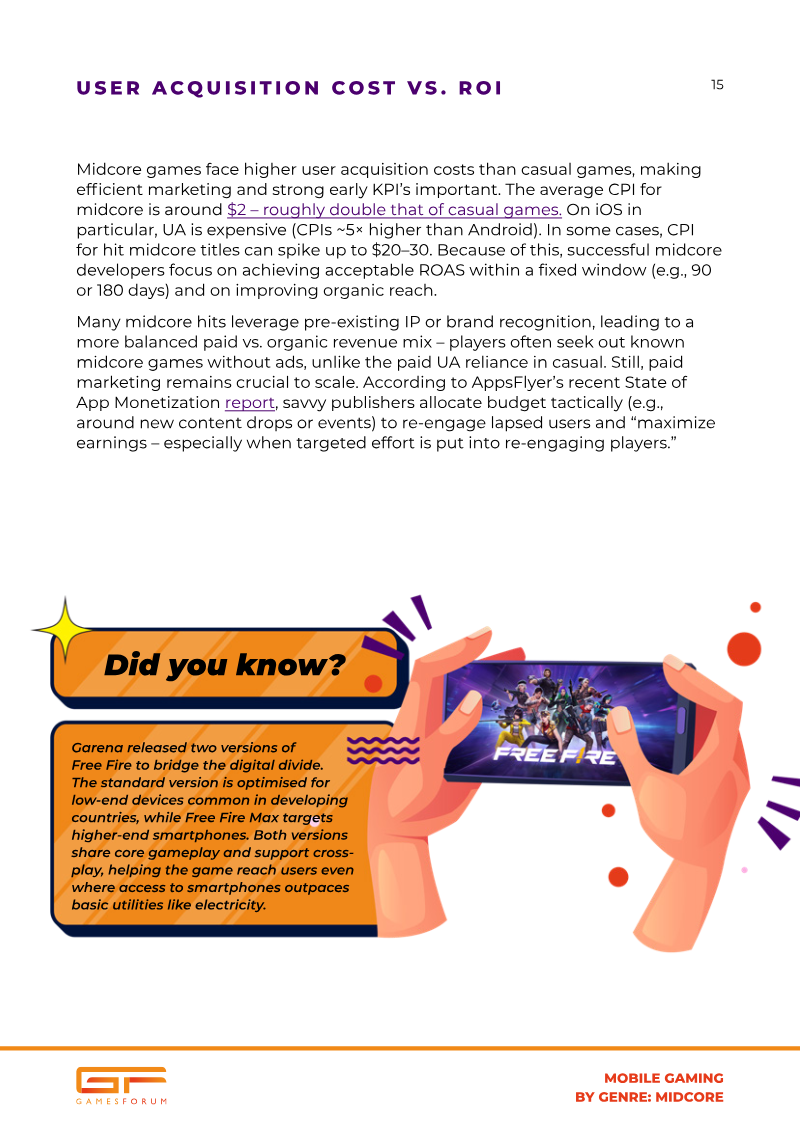
The analysis demonstrates that midcore mobile games—those offering depth while remaining accessible on handheld devices—are experiencing a post-pandemic rebound, with Q1 2025 downloads and revenue surpassing 2024 levels. Five-year data (2020-2024) reveal a temporary decline during the pandemic, followed by a steady uptick in 2024 and forecasts that growth will continue into 2025. The primary thesis is that monetization success in this segment hinges on data-driven ad integration and player-centric design. Key findings show that midcore titles command higher eCPMs than casual games, yet player retention and in-app purchase (IAP) conversion rates are sensitive to ad placement. A phased, A/B-tested approach—beginning with limited rewarded videos and expanding based on performance metrics such as retention, playtime, and IAP conversions—maximizes revenue while preserving engagement. Case studies illustrate tangible benefits: Bytro Labs’ rewarded video strategy lifted average revenue per daily active user (ARPDAU) by 32.9%, increased Day-3 retention on iOS by 6.1%, and achieved eCPMs of 23 (iOS) and 25 (Android). These results confirm that well-timed ads can rival or complement IAP revenue when aligned with player incentives. The scope covers the global midcore mobile market, focusing on 2025 performance and projecting trends through 2026. It emphasizes long-term player value, streamlined gameplay, social hooks, and frequent content updates as critical success factors. The conclusions underscore that responsive development cycles, continuous data analysis, and fair live-service practices are essential for sustaining growth in the competitive midcore landscape.

HPvX Partners
Report