Reports in the Market (Overall) category.
The report examines how gaming engagement varies across generational cohorts, drawing on a representative online sample of 72,068 respondents from 33 global markets (North America, EMEA, APAC). Data were collected via Computer Assisted Web Interviewing between January and April 2021. Findings show that younger generations devote a larger share of leisure time to gaming, with Gen Z and Millennials spending 11–12% of their free time on games versus 18% for Baby Boomers. Weekly playtime averages 7 hours and 20 minutes for Gen Z, 6 hours and 30 minutes for Millennials, dropping to just over 2 hours for Baby Boomers. Gaming remains the dominant entertainment medium across all ages, though motivations shift: younger players cite competition, socializing and achievement, while older players prioritize relaxation.
Platform preferences differ markedly; Gen Z spends 77% of gaming spend on mobile, whereas Baby Boomers allocate 73% to PC. Younger gamers also engage more with game‑related content, with 71–67% of Gen Z and Millennials both playing and watching games, compared to 44–51% for older cohorts. Persona segmentation reveals that “Ultimate Gamers” and “Community Gamers” dominate among Gen Z, whereas older groups are more likely to be “Time‑Fillers” or “Bargain Buyers.”
The report highlights the metaverse as a growing trend, with 70% of Gen Z and 63% of Millennials expecting to spend more time in virtual worlds. Overall, the study underscores a generational shift toward immersive, social gaming experiences and signals expanding opportunities for brands to reach diverse gamer audiences.
The playbook outlines a systematic approach for mobile gaming publishers and investors to identify, evaluate, and acquire high‑growth developers. It argues that the mobile gaming market—projected to reach $138 billion in 2025—has become a prime arena for mergers and acquisitions, citing recent deals such as Zynga’s $2 billion purchase of Peak Games, EA’s $2.1 billion acquisition of Glu Mobile, and Embracer Group’s multi‑year funding round for future buys. The document stresses that M&A serves dual purposes: portfolio diversification and the acquisition of talent, expertise, and new IPs that can accelerate growth beyond a publisher’s core genres.
Key findings highlight the importance of data‑driven target selection. Sensor Tower’s Game Intelligence platform is promoted as a tool for tracking genre trends, revenue trajectories, and market share across regions. The playbook recommends establishing clear acquisition criteria—budget limits, company size, geographic focus—and using custom alerts and taxonomy filters to surface promising titles. It also advises building structured lead‑tracking workflows, labeling qualified versus unqualified prospects, and continuously monitoring portfolio performance to spot strategic shifts or revenue declines that may signal acquisition opportunities.
The scope covers the global mobile gaming industry, with particular emphasis on North America and Southeast Asia, over a recent five‑year period marked by accelerated M&A activity. Methodologically, the playbook relies on Sensor Tower’s proprietary analytics, supplemented by industry news feeds from outlets such as Pocket Gamer, VentureBeat, and Crunchbase. The conclusion urges publishers to leverage analytics, maintain rigorous criteria, and stay alert to market movements in order to secure advantageous acquisitions that align with long‑term growth objectives.
India is positioned as the world’s largest mobile‑gaming market, with 8.45 billion downloads recorded in FY 2024‑25 yet only $400 million in in‑app purchase (IAP) revenue, underscoring a pronounced monetization gap despite high engagement. Downloads have stabilized post‑pandemic while IAP spending has accelerated, largely driven by Google Play’s dominance and an expanding share of higher‑spending iOS users. Demographic analysis shows that 77 % of players are aged 18‑34, 86 % are male, and lifestyle titles uniquely attract a larger female audience.
Genre‑level insights reveal that casual, family‑oriented categories—Simulation (driving/flight), Arcade (platformer/runner), and Tabletop board games—generate the bulk of download volume. In contrast, monetization is concentrated in competitive, engagement‑heavy segments such as Shooter (Battle Royale), Casino, and Strategy (4X). Publishers are advised to pair mass‑appeal casual titles with monetization strategies that target the growing cohort of high‑value, competitive gamers.
India‑based publishers maintain robust domestic download volumes through culturally resonant titles like Ludo King and Dream11, yet monetization remains modest. To offset this challenge, publishers are expanding overseas revenue streams, with the US, Saudi Arabia, and the UK emerging as key markets. The dual strategy of leveraging local appeal for mass reach while pursuing international growth is presented as a pathway to enhance overall profitability in India’s mobile‑gaming ecosystem.
The provided text does not contain the content of the document titled Global Gaming Industry Takes Center Stage, as the source link is restricted and inaccessible. Consequently, it is impossible to extract the main thesis, key findings, or methodological details required for an analytical summary. The available information consists solely of a server-side error message indicating a lack of authorization to view the requested file.
To provide a professional and accurate summary, the full text of the report must be made available. Once the content is accessible, the analysis will focus on identifying the primary industry trends, geographic scope, and statistical data points presented by the authors. Please provide the complete text or a functional link to the document to facilitate a comprehensive review of the gaming industry's current market position and future outlook.
The global games market reached a record $199.4 billion in 2024, cementing its status as the preeminent force in the entertainment sector. Despite this scale, the industry faces a period of moderated growth, with projections for 2025 hovering at approximately 1%. This deceleration stems from a combination of high-profile release delays, such as the postponement of major titles, and a tightening early-stage funding environment. To navigate this landscape, firms are shifting their focus from aggressive expansion toward operational efficiency, lean development cycles, and the optimization of existing intellectual property.
Strategic growth in 2025 will rely heavily on geographic diversification and demographic expansion. Emerging markets in the Middle East and Southeast Asia represent significant frontiers, while developers are increasingly targeting underserved cohorts, including older gamers and young adult females. Furthermore, the industry is leveraging user-generated content platforms like Roblox to maintain engagement among younger audiences. Hardware cycles, particularly the anticipated launch of the Nintendo Switch 2, remain a critical catalyst for consumer spending, providing a necessary boost to the broader market ecosystem.
To combat the dual pressures of escalating AAA development costs and fragmented consumer attention, publishers are adopting more conservative financial models. This includes a heavy reliance on remakes, remasters, and multi-platform porting to extract maximum value from established assets. Simultaneously, companies are pursuing margin expansion through diversified monetization strategies, such as hybrid mobile models and direct-to-consumer web shops that bypass traditional app store fees. By transitioning toward holistic franchise management that spans licensing, subscription services, and cross-media integration, the industry aims to stabilize revenue streams and ensure long-term sustainability in an increasingly competitive global environment.
The global video game industry has transitioned from a decade of rapid expansion into a period of contraction and market maturation. Following the 2011–2021 growth wave, the sector now faces a "zero-sum" environment characterized by stagnant player spending, plummeting stock values, and a collapse in venture capital. This downturn has triggered an unprecedented wave of studio closures and mass layoffs as publishers move away from risky new ventures to focus on aggressive multiplatform strategies for established franchises. While the industry maintains a higher net headcount than in 2022, the current climate is defined by an oversupply of content competing for limited consumer hours, with the top ten titles capturing 60% of all sales.
Market dominance is increasingly concentrated in "Black Hole" titles and User-Generated Content (UGC) platforms like Roblox and Fortnite. These ecosystems leverage deep social integration and digital entitlements to create a "lock-in" effect that makes it difficult for new live-service titles to gain traction. While the PC ecosystem is gaining momentum over traditional consoles due to its larger libraries and native social tools like Discord, the handheld market is poised for a shift with the impending launch of the "Switch 2" and Valve’s expansion of SteamOS. Furthermore, the rise of high-quality AAA titles from China and localized media in emerging markets is successfully challenging Western dominance by prioritizing domestic cultural themes and lower hardware specifications.
Future growth is expected to be driven by technological innovation and regulatory shifts rather than traditional software sales. Generative AI is being deployed to create autonomous virtual agents and lower development costs, while major publishers are aggressively pursuing programmatic in-game advertising to offset decades of price deflation. Simultaneously, the deregulation of mobile app stores is expected to improve developer margins by 10–20%, enabling new cloud-native experiences and third-party storefronts. By 2030, nearly one billion mobile devices will be capable of running high-fidelity console-spec games, positioning emerging regional markets as the primary engine for the industry’s next economic cycle.
The global games market has transitioned into a phase of structural maturity, with 2025 revenues projected at $236.9 billion. While this represents a 4.6% year-on-year increase, the growth is essentially flat when adjusted for inflation, signaling an end to the era of consistent double-digit expansion. Significant industry catalysts, specifically the anticipated launch of the Nintendo Switch 2 and the release of Grand Theft Auto 6, are expected to drive a recovery in hardware and software sales. However, these gains will likely be concentrated among market leaders rather than lifting the broader industry. By 2031, the global player base is forecast to reach 4.02 billion, with long-term growth sustained by premium game sales and advertising as the live-service sector faces saturation.
Software revenue continues to be dominated by in-game spending, which accounts for 69% of the market in 2025. Despite this dominance, premium full-game purchases are regaining momentum as consumers pivot toward high-quality single-player experiences. The subscription sector, while reaching $11.8 billion in 2024, is also maturing; future revenue in this segment will likely depend on price adjustments and the introduction of ad-supported tiers rather than rapid user acquisition. This shift reflects a broader trend where the industry is moving away from saturated multi-game models toward more traditional premium monetization and the expansion of game-based intellectual property into film and television.
Geographically, the Asia Pacific region maintains its position as the largest market by player count and leads in in-game revenue. A significant shift is expected by 2028, as premium game revenue in Asia Pacific is projected to overtake North America, driven by the rising success of high-end titles in China. While North America currently retains its lead in full-game purchase revenue, the global landscape is increasingly defined by regional cultural adaptation and the porting of legacy titles to new hardware platforms. These dynamics suggest a future where growth is driven by strategic price increases and regional expansion rather than the explosive user growth seen in previous decades.
The marketing and commercial performance of Bethesda’s Starfield reflects a strategic evolution in digital promotion, transitioning from traditional trailer-based campaigns to a diversified, multi-channel approach. By prioritizing platforms like TikTok, Twitch, and Instagram during the 2023 pre-order phase, the campaign successfully built massive momentum, culminating in the title reaching the top of Steam’s Wishlist and securing over 300,000 followers prior to launch. A critical component of this success was the integration with Microsoft’s ecosystem, specifically leveraging "Day One on Game Pass" messaging and Bing’s AI search capabilities to maximize visibility and accessibility across the Xbox and PC markets.
Upon release, the title became the largest launch in Bethesda’s history, surpassing 10 million players despite a highly competitive landscape featuring major RPG rivals. This achievement was supported by a substantial $21.2 million advertising investment, which ranked second in the RPG category for the year. A significant portion of this budget—over one-third—was allocated to Over-the-Top (OTT) advertising, signaling a shift toward high-impact streaming services. While the game achieved a favorable critical reception with a Metacritic score of 84, user sentiment remained polarized across Steam and Game Pass, and initial Twitch viewership saw a steady decline following the early-access period.
The broader industry context for these findings is supported by digital marketing intelligence that tracks competitor spending, creative messaging, and regional targeting. By analyzing spend patterns across social and digital platforms, the data illustrates how major publishers are increasingly moving away from centralized video platforms toward fragmented, high-engagement social media and streaming services to capture audience attention in a crowded marketplace. This analysis covers the primary 2021 to 2023 launch window, focusing on the global RPG segment and the shifting dynamics of digital ad distribution.
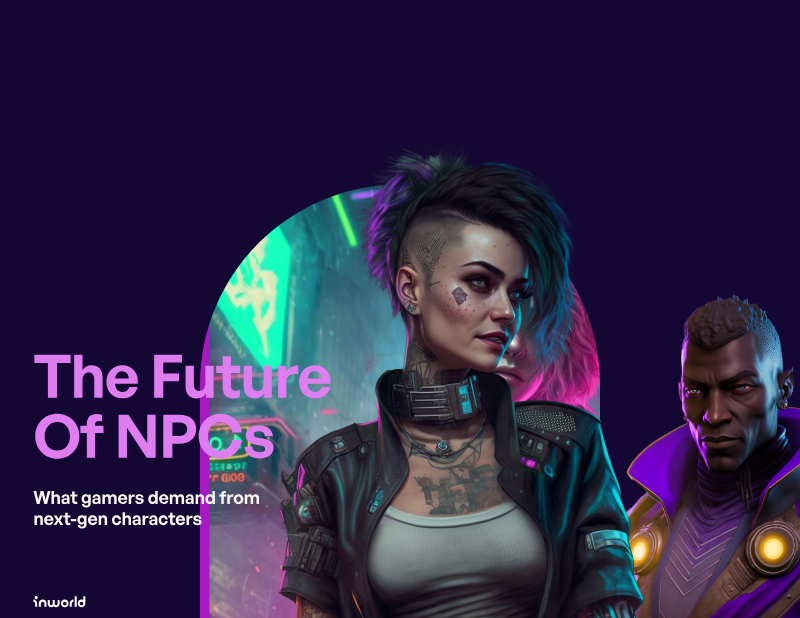
The evolution of non-playable characters (NPCs) has failed to keep pace with the rapid advancements in game graphics and narrative complexity, leading to a significant gap in player immersion. While modern titles feature sophisticated world-building, NPC technology remains largely stagnant, relying on repetitive dialogue trees and rigid scripts. Research conducted among 1,002 U.S.-based gamers aged 16 to 50 reveals that while 84% of players consider NPCs vital to the gaming experience, over half are frustrated by repetitive dialogue and an inability for characters to adapt to in-game changes.
The transition toward advanced AI NPCs—characters powered by machine learning, natural language processing, and emotional perception—represents a transformative shift for the industry. Survey data indicates an overwhelming appetite for this technology: 99% of gamers believe advanced NPCs would positively impact gameplay, and 88% believe they would significantly improve immersion. Players specifically desire NPCs with situational awareness, the ability to remember previous interactions, and the capacity for free-flowing conversation. This demand is highest among fans of RPG and sandbox genres, where interaction with the world is a core mechanic.
Beyond enhancing the player experience, the integration of advanced AI presents a substantial commercial opportunity for developers. The findings show that 81% of gamers are willing to pay more for titles featuring intelligent NPCs, and 79% are more likely to purchase a game if it includes this technology. Furthermore, 78% of respondents indicated they would spend more time playing games with advanced NPCs, suggesting a direct correlation between AI sophistication and player retention.
The methodology utilized a 20-minute online survey where participants interacted with demos of advanced AI technology. The sample included a diverse range of players across PC, console, mobile, and VR platforms, spending an average of five to eight hours per week gaming. Ultimately, the data suggests that moving away from scripted dialogue toward dynamic, autonomous characters is essential for studios looking to remain competitive and meet the rising expectations of modern audiences.
The gaming industry experienced a strategic shift in 2024, moving away from short-term financial arbitrage toward long-term, objective-driven transactions. While the broader market faced a stricter environment characterized by layoffs and the offloading of non-core assets, total deal-making activity remained above pre-pandemic levels. A significant trend emerged in the work-for-hire sector, highlighted by the $2.8 billion Keywords buyout. Additionally, venture capital interest notably pivoted from game development studios toward platform and technology startups, leaving corporate venture arms to fill the gap in studio financing.
The analysis identifies a stabilization phase following the post-pandemic "hangover." Private investments saw a 22% year-over-year increase in funding during Q4 2024, while the M&A market recorded one of its strongest quarters in two years. Although the public market remained volatile, a three-quarter recovery trend in public offerings suggests a gradual reopening of the IPO window. Geographically, North America and Europe led early-stage studio fundraising, accounting for the vast majority of capital raised, while Asian developers dominated new top-tier mobile releases.
The outlook for 2025 anticipates sustained M&A momentum driven by lower interest rates, significant cash reserves among public strategics, and increased private equity involvement. Investment in AI-driven solutions and web3 is expected to rise, fueled by renewed crypto enthusiasm. While high-profile gaming teams will continue to command strong valuations, such deals may become less frequent as investors prioritize "picks and shovels" technology over pure content.
This report covers global gaming industry segments including PC, console, mobile, and hardware, with a specific focus on M&A, private equity, and public offerings. Data is derived from public media, business partners, and market insights, tracking closed transactions while excluding pure gambling and non-gaming blockchain ventures.
This analysis explores the strategic shift toward out-of-app monetization in the global gaming industry, with a specific focus on Southeast Asia and China. The primary thesis posits that while Apple and Google have historically dominated distribution, publishers are increasingly adopting alternative channels—including third-party web stores, first-party direct-to-consumer platforms, and alternative app stores—to bypass high "take rates" and better serve unbanked populations in emerging markets.
Key findings indicate that out-of-app monetization is already a mature practice in Asia. In Southeast Asia, these channels account for 21% of mobile game revenue, while in China, they represent 53% of the market. Data from 2023 highlights that in the "SEA-6" countries (Indonesia, Malaysia, Philippines, Singapore, Thailand, and Vietnam), 40-50% of the adult population remains unbanked, making the credit card-centric models of primary app stores ineffective. Consequently, gamers in these regions prefer e-wallets, carrier billing, and physical vouchers. A case study of Mobile Legends: Bang Bang in the Philippines demonstrated that a localized promotion using an e-wallet partner led to a 133% increase in daily purchase volume and a 167% rise in transactions.
The scope of the research covers the evolution of digital distribution over the last 15 years, with a forward-looking projection through 2027. It emphasizes the impact of regulatory momentum in the EU, UK, South Korea, and Japan, where new legislation is forcing primary stores to allow alternative payment systems. Methodology relies on Niko Partners’ 2023 market model, gamer surveys, and proprietary data from Coda Payments. The findings conclude that publishers who fail to localize their monetization and discovery strategies risk losing significant market share to regional competitors who offer more flexible, lower-cost payment solutions.
Tower Defense games represent a high-performing sub-genre within the casual arcade category, characterized by exceptional monetization and engagement depth. Analysis of 2020 industry data reveals that the top 5% of Tower Defense titles significantly outperform related sub-genres like Idlers, Platformers, and Board Games in financial efficiency. Specifically, these top-tier games achieve a conversion rate of 3.83%, more than double that of their closest competitors, and maintain an Average Revenue Per Daily Active User (ARPDAU) of $1.66. This financial strength is further evidenced by an Average Revenue Per Paying User (ARPPU) of $83, suggesting a highly committed and spending-prone player base.
Engagement metrics for the genre are equally robust, with top-performing titles commanding an average daily playtime of 130 minutes. While Day 1 retention sits at 40%, slightly lower than some competing sub-genres, Day 7 retention remains competitive at 15%. Geographic performance varies by metric; Italy leads in Day 7 retention at 39%, while France sees the highest daily playtime at 210 minutes. China stands out as the most lucrative market for conversion, reaching a rate of 8.7%.
The success of the genre is attributed to its accessible core mechanics, high replayability, and the ease with which developers can integrate meta-features such as PvP modes, daily challenges, and RPG elements. These features allow for significant meta-game shifts with minimal content overhead. Notable titles entering the market in 2020, such as Rush Royale and Towerlands, exemplify the trend of blending traditional defense mechanics with strategy and role-playing elements to drive long-term player investment. This data is derived from a network of over 134,000 integrated games and 1.8 billion monthly cross-title players.