Investments
Reports in the Investments category.
55 documents
Financial26 pages
DDM Games Investment Review Q4 2023 Executive Summary Report
Digital Development Management (DDM) provides a comprehensive analysis of global video game investments, mergers and acquisitions (M&A), and initial public offerings (IPOs) for the full year and fourth quarter of 2023. The review utilizes proprietary data spanning 16 years to track capital flow across industry segments including Mobile, Console/PC, eSports, AR/VR, and blockchain.
The central thesis identifies 2023 as a year of "masked challenges." While the industry reached a record-breaking $81.1 billion in total transaction value, this figure was heavily skewed by Microsoft’s $68.7 billion acquisition of Activision Blizzard, which accounted for 85% of the year's total value. Excluding this outlier, M&A activity hit its lowest value since 2020, totaling only $8.0 billion. Similarly, pure investments fell to $4.4 billion across 616 deals, a 69% decline in value from 2022 and the lowest level since 2016. This contraction reflects a "corrective year" following pandemic-era highs, characterized by high-interest rates, macroeconomic headwinds, and a shift toward corporate restructuring and layoffs.
Key findings highlight a "winter" in both eSports and blockchain. Blockchain investments dropped 72% in value year-over-year, while eSports saw significantly lower valuations, exemplified by FaZe Clan’s $17 million acquisition following a previous $725 million valuation. Conversely, Artificial Intelligence emerged as a growing interest area, securing $319 million across 61 investments. Geographically, Poland maintained its status as a global IPO hub, while Saudi Arabia’s Public Investment Fund signaled long-term disruption with major acquisitions like Scopely for $4.9 billion.
The outlook for 2024 suggests continued volatility and "unprecedented layoffs" as companies divest non-core assets. However, DDM anticipates a stabilization in the latter half of the year as valuations bottom out, potentially triggering a wave of bargain-driven M&A activity. Methodology is strictly limited to closed transactions to ensure data consistency and accuracy.
- The $81.1 billion total transaction value for 2023 was heavily skewed by Microsoft’s $68.7 billion acquisition of Activision Blizzard, which represented 85% of the year's total volume.
- Excluding the Microsoft-Activision deal, M&A activity reached its lowest value since 2020 at $8.0 billion, while pure investments fell 69% year-over-year to $4.4 billion.
- Blockchain and eSports sectors experienced significant downturns, with blockchain investments dropping 72% in value and eSports valuations plummeting, as evidenced by FaZe Clan’s acquisition for $17 million.
- Artificial Intelligence emerged as a key growth area, attracting $319 million in capital across 61 separate investments.
- Saudi Arabia’s Public Investment Fund demonstrated significant market influence through major acquisitions, including the $4.9 billion purchase of Scopely.
+1
Digital Development ManagementJan 2023

Financial18 pages
Gaming Deals Report: Navigating Turbulence (H1’23)
The first half of 2023 marked a significant downturn in gaming industry deal activity, characterized by a sharp contraction in total deal value across private investments, mergers and acquisitions (M&A), and public offerings. Total private investment fell to $1.5 billion across 239 deals, representing a fivefold decline in value compared to the same period in 2022. M&A activity saw an even more dramatic 31x drop in value, falling to $0.9 billion as strategic investors shifted focus toward internal restructuring, layoffs, and cost optimization rather than aggressive expansion.
The venture capital landscape remains dominated by early-stage activity, as pre-seed and seed rounds are less susceptible to macroeconomic volatility. While the number of early-stage deals remained relatively stable, the total capital raised shrank by more than half to $269 million. Late-stage investments have largely paused due to a closed IPO window and a lack of viable exit opportunities, leading to a disconnect between investor expectations and startup valuations. Geographically, North America led early-stage VC activity with 24 deals, followed by Western Europe and the MENA region.
Public markets remained muted, with companies increasingly choosing to postpone listings or engage in share buybacks. Despite the general market cooling, artificial intelligence has emerged as a resilient niche; investments in AI-related gaming companies rose to $214.1 million across 19 deals in the first half of 2023. Analysts anticipate a potential recovery in the latter half of the year, driven by the closing of major pending deals, such as the Savvy Games Group acquisition of Scopely and Microsoft’s pursuit of Activision Blizzard, alongside a significant amount of unallocated venture capital waiting to be deployed.
- Gaming deal activity contracted sharply in H1 2023, with total private investment falling to $1.5 billion across 239 deals, a fivefold decrease compared to the same period in 2022.
- M&A activity experienced a 31x drop in value to $0.9 billion as strategic investors prioritized internal restructuring and cost optimization over expansion.
- Late-stage venture capital investments have largely stalled due to a closed IPO window and a lack of viable exit opportunities, creating a valuation gap between investors and startups.
- Early-stage funding remains the most resilient segment, though total capital raised in pre-seed and seed rounds still declined by over 50% to $269 million.
- Artificial intelligence emerged as a growth niche, attracting $214.1 million in investment across 19 deals during the first half of 2023.
+1
InvestGameJan 2023
Financial29 pages
Gaming Deals Activity Report Q1‑Q3'22
The analysis tracks deal activity across the global gaming ecosystem during the first three quarters of 2022, quantifying both merger‑and‑acquisition (M&A) and venture‑capital trends to assess how regulatory shifts and macro‑economic conditions reshaped investment patterns. A total of 626 transactions closed, generating $51.4 billion in value—a 31 percent rise over the same period in 2021—yet the quarterly count of deals contracted sharply, falling from 80 in Q1 to 55 by Q3. This contraction is attributed to heightened regulatory scrutiny, the fallout from the IDFA privacy changes, and a broader slowdown in economic confidence.
M&A activity remained the dominant driver, accounting for roughly 73 percent of total deal value, with gaming‑specific mergers representing 72 percent of that share, underscoring the sector’s preference for consolidation over organic growth. In contrast, venture investment slipped 25 percent year‑over‑year, reflecting investor caution amid the same external pressures. Within the venture segment, crypto‑gaming emerged as a distinct outlier: Series A rounds averaged $40 million, markedly above the $25 million average across all gaming deals, highlighted by sizable raises such as Jot Art’s $55 million, Iskra’s $34 million, and Planetarium Labs’ $32 million.
Overall, the period illustrates a market in transition, where large‑scale M&A continues to capture the bulk of capital while emerging niches like crypto‑gaming attract disproportionately high funding despite a general retreat in venture activity. The findings suggest that future deal flow will likely hinge on regulatory clarity and the ability of niche segments to sustain investor enthusiasm in a constrained macro environment.
- The gaming sector recorded 626 transactions totaling $51.4 billion in the first three quarters of 2022, representing a 31 percent increase in value over the same period in 2021.
- Deal volume experienced a sharp contraction throughout the year, with quarterly transactions falling from 80 in Q1 to 55 by Q3 due to regulatory scrutiny, privacy changes, and economic uncertainty.
- M&A activity dominated the market, accounting for 73 percent of total deal value, with gaming-specific mergers making up 72 percent of that share as companies prioritized consolidation over organic growth.
- Venture capital investment declined 25 percent year-over-year as investors adopted a more cautious approach to the broader gaming market.
- Crypto-gaming emerged as a high-value niche, with Series A rounds averaging $40 million compared to the $25 million average for all gaming deals.
+1
InvestGameSept 2022
Financial25 pages
Gaming Deals Activity Report H1'22
The first half of 2022 marked an unprecedented surge in gaming‑sector transactions, with 455 deals closed and a total value of $43.3 billion, rising to $113.6 billion when including announced but not yet finalized agreements. This activity set a new industry benchmark, reflecting heightened investor confidence and a broadening appetite for both mature and emerging gaming assets.
Deal activity spanned the full spectrum of financing structures. Control‑oriented mergers and acquisitions dominated, while minority‑stake purchases, early‑stage venture capital, late‑stage venture capital, corporate strategic investments, IPOs and SPAC listings, fixed‑income instruments, and hybrid private‑public offerings each contributed to a diversified capital landscape. The data, compiled from public filings, market‑insight providers, and partner research, cover global markets and encompass all major video‑games subsectors, from console and PC titles to mobile and cloud‑based platforms.
The analysis underscores that the record‑setting volume and value were driven not only by traditional M&A but also by an expanding ecosystem of venture and corporate funding, indicating a maturing market where both established publishers and nascent developers attract substantial capital. The report’s methodology emphasizes transparency and non‑advisory intent, positioning the findings as a reference point for industry participants rather than a basis for specific investment decisions.
Access to the underlying deal tables and community insights is tiered across subscription levels, ranging from free access to comprehensive expert‑grade data, with sponsorship from Hiro Capital and Naavik noted as independent of the analytical conclusions.
- The gaming sector reached a record-setting $113.6 billion in total deal value during the first half of 2022 when including both finalized and announced agreements.
- A total of 455 gaming-sector transactions were closed in H1 2022, representing an unprecedented surge in industry activity.
- Finalized deals alone accounted for $43.3 billion in value during the first six months of 2022.
- Control-oriented mergers and acquisitions served as the primary driver of deal volume, though the landscape remained diversified across venture capital, minority-stake purchases, and public offerings.
- Capital investment spanned the entire gaming ecosystem, covering console, PC, mobile, and cloud-based platforms.
+1
InvestGameJan 2022
Financial24 pages
Gaming Deals Activity Report: Q1 2022
The primary aim of the Q1 2022 Gaming Deals Activity analysis is to quantify and interpret investment trends within the video‑game sector, offering stakeholders a data‑driven snapshot of market dynamics during the first quarter of 2022. By aggregating transaction records across all major regions, the study evaluates both total capital deployed and the frequency of deals, thereby establishing a benchmark for comparative performance.
During the quarter, investors allocated roughly $1.1 billion to 52 distinct transactions, reflecting a sharp contraction relative to the previous year. Deal value fell to one‑quarter of the Q1 2021 level (a 2.5‑fold decline), while the number of agreements dropped by nearly half (a 1.9‑fold reduction). These figures signal a pronounced slowdown in financing activity, likely driven by broader macro‑economic pressures and heightened risk aversion among venture and private‑equity participants. The analysis also isolates the blockchain‑gaming niche, for which supplemental data were provided by Naavik, indicating that even emerging sub‑segments are not insulated from the overall downturn.
Geographically, the dataset spans global markets, encompassing North America, Europe, Asia‑Pacific and emerging economies, and it covers the full spectrum of gaming‑related enterprises—from traditional publishers and developers to ancillary service providers and crypto‑gaming platforms. The report underscores that the observed decline is not merely a seasonal fluctuation but a substantive shift in capital allocation patterns, suggesting that investors may recalibrate strategies toward more resilient or diversified portfolios in the coming quarters.
- In Q1 2022, total investment in the gaming sector fell to $1.1 billion across 52 transactions, marking a significant contraction in market activity.
- Deal value in Q1 2022 dropped to one-quarter of the levels recorded in Q1 2021, representing a 2.5-fold decline.
- The volume of investment agreements decreased by nearly half compared to the previous year, reflecting a 1.9-fold reduction in deal frequency.
- The decline in financing is attributed to broader macro-economic pressures and increased risk aversion among venture and private-equity investors.
- Blockchain gaming, despite being an emerging sub-segment, experienced a downturn consistent with the broader market trend.
+1
Activision BlizzardJan 2022
Financial22 pages
Global Video Game Deals Report Q1 2021
The first quarter of 2021 marked a historic surge in global video game industry investment, with 249 closed transactions totaling $25 billion. This performance represents a doubling of deal value compared to the first half of 2020, signaling a record-breaking trajectory for the fiscal year. When including announced but unclosed deals, the total quarterly deal value reached $39 billion. The activity was driven primarily by massive consolidation and public market entries, with the gaming segment accounting for nearly all merger and acquisition value.
Mergers and acquisitions emerged as the dominant force, contributing 57% of total deal value at $14.3 billion. This sector saw 5.9x year-over-year growth, fueled by "mega-deals" such as Microsoft’s $7.5 billion acquisition of ZeniMax, ByteDance’s $4 billion purchase of Moonton, and Electronic Arts’ $1.2 billion acquisition of Codemasters. Public offerings followed, accounting for $8.3 billion across 36 deals. This segment experienced a 29x increase in value compared to the previous year, highlighted by the public listings of Playtika, Huuuge Games, and tinyBuild, alongside the $41.9 billion direct listing of Roblox.
Private investments also reached a record $2.6 billion, with late-stage transactions representing 73% of that total. Early-stage venture capital remained robust, particularly in the mobile and multiplatform sectors, with average seed round sizes increasing by 120% over 2020 levels. Geographically, activity was global but led by major strategic entities; Tencent remained the most prolific investor with 35 deals, while European firms like Embracer Group dominated private investments in public equity. The data, compiled from public media, business partners, and S&P Capital IQ, indicates that high public market valuations and intense interest from institutional investors are likely to sustain this momentum throughout the year.
- The global video game industry saw a historic Q1 2021 with $25 billion in closed transactions, a figure that rises to $39 billion when including announced deals.
- Mergers and acquisitions dominated the landscape with $14.3 billion in value, representing 5.9x year-over-year growth driven by major acquisitions like Microsoft’s $7.5 billion purchase of ZeniMax.
- Public offerings reached $8.3 billion across 36 deals, a 29x increase over the previous year, bolstered by the $41.9 billion direct listing of Roblox and IPOs from Playtika, Huuuge Games, and tinyBuild.
- Private investments hit a record $2.6 billion, with 73% of that capital directed toward late-stage transactions.
- Early-stage venture capital remains strong, evidenced by a 120% increase in average seed round sizes compared to 2020 levels, particularly within the mobile and multiplatform sectors.
InvestGameMar 2021
Report29 pages
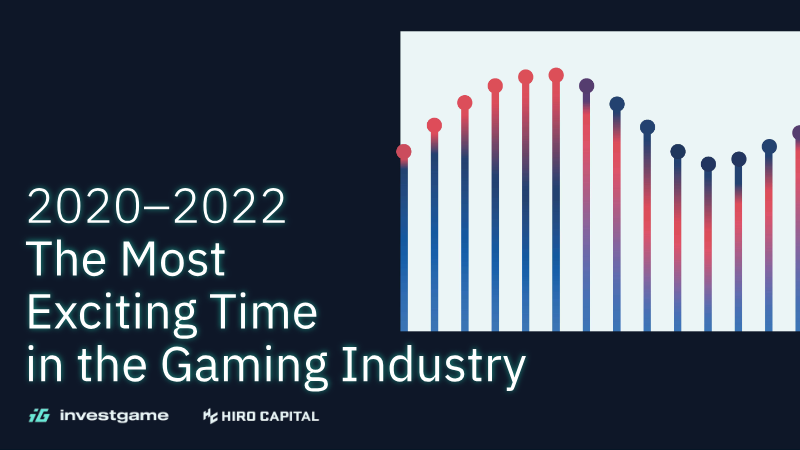
2020–2022: The Most Exciting Time in the Gaming Industry
This analysis examines global investment and merger and acquisition (M&A) activity within the video game industry from 2020 through 2022. The primary thesis posits that the industry has passed a historic peak of deal-making and is now entering a "Great Reset" characterized by market cooling, lower valuations, and a shift in investor priorities. While the era of massive public offerings and late-stage venture capital (VC) surges has slowed due to macroeconomic headwinds like inflation and rising interest rates, the industry remains fundamentally strong with significant "dry powder" available for early-stage startups and strategic consolidations.
The data reveals a volatile three-year cycle. M&A activity reached a zenith in 2022 with $37.7 billion in closed deals—a 199% increase in value from 2021—driven by massive consolidations such as Take-Two’s acquisition of Zynga. Conversely, public offerings plummeted by 82% in 2022 as the IPO and SPAC windows effectively closed. Private investments also saw a 16% decline in value in 2022 after doubling the previous year. Despite these drops, early-stage VC remained resilient, with over $6.2 billion raised by gaming-focused funds ready for deployment.
Geographically and segmentally, the scope is global, with specific attention paid to the decline of mobile gaming hype post-IDFA and the rising interest in PC, console, and AI-driven startups. The report highlights a stark cooling in Web3 gaming, where investor "FOMO" has been replaced by a focus on fundamental gameplay and infrastructure. Gender diversity remains a challenge in the sector; 89% of funded or acquired companies were led by men in 2022, a negligible change from 90% in 2021.
Methodologically, the findings are based on tracked closed transactions across video game publishers, developers, and hardware providers. Data was aggregated from public media, S&P Capital IQ, and partner insights, utilizing a weighted ranking system to identify the most active investors. The analysis concludes that while the "peak wave" has passed, the industry is transitioning into a more disciplined phase of the investment cycle.
- M&A activity reached a historic peak in 2022 with $37.7 billion in closed deals, representing a 199% increase over 2021, largely driven by major consolidations like Take-Two’s acquisition of Zynga.
- Public offerings for gaming companies collapsed in 2022, with an 82% decline in value as IPO and SPAC windows effectively closed due to macroeconomic headwinds.
- Private investment value fell by 16% in 2022 following a doubling of investment the previous year, signaling a shift toward a more disciplined, cooling market.
- Despite the broader market slowdown, early-stage venture capital remains robust, with over $6.2 billion in dry powder currently available for deployment into new startups.
- Investor interest has shifted away from Web3 gaming and mobile gaming—the latter impacted by post-IDFA challenges—toward PC, console, and AI-driven development.
+1
InvestGameJan 2020