Reports in the Investments category.
The fourth quarter of 2025 confirms a continued expansion of the global video‑game market, driven by robust performance across core platforms and a surge in ancillary services. PC sales on Steam rose 20 percent year‑over‑year, while console revenue posted a comparable increase, underscoring sustained consumer demand for both traditional and digital distribution channels. This growth is complemented by a rapid rise in rewarded‑app installations, which have compounded at a 42 percent annual rate from 2021 to 2025 and now support roughly 24 million monthly active users, reflecting the increasing monetisation of interactive micro‑experiences within mobile ecosystems.
Investment activity in the early‑stage gaming sector remains tightly concentrated among a small cohort of venture firms. Airoclip led the market in deal volume with ten transactions, whereas Catalyst deployed the greatest capital, allocating $146 million across its portfolio. Other notable participants—Griffin, Arcadia and Laton—maintain a significant but secondary presence, indicating a market where capital is funneled toward a limited set of high‑potential developers and technology providers.
Overall, the data portray a video‑game industry that is not only expanding in traditional hardware‑driven segments but also diversifying through mobile reward mechanisms and focused venture investment. The convergence of strong consumer uptake and concentrated financing suggests a trajectory of continued growth, with emerging opportunities concentrated in mobile micro‑transactions and early‑stage innovation pipelines.
The global video game industry experienced a notable resurgence in growth during the third quarter of 2025, driven by a rebound in mobile in-app purchases and robust performance across PC and console platforms. The launch of the Nintendo Switch 2 served as a primary catalyst for console sector strength, reinforcing the enduring value of established intellectual property. While the broader capital markets faced significant headwinds, characterized by multi-year lows in public fundraising and subdued early-stage venture activity, the industry’s transaction landscape was defined by high-value consolidation. The $55 billion public takeover of Electronic Arts stands as the definitive event of the period, signaling a strategic shift toward large-scale mergers and acquisitions as the primary mechanism for growth.
Market dynamics currently favor established entities, with diversified publishers and PC and console developers commanding significant valuation premiums due to their proven profitability and market stability. This environment has concentrated investment power among a select group of firms. BITKRAFT emerged as the most active participant in the early-stage ecosystem over the past twelve months, leading the sector with 16 deals totaling $113 million. Alongside other prominent investors like Bessemer Venture Partners and Menlo Ventures, these firms continue to deploy capital despite the broader contraction in private investment.
Ultimately, the industry is transitioning into a phase of maturity where scale and intellectual property ownership are paramount. While early-stage funding remains constrained, the surge in total transaction value through megadeals indicates that institutional confidence remains high for proven assets. The current landscape suggests a bifurcated market where high-growth, established publishers attract significant capital, while smaller, early-stage ventures face a more challenging environment for securing liquidity and growth funding.
The global gaming industry experienced a significant financial resurgence during the first half of 2025, characterized by a 28 percent increase in the Drake Star Gaming Index. This performance notably outpaced the S&P 500, signaling renewed investor confidence and a stabilization of market valuations. The landscape remains defined by consistent deal flow, with 46 announced mergers and acquisitions in the second quarter alone and 110 private financing placements totaling $3 billion. A landmark $2.5 billion investment in Dream Games by CVC and Blackstone underscores the continued appetite for high-value, strategic minority stakes within the sector.
Capital allocation is currently broad, spanning mobile, PC, console, and emerging platform and tool segments. Artificial intelligence and specialized technology infrastructure have emerged as primary drivers for future investment, as companies increasingly utilize improved public valuations to pursue inorganic growth strategies. Major institutional players, including Tencent and Savvy Games Group, continue to exert significant influence over the market, maintaining their roles as key architects of industry consolidation and expansion.
Comprehensive benchmarking across Asia, the United States, and Europe reveals a sophisticated ecosystem where valuation multiples, such as EV/Revenue and EV/EBITDA, serve as critical indicators for publishers, hardware manufacturers, and advertising platforms. As the industry moves into the latter half of the year, expectations for increased initial public offering activity and sustained M&A momentum remain high. This financial data provides a foundational reference for understanding the current competitive environment, reflecting a sector that is successfully leveraging technological innovation and strategic capital to navigate a complex global economic landscape.
The update delivers a comprehensive snapshot of the global video‑game ecosystem in the second quarter of 2025, emphasizing financial flows, consumer behavior and platform performance. It argues that the market is transitioning from pandemic‑driven expansion to a more differentiated growth pattern, with mobile spending stabilising at roughly $20 billion per quarter, while PC and console segments experience renewed vigor.
Quarterly consumer spend on mobile games remains flat, yet download volumes have slipped, contrasting with a 20 % year‑on‑year rise in Steam revenue powered by several high‑profile indie releases. Console dynamics are buoyant: Nintendo’s Switch 2 set a record launch pace, and PlayStation reported over 120 million monthly active users, marking its most profitable hardware cycle. M&A activity reached $6.2 billion, led by the Niantic sale and a private‑equity round in Dream Games, whereas private‑equity and late‑stage venture capital inflows fell to a five‑year low of $0.4 billion. Public offerings generated $4.2 billion, with equities trading near 52‑week highs; valuation spreads have widened, as PC/console firms trade above 15 times EBITDA while mobile peers sit at historic lows.
User engagement metrics show Fortnite sustaining 16 million concurrent users and Roblox 14 million, with Twitch delivering 2.2 billion hours watched. Creator payouts rose 25 % year‑on‑year, driven by major acquisitions in the UGC space. Financing trends reveal AI‑infrastructure startups accounting for 65 % of related deals, and debt providers now fund roughly 80 % of user‑acquisition capital, reflecting a shift toward non‑dilutive growth financing. The analysis draws on data from InvestGame, Sensor Tower, Alinea Analytics and company earnings, covering the period from 2020 through Q2 2025 across North America, Europe and Asia‑Pacific.
The report provides a comprehensive analysis of investment and merger‑and‑acquisition activity within the global video‑game development sector for the calendar year 2024, positioning the data as a benchmark for industry stakeholders seeking insight into capital flows and strategic trends. By focusing exclusively on developer‑centric deals—excluding hardware, middleware and ancillary software—the study highlights the accelerating scale of financing and consolidation in the games ecosystem.
In 2024, developers attracted $4.4 billion across 580 investments, representing 57 % of total industry capital and a 84 % increase in value over 2023. The surge was driven largely by a $1.5 billion infusion from Disney into Epic Games, which alone accounted for 34 % of developer investment value. Console and PC studios captured the largest share of investment volume (42 %), followed by mobile (31 %) and mass‑community games (12 %). Smaller studios dominate the investor base, with 90 % employing fewer than 50 staff, and the bulk of capital originated from Europe, North America and Asia, which together accounted for 96 % of total value.
M&A activity mirrored the investment boom, with developers involved in $6.4 billion of transactions across 91 deals, or 65 % of total industry M&A value. Excluding Microsoft’s $68.7 billion acquisition of Activision Blizzard, developer M&A volume fell 8 % in value but rose 23 % in deal count, underscoring a shift toward strategic purchases of distressed assets. Console/PC remained the dominant segment (50 % of M&A volume), while acquirers favored studios of 21‑250 employees, primarily in the same three regions.
Methodologically, the analysis counts only closed transactions, treating SPAC proceeds as the investment amount rather than post‑transaction valuations, and relies on a proprietary database maintained for over a decade. The dataset spans 17 years of historical activity, ensuring consistency and comparability across periods while deliberately filtering out announced but unclosed deals to present a clear picture of actual capital deployment.
The current landscape of game development investment reflects a period of cautious recalibration following several years of aggressive expansion. Financial activity within the sector is increasingly concentrated on established studios with proven intellectual properties or technical infrastructures that mitigate risk for venture capitalists and private equity firms. While seed-stage funding remains accessible for innovative startups, mid-market developers face a more rigorous due diligence process as investors prioritize sustainable profitability and long-term player retention over rapid user acquisition.
Strategic shifts in the industry indicate a growing preference for cross-platform capabilities and the integration of live-service models. Data suggests that investment flows are heavily directed toward developers capable of maintaining high engagement through consistent content updates and community management. Geographically, while North America and Europe continue to lead in total deal volume, there is a notable uptick in capital allocation toward emerging markets in Southeast Asia and Latin America, driven by rising smartphone penetration and a burgeoning middle-class gaming demographic.
Methodological analysis of recent transactions reveals that the average deal size has stabilized, though the time required to close funding rounds has lengthened significantly. Investors are placing greater emphasis on the scalability of proprietary engines and the potential for transmedia expansion, such as adapting game franchises into film or television. Overall, the industry is transitioning toward a more disciplined investment environment where technical excellence and operational efficiency are the primary catalysts for securing capital in a competitive global market.
The Games Investment Review provides a comprehensive analysis of financial activity within the global video game industry, focusing on the second quarter (Q2) and first half (H1) of 2024. The primary thesis indicates a period of stabilization and recovery in investment volume, even as total deal values fluctuate due to a lack of massive, outlier acquisitions. The scope is global, covering North America, Europe, and Asia across segments including Console/PC, Mobile, Blockchain, and Tech/Other. Data is derived from a proprietary database of over 725 deals spanning 17 years, utilizing medians to provide a more accurate picture of typical market activity.
Key findings for Q2 2024 show that investments reached $3.08 billion across 222 transactions, marking the highest investment volume in nearly two years. This growth was heavily influenced by GameStop’s $2.1 billion post-IPO equity raise. Conversely, M&A activity saw a decline, totaling $845 million across 40 transactions, a 59% drop in value from the previous quarter. Notably, Q2 2024 broke a five-year streak of quarterly public debuts, recording zero IPOs. However, the fundraising environment for venture capital showed signs of easing, with $21.9$ billion raised across 38 new funds, dominated by four major firms accounting for 74% of that capital.
The H1 2024 overview reveals that while total deal value reached $8.1 billion, a 15% decrease from an adjusted H2 2023, investment volume rose by 26%. Blockchain remains a significant sector, representing 37% of H1 2024 investment volume. Developer-focused investments also saw a 90% increase in value compared to the previous half-year, largely driven by Disney’s $1.5 billion investment in Epic Games. The analysis concludes that while the industry is moving away from the era of "colossal" acquisitions, the high frequency of smaller investments suggests a healthy, active ecosystem for early-stage companies and specialized technology.
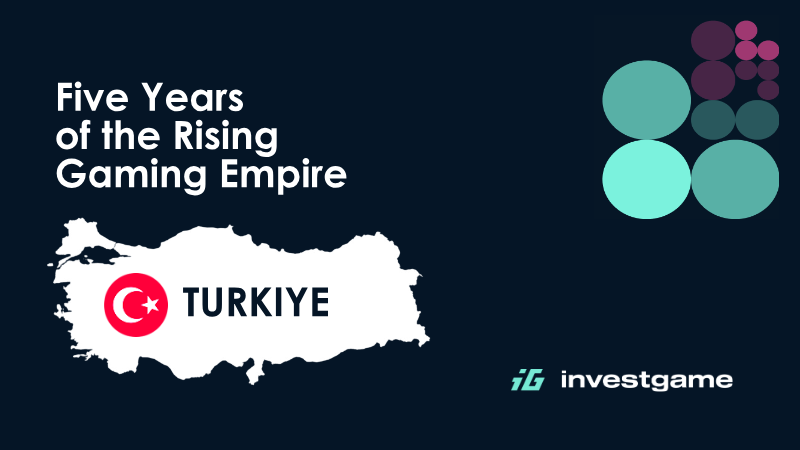
Turkiye has emerged as a significant global hub for game development, characterized by a rapid surge in entrepreneurship and capital investment over the last five years. Between 2020 and early 2025, the Turkish gaming ecosystem secured $935 million in private investment across 132 closed rounds. This activity represents approximately 5.8% of global gaming venture capital and corporate deals by volume. The market is heavily dominated by mobile gaming studios, particularly those focused on the casual segment, which lead the region’s top fundraising efforts.
The growth of the industry is supported by a mix of local and global generalist venture capital funds. Investment activity peaked in 2022 with $441 million raised before stabilizing in subsequent years. Notable high-value fundraisings include significant rounds for studios such as Dream Games, which has raised hundreds of millions of dollars across multiple series. This influx of capital is mirrored by robust exit activity. The cumulative value of M&A exits in the region reached $2.9 billion from 2020 to 2025, accounting for roughly 3% of global gaming M&A value. Major transactions, such as the $2.1 billion acquisition of Peak Games and the $250 million sale of Gram Games, have established Turkiye as a "factory" for high-value gaming entities.
When compared to other major gaming hubs like Israel, Finland, and the United Kingdom, Turkiye demonstrates competitive strength in both deal volume and cumulative exit value. While the UK and Israel maintain higher total capital raised, Turkiye’s concentration of successful mobile gaming exits positions it as a rising leader in the global landscape. The data, which excludes rumored mega-rounds to maintain analytical accuracy, suggests a maturing ecosystem where early-stage talent is increasingly backed by sophisticated global investors.
The global gaming market reached $188 billion in 2024, reflecting a 2.1% year-over-year increase. While public gaming markets outperformed the S&P 500 with growth up to 50%, the venture capital landscape faced significant headwinds. Q4 2024 recorded the lowest funding level in over five years at $286 million, representing a 47% decline from the previous quarter. This downturn was primarily driven by a reduction in growth-stage investments and a steep decline in "graduation" rates, where only 4% of gaming startups that raised seed rounds since late 2021 successfully progressed to Series A.
Geographically, North American funding remained relatively flat for the year, while Asia saw a 33% drop. Conversely, Europe experienced a 10% increase in funding. Despite the VC slowdown, the industry maintains a healthy environment for mergers and acquisitions, with public gaming companies and tech giants holding approximately $236 billion in combined cash and equivalents. Notable sector trends include an increasing allocation of capital toward AI—accounting for 10% of 2024 funding—and a continued interest in extended reality (XR) following Google’s announcement of the Android XR operating system.
The industry also faces significant regulatory and structural shifts. Key developments include U.S. antitrust actions against Google that could force the divestiture of Chrome or Android, and ongoing legal battles regarding a potential U.S. ban on TikTok. Additionally, there is heightened global scrutiny regarding child protection, exemplified by Australia’s social media ban for minors and new safety protocols implemented by Roblox. In hardware, the Nintendo Switch became the most sold console in U.S. history, reaching 46.6 million units. This analysis utilizes data from CB Insights, Carta, and Circana to provide a comprehensive overview of the private and public gaming sectors through the end of 2024.
The quarterly briefing delivers a concise assessment of the global gaming ecosystem during the first quarter of 2025, emphasizing activity trends, revenue dynamics, and merger‑and‑acquisition (M&A) patterns across the principal platform segments. It argues that, despite lingering macro‑economic pressures, the industry remains resilient, with growth driven by new content releases and strategic consolidation.
During the period, personal‑computer engagement surged, highlighted by Steam’s record‑high concurrent user count, while mobile spending rebounded by roughly three percent year‑on‑year, a recovery largely attributed to publishers operating in Asian markets. The console segment held steady, buoyed by anticipation of the Switch II launch and the forthcoming release of GTA VI, suggesting that flagship titles continue to anchor consumer demand across hardware categories.
M&A activity reached a two‑year peak, generating approximately $6.6 billion across 42 transactions, with mobile‑focused deals accounting for about $4 billion of that total. Strategic consolidators and private‑equity firms intensified portfolio reshaping, even as later‑stage private financing grew more constrained. Although the number of deals contracted by roughly sixty percent over the preceding six months, the aggregate upfront value remained robust, indicating a shift toward fewer but larger transactions.
Overall, the analysis concludes that the gaming market’s core segments are sustaining momentum amid tighter financing conditions, and that forthcoming hardware and software launches are likely to reinforce this stability. Stakeholders are advised to monitor the evolving deal landscape, where strategic scale
The analysis focuses on the accelerating consolidation of the worldwide gaming ecosystem, emphasizing the unprecedented scale of mergers and acquisitions (M&A) and private‑placement financing observed in the final quarter of 2025 and projecting a further surge into 2026. In Q4 2025, a record‑high 43 announced transactions totaled $83 billion, highlighted by Netflix’s $82.7 billion purchase of Warner Bros.’ avatar‑technology portfolio and Kakao Games’ $78 million strategic stake aimed at expanding its PC and console footprint. Private‑placement activity complemented the M&A wave, with 137 deals raising $1.5 billion, underscoring heightened investor appetite for growth‑stage gaming ventures.
The data reveal a clear shift toward acquisition of immersive‑technology assets, particularly avatar and metaverse‑related capabilities, as major platform operators seek to deepen engagement across streaming and interactive media. Geographic distribution remains truly global, with North American and Asian firms leading both deal origination and capital provision, while sovereign wealth entities such as the Public Investment Fund (PIF) emerge as influential buyers. The breadth of activity spans traditional console and PC publishers, mobile‑first developers, and emerging gaming‑tech startups, indicating a convergence of content, distribution, and underlying technology.
Looking ahead to 2026, the outlook anticipates a sharp acceleration in gaming‑tech M&A, driven by a roster of “buyers to watch” that includes PIF‑backed Scopely, Netflix, Paramount, Tencent, Krafton and NCSoft. The forecast suggests that strategic imperatives—namely, securing avatar‑tech, expanding cross‑platform ecosystems, and leveraging data‑driven monetisation—will fuel continued dealmaking at volumes exceeding the historic Q4 2025 peak. Overall, the findings point to an industry in the midst of rapid structural realignment, with capital flowing toward assets that enable deeper, more immersive player experiences and broader monetisation opportunities.
The global gaming industry experienced a strategic shift in 2024, moving away from pure financial arbitrage toward targeted, objective-oriented deal-making. While overall activity remained above pre-pandemic levels, the market was characterized by a stricter environment where major players like Embracer Group and Take-Two streamlined operations through layoffs and the offloading of non-core assets. A significant trend emerged in the work-for-hire sector, highlighted by the $2.8 billion Keywords Studios buyout. Private equity firms became increasingly active, seizing opportunities to provide growth capital and acquire established entities like Jagex and Private Division.
Investment patterns diverged by segment throughout the year. Venture capital firms largely pivoted from game development studios toward platform and technology startups, which saw their investment totals nearly double. Conversely, early-stage financing for gaming studios faced downward pressure, with a persistent decrease in closed rounds since early 2024. Geographically, North America and Europe led in early-stage capital raised, accounting for $244 million and $200 million respectively. Public markets remained volatile, though a three-quarter recovery trend suggested a gradual stabilization in public offerings and fixed-income issuances.
The outlook for 2025 anticipates sustained or slightly increased M&A momentum driven by lower interest rates and significant cash reserves among public strategics. Private equity is expected to play a larger role as borrowing costs ease, leading to more buyouts and PE-led investments. While high-profile gaming teams will continue to command strong valuations, the volume of such deals may decrease as VCs focus on AI-driven solutions and web3 ventures. The methodology for these findings involves tracking closed transactions across the video game industry, excluding pure gambling and non-gaming blockchain companies, using data from public media, business partners, and market insights.