Video Games Industry Memo (VGIM) provides a specialized advertising platform for organizations seeking to reach a high-level audience within the global video games sector. The publication functions as a weekly newsletter, offering in-line promotional placements designed to influence decision-makers through brand awareness and targeted messaging. The primary objective is to connect advertisers with a professional readership that prioritizes the business, policy, and commercial aspects of the gaming industry.
The readership comprises over 4,000 professionals, characterized by a high concentration of senior leadership, with nearly 40% of subscribers holding C-level, founder, or director positions. The audience is predominantly commercially focused, with over 60% working in marketing, business development, law, or policy. Geographically, the publication maintains a strong footprint in the UK at 49% and the US at 18%, with additional reach in Canada, Australia, and Ireland. The platform demonstrates significant engagement metrics, maintaining a 44% weekly open rate and a 10% click-through rate per edition. Furthermore, the publication serves as a recognized industry resource, with readership spanning 20 of the top 25 publicly listed gaming companies and various mainstream media outlets.
Advertising campaigns are most effective when aligned with the publication’s focus on the business and political landscape of gaming. Successful strategies typically leverage brand awareness goals and clear calls to action tied to specific industry events or organizational milestones. The standard advertising format includes a logo, company name, and two 50-word slots integrated into the newsletter’s editorial content. Booking is facilitated through a flat-rate model for individual campaigns or discounted packages for multi-campaign commitments over a 12-month period.
The Video Games Industry Memo (VGIM) Insider program functions as a premium subscription tier designed to augment the existing weekly industry newsletter. The primary objective of this service is to provide dedicated industry professionals with deeper analytical content, exclusive access to events, and direct engagement opportunities with the publication’s author. By transitioning from a free reader to a paid subscriber, members gain access to specialized monthly newsletters, including a Q&A-focused segment and a monthly industry retrospective, while supporting the long-term sustainability of the platform.
The service offers a tiered pricing structure to accommodate various user needs, ranging from a standard monthly rate of £6 to an annual commitment of £50, which represents a 31% cost reduction. Additionally, the program incentivizes organizational adoption through group subscriptions, which offer a 20% discount per seat, effectively lowering the annual cost to £40 per user. A founding membership tier is also available at £100, providing exclusive benefits to early supporters.
Beyond direct content delivery, the program serves as a networking and professional development tool. Subscribers receive priority access to consulting opportunities, event tickets, and webinars, alongside tangible financial benefits such as discounts on advertising and event participation. The initiative is positioned as a scalable model, with plans to expand feature sets in direct correlation with the growth of the subscriber base. This structure targets industry stakeholders seeking consistent, high-level commentary on the global video game market, leveraging a direct-to-consumer subscription model to foster a specialized community of readers.
The acquisition of Gamer Network by IGN Entertainment, finalized in May 2024, represents a significant consolidation within the video games media sector. By purchasing the entire digital portfolio from ReedPop—which includes influential outlets such as Eurogamer, GamesIndustry.biz, VG247, and Rock, Paper, Shotgun—IGN has absorbed several of its former competitors. ReedPop retains control of its events business, including the EGX and MCM brands, effectively exiting the digital media space to focus on its core pop culture events.
The transaction, reportedly valued at approximately $20 million, followed a roughly six-month search for a buyer after ReedPop’s parent company, RELX, lost interest in maintaining a games media division. The deal was characterized by a rapid turnaround, with IGN emerging as the successful bidder among three primary contenders. However, the integration process has already resulted in immediate staff redundancies across multiple acquired properties, fueling industry concerns regarding the future of editorial independence and the potential for further headcount reductions as IGN streamlines its new assets.
The primary analytical concern surrounding this acquisition is the erosion of media plurality. A diverse landscape of outlets is essential for maintaining competitive reporting standards and providing a variety of perspectives within the complex games industry. By centralizing control over a vast array of previously independent sites, the deal risks narrowing the scope of industry discourse. To preserve a healthy media ecosystem, the industry must look toward alternative models, such as niche-focused publications, independent newsletters, and diversified revenue streams, while encouraging stakeholders to continue distributing information across a broad range of platforms to support emerging voices.
The rapid reversal of Sony’s mandatory PlayStation Network (PSN) account-linking policy for PC players of Helldivers 2 serves as a case study in the power of organized gaming communities. Following the announcement in May 2024, the player base successfully pressured Sony to abandon the requirement within 72 hours. The conflict arose because the policy threatened to lock out players in 177 countries where PSN is unavailable, effectively rendering the game unplayable for a significant portion of the global audience.
The community’s response was characterized by a highly disciplined, coordinated campaign that leveraged the game’s own internal culture. Helldivers 2, which had sold over 8 million units since its February 2024 launch, utilized developer-led storytelling and military-themed mechanics to foster a tight-knit, collaborative player base. This existing infrastructure allowed players to rapidly mobilize, resulting in over 200,000 negative reviews on Steam and a widespread push for refunds. The campaign was further bolstered by Steam’s decision to waive standard playtime limits for refunds, which created immediate commercial pressure on Sony.
This event highlights a critical shift in the influence of gaming communities, demonstrating that they possess the capacity to act as effective, organized pressure groups against major publishers. While the game’s unique, collaborative ethos provided the foundation for this mobilization, the outcome was ultimately driven by the combination of clear, achievable objectives and the financial impact of mass refund requests. The episode serves as a reminder to the industry that communication and consultation are essential, as failure to account for the geographic and technical realities of a global player base can trigger significant reputational and commercial backlash.
The primary focus of this analysis is the strategic evolution of Rezzil, a Manchester-based company that has successfully transitioned from a professional sports training provider to a consumer-facing game developer. The thesis posits that by leveraging game technology to solve high-stakes cognitive and physical training challenges for elite athletes, the company established the credibility and technical infrastructure necessary to secure a flagship partnership with the Premier League. This trajectory highlights a broader industry trend where game-engine-based "spillover" technologies are increasingly migrating from specialized professional applications back into the consumer entertainment market.
Founded in 2017, Rezzil operates through two distinct tiers: Rezzil Player, a consumer-focused VR experience, and Rezzil Index, a professional-grade service used by organizations such as Manchester City and Red Bull Racing. The professional service utilizes VR to assist in injury rehabilitation, cognitive benchmarking, and performance analysis, often employing spatial tracking to provide actionable data for coaches and athletes. By securing financial backing and validation from high-profile figures like Gary Neville and Vincent Kompany, the company successfully navigated the skepticism typically associated with introducing gaming technology into professional sports environments.
The company’s expansion into international markets, including New York, Paris, and Rio de Janeiro, underscores the global scalability of its performance-based model. The recent four-year partnership with the Premier League, announced in March 2024, serves as the culmination of this strategy, marking the firm's formal entry into the consumer game development sector. By treating sports as a form of gamified performance, Rezzil has effectively utilized professional sports as a rigorous testing ground to refine its development processes, ultimately positioning itself to deliver interactive entertainment to a mass audience.
Embracer Group’s trajectory from a high-growth conglomerate to a fragmented entity serves as a case study in the risks of aggressive, debt-fueled corporate expansion within the video game industry. The company’s primary thesis was built on a decentralized portfolio strategy, aiming to de-risk game development by acquiring numerous studios and intellectual properties. However, this approach lacked a cohesive strategic vision, functioning more as a form of corporate spread betting that relied heavily on favorable market conditions and cheap capital during the pandemic.
The company’s rapid ascent saw its valuation exceed $11 billion by 2021, supported by 27 acquisitions in a single year and a headcount expansion from 600 employees in 2016 to over 7,000 by 2021. This growth was abruptly halted when a critical $2 billion funding deal with Savvy Games collapsed in 2023. The subsequent financial pressure, exacerbated by rising interest rates and a cooling post-pandemic gaming market, forced the company into a severe restructuring. This period of retrenchment resulted in the layoff of over 1,400 employees, the cancellation of at least 29 projects, and the divestment of major assets, including Gearbox Entertainment and Saber Interactive.
Ultimately, the organization’s failure to integrate its acquisitions effectively left it vulnerable to market volatility. The current resolution involves splitting the conglomerate into three distinct, publicly listed entities—Asmodee Group, Coffee Stain & Friends, and Middle-earth Enterprises & Friends—to clarify operations and manage debt. This transformation represents a total repudiation of the company’s original governing philosophy, signaling the end of the Embracer Group brand and highlighting the unsustainable nature of its previous acquisition-heavy business model.
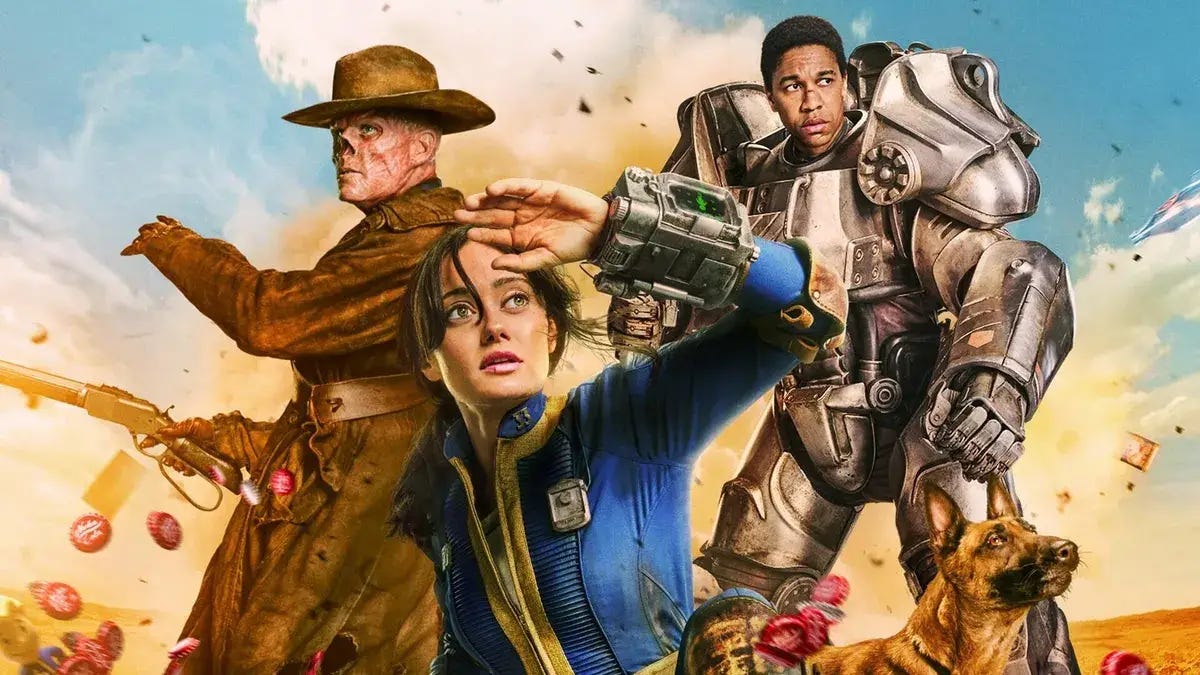
The recent surge in high-quality film and television adaptations of video games, such as the Fallout series and The Last of Us, marks a significant shift from the historically poor track record of such projects. The primary thesis is that this improvement is driven by the integration of video games into the cultural mainstream, which has fostered a new environment of respect and serious investment from the broader entertainment industry.
Historically, adaptations were often cynical, low-budget attempts to exploit existing fanbases without genuine engagement with the source material. In contrast, current productions benefit from three key factors: substantially higher financial investment, the involvement of creative leaders who possess an authentic passion for the games, and a more sophisticated approach to storytelling that prioritizes the spirit of the game over rigid, literal translation. For instance, while The Last of Us adhered closely to its narrative, Fallout successfully captured the atmosphere and experience of its source material, demonstrating a nuanced understanding of how to translate interactive media into passive viewing.
This trend is supported by data indicating a robust industry landscape, including a 94% quarter-on-quarter increase in gaming venture capital funding and a record-high valuation of £7.82 billion for the UK games industry in 2023. As these adaptations continue to achieve critical and commercial success, the industry is poised for further expansion, with numerous sequels and new projects in development. While the risk of commercial "ambulance chasing" remains, the current shift reflects a fundamental change in how the creative sector perceives and values video game intellectual property.
The London Games Festival serves as a significant two-week celebration of the city’s £2 billion video games sector, acting as a central hub for industry professionals and the public. The primary purpose of this guide is to highlight key events and cultural touchpoints within the festival, emphasizing the intersection of commercial, creative, and experimental facets of the industry. By curating a selection of essential activities, the analysis underscores the festival's role in fostering networking, showcasing diverse talent, and providing a platform for both established developers and emerging indie creators.
Key highlights of the festival include the BAFTA Games Awards, where Baldur’s Gate 3 is positioned as a frontrunner for the Best Game category, and the Now Play This exhibition, which focuses on experimental and interactive design. The festival also features the Ensemble program, a vital initiative supported by the Mayor of London that promotes Black, Asian, and Minority Ethnic talent within the UK games sector. Additionally, the W.A.S.D. event is identified as a critical, low-key networking venue for industry professionals, effectively filling the gap between major global conferences.
Beyond the festival, the broader industry landscape is marked by notable developments, including the return of Blizzard’s World of Warcraft to the Chinese market following a resolution of IP disputes with NetEase. Other significant trends include a focus on game preservation at Xbox and ongoing consolidation, such as the acquisition of Powerwash Simulator developer Futurlab by Miniclip. These insights, combined with a summary of leadership shifts at Disney and current job market opportunities, provide a comprehensive overview of the contemporary video games business environment as of April 2024.
The Russian government has initiated a formal exploration into the development of a domestic video game console, operating system, and cloud gaming service. This directive, signed by President Vladimir Putin in early 2024, mandates that the Prime Minister evaluate the feasibility of these technologies by mid-June 2024. The move is framed as a strategic effort to revitalize the Russian gaming sector, which suffered an 80% market decline in 2022 following the invasion of Ukraine and the subsequent withdrawal of major international hardware and software providers.
The industry landscape in Russia has been significantly altered by the departure of global platforms like PlayStation, Nintendo, and Xbox, alongside the exodus of major publishers and local talent. While the Russian market previously generated approximately $2.5 billion in 2021 with a player base of nearly 60 million, the current environment is characterized by isolation from global distribution networks and a reliance on local market conditions. Analysts express skepticism regarding the feasibility of the state’s console project, citing a lack of domestic expertise in high-end chip production and a history of failed initiatives, such as previous attempts to develop national game engines.
Beyond economic recovery, the initiative highlights the growing use of video games as a tool of statecraft. By attempting to foster a sovereign gaming ecosystem, the Russian government seeks to leverage the cultural influence of the medium. This trend reflects a broader geopolitical shift where authoritarian regimes increasingly prioritize the control and development of gaming infrastructure, contrasting with the more laissez-faire approach often observed in democratic nations. The outcome of this directive remains uncertain, with potential results ranging from a genuine, albeit difficult, hardware development effort to the mere rebranding of existing foreign technology.
This industry memo provides a curated overview of key developments and highlights from the 2024 PAX and Game Developers Conference (GDC) events. The primary purpose is to synthesize observations from these major industry gatherings, focusing on emerging game titles, technological trends, and the broader socio-economic climate within the video game sector. The content serves as a professional update for industry stakeholders, emphasizing both creative innovation and the ongoing challenges facing developers and publishers.
Key findings from the events include a diverse range of independent and AAA game showcases, such as the horror title Horses and the narrative-driven Wildwood Down. The industry’s focus on accessibility was noted as a significant success at PAX, while GDC served as a platform for critical discourse regarding industry layoffs, corporate greed, and the importance of game preservation. Technological demonstrations, specifically those involving generative AI for NPC interactions, were evaluated with skepticism, highlighting concerns regarding both technical maturity and the ethical implications for creative labor.
The scope of the coverage encompasses the North American gaming landscape during March 2024, specifically targeting the professional development and consumer-facing segments of the industry. The information is derived from direct attendance and observation at the aforementioned conferences, supplemented by industry reporting on topics such as potential release delays for major titles like Grand Theft Auto 6 and executive commentary on the state of the market. The analysis concludes that while the industry continues to produce significant creative output, it remains in a period of introspection regarding labor practices, sustainability, and the integration of new technologies.
The Game Developers Conference (GDC) serves as a critical barometer for the global video games industry, facilitating professional networking and setting the commercial agenda for the year. The 2024 event highlighted five primary industry trends, reflecting a sector currently navigating significant economic, technological, and political shifts.
A central finding is the deepening divide regarding generative AI. While nearly half of industry professionals report using AI tools, adoption is heavily skewed toward commercial and administrative functions—such as marketing, finance, and community management—rather than core development. Despite this, frontline developers remain hesitant, with 80% expressing ethical concerns regarding AI deployment in game creation. Simultaneously, the US job market remains in a state of crisis, with 18,000 global layoffs over the past year fostering a bleak outlook. Industry sentiment suggests that these cuts are permanently displacing senior talent and creating significant barriers for new entrants, leading many to adopt a survival-focused approach for the coming year.
The industry is also grappling with its political and social responsibilities. In the UK, the relationship between the games sector and the government has deteriorated, with industry leaders expressing frustration over immigration policies and a perceived lack of fiscal support. Furthermore, while toxicity remains a pervasive issue, there is a growing consensus that leadership must prioritize community safety. Evidence suggests that non-toxic environments correlate with higher player spending, providing a commercial incentive for companies to move beyond silence and actively moderate their platforms. Amid these challenges, the industry continues to seek a balance between acknowledging the current economic hardship and celebrating commercial successes, such as the breakout hit Balatro, to maintain morale and demonstrate the sector's long-term viability.
The current landscape of video game research is characterized by significant methodological challenges that frequently lead to misleading public perceptions and reactionary policy decisions. The primary thesis posits that the "messiness" of screen research—stemming from the difficulty of capturing complex human behavior—is often exploited by media and political entities to support predetermined narratives, such as the inherent addictiveness of digital technology. This cycle of flawed evidence and knee-jerk regulation has historically resulted in ineffective policies, such as South Korea’s former shutdown law and the World Health Organization’s inclusion of gaming disorder as a clinical condition despite a lack of consensus on its unique characteristics or prevalence.
Methodological shortcomings are central to this issue. Laboratory experiments often lack ecological validity, failing to reflect real-world device usage, while self-reported surveys are notoriously unreliable compared to objective data. Longitudinal studies, though more robust, are often too slow to influence fast-moving policy debates or produce results that are merely correlational rather than causal. This environment is further complicated by a lack of access to proprietary industry data, which forces researchers to rely on repetitive, low-quality studies that fuel public outrage cycles rather than advancing scientific understanding.
To address these systemic issues, experts advocate for a more collaborative approach between academia and the gaming industry. Establishing frameworks for sharing in-game data, utilizing independent brokers to facilitate communication, and fostering greater digital literacy are proposed as essential steps to move beyond simplistic metrics like screen time. By prioritizing nuanced, empirical research over reactive policy, the industry and the scientific community can better distinguish between harmful behaviors and healthy engagement, ultimately creating a more informed and balanced public discourse.