The Child Appropriate Game Design (CAGD) research project, conducted by the University of Toronto’s Kids Play Tech Lab, examines the complex, evolving definition of "age-appropriate" play within the video game industry. The project aims to bridge the gap between top-down regulatory frameworks and the lived experiences of young players. Covering the United Kingdom, the United States, and Canada, the first year of this three-year study analyzes the current policy landscape, industry-standard safety tools, and the perspectives of children aged 6 to 12.
Key findings indicate that current industry mechanisms—such as content ratings (PEGI, ESRB), parental controls, and age verification technologies—are often viewed as incomplete or inconsistent. While 79% of European parents are aware of PEGI ratings, the report highlights that parental control usage remains low, sometimes as low as 3%, and that technological solutions often fail to account for individual child maturity or cultural nuances. Furthermore, the research reveals that children possess a sophisticated understanding of the topic, frequently rejecting rigid numerical age limits in favor of personalized, maturity-based assessments.
The study concludes that "age appropriateness" is a vague, context-dependent term that cannot be solved by blunt technological blocks or restrictive mandates. Instead, the findings advocate for a more nuanced approach centered on improved digital literacy, better education for parents, and the inclusion of children in the decision-making process. By fostering open dialogue between parents and children, the industry can move away from passive, restrictive management toward a supportive framework that empowers families to make informed choices about digital content.
Blumhouse, the prominent film production company known for horror hits such as Paranormal Activity and Get Out, has successfully expanded into the video game industry. The company’s strategic entry, which began in February 2023 with the announcement of a dedicated publishing arm, mirrors its cinematic philosophy of supporting small-budget, original, and creative horror projects. By diversifying its portfolio to include various horror sub-genres, the firm aims to capture untapped market demand for diverse interactive experiences beyond traditional survival horror.
The transition has been facilitated by a deliberate focus on industry expertise. Rather than relying solely on its film reputation, the company recruited experienced professionals, including President Zach Wood and CFO Don Sechler, who possess deep backgrounds in the independent development sector. This leadership team has been granted significant autonomy, allowing them to foster strong relationships with developers who view their projects as passion-driven creative endeavors. The appointment of Creative Lead Louise Blain, a former games journalist and horror enthusiast, further underscores the company's commitment to integrating authentic genre knowledge into the publishing process.
Early results indicate a positive reception, with the company’s first published title, Fear the Spotlight, launching to critical acclaim in October 2024. This success serves as a proof of concept for the firm’s broader ambition to release a steady stream of independently developed horror games annually. By balancing its established brand identity with a respectful, expert-led approach to game development, the organization has effectively positioned itself as a significant new player in the interactive entertainment space, providing a high-profile platform for creators to explore unconventional and experimental horror concepts.
The UK games industry faces a significant social mobility crisis, characterized by a lack of representation for individuals from lower socioeconomic backgrounds. While the broader UK population is comprised of 37.4% of individuals from lower socioeconomic categories, only 13% of the games industry workforce shares this background. This disparity positions the sector as a notable outlier compared to other creative fields, such as film and television (29%) and music (22%), and even traditional professions like law and the civil service.
The findings are based on the Into Games "Difficulty Level" report, which utilized a survey of 297 working-class industry professionals and 17 in-depth, one-to-one interviews. The data reveals that 59% of these professionals feel marginalized or looked down upon due to their social background, and fewer than 5% believe the industry is taking sufficient action to address these systemic barriers. The report identifies a combination of individual, institutional, and industry-wide failures, including inadequate careers advice in state schools, the high cost of entry for specialized digital roles, and a lack of dedicated support structures for working-class talent.
To mitigate these issues, the report advocates for a multifaceted approach, including the establishment of an industry-wide body to champion social mobility, the implementation of targeted internship and relocation support, and the creation of regional "waypoints" to foster local talent pipelines. Ultimately, the analysis concludes that the industry must move beyond passive acknowledgment and adopt proactive, measurable strategies to improve socioeconomic diversity, as current inaction risks further alienating potential talent and hindering the sector's long-term growth.
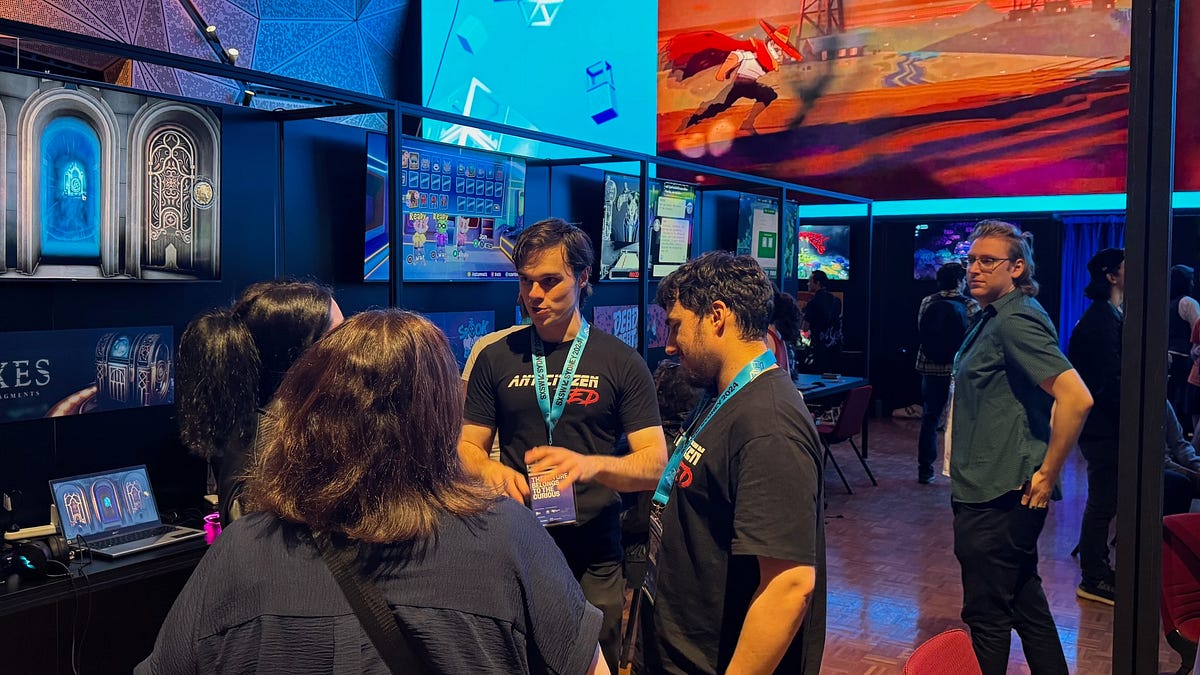
The SXSW Sydney festival serves as a focal point for evaluating the current state of the Australian video games industry, highlighting both regional growth challenges and broader shifts in the global interactive entertainment sector. The analysis centers on three primary observations: the precarious relationship between the New South Wales government and local developers, the need for improved professional services infrastructure, and the evolving market positioning of major streaming platforms.
A key finding is the lack of trust between the New South Wales games sector and the state government, stemming from a 2023 attempt to withdraw $190 million in screen industry funding. While the cuts were ultimately reversed, the inconsistency has created uncertainty for developers, contrasting sharply with the more stable, growth-oriented support models seen in states like Victoria. Furthermore, the Australian industry is identified as lacking the robust network of banks, law firms, and corporate advisors that support games companies in the United Kingdom, limiting access to specialized financial products and accelerator programs.
Finally, the festival highlights a strategic pivot for Twitch. By positioning its leadership outside of the dedicated games track, the platform signals an effort to transcend its "games-only" reputation to compete with short-form content rivals like TikTok. This move reflects a necessary balancing act as the company attempts to diversify its audience and revenue streams while maintaining its core gaming community. These observations underscore a period of transition for both the Australian domestic market and global streaming giants as they navigate shifting economic and competitive landscapes.
The October 2024 edition of the Video Games Industry Memo serves as a summary of insights shared during a Q&A session at the Education Symposium in Melbourne. The primary objective of the content is to address the societal impact of video games, specifically focusing on their cultural perception, the industry's role in supporting parents, and the personal significance of the medium.
The discussion centers on three core inquiries: why video games remain undervalued from a cultural perspective despite their widespread influence, how the industry can better assist parents in navigating gaming environments, and the personal motivations behind a long-term engagement with the medium. These reflections originate from a professional dialogue between industry analyst George Osborn and host Rad Yeo, intended to provide a nuanced perspective on the intersection of gaming and education.
The scope of the analysis is qualitative, drawing on expert commentary rather than quantitative survey data. By framing games as a critical cultural force, the content advocates for a shift in how the public and the industry approach the medium's role in daily life and family dynamics. The insights presented are intended to inform broader discussions on the societal integration of gaming, emphasizing the need for greater support structures for families and a deeper appreciation of the medium's cultural weight.
Melbourne has solidified its status as a premier global hub for independent game development, underpinned by a robust educational pipeline and consistent government support. The region’s success is largely attributed to a collaborative, non-hierarchical community structure and strategic tax incentives that have effectively shielded local developers from the volatility of the broader global industry downturn. While these sustainable business models have fostered a thriving indie ecosystem, the sector now faces the critical challenge of scaling operations to avoid a growth ceiling. To address this, the Australian games industry is transitioning toward a unified national strategy designed to leverage regional strengths and attract significant international investment and talent.
The 2024 Melbourne International Games Week served as a focal point for this momentum, showcasing the depth of local creative output through events like the Australian Game Developer Awards and the debut of indigenous-led projects such as Blaktasia. This regional vitality is bolstered by ongoing state-level grant programs that prioritize long-term industry stability. Beyond the Australian context, the broader industry landscape remains characterized by significant corporate shifts, including the rebranding of major studios and persistent legal scrutiny surrounding platform giants like Google and Roblox.
Covering the 2024–2026 period, these developments reflect a global industry in flux, balancing localized growth against international corporate pressures. As the Australian sector matures, its ability to integrate into the global market while maintaining its unique, community-driven identity will determine its long-term viability. The current trajectory suggests a shift toward professionalization and increased scale, positioning the region as an increasingly influential player in the international gaming market.
The exhibition Honk! at the Australian Centre for the Moving Image (ACMI) in Melbourne serves as a case study on the development of the independent hit Untitled Goose Game. By examining the game’s fifth anniversary, the exhibition highlights the creative influences, design iterations, and collaborative processes that shaped the title. The primary thesis posits that by documenting the messy, human reality of game development—including discarded ideas and technical hurdles—museums can effectively demystify the medium for a broad audience while celebrating the craft behind successful digital culture.
The exhibition provides insight into the specific design choices made by the development team at House House, such as the integration of slapstick comedy tropes, the use of Debussy’s music to contrast with the protagonist's aggressive behavior, and the deliberate refinement of in-game objectives to enhance player agency. Beyond the game itself, the display showcases the broader mission of ACMI, which attracts over one million visitors annually. The museum functions not only as an educational space but also as an industry hub, utilizing co-working facilities and play-testing programs to support local developers and foster commercial successes like Cult of the Lamb.
Methodologically, the exhibition relies on primary development artifacts, including early design documents, Moleskine sketches, and raw git commit logs. These materials illustrate the transition from conceptualization to execution, emphasizing that even highly polished products often emerge from chaotic, iterative workflows. By presenting these internal development logs, the exhibition successfully humanizes the creative process, offering a template for how cultural institutions can bridge the gap between technical industry practices and public understanding.
The intersection of neuroarchitecture and video game design offers significant potential for cross-disciplinary innovation, particularly in understanding human spatial navigation and behavior. Neuroarchitecture, a field that examines how physical environments influence human cognition and emotion, increasingly mirrors the concerns of progressive game design. By utilizing advanced research facilities like the Person-Environment-Activity Research Laboratory (PEARL) at University College London, researchers can create controlled, life-sized environments to track behavioral data, effectively bridging the gap between digital design principles and physical architectural planning.
The methodology involves using high-tech sensors, cameras, and wearable technology to monitor participants as they navigate reconfigurable spaces. A key finding from recent experiments is the successful integration of digital gaming data, such as that collected by the game Sea Hero Quest, with physical movement patterns. This integration allows researchers to validate spatial navigation theories against massive, real-world datasets. Participants in these studies often employ intuitive strategies—such as mental mapping—that are fundamentally similar to the problem-solving skills developed through gameplay, suggesting that game design techniques can provide actionable insights for creating more inclusive and navigable physical spaces.
Ultimately, the collaboration between these fields suggests that video games serve as more than just entertainment; they act as powerful tools for scientific inquiry. By applying the iterative design philosophies common in gaming to the challenges of neuroarchitecture, researchers can develop more equitable environments. This interdisciplinary approach highlights a growing trend where data-driven insights from digital experiences are increasingly applied to improve real-world infrastructure, demonstrating the broad, positive societal impact of game design expertise.
The September 2024 edition of the Video Games Industry Memo serves as a Q&A-style commentary, providing personal insights into the gaming habits of industry analyst George Osborn while touching upon broader sector trends. The primary purpose of the publication is to engage subscribers with professional perspectives on current industry discourse, specifically addressing player preferences, the state of the esports market, and the regulatory debate surrounding loot boxes.
The content highlights a preference for titles that emphasize meaningful player agency and world-building, citing role-playing games like Pentiment and Fallout: New Vegas, as well as strategy titles such as Football Manager and the Total War series, as benchmarks for quality design. These selections reflect a broader appreciation for games that respect the player's time through tight, well-defined core loops or immersive narrative experiences.
While the full analysis of the esports sector and the ethical implications of loot boxes remains behind a subscription paywall, the framing of these topics suggests an ongoing critical evaluation of whether the industry has passed its peak growth phase in competitive gaming and how monetization mechanics intersect with gambling definitions. The scope of the commentary is global, reflecting the general nature of the video game industry, and is intended for an audience of industry professionals and enthusiasts interested in market trends and personal gaming analysis.
The Roblox Economic Impact and Social Benefits Study, conducted by Nordicity, evaluates the financial contribution of creators on the Roblox platform to the United States economy between 2017 and 2023. The study aims to quantify the growth and reach of this creator ecosystem, highlighting its evolution from a negligible economic factor to a notable contributor. The research methodology involved surveying hundreds of developers and analyzing over 70,000 transactions from the platform’s Developer Exchange Program to measure direct, indirect, and induced economic impacts, including GDP contribution, job creation, and tax revenue.
Key findings indicate that Roblox creators contributed $1.2 billion to the U.S. GDP and supported 17,840 full-time equivalent (FTE) positions over the seven-year period. Growth was particularly significant, with GDP contributions rising by over 2,200% and FTE support increasing by more than 1,500% between 2017 and 2023. Notably, the economic benefits are geographically dispersed, with 50% of cash remittances flowing to developers in emerging tech hubs outside of traditional coastal centers, suggesting the platform acts as a catalyst for economic leveling.
Despite these figures, the report notes that the creator economy remains in a phase of professionalization, with only 21% of U.S. creators currently operating as formal businesses. The study concludes that the current economic impact is likely understated, as the analysis excludes ancillary revenue streams such as merchandise sales and branded experiences. Moving forward, the findings suggest that policymakers could further stimulate this sector by clarifying tax credit eligibility for user-generated content creators and recognizing the role of platform-based development in fostering digital literacy and equitable economic growth.
The video game industry functions as a complex intersection of creative labor, global economic power, and sociopolitical influence. Understanding this landscape requires a multifaceted approach that balances the technical realities of game development with the broader implications of digital platforms on human behavior. By examining both the internal mechanics of production and the external pressures of market regulation, stakeholders can better navigate the evolving challenges of a medium that increasingly shapes global culture and mental health.
Practical insights into the industry reveal the intense pressures inherent in development cycles, as evidenced by the high-stakes environments of major studios and the immense economic reach of conglomerates like Tencent. Beyond the boardroom, the industry faces significant scrutiny regarding its societal impact. Gaming platforms are increasingly scrutinized for their potential to be co-opted by extremist groups, necessitating a deeper understanding of how digital spaces function as both creative outlets and vectors for radicalization. These dynamics are further complicated by shifting regulatory landscapes, such as the heightened oversight surrounding major corporate acquisitions and the ongoing evolution of market trends projected through 2026.
Ultimately, the industry is defined by a tension between its role as a source of artistic expression and its status as a critical component of the modern digital economy. Whether through the lens of authentic development narratives or critical analyses of platform security, the sector demands a rigorous, informed perspective. As regulatory bodies increase their focus on industry giants and market participants prepare for the next phase of growth, the ability to synthesize these diverse viewpoints remains essential for anyone seeking to understand the trajectory of interactive entertainment in the coming years.
The August 2024 edition of the industry analysis column addresses the current state of the independent video game sector, focusing on survival strategies amidst a challenging financial climate. The primary thesis posits that while the industry is experiencing a period of significant volatility characterized by risk-averse financing and market contraction, independent developers are successfully adapting through operational restructuring and a renewed focus on fiscal discipline.
Key findings indicate that independent studios are navigating the current downturn by aggressively reducing overhead, including hiring freezes and increased reliance on core founding teams. To maintain liquidity, many developers are diversifying revenue streams by pursuing outsourcing, co-development contracts, or applying their technical expertise to corporate projects outside the gaming sector. Furthermore, studios are increasingly rescoping projects to align with current market appetites, thereby improving their chances of securing publisher interest.
Data from the investment firm Konvoy highlights a potential recovery in specific segments, noting that early-stage funding reached a one-year high of $492 million in the second quarter of 2024. This influx of capital is largely directed toward experienced talent emerging from recent industry-wide layoffs. The success of high-profile indie titles such as Animal Well and Balatro serves as a critical indicator of market viability, providing necessary confidence to investors and developers alike. Ultimately, the analysis concludes that while the industry remains in a difficult cycle, a return to foundational business practices—characterized by tight financial control and clear market alignment—offers a viable path for survival and long-term stability.