University of York
4 reports, presentations and talks by University of York in the Game Industry Library, the newest “Do Not Play With My Emotions: Design for Emotional Accessibility” (2025).
Documents
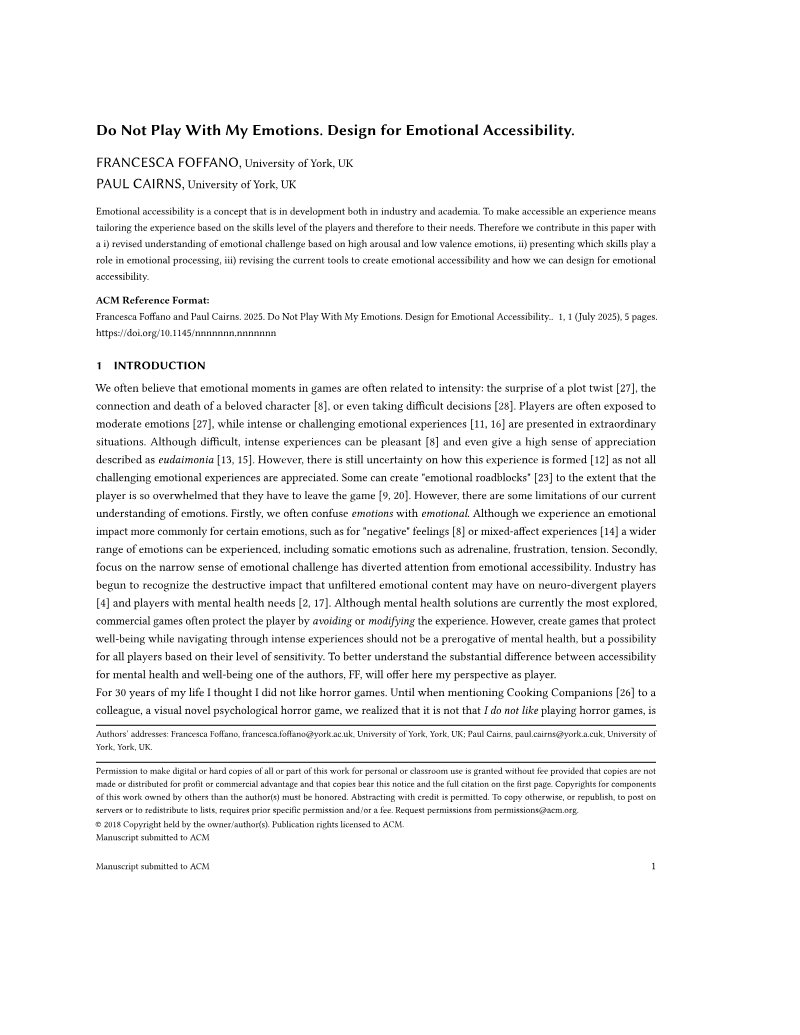

Do Not Play With My Emotions: Design for Emotional Accessibility
This analysis explores the concept of emotional accessibility in digital games, arguing that current industry practices—which often rely on simply removing or warning about intense content—fail to provide a truly inclusive experience.
- Emotional accessibility is defined as tailoring game experiences to a player's individual capacity to process emotional intensity, rather than simply removing or moderating content.
- Players possess a finite 'body budget' of cognitive resources, and when the intensity or duration of emotional stimuli exceeds these resources, it creates 'emotional roadblocks' that render a game inaccessible.
- Current industry standards for emotional accessibility, such as content warnings or the ability to disable gore, are insufficient because they focus on avoidance rather than enabling players to process intense experiences.
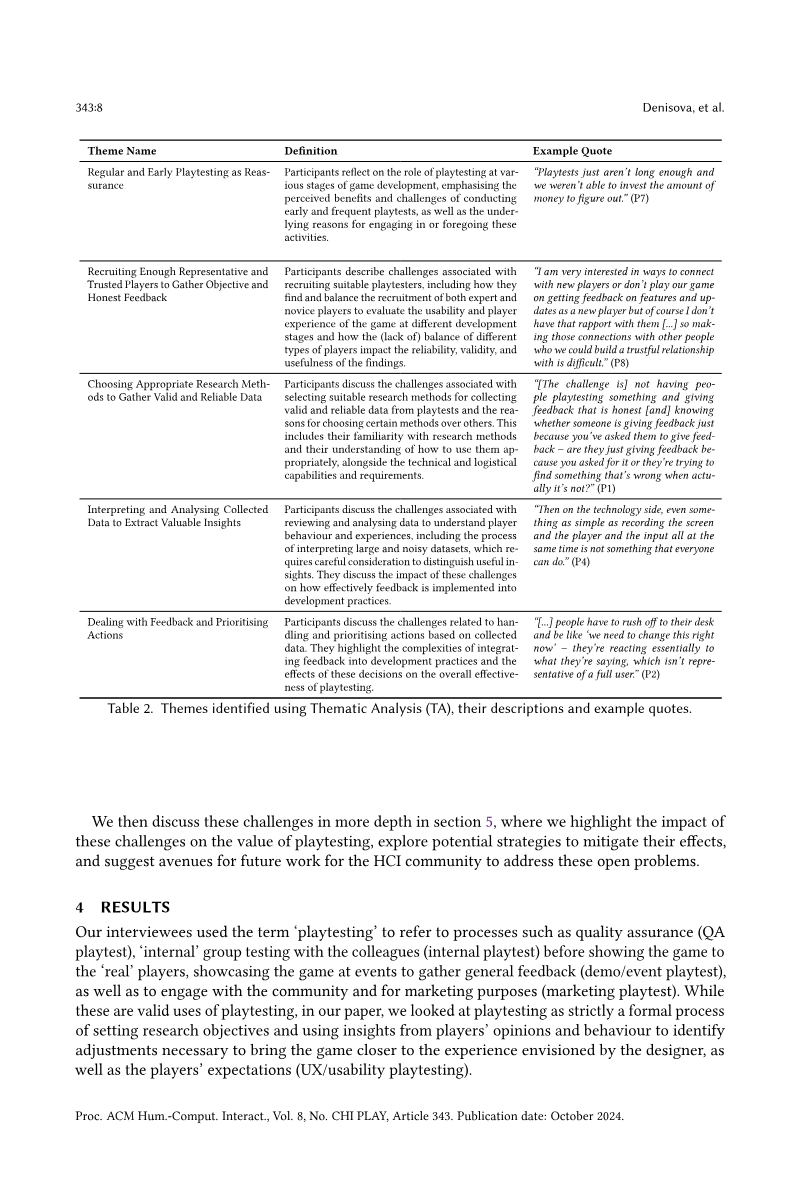
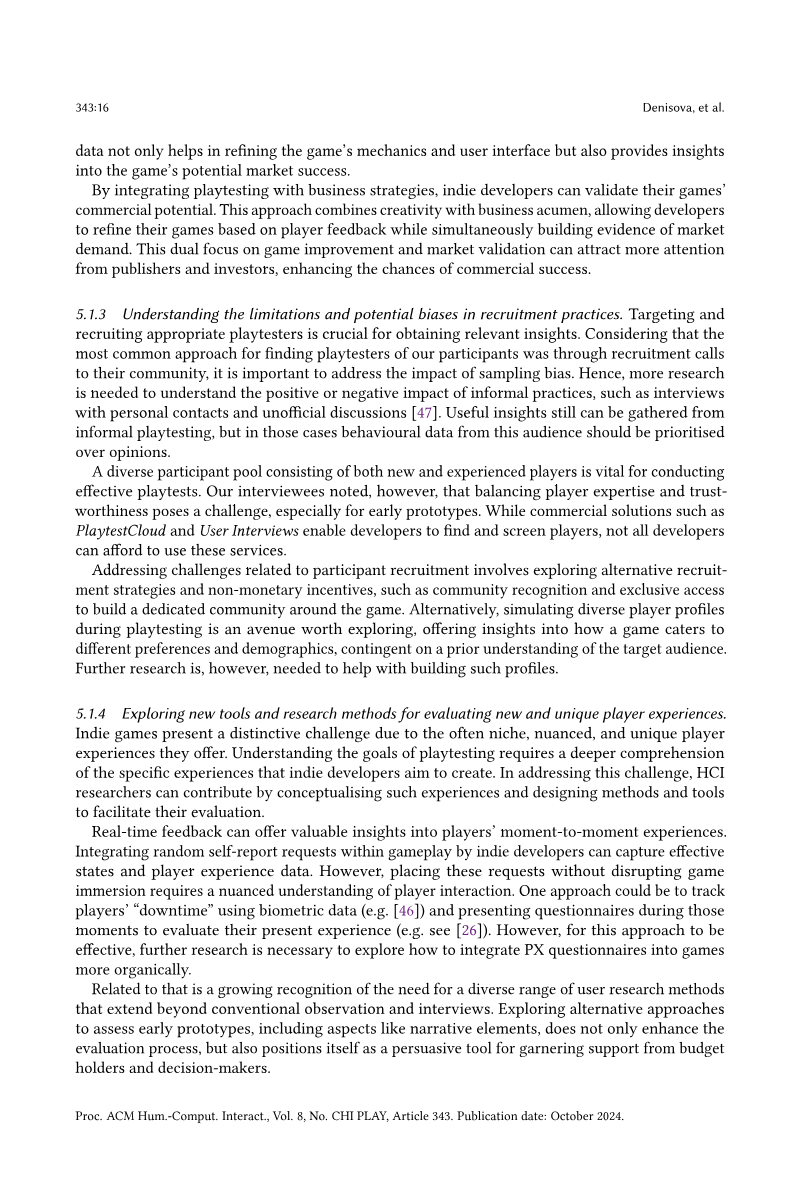
Towards Democratisation of Games User Research: Exploring Playtesting Challenges of Indie Video Game Developers
Independent game developers face a significant disconnect between the formal principles of Games User Research and the practical realities of resource-constrained production environments.
- Indie developers lack dedicated physical spaces for playtesting, forcing them to rely on suboptimal environments like office desks or public events, which compromises data reliability and introduces observer bias.
- The absence of formal Games User Research (GUR) training leads developers to react impulsively to isolated player feedback rather than using structured, objective-based evaluation methods.
- Recruitment for playtests is predominantly limited to existing community members, creating significant sampling bias that can skew results and misrepresent the experiences of broader, non-expert player audiences.
How Boardgame Players Imagine Interacting With Technology
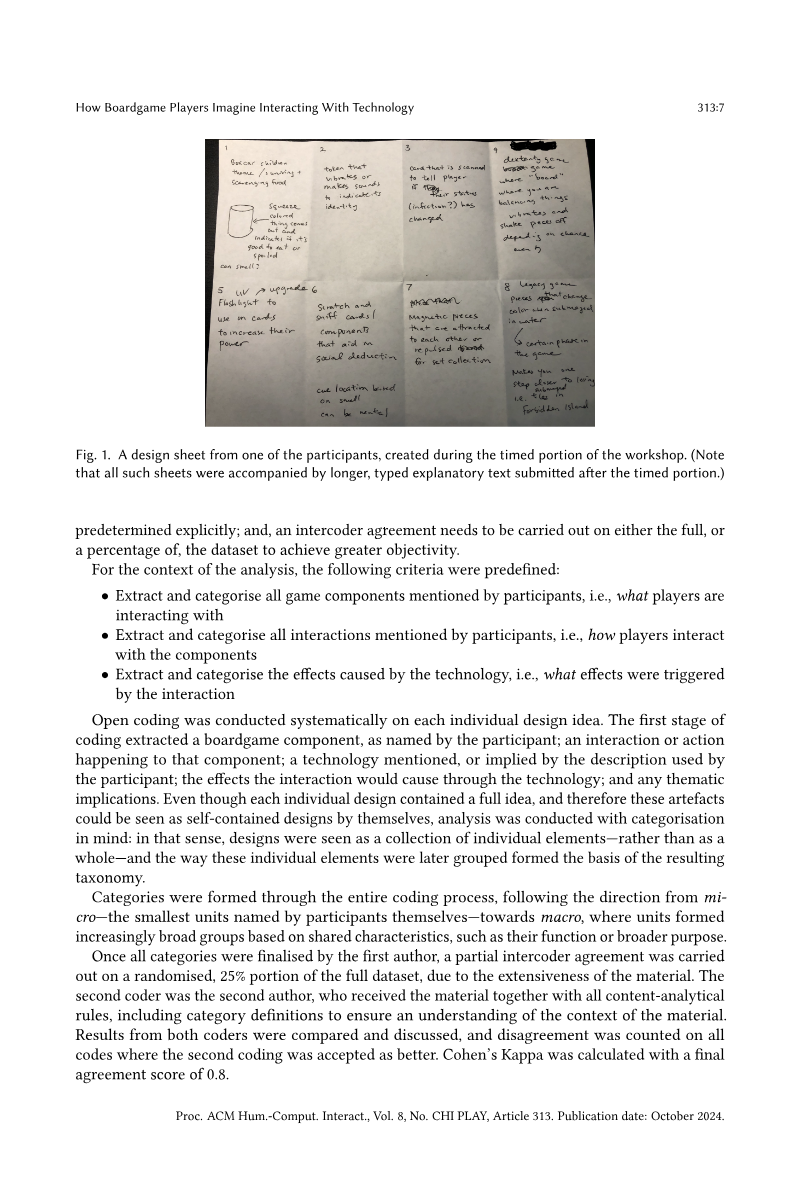
The integration of technology into tabletop gaming is evolving beyond simple mobile application companions toward deeply embedded, invisible systems that prioritize thematic immersion.
- Hobbyist boardgame players envision a shift away from screen-reliant mobile apps toward integrated technology, such as sensors and actuators, that preserves the tactile nature of traditional components.
- A taxonomy of 31 participants' ideas identified game pieces (96 mentions) and play areas (75 mentions) as the most common components envisioned for technological integration, followed by cards (46) and dice (26).
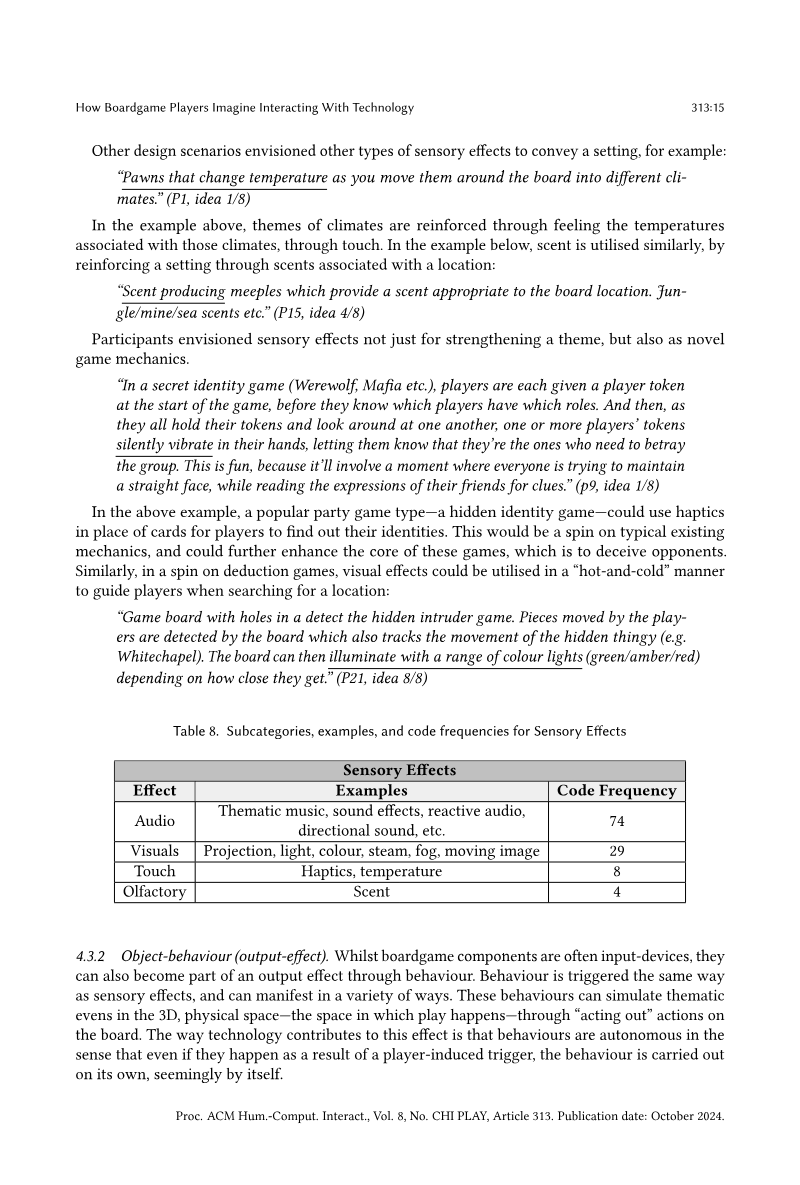
- Players prioritize 'thematicness'—the degree to which a game world feels realized—suggesting that technology should be used to provide sensory feedback like audio (74 mentions) and visual effects (29 mentions) rather than just automating housekeeping tasks.
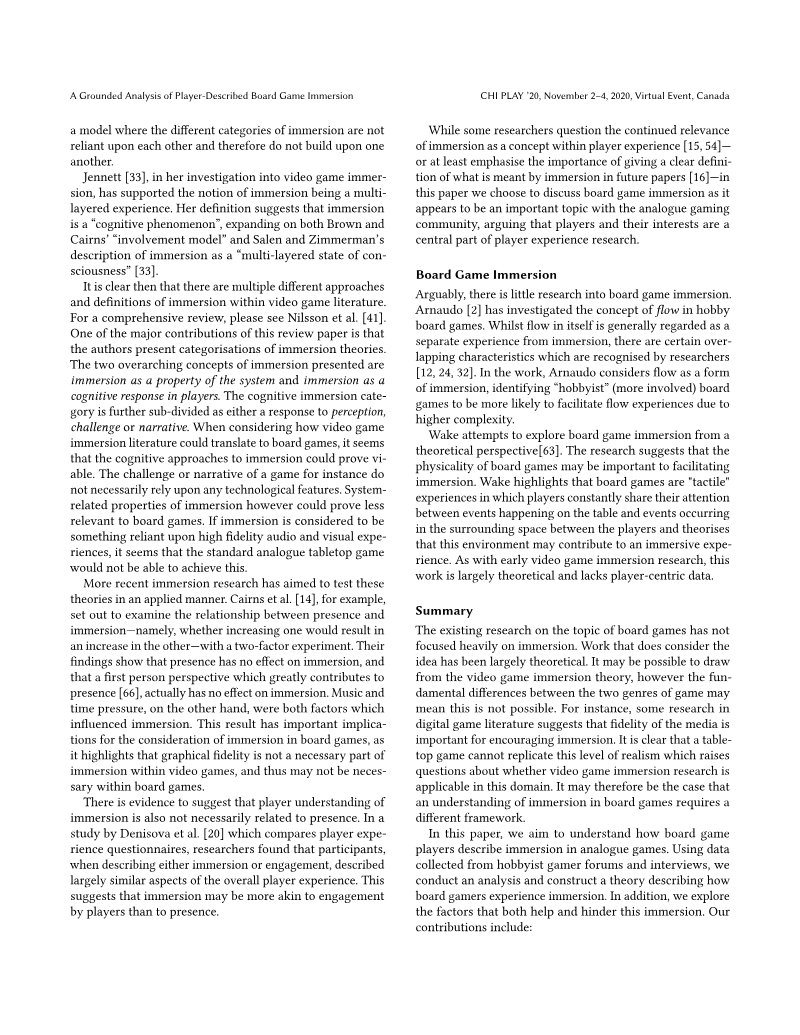
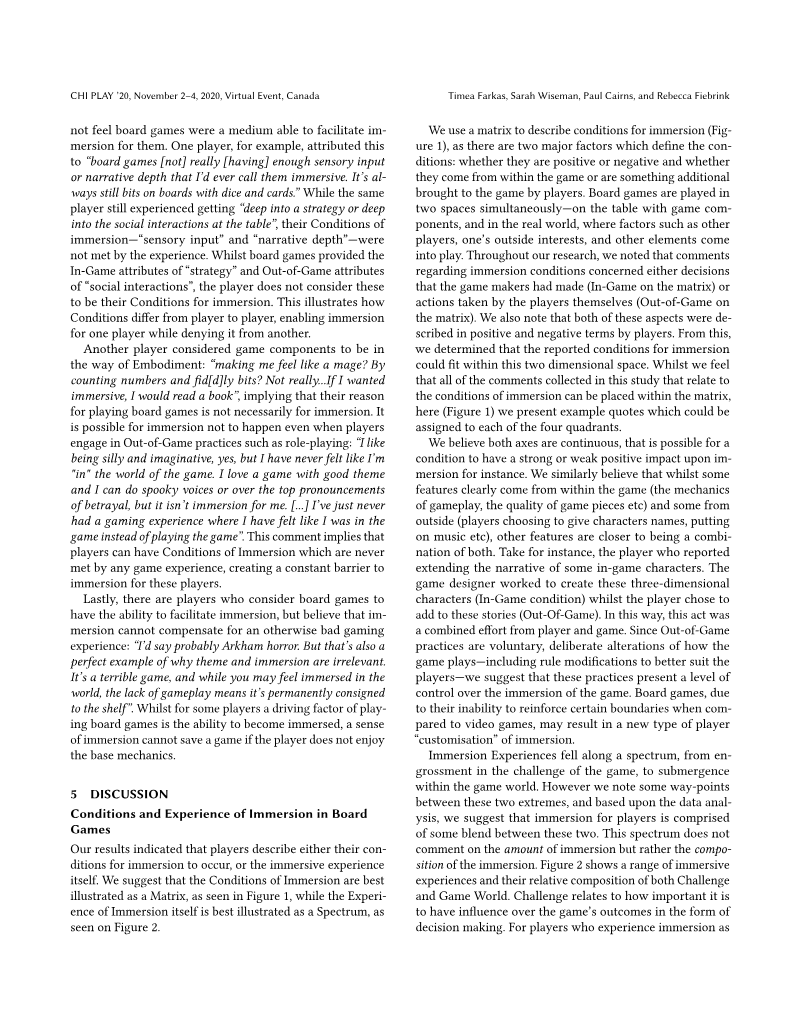
A Grounded Analysis of Player-Described Board Game Immersion
Board game immersion functions as a dynamic, collaborative phenomenon rather than a static attribute of game design or individual player psychology.
- Board game immersion is a dual-space experience, shaped by both 'In-Game' design decisions made by developers and 'Out-of-Game' factors controlled by players, such as social dynamics and physical environment.
- Players categorize their immersive experiences along a spectrum ranging from 'Engrossment' (focus on game mechanics and challenges) to 'Submergence' (feeling part of the game's fictional world), with 'Embodiment' representing a hybrid of both.
- Out-of-Game conditions, including role-playing, thematic music, and costumes, are significant drivers of immersion that can either enhance or, if ignored by a group, actively hinder the experience for others.
Do you work at University of York? Get a free report of how these documents are read and cited here.