University of Skövde
University of Skövde is a public university in Sweden that offers game development education and research. It publishes reports on Swedish game education, such as a study covering 2001 to 2016.
Documents
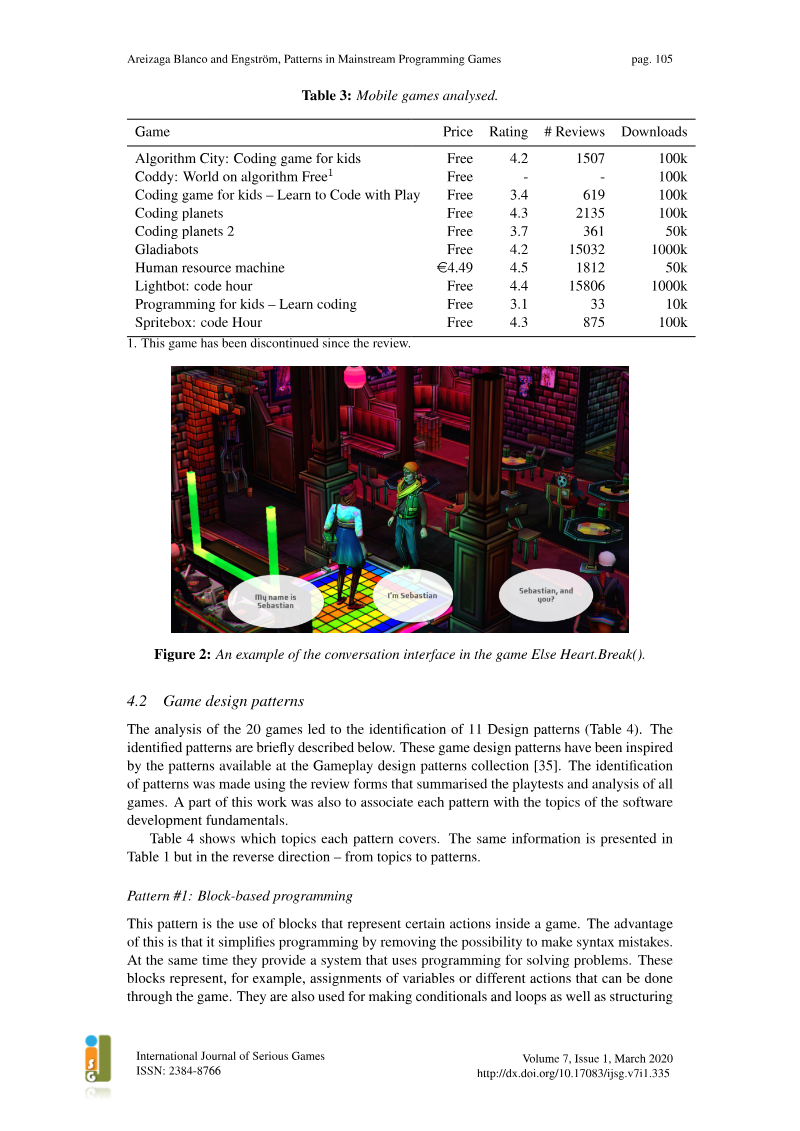
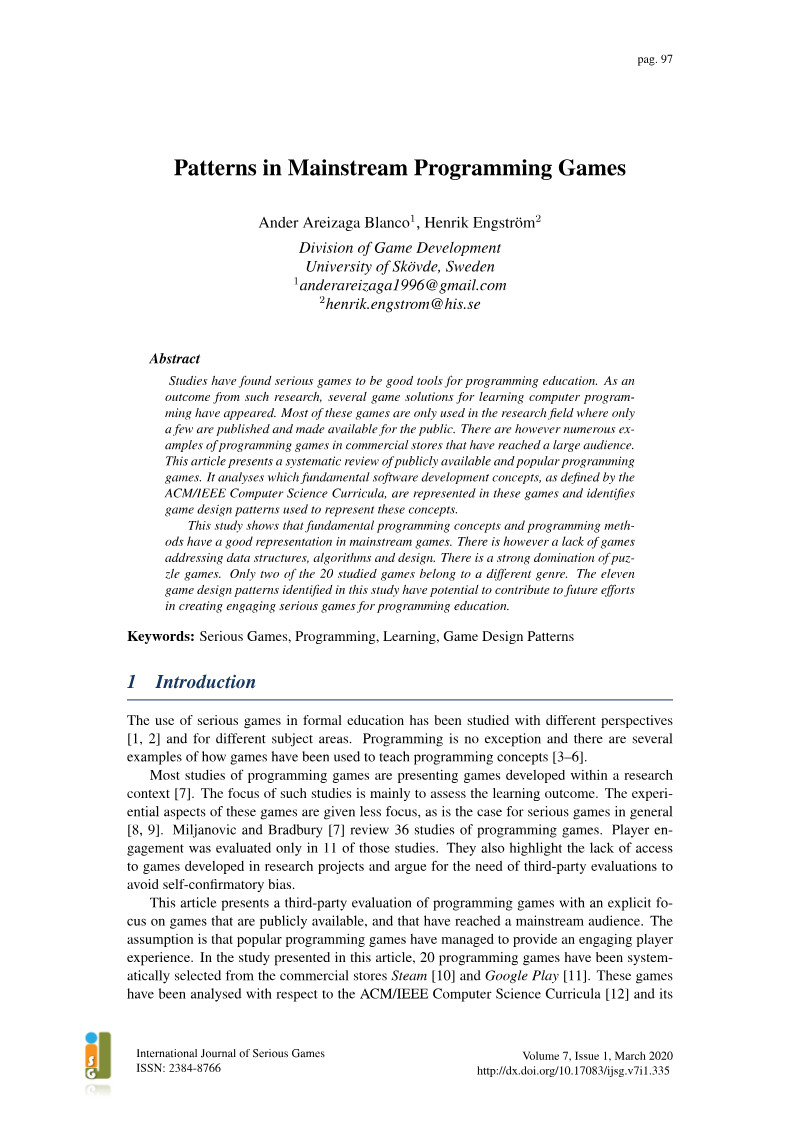
Patterns in Mainstream Programming Games
Mainstream programming games serve as a bridge between entertainment and technical education, utilizing specific design patterns to introduce software development fundamentals to a broad audience.
- Mainstream programming games rely on eleven recurring design patterns, such as block-based programming, register representation, and device hacking, to teach software development fundamentals.
- An analysis of twenty commercially successful titles on platforms like Steam and Google Play confirms that puzzle-based mechanics are the primary vehicle for teaching logic, debugging, and control structures.
- Current programming games prioritize player retention and accessibility, which leads to a significant educational gap regarding complex data structures, advanced algorithms, and software design principles.
How to Reference a Digital Game
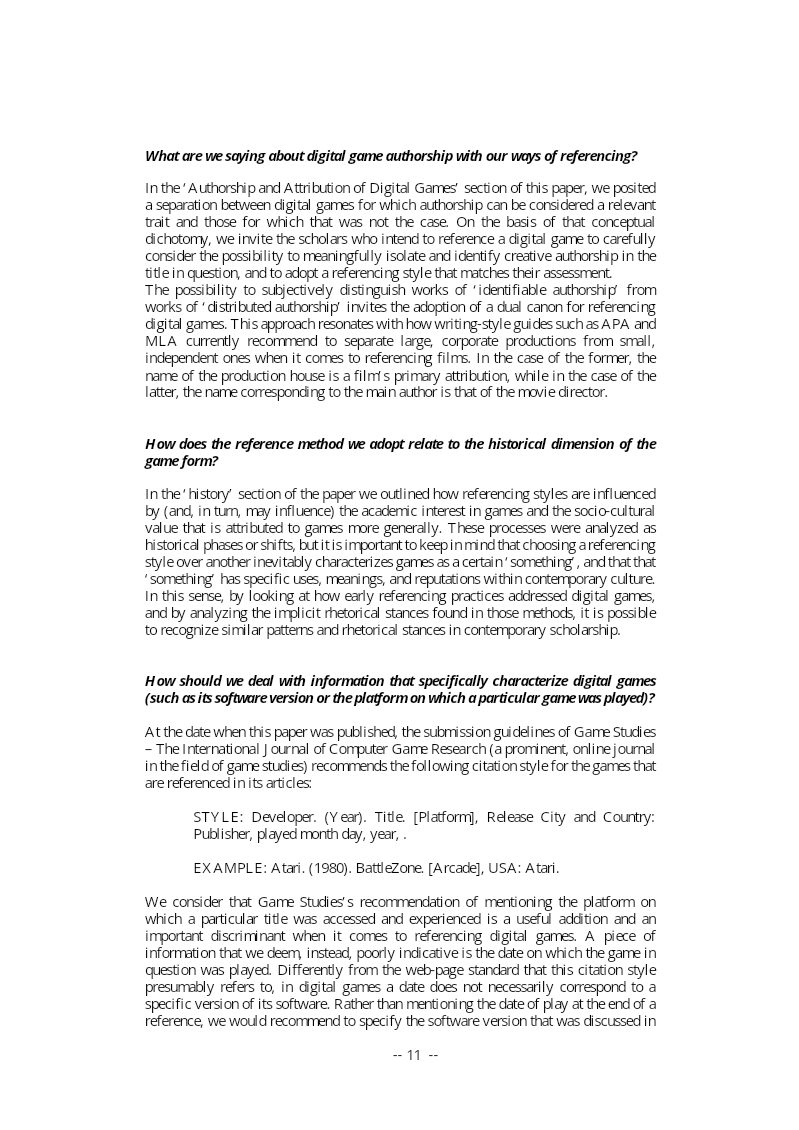
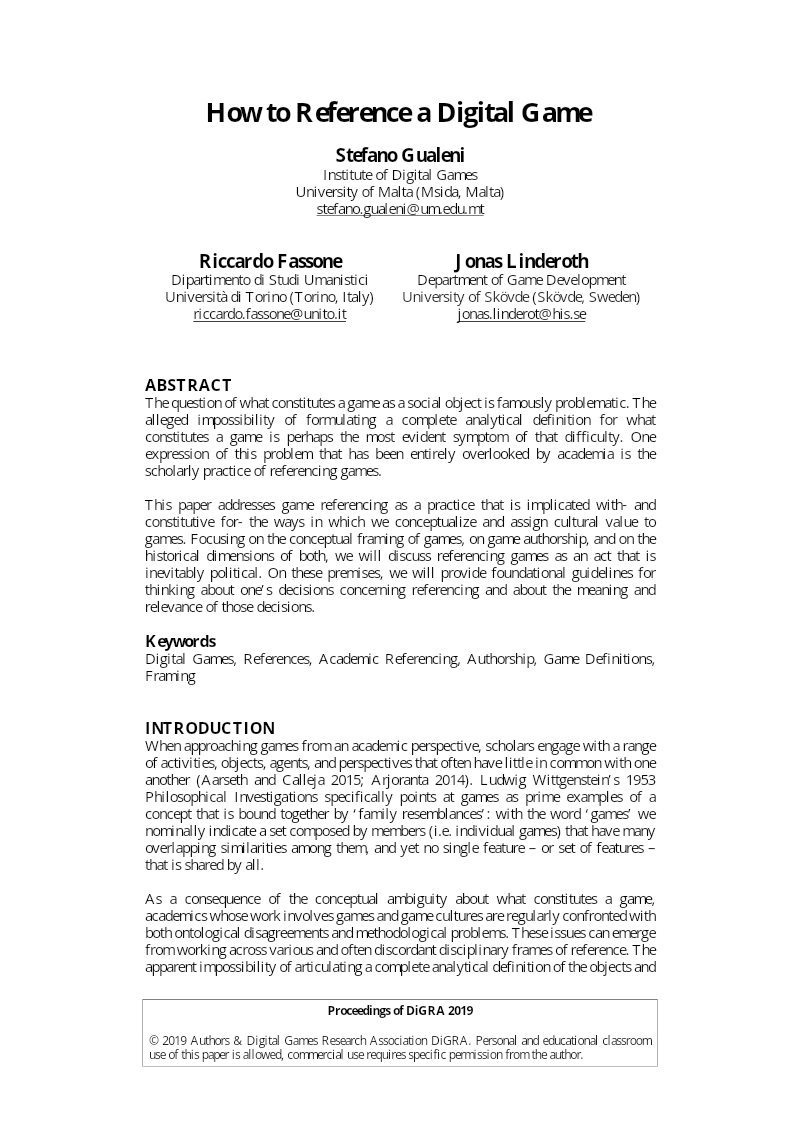
Gualeni, Fassone, and Linderoth's paper "How to Reference a Digital Game" argues that the absence of shared academic standards for citing video games is a neglected problem, one closely tied to the unsettled question of what games are.
- Citation practices for video games lack shared academic standards, and Olsson's (2013) survey of game studies journals, conferences, and books found that referencing guidelines were rarely enforced.
- The authors argue that citation decisions are political acts: they shape how games are conceptualized, valued, and regulated, so citation methods should be treated as constitutive rather than neutral.
- The authors contend that the traditional concept of authorship is increasingly ill-suited to large commercial games, where production is distributed across teams, though it remains meaningful for independent works with a distinct creative vision.
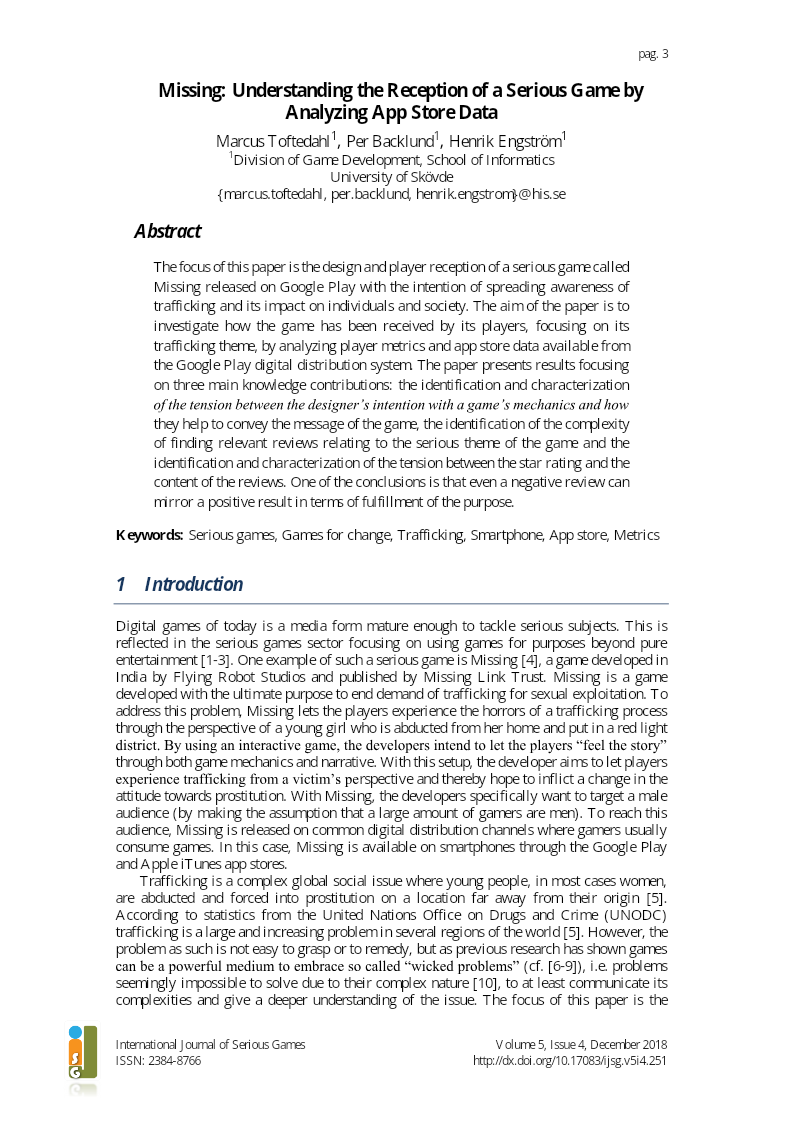
Missing: Understanding the Reception of a Serious Game by Analyzing App Store Data
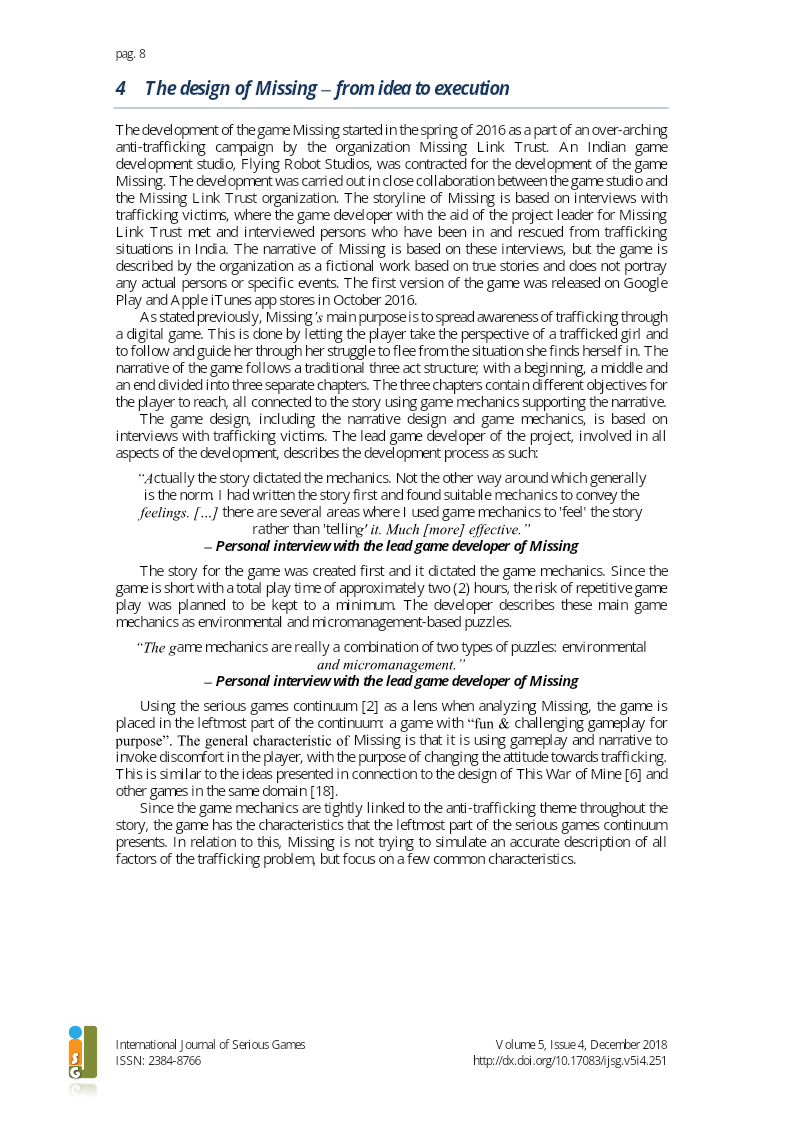
The serious game Missing serves as a case study for evaluating how narrative-driven mechanics can effectively raise awareness regarding human trafficking.
- Technical stability is a critical gatekeeper for social impact, as bugs and progression issues frequently overshadow the intended narrative message in serious games.
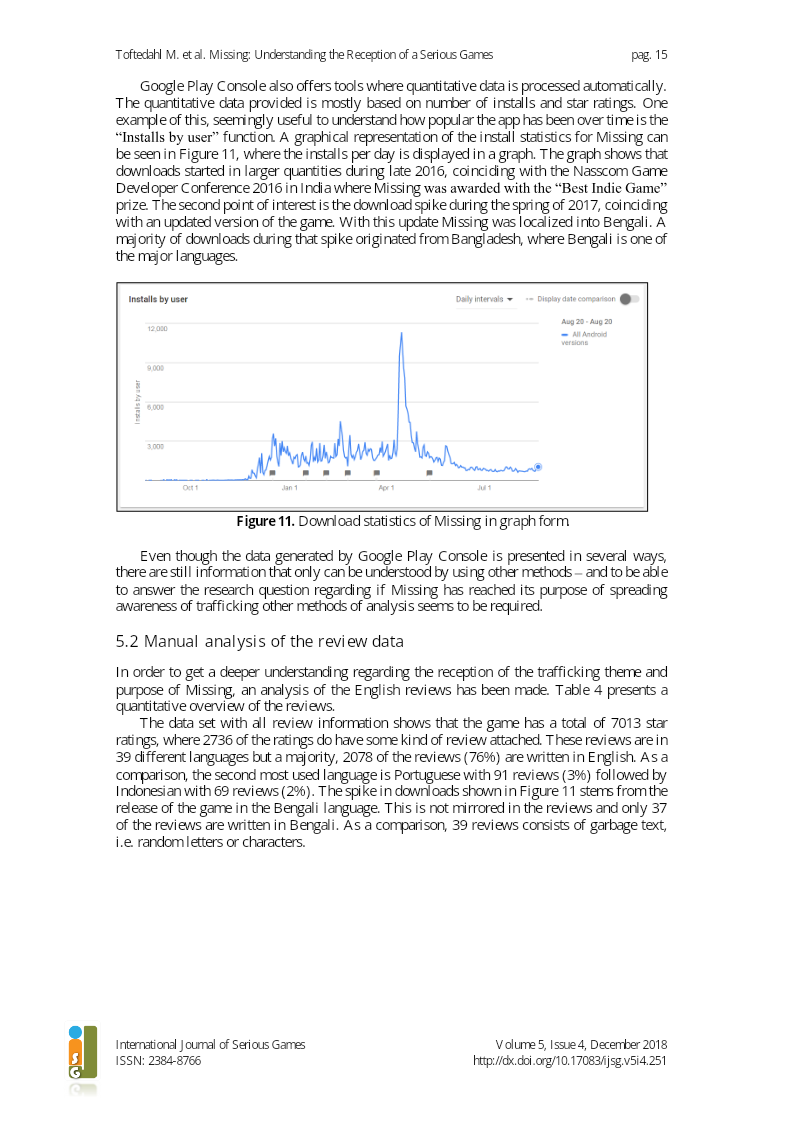
- The game 'Missing' achieved significant reach with over 460,000 downloads, demonstrating that mobile platforms are viable conduits for social advocacy.
- User demographics for 'Missing' were highly concentrated, with 63% of the total user base located in India and Bangladesh.
Swedish Game Education: 2001-2016
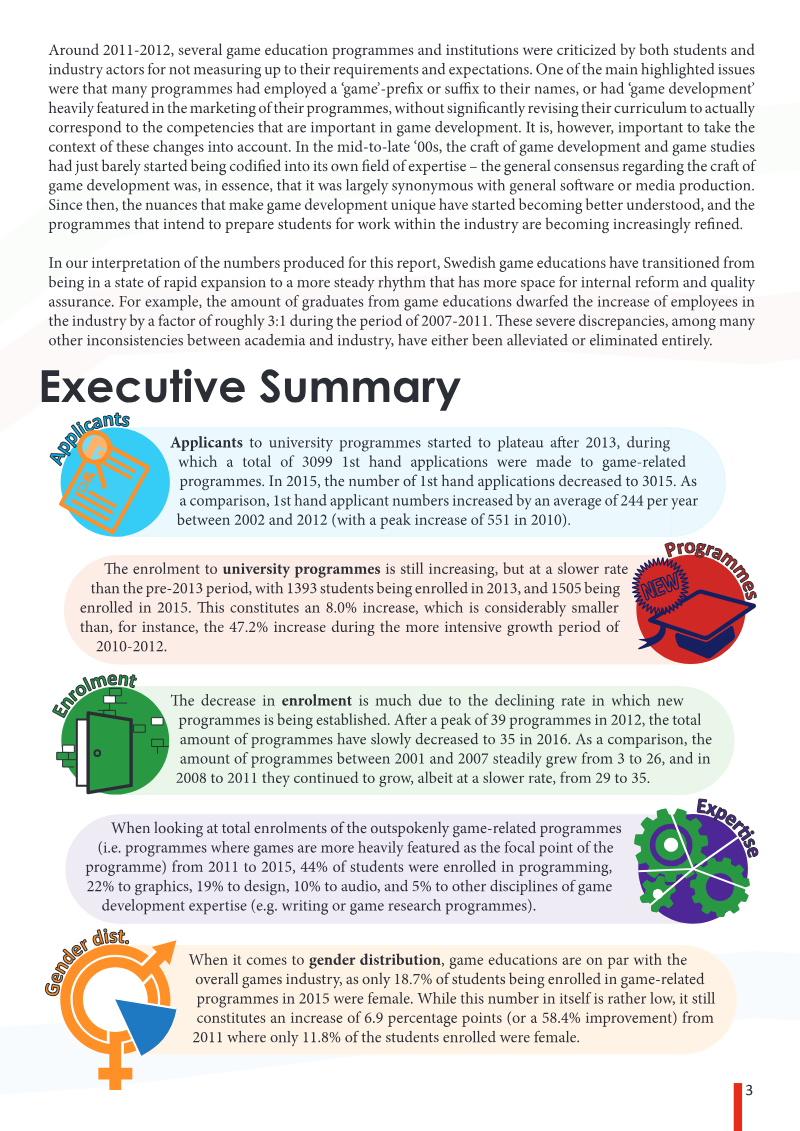
This report, "Swedish Game Education: 2001-2016," provides an overview of academic game-related education in Sweden, analyzing its evolution from rapid expansion in the 2000s to a more stable, plateaued state in the 2010s.
- Swedish game education reached a peak of 41 programs in 2012 before stabilizing at 35 programs by 2016, signaling a shift from rapid proliferation to a mature phase.
- Despite the expansion of academic and vocational training, the Swedish game industry continues to face persistent labor shortages that limit its growth potential.
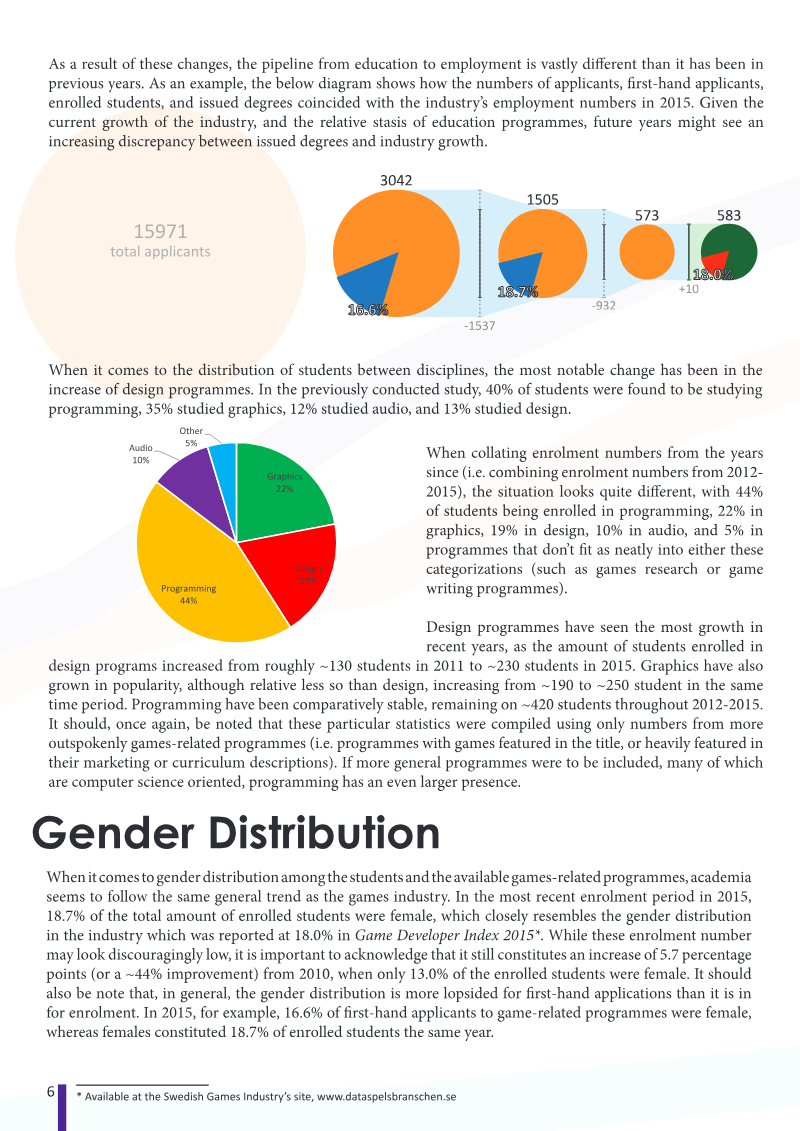
- Programming remains the dominant discipline with 44% of total enrollment, followed by graphics (22%), design (19%), audio (10%), and other fields (5%).