1 free read left. Create a free account for unlimited reading + AI research.
Create free accountWhitepaperUniversity of Malta
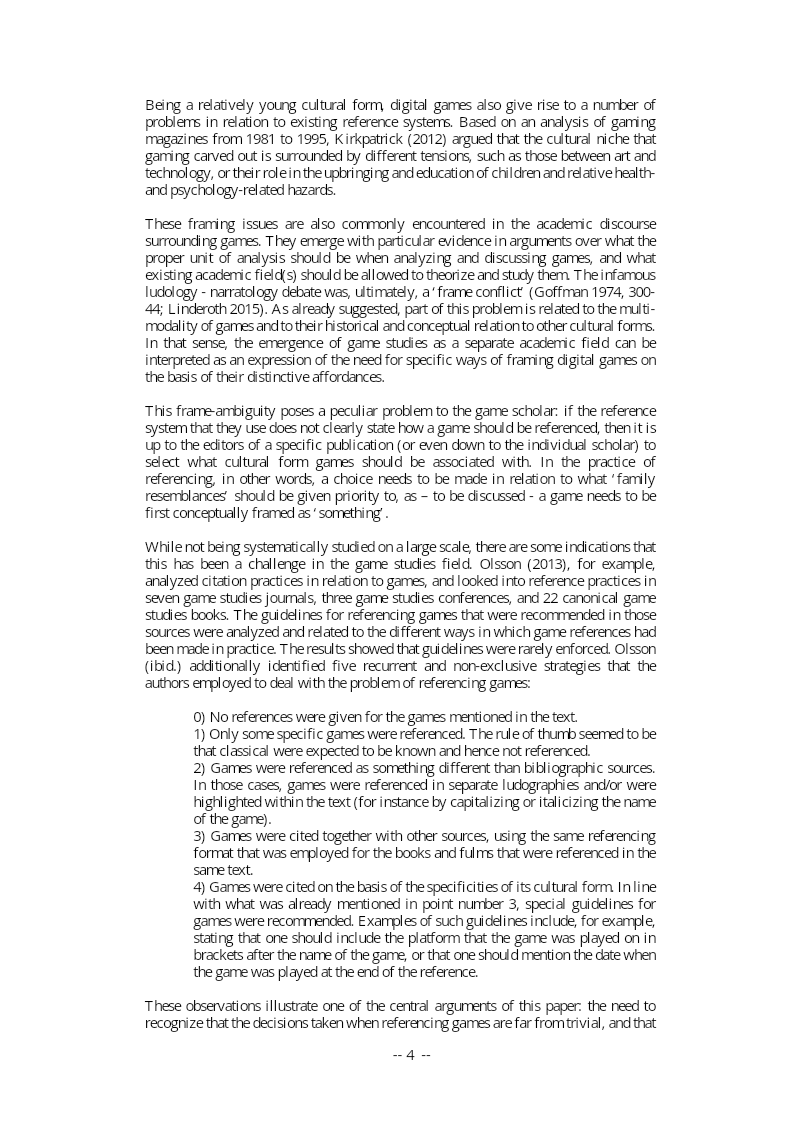
Olsson's survey of game studies journals, conferences, and books found that referencing guidelines were rarely enforced.
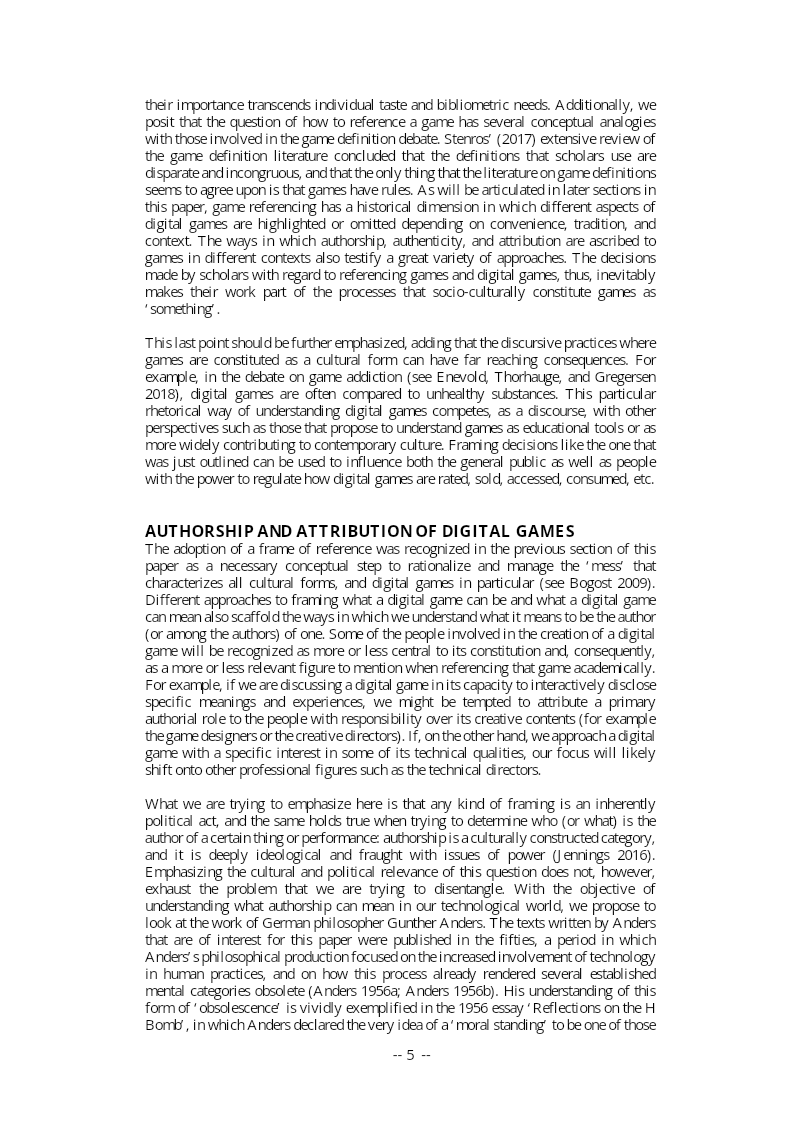
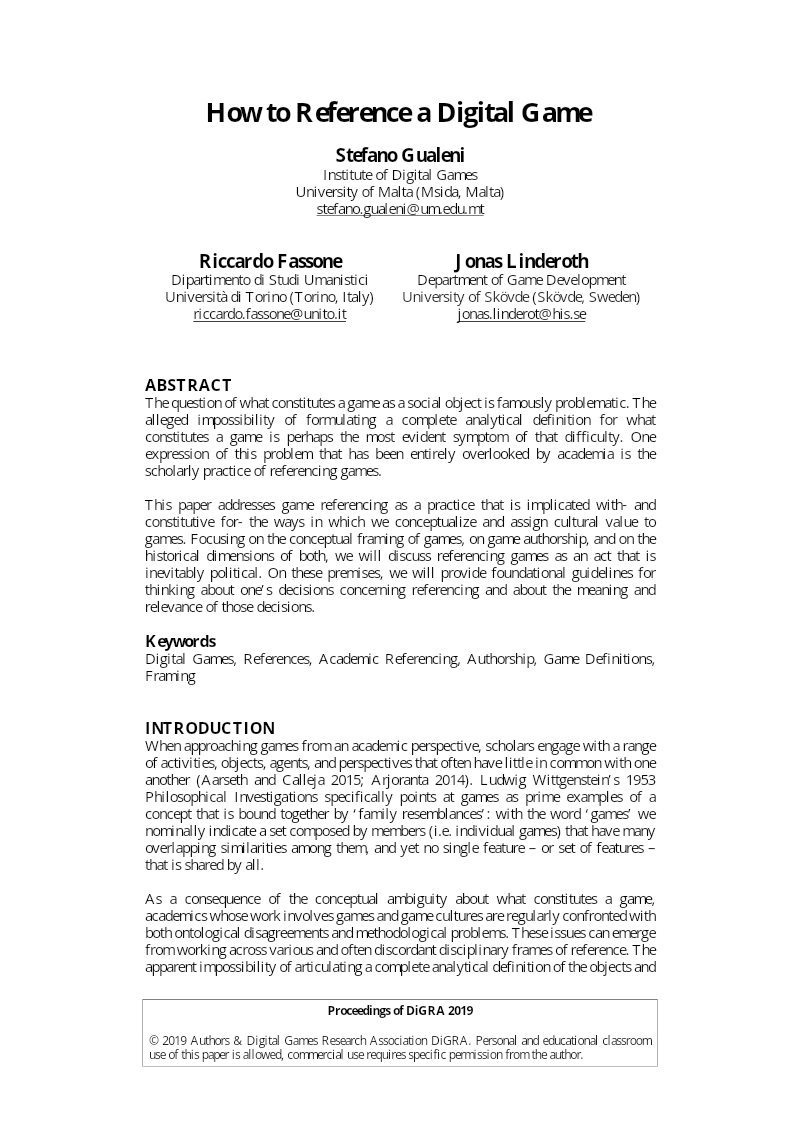
Gualeni, Fassone, and Linderoth's paper "How to Reference a Digital Game" argues that the absence of shared academic standards for citing video games is a neglected problem, one closely tied to the unsettled question of what games are. Building on Olsson's (2013) survey of game studies journals, conferences, and books, which found that referencing guidelines were rarely enforced and that scholars relied on a handful of recurring strategies ranging from omitting references to adopting game-specific formats, the authors contend that citation decisions are political acts. They shape how games are conceptualized, valued, and regulated, and the paper examines these choices through conceptual framing, authorship and attribution, and the historical development of referencing practices.
On authorship, the authors argue that the category is increasingly ill-suited to large commercial games, where production is so distributed across teams that attribution becomes ambiguous, while it remains meaningful for independent works with a distinct creative vision. Their historical account traces how early scholars such as Duke (1974) and Murray (1997) credited designers in order to lend games legitimacy, whereas many texts from the 1980s and early 1990s omitted credits altogether. The authors conclude that such choices carry ideological weight, implying conceptual analogies and influencing how the cultural standing of games is perceived, and they urge scholars to treat citation methods as constitutive rather than neutral.
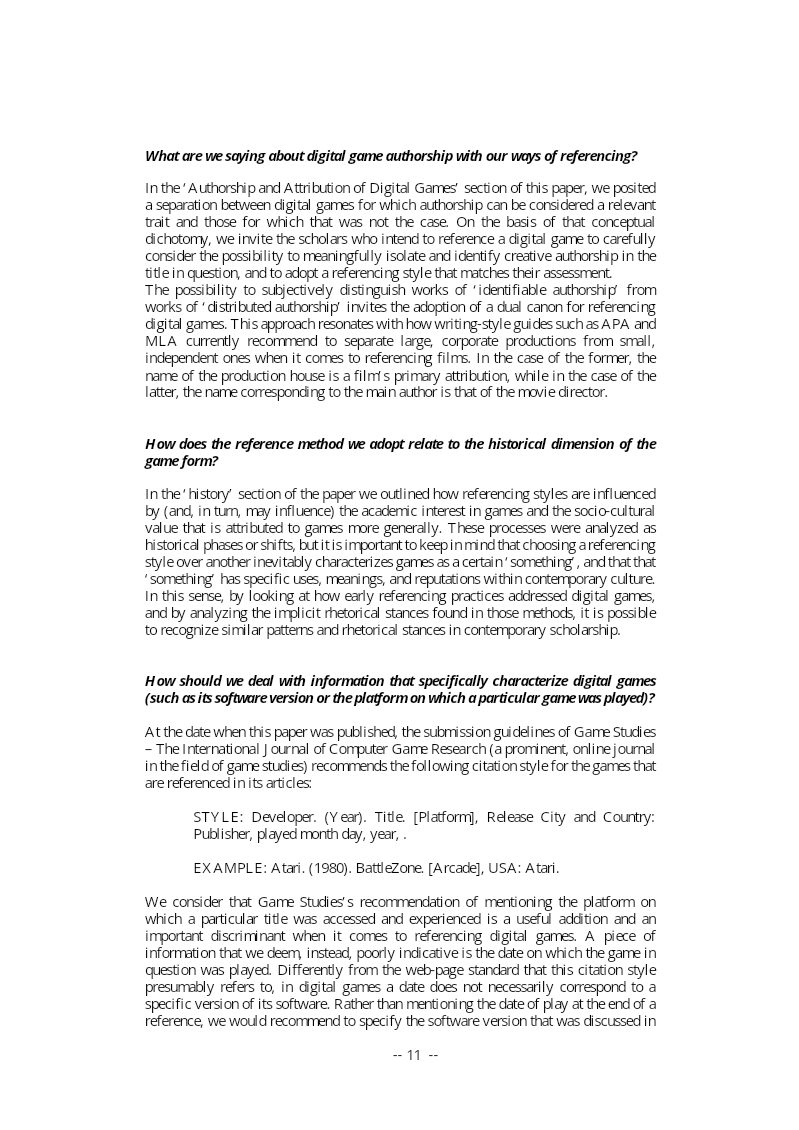
The paper's practical contribution is a proposed dual referencing canon in which citation style reflects whether a game has identifiable or distributed authorship. For distributed-authorship titles, the authors recommend "director" in place of "author." They further argue that platform should be included in citations, since software version offers a more reliable identifier, while publication date and publisher location are often difficult to establish and of limited relevance in a globalized industry. The recommended formats are presented as adaptable to publication context and rhetorical purpose. The closing reference list, which draws on game studies, game history, and digital preservation literature, supports these arguments without adding independent findings.
University of Malta · 2026
DiGRA · 2025
International Journal of Serious Games · 2020
University of Malta · 2019
University of Skövde · 2018

GameHub Scandinavia · 2016
International Journal of Role-Playing · 2026






























Comments