NeoGames
Organization3 documents
3 reports, presentations and talks by NeoGames in the Game Industry Library, the newest “Finnish Game Industry Report: 2022” (2024).
Documents


Report138 pages
Finnish Game Industry Report: 2022
The Finnish game industry maintains a position of significant global influence, characterized by sustained financial resilience and a strategic pivot toward long-term operational stability.
- The Finnish game industry generated over €3 billion in annual turnover during the 2022 fiscal year.
- The sector is supported by a workforce of approximately 4,100 professionals distributed across 232 active studios.
- Finnish developers are shifting from a mobile-first focus toward diversifying into PC, console, VR, AR, and cross-platform social gaming.
NeoGamesJan 2024
Report1 page
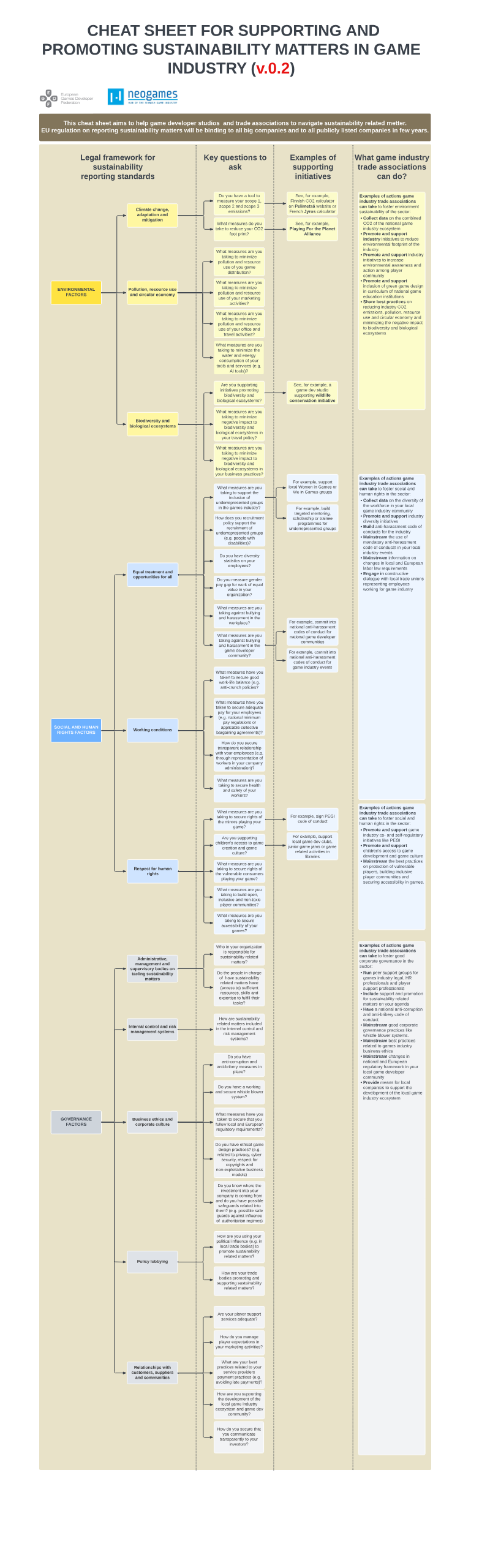
Cheat Sheet for Supporting and Promoting Sustainability in the Game Industry
The primary objective of this guide is to assist game development studios and trade associations in navigating the evolving landscape of corporate sustainability.
- Studios must prepare for mandatory sustainability reporting as EU regulations increasingly require large and publicly listed companies to adhere to strict environmental, social, and governance (ESG) criteria.
- Environmental compliance requires studios to track scope 1, 2, and 3 emissions using specialized calculators while addressing the high energy demands of modern digital tools like artificial intelligence.
- Social responsibility mandates include tracking workforce diversity statistics, implementing anti-harassment codes of conduct, and establishing formal policies to eliminate crunch and ensure fair compensation.
European Games Developer FederationNov 2023
Report14 pages
Suomen Pelitoimialan Strategia 2010-2015: Visio 2020
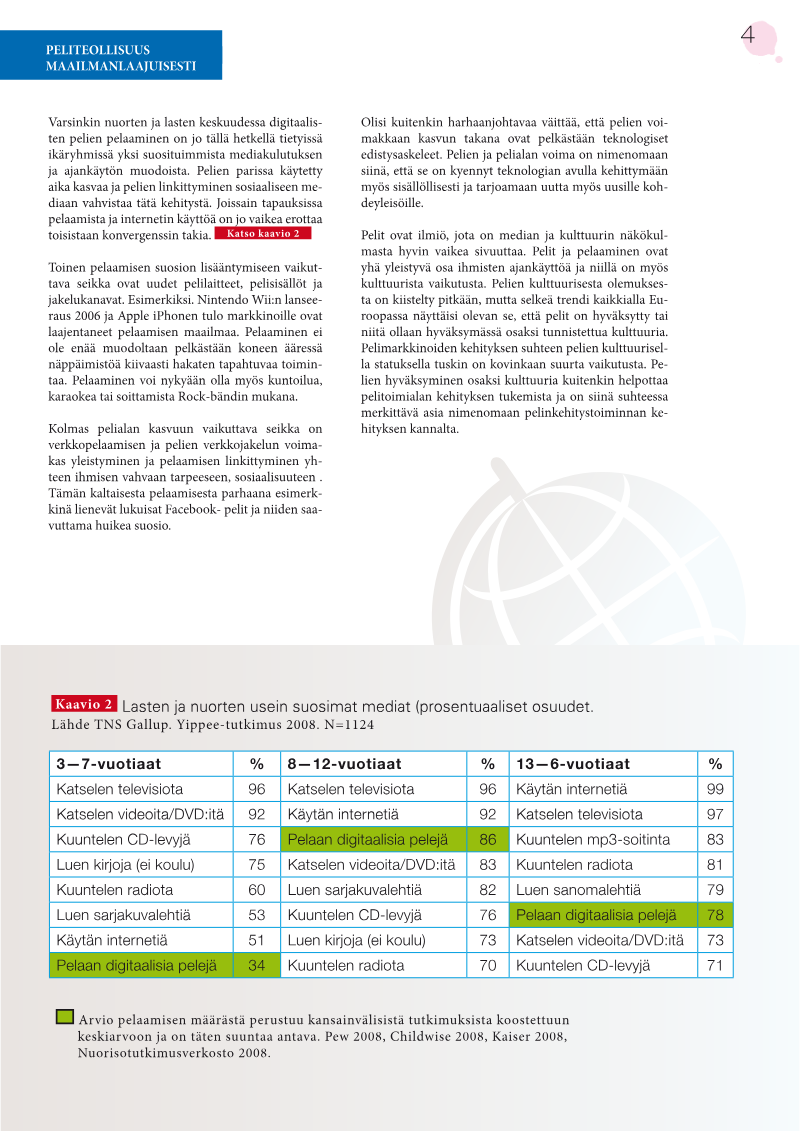
The Finnish gaming industry represents a high-growth cultural export sector that consistently outperformed global market benchmarks between 2004 and 2008.
- The Finnish gaming industry targets a 2020 vision of 6,600 employees and €540 million in annual revenue, with €380 million derived from exports.
- The sector is shifting away from traditional, publisher-led models toward digital distribution and online services to secure intellectual property rights and independence.
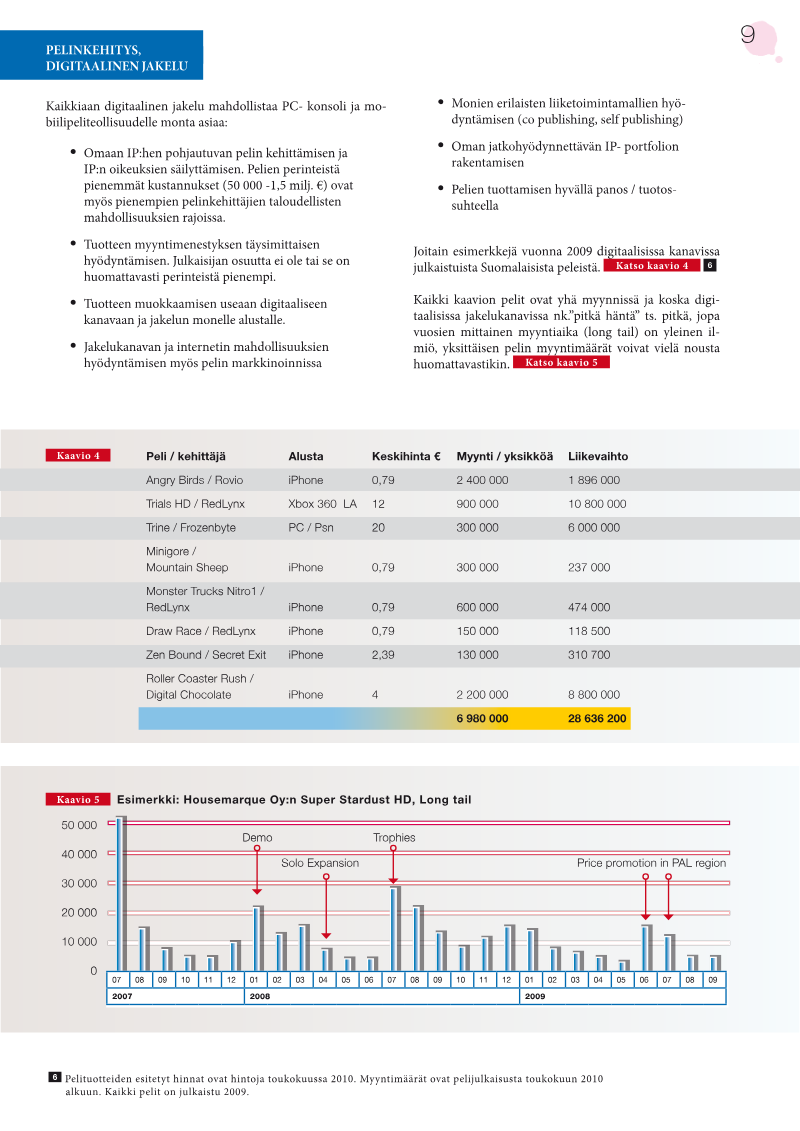
- Digital distribution is identified as the primary catalyst for growth, enabling lower production costs and direct engagement with global consumers.
Suomen Pelinkehittäjät ryMay 2013