Interactive Audio Special Interest Group
The Interactive Audio Special Interest Group (IASIG) is an organization focused on audio for interactive media such as games. It publishes material on audio topics, including its Audio Education Working Group (EDU-WG).
Documents
Game Audio Curriculum Guideline
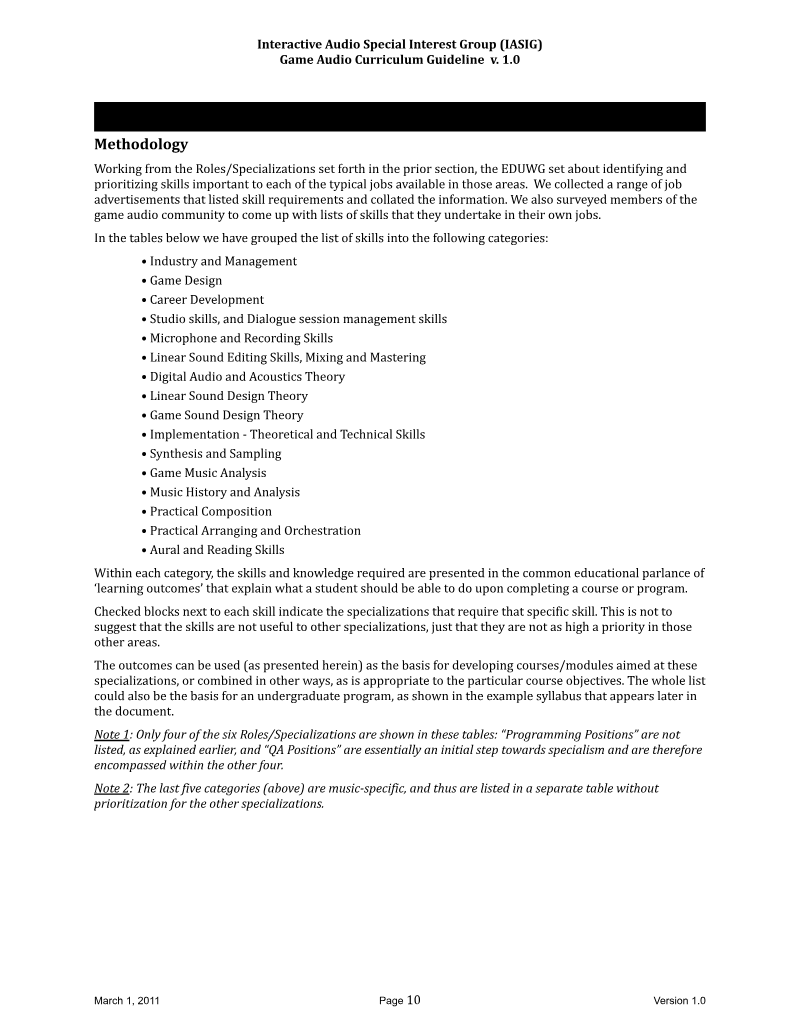
The game audio industry faces a persistent talent gap caused by the unique intersection of traditional linear media production and complex, non-linear technical implementation.
- The game audio industry suffers from a persistent talent gap caused by the difficulty of bridging traditional linear media production with complex, non-linear technical implementation.
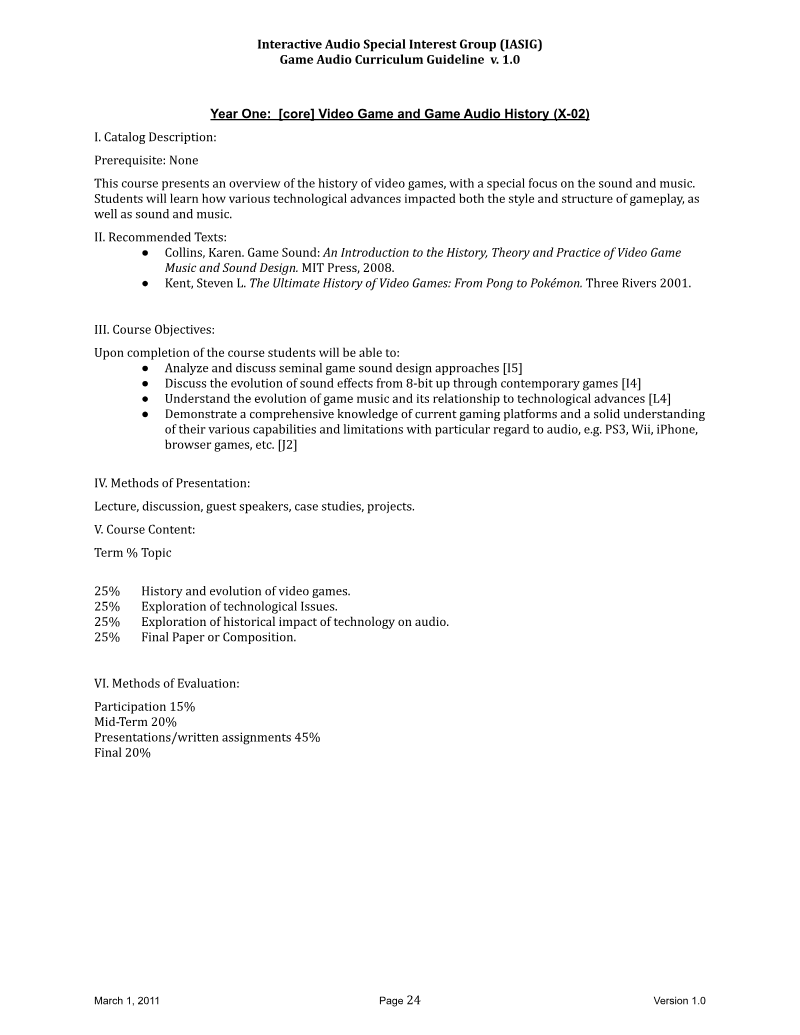
- A standardized 120-credit, four-year undergraduate curriculum framework has been proposed to provide a consistent roadmap for higher education institutions in the United States.
- The curriculum prioritizes a constructivist pedagogical approach that emphasizes core principles and adaptability over software-specific training to ensure graduates can navigate evolving technologies.
Interactive XMF: File Format Specification
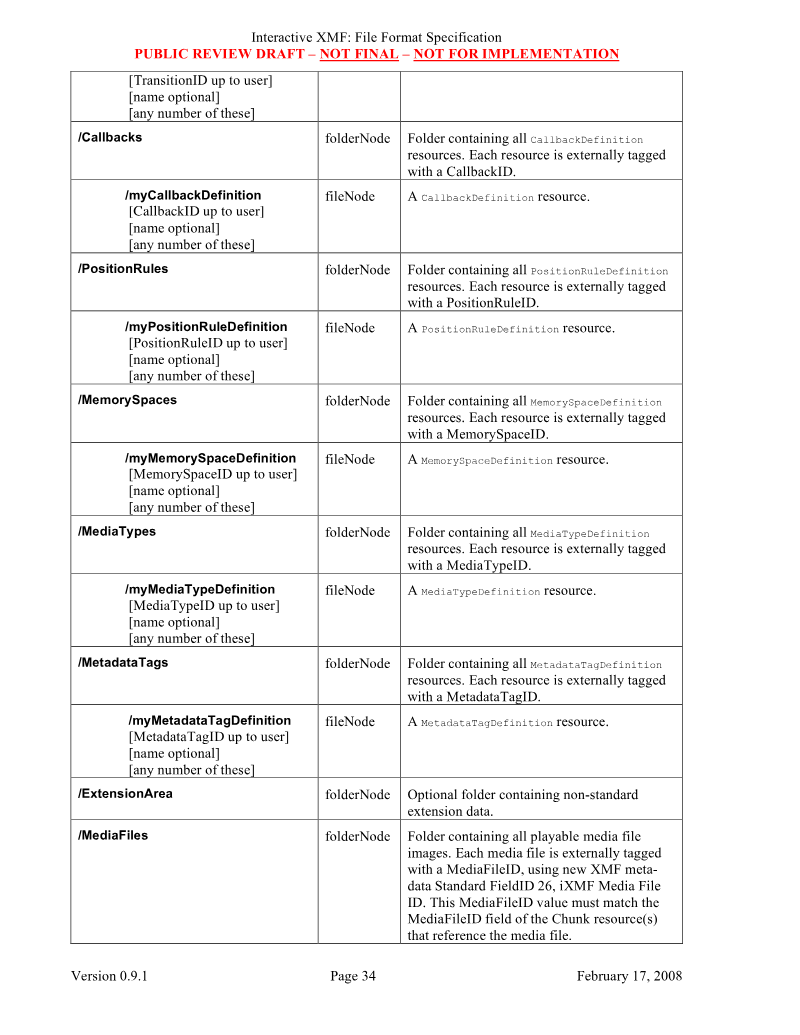
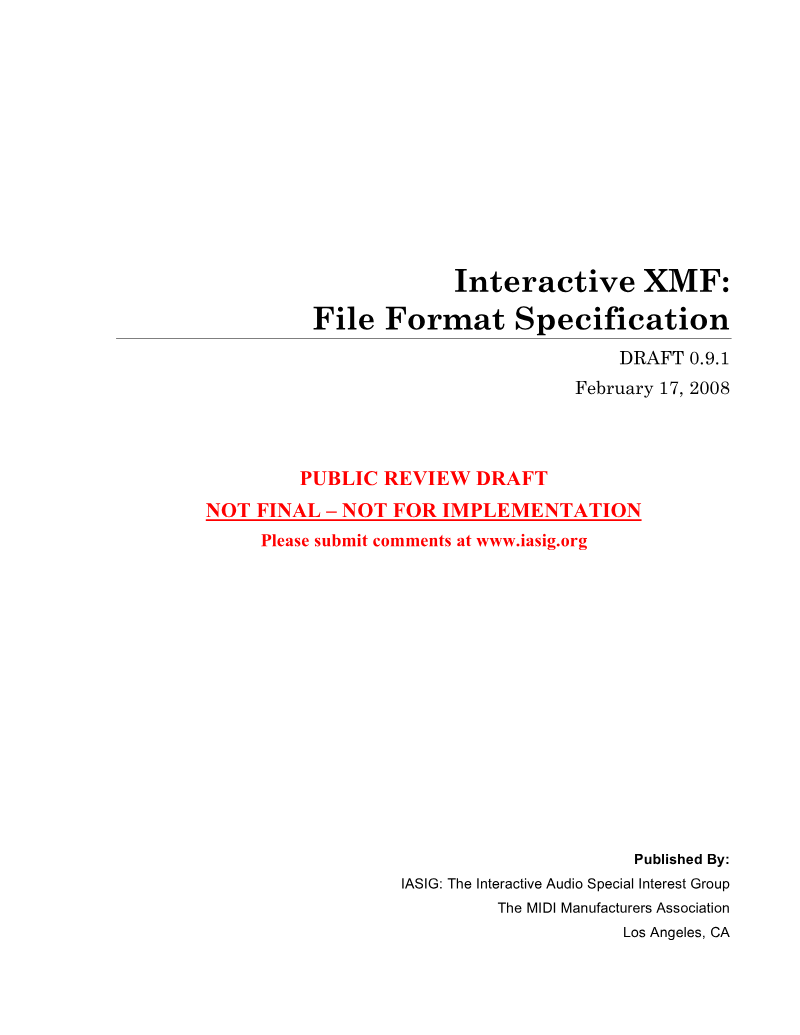
Interactive XMF (iXMF) serves as an open, interoperable standard for adaptive audio in gaming and interactive media.
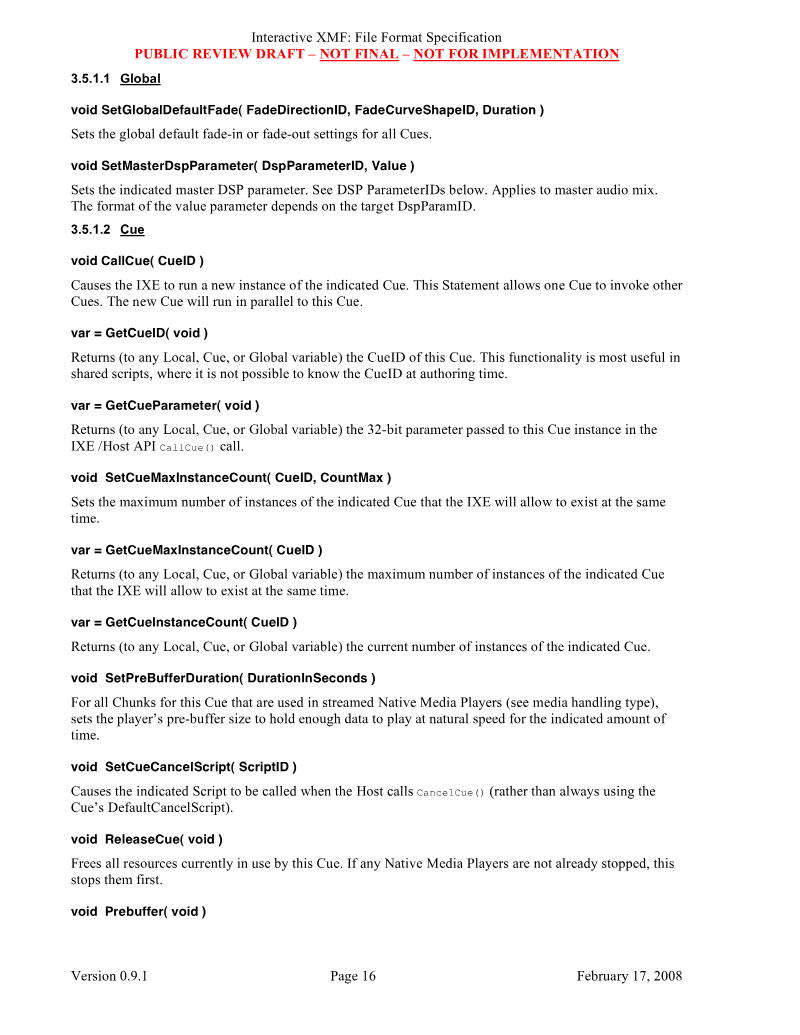
- Interactive XMF (iXMF) is an open, interoperable file format that bundles MIDI, digital audio, and scripting into a unified structure for dynamic, event-driven game audio.
- The iXMF Engine utilizes a stack-based expression processor to manipulate 32-bit signed integer variables across global, cue-specific, and instance-specific scopes.
- Developers can implement complex, non-linear audio through a built-in scripting language that supports conditional logic, DSP parameter adjustments, and memory management.
Mobile Audio Technology: Report and Recommendations
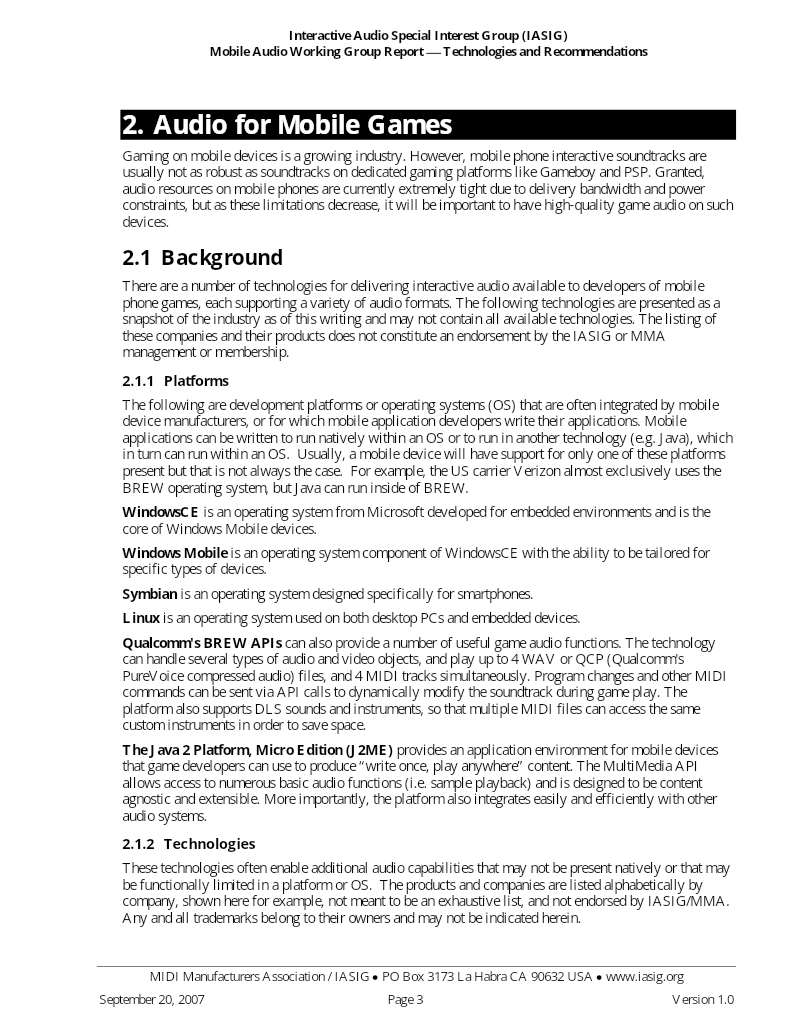
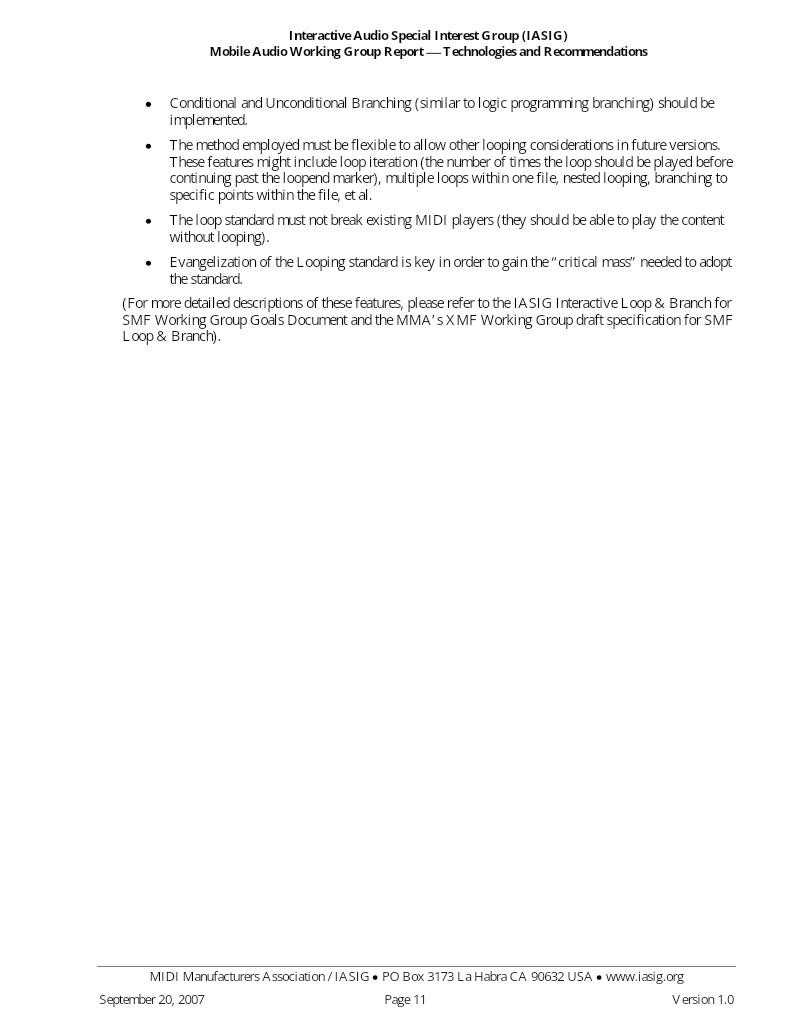
The mobile audio industry faces significant operational challenges due to extreme market fragmentation, characterized by the existence of over 50 file formats and 400 distinct device implementations.
- The mobile audio industry is hindered by extreme fragmentation, involving over 50 file formats and 400 distinct device implementations that inflate development and quality assurance costs.
- To achieve cross-platform interoperability, the industry must transition to non-proprietary standards, specifically adopting SP-MIDI, General MIDI, and the XMF format.
- Standardizing APIs such as JSR-234 and OpenSL ES is essential to provide developers with consistent access to advanced features like Digital Signal Processing and 3D audio.
3Dxp: DirectSound 3.0 Extension API
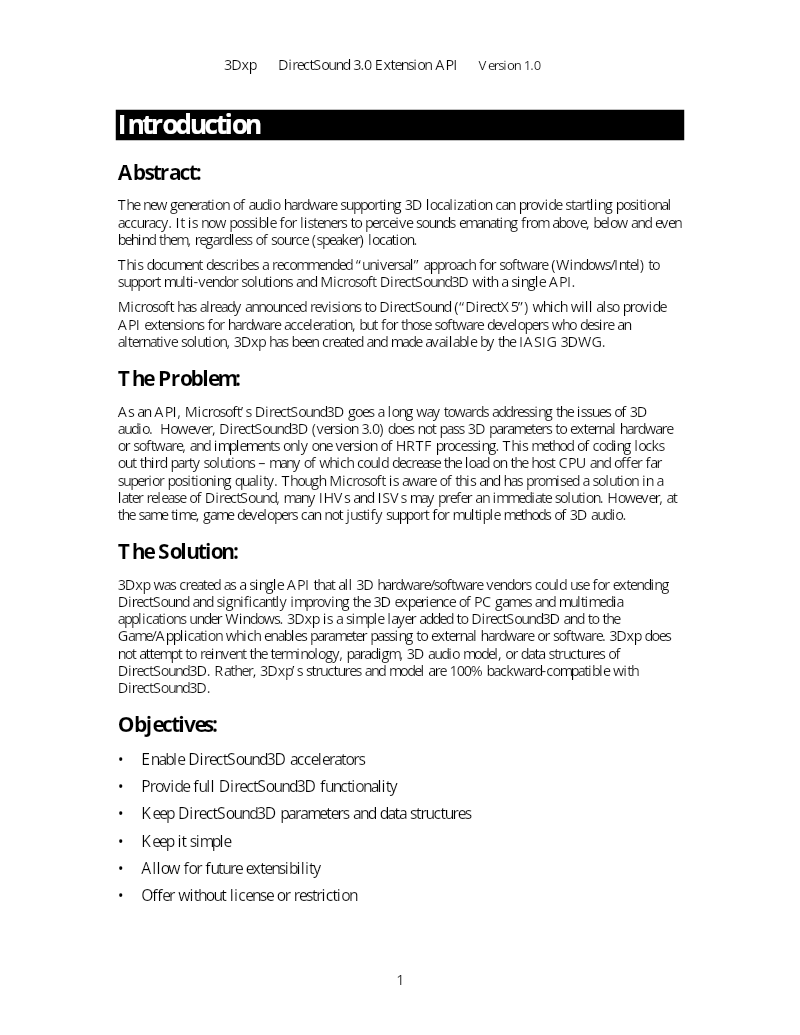
The 3Dxp API, developed by the Interactive Audio Special Interest Group’s 3D Working Group in 1997, serves as a standardized extension to Microsoft’s DirectSound 3.0.
- The 3Dxp API was introduced in 1997 as a standardized extension to Microsoft’s DirectSound 3.0 to enable hardware-accelerated 3D audio positioning on Windows PCs.
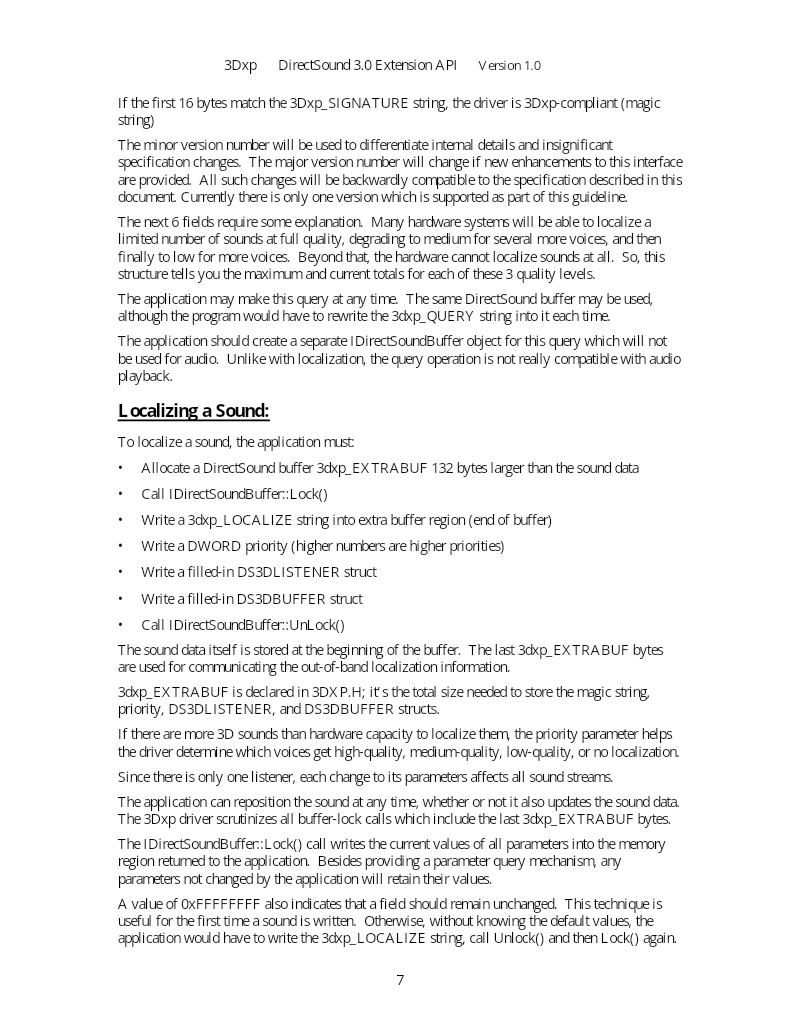
- The API functions by appending a 132-byte data structure to standard DirectSound buffers, allowing developers to pass 3D parameters like position, velocity, and cone orientation to external renderers.
- A reference wrapper enables automatic detection of 3Dxp-compliant drivers, proprietary solutions such as Aureal’s A3D, or a fallback to standard DirectSound3D.
IASIG Audio Education Working Group (EDU-WG)
The Interactive Audio Special Interest Group (IASIG) has established an Education Working Group (EDU-WG) in June 2026 to foster global collaboration between academic institutions, educators, students, and industry professionals focused on game audio and interactive sound.
- The Interactive Audio Special Interest Group (IASIG) launched the Education Working Group (EDU-WG) in June 2026 to bridge the gap between academic institutions and the interactive audio industry.
- The initiative aims to standardize game audio education by aligning academic curricula with current industry requirements and professional best practices.
- Students participating in the program gain direct access to industry mentorship, career development pathways, and platforms for leadership and community engagement.