The newsletter examines the Meta Quest VR market in 2026, arguing that the platform remains vibrant but has shifted from early‑stage experimentation to a mature ecosystem dominated by free‑to‑play (F2P) titles and social‑centric experiences. Key data show that seven of the top ten grossing Quest games are F2P, while the remaining titles include long‑standing staples such as Beat Saber, Blade & Sorcery, and Bonelab. Revenue rankings are driven by high‑volume downloads and in‑app purchases, with cosmetics and functional items forming the core monetization mix. Hours‑played charts reveal a dominance of co‑op world spaces—VRChat, Rec Room, and Job Simulator—alongside a single core FPS (Ghosts of Tabor) and several fitness or subscription apps.
The analysis highlights three audience segments identified by Meta’s Chris Pruett: core VR enthusiasts, teens and young adults attracted to social loops, and casual adults preferring natural input. Social media acquisition remains critical; top titles actively promote on Instagram, YouTube, and TikTok, generating short‑form clips that fuel community growth. Discord communities are also pivotal; Scary Baboon’s Discord exceeds 200,000 members and its creator network drives content virality.
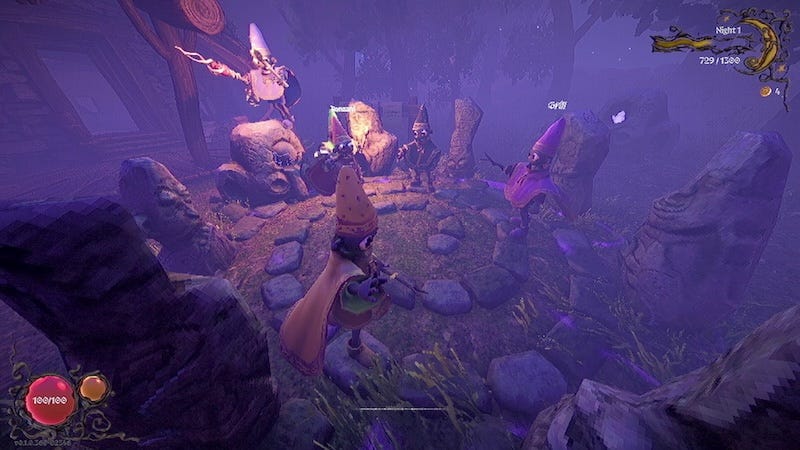
The newsletter cites Scary Baboon as a case study, noting its rapid scaling to over one million monthly active users through arm locomotion mechanics, light horror themes, and a shift from PvP to cooperative PvE. Monetization centers on cosmetics, functional items, and upgrade systems, while creator partnerships and short‑form video content sustain engagement. Overall, the 2026 Quest landscape is characterized by high F2P penetration, social‑first discovery channels, and community‑driven growth models.
The article examines April’s Steam releases to uncover titles that have maintained or grown player interest weeks after launch, challenging the focus on immediate mega‑sellers. Using GameDiscoverCo Pro data, the author filters April’s new games by current concurrent user counts (CCU), revealing four “hidden semi‑hits” priced between $5 and $15: Librarian: Tidy Up the Arcane Library (400 k units), Oaken Tower (92 k units), Demon Lord: Just a Block (100 k units), and Pratfall (210 k units). While unit totals suggest modest gross revenue of $1–$2 m, the analysis notes that indie titles often see 3‑5× growth over time.
The piece highlights each game’s unique appeal: Librarian leverages a tidy‑simulation hook and strong short‑form video traction; Oaken Tower offers an asynchronous autobattler loop that attracts solo developers and depth‑seeking players; Demon Lord enjoys significant Chinese market traction with a retro roguelite formula; and Pratfall capitalizes on the popular digging mechanic, blending cooperative play with a quirky “reverse Peak” premise. The author contextualizes these findings within broader industry trends, noting concurrent Steam debuts such as Forza Horizon 6 and Subnautica 2, and citing market data from Circana on hardware spending and content revenue. The article concludes by inviting readers to compare these hidden winners against the week’s top new releases, underscoring the value of long‑tail performance for indie developers.
The article explains how Poppy Playtime, a horror‑puzzle title released on Steam in 2021 as a free base game with subsequent paid “chapters,” has achieved significant commercial success. It highlights that the franchise’s viral character, Huggy Wuggy, has become a cultural icon through YouTube and other media, driving strong download numbers for the free base game—over 2.7 million Steam downloads and 360,000 on Epic since February 2026. The paid DLC chapters have been released annually, with Chapter 5 priced at $20 and selling 408,000 copies on Steam plus 19,000 on Epic. The cumulative gross from the four DLCs exceeds $30 million on Steam alone, and when console and mobile sales are added—estimated at 500,000 units for Chapter 4—the franchise approaches a $100 million revenue threshold, excluding merchandise.
The development model involves parallelized cycles: while one chapter is in deep production, the next enters early planning or prototyping to maintain an annual release cadence. Pricing has risen in line with increased length, complexity, and production value across chapters. On consoles and mobile, the DLCs are distributed as standalone apps to conserve device space, yet content remains consistent with the PC experience.
The article notes that the player base skews young and casual, which may explain why the title is less visible in traditional sales charts. It also discusses design priorities—balancing puzzles and chase sequences—to keep returning players engaged, suggesting that the free‑game plus DLC structure can be a viable model for other narrative horror franchises.
Far Far West, a $20 co‑op roguelite shooter released on Steam on April 28 2026, achieved over 500 000 sales within two weeks of launch and is projected to exceed 750 000 units, a rare milestone in the current market. Steam data shows the title began with approximately 650 000 wishlists, driven by two public playtests that reached 2 400 and 9 400 concurrent users, and a February 2026 Next Fest demo that placed the game fifth on Valve’s unique‑player chart among 3 500 titles. The publisher, Fireshine, and developer Evil Raptor employed a tiered playtest strategy—VIP community access, newsletter code drops, and full Discord key claims—that generated early feedback, polished the build, and built a dedicated community. This approach also amplified organic streamer and short‑form video support, boosting visibility through Steam’s Discovery Queue and “More Like This” recommendations.
Player reception highlights the game’s fun, cooperative extraction mechanics, open‑world RNG maps, and a whimsical Wild West robot theme. Sentiment analysis shows overwhelmingly positive reviews focused on gameplay feel, animations, and visuals, despite minimal environmental detail. Geographic data indicates a U.S.-centric audience (28 %) with significant international penetration: China 8 %, and the UK, Canada, Germany, Russia, and Brazil each between 3–5 %. Affinity analysis reveals Far Far West players are more than eight times as likely to have played Deep Rock Galactic, Risk of Rain 2, and Helldivers 2 compared to the average Steam user. The case demonstrates how a small team can deliver an expansive, well‑received title by leveraging community‑driven development and targeted pre‑launch engagement.
April 2026’s top new PC and console releases are highlighted through a data‑driven lens, focusing on launch performance across Steam, PlayStation, Xbox, and Switch platforms. The analysis identifies Windrose as the most successful new Steam title, selling approximately 1.65 million units from its April 14 launch and generating nearly $40 million in gross revenue within days. Pragmata follows closely, with 1 million PC sales and an additional 600k console units, while Vampire Crawlers reaches 900k copies in ten days at a lower price point. Late‑month entries such as Far Far West and Heroes of Might & Magic: Olden Era also demonstrate strong post‑launch momentum, with 750k and 650k units sold respectively.
The report notes that only one of the top ten Steam titles is based on an existing IP, underscoring a trend toward original IP success. Gross revenue leaders include Counter‑Strike 2 ($150 m), PUBG ($62 m), and Apex Legends ($44 m). On consoles, Pragmata dominates PlayStation sales with over 400k units, while Starfield adds 175k PS5 players. Xbox Game Pass sees 100–200k downloads for new titles, and Nintendo Switch eShop sales are led by Tomodachi Life: Living the Dream with 300k units.
Methodologically, data derive from GameDiscoverCo’s Pro service, incorporating Steam wishlists, concurrent user counts, and off‑Steam key estimates. The analysis spans global markets with a focus on U.S., Europe, and Asia, providing actionable insights for publishers on launch timing, pricing, and platform strategy.
The article projects how PC and console gaming will evolve over the next five years, drawing on device‑penetration data from Asymco and industry commentary. It argues that while the overall addressable device market will shrink for consoles (from ~10 % in 2010 to ~3 % by 2030) and for PCs (from >70 % to ~12 %), the total market remains sizable, with Google and Apple dominating distribution. The piece then outlines seven PC‑centric trends: catalog revenue remains critical, high‑hook low‑polish titles outperform polish‑heavy releases, discount pressure erodes new‑title margins, veteran developers face high cost bases, compact AAA projects can still succeed, indie “lottery” games thrive with small teams, and the sheer volume of titles dilutes visibility. The author rates the PC market a B‑, noting it is chaotic but still profitable for well‑positioned titles.
For consoles, seven trends highlight a reliance on flagship franchises (e.g., Resident Evil), strong performance for shooters, sports and ARPGs on PlayStation, limited third‑party success on Switch 2 due to saturated libraries, a still‑present but shrinking Xbox user base, and the challenge of breaking through discount‑heavy storefronts. Console sales are projected to remain below 50 % of PC totals for most titles, leading the author to give consoles a C‑ rating. The article concludes with brief coverage of recent Steam debuts and a call to action for paid subscribers, underscoring the need for strategic positioning in an increasingly competitive landscape.
The analysis examines YapYap, a $10 Steam title released on 3 Feb 2026 that achieved over one million copies sold by mid‑March, making it the seventh best‑selling new game of 2026 in Steam units alone. The report attributes the rapid sales to a combination of early‑stage viral marketing, a strong word‑of‑mouth component, and short‑form video exposure. Data from GameDiscoverCo Pro’s Steam Fan Snapshot shows a 12 % demographic skew toward players under 35, with a 180× review‑to‑sales multiplier that reflects the game’s casual audience. The title’s art direction, described as “new but retro” with real‑time shadows and cloth simulation, is highlighted as a key differentiator that resonated with influencers such as MoistCr1TiKaL and led to 900 k wishlists at launch.
The development narrative reveals that Maison Bap pivoted from a long‑running roguelike to YapYap after the former failed to gain traction. Voice‑first gameplay and a vandalism mechanic emerged from early TikTok buzz, while the team focused on creating a “fun” experience rather than deep mechanics. The report notes that maintaining a small team limits live‑service expansion, leading to mixed player sentiment about content depth versus humor.
Geographically the data is global but heavily weighted toward Western markets, with Steam as the sole distribution channel. Methodologically, insights derive from proprietary Steam analytics, fan snapshot surveys, and direct interviews with the Vancouver‑based studio. The piece concludes that YapYap’s success illustrates how early dev showcase validation, coupled with a strong aesthetic and viral marketing, can drive rapid sales for indie titles.
The practice of marketing video games before full development—often referred to as "marketing before you build"—has emerged as a strategic approach for indie studios to validate market interest and mitigate financial risk. By releasing early trailers or "mini-announcements" to gauge audience traction through wishlists and social media engagement, developers can determine whether a concept warrants full-scale production. This methodology, which relies heavily on short-form viral content, allows publishers to test the "memetics" of a game idea before committing significant capital to development.
The effectiveness of this approach is evidenced by recent successes, such as the title Cartel Pilots Wanted, which secured over 200,000 Steam wishlists in a single week based on a cinematic trailer and viral TikTok content. However, this strategy carries inherent risks, particularly regarding expectation management. When marketing is based on "vibes" rather than finalized gameplay, there is a danger that the final product may fail to satisfy the audience's expectations, leading to poor reception or project abandonment. Historical examples, such as Contraband Police, demonstrate that this model can lead to commercial success if the core concept is refined over time, while others like Jungle House illustrate the potential for failure when the final game cannot match the initial promotional vision.
Ultimately, the industry is shifting toward earlier validation to avoid the high cost of developing games that lack a clear audience. While concerns persist that this "conditional funding" model might foster a hypercasual-style dev underclass, the core thesis remains that in an increasingly crowded and unpredictable market, identifying consumer interest early is a critical business imperative. Developers are encouraged to utilize game jams, early playtests, and demos alongside these marketing strategies to ensure that the final product aligns with the interest generated during the discovery phase.
A significant portion of Steam game sales occurs outside the platform, a trend particularly prevalent among high-profile titles. Analysis of Steam review data reveals that while the median percentage of off-platform reviews—which include purchases from third-party key stores, retail, and promotional copies—is approximately 12%, some major releases see this figure climb to between 30% and 45%. This phenomenon is largely driven by consumers seeking discounts on expensive, highly anticipated games through reputable third-party key retailers, allowing publishers to bolster sales volume without sacrificing margins to Steam’s platform fees.
The research, which examined paid Steam titles with over $1 million in gross revenue released within the last 12 months, indicates a clear correlation between a game's price point and the volume of off-platform acquisitions. While indie breakout hits typically show lower percentages of off-platform reviews, larger publishers frequently leverage third-party stores to distribute keys, effectively bypassing Steam’s direct monetization for a significant share of their total sales. These findings suggest that while Steam remains a primary hub for discovery, the actual transaction often occurs elsewhere, complicating traditional sales forecasting.
Beyond the analysis of Steam key distribution, the industry landscape continues to evolve with shifts in subscription models, such as Xbox Game Pass, and platform-specific discovery strategies. For instance, smaller developers are increasingly utilizing platforms like Itch.io to cultivate early communities and secure initial feedback, though such platforms serve different strategic purposes compared to the broader reach of Steam. Ultimately, the data underscores a complex, fragmented digital marketplace where third-party key stores play an essential, albeit often overlooked, role in the commercial success of modern video games.
Short-form video content has emerged as a primary driver for PC and console game discovery, currently serving as a key discovery method for 36% of players. This shift highlights the growing importance of mobile-optimized video platforms—specifically TikTok, Instagram Reels, and YouTube Shorts—in reaching audiences that traditional media and forums no longer capture effectively. The analysis emphasizes that short-form video is not merely a promotional tool but a critical mechanism for distilling a game’s core hook for a broader, often non-hardcore, audience.
Platform-specific nuances dictate the success of game content. Instagram Reels excels with visual-heavy, cozy, or horror titles and prioritizes sharing, while TikTok reaches the youngest, most mainstream demographic, making it ideal for social and cooperative games. Conversely, YouTube Shorts attracts a more critical, hardcore audience that engages with gaming terminology and niche titles. Creators in this space generally fall into three categories: gameplay creators who repurpose stream highlights, showcase creators who utilize trailers and B-roll to highlight hooks, and aesthetic-focused creators who integrate games into lifestyle-oriented content.
The findings are supported by data from Jestr, which tracked 100 million payout-compatible views in March 2026 across these platforms. While short-form video is highly effective for dynamic genres like puzzle, horror, and co-op games, it is less suited for strategy or titles that lack strong visual appeal. Ultimately, the industry is encouraged to leverage these creator archetypes to bridge the gap between niche gaming bubbles and the general public, as many players remain unaware of even prominent indie releases without the viral exposure provided by short-form platforms.
This analysis examines the performance of top video game releases across Steam and major console platforms during March 2026. Utilizing data from GameDiscoverCo, the findings highlight significant commercial successes and regional market trends, focusing on both unit sales and revenue generation for new and established titles.
Slay the Spire 2 emerged as the dominant performer for the month, leading both Steam unit sales with over 5 million copies and revenue charts with earnings exceeding $115 million. Crimson Desert followed closely, achieving 2.2 million copies sold on Steam and over 5 million units globally across all platforms, generating $105 million in Steam revenue. Other notable new releases included Marathon, which sold 920,000 copies on Steam, and Death Stranding 2, which reached 459,000 copies on the platform. The data also notes the continued financial strength of established titles like Counter-Strike 2, which remained the overall revenue leader on Steam, and Resident Evil Requiem, which has surpassed $400 million in total lifetime revenue.
Console performance metrics reveal distinct regional and platform-specific behaviors. MLB The Show 26 led console sales with 1.1 million units, driven heavily by the North American market. Pokemon Pokopia demonstrated strong momentum on the Nintendo Switch, selling 2.2 million copies within its first four days. Conversely, Marathon experienced a weaker console launch, with only a fraction of its total sales originating from PlayStation and Xbox platforms. The analysis also identifies emerging market trends, such as the significant 15% audience share for WWE 2K26 in the Middle East and a high volume of key-based sales for Death Stranding 2, potentially linked to the Chinese market.
The cozy room-builder game Hozy achieved significant commercial success on Steam, selling 100,000 units within four days of its release and surpassing 175,000 lifetime sales shortly thereafter. This performance was driven by a strategic pre-release campaign that leveraged consistent community engagement and high-visibility showcases. The game’s development team, Come On Studio, and publisher, Tinybuild, utilized a long-term strategy that began with an early announcement and the immediate launch of a public playtest in May 2025. This approach allowed for continuous iteration based on player feedback, which helped maintain momentum through various seasonal updates and participation in major industry events like the Wholesome Games showcase and Steam Next Fest.
A critical component of the game's marketing success was the effective use of shortform video content on platforms like TikTok and Instagram. While paid sponsorships provided an initial boost, these placements served primarily to catalyze organic content creation from influencers. The developers noted that shortform content requires a longer lead time to influence wishlist velocity because it relies on platform algorithms rather than existing subscriber bases. Furthermore, the game’s visual appeal and tactile "tidying and arranging" mechanics resonated strongly with a target demographic that favored cozy, low-stress gameplay, mirroring the success of similar titles in the genre.
Geographically, the game saw a diverse revenue split, with the United States, Germany, and China emerging as the top three markets. Beyond the specific case study of Hozy, the analysis emphasizes the importance of the "production point"—a concept advocating that developers should only commit to full-scale production once major project uncertainties are resolved. By focusing on iterative prototyping and avoiding premature commitment, developers can ensure that their efforts translate directly into measurable progress toward a finished, marketable product.