The analysis evaluates Steam’s commercial performance during the first half of 2024, focusing on revenue generation and the competitive landscape for new versus catalog titles. By utilizing proprietary algorithms and data from SteamDB, the assessment identifies the top-grossing games on the platform, noting that while free-to-play titles remain significant, they constitute less than half of the top 20 earners. Notable outliers include Helldivers 2 and Palworld, which achieved gross lifetime earnings between $375 million and $450 million, while Valve’s own titles, such as Counter-Strike 2 and DOTA 2, continue to generate substantial revenue.
The findings highlight a challenging environment for new releases, which must compete against a vast library of established evergreen titles. While new games accounted for approximately 33% of titles grossing over $50 million, they represented only 15% of the market share for games grossing between $500,000 and $5 million. The total number of games on Steam grew by 22% year-over-year, reaching approximately 92,000 by mid-2024. Despite this saturation, the platform is experiencing overall growth in total consumer spending, with a 20% increase in the number of games grossing between $500,000 and $1 million compared to the same period in 2023.
Beyond raw data, the analysis emphasizes the role of market uncertainty and the difficulty of predicting commercial success. Industry experts suggest that successful titles often exhibit strong pre-launch momentum, characterized by high community engagement and creator interest. Conversely, underperformance is frequently linked to poor genre selection, uncompetitive pricing, or inflated wishlist expectations. Ultimately, the report concludes that while market conditions are evolving, the ability to identify and secure high-potential projects remains a critical, albeit unpredictable, component of successful game publishing.
The success of the survival-crafting title Abiotic Factor, which achieved 600,000 sales on Steam within three months of its May 2024 release, serves as a case study in effective community-driven marketing and genre-blending design. The game’s performance significantly exceeded initial expectations, moving 250,000 units in its first eight days alone. This growth is attributed to a design philosophy that combines co-op mechanics with deep, interconnected level design and a humorous, non-serious tone that resonates with modern player preferences.
The marketing strategy prioritized direct player engagement over traditional press coverage, which proved largely ineffective for the title. Instead, the publisher utilized expansive, iterative playtests that provided generous content slices, allowing streamers to engage with the game for extended periods. This approach fostered organic visibility on platforms like Twitch, as the game’s social, emergent gameplay loop was well-suited for group streaming. By working with talent agencies to curate groups of streamers with natural chemistry, the developers successfully amplified the game’s co-op appeal.
Geographically, the player base is concentrated in the United States at 38% and China at 21%, with the remainder distributed across various global markets. The game’s success highlights the importance of understanding both technical game design and the social dynamics of modern digital distribution. By focusing on content-rich demos and influencer-led discovery, the developers successfully navigated a crowded market to establish a strong, sustained player community.
This analysis explores the intersection of generative AI and video game development through a satirical lens, while simultaneously providing factual updates on industry platform policies and market trends. The primary content features a fictional interview with an AI consultant who parodies the industry’s current obsession with integrating generative tools to drive efficiency and shareholder value. By framing AI as a form of "magic" rather than a technical utility, the narrative highlights the disconnect between corporate mandates for AI adoption and the practical realities of game design.
Beyond the satirical commentary, the analysis provides substantive updates regarding Steam’s platform policies. Valve has implemented significant changes to its demo system, effectively eliminating the "Prologue" loophole. Developers can now host standalone demo pages that function as independent store entries, complete with review capabilities and automatic cross-promotion widgets. These demos now receive the same discoverability boosts previously reserved for separate prologue apps, including visibility in "New & Trending" charts and the ability to notify wishlisters upon launch.
The broader industry coverage encompasses several key developments: Epic Games continues its activist strategy against mobile app store restrictions, while the high cost of game development in the United States remains a critical barrier to profitability. Financial data indicates that Twitch, despite generating substantial revenue through ads and commerce, remains unprofitable, leading to ongoing concerns regarding operational sustainability. Additionally, the report notes leadership shifts at Netflix Games, a reduction in spending at Meta’s Reality Labs, and the increasing importance of follower velocity metrics for tracking the success of unreleased titles on Steam. These findings underscore a period of strategic recalibration across major game platforms and service providers.
This analysis examines the geographic distribution of players for hit Steam games, defined as titles with over 100
The analysis examines the performance of recent Steam launches, focusing on the significant divergence between medieval colony sim Norland and high-concept platformer SCHiM. Despite both games entering the week with high wishlist counts, Norland achieved over 10,000 concurrent users (CCU) while SCHiM peaked at approximately 100. This disparity highlights that raw hype scores and wishlists are not always predictive of immediate sales. The findings suggest that "core" PC genres with perceived depth and replayability, such as strategy and colony builders, drive stronger day-one conversions than high-concept, shorter experiences that players may defer until future sales.
Beyond these primary examples, the data identifies a surge in Chinese-market titles, including satire-heavy games and FMV dating simulators, which are achieving high CCU counts despite limited English localization. In the Western market, the moon-based builder The Crust emerged as a surprise success, while high-profile titles like Flintlock: The Siege of Dawn and Dungeons of Hinterberg saw more modest Steam debuts. The analysis notes that subscription services like Game Pass may impact individual Steam purchase rates for these titles.
The scope of the data covers global Steam launches for the third week of July 2024, with additional sales chart analysis for PlayStation, Xbox, Nintendo Switch, and Meta Quest VR in the United States. Methodology relies on GameDiscoverCo’s proprietary Hype scores, CCU tracking, and review-to-sales ratios to estimate market performance. Looking ahead, the analysis identifies upcoming titles such as Cataclismo and Lost Castle 2 as high-interest releases based on follower counts and demo performance, emphasizing that creating an "urge to play" through genre depth and community engagement is critical for launch success in a crowded market.
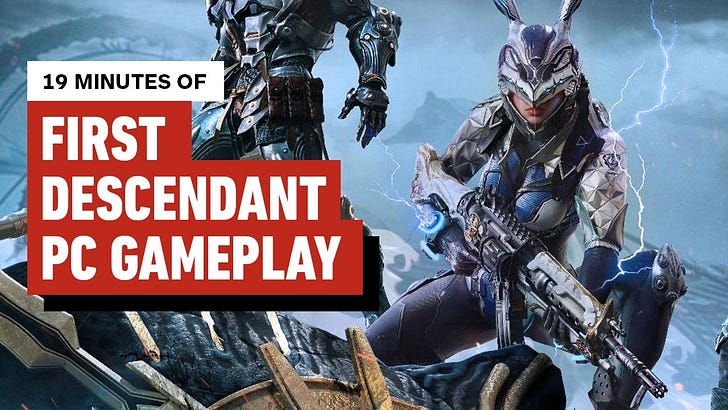
The First Descendant, a free-to-play third-person looter shooter from Nexon, has achieved a significant debut on Steam, reaching approximately 230,000 concurrent users (CCU) and securing a top position on global revenue charts. Despite mixed reviews citing aggressive microtransactions and technical performance issues, the title has successfully attracted a broad international audience, with 21% of players based in the United States and 17% in China. This launch occurred during the Steam Summer Sale, a period that typically disincentivizes new releases, leaving only a few major titles to compete for player attention.
The other primary release of the week, Final Fantasy XIV: Dawntrail, also saw a mixed critical reception but successfully tripled the MMO’s active Steam player base from 30,000 to over 90,000 CCU. Looking ahead, the industry anticipates the launch of Once Human, which enters the market with over 120,000 Steam followers and 20 million global pre-registrations across multiple platforms. Other upcoming titles of interest include the physics-based shooter Anger Foot and the meme-inspired roguelite Meme Mayhem.
Across console platforms, free-to-play titles continue to dominate the PlayStation top-grossing charts, led by Zenless Zone Zero and The First Descendant. On Xbox, Elden Ring’s Shadow of the Erdtree Edition remains the top-performing paid title, while Little Kitty, Big City maintains its lead among recent third-party releases on the Nintendo Switch eShop. The data, compiled through GameDiscoverCo’s proprietary Hype charts and public store rankings, indicates that while the summer sale has slowed the volume of new launches, high-profile service games and established franchises continue to drive significant engagement and revenue.
Analysis of Steam tag data from 2024 reveals that complex, PC-centric genres continue to dominate player interest and "hype" scores. Utilizing a proprietary metric that aggregates followers, wishlist rankings, and forum traffic across nearly 24,000 unreleased titles, the findings indicate that Open World Survival Craft, Grand Strategy, City Builders, and Farming Simulators remain the most consistently popular genres. A notable shift since late 2022 is the emergence of the Extraction Shooter as a high-interest subgenre, alongside a significant rise in the "Job Simulator" category, driven by the success of niche management titles.
The data distinguishes between median hype and average hype to identify "top-heavy" genres. While the median view highlights consistent performers, the average view reveals that genres like MMORPG, MOBA, Looter Shooter, and Souls-Like are driven by a few massive, highly anticipated titles. Additionally, the most anticipated specific tags for games with at least ten entries are Remake and Warhammer 40k, suggesting strong market sentiment for established intellectual properties and updated classics.
Beyond genre trends, the analysis covers shifting hardware preferences on Steam. Controller usage has tripled since 2018, now accounting for 15% of daily sessions. While Xbox controllers maintain a 59% market share, PlayStation controllers have grown to 26%, and the Steam Deck accounts for 10%. This broadening of the PC market is further evidenced by the announcement of new Steam-branded peripherals from third-party manufacturers like Hori.
The scope of this analysis is global, focusing on the Steam platform during the first half of 2024. It also touches upon broader industry trends, including the limited commercial success of premium console-to-mobile ports on iOS, the dominance of Meta Quest in the VR extraction shooter market, and the impact of Steam Next Fest, where surveyed games averaged 4,000 new wishlists and a 20% conversion rate from demo players to wishlisters.
Market performance for the final week of June 2024 reflects a significant slowdown in new releases as the industry deferred to the launch of the Steam Summer Sale. Analysis of Steam debuts, upcoming titles, and console storefront trends indicates that while high-profile remakes and niche simulators can find success, the overall volume of major new entries remained low during this period.
The primary highlight of the week was the launch of Riven, a real-time 3D remake of the 1997 classic. The title achieved approximately 1,700 maximum concurrent users and an estimated 25,000 to 30,000 units sold in its first week on Steam. Other notable Steam debuts included the deck-building dungeon crawler Dice & Fold and the hyper-niche storm-chasing simulator Outbrk, both of which maintained steady engagement despite specific technical critiques from their respective communities. Conversely, Ubisoft’s Beyond Good & Evil 20th Anniversary Edition saw a more muted start across Steam, PlayStation, and Xbox, likely due to a late-announced Steam page and a crowded legacy market.
Looking ahead, the free-to-play co-op RPG The First Descendant dominates upcoming interest with over 215,000 Steam followers, positioning it as a major contender in the looter-shooter segment. Other significant upcoming activity includes the Dawntrail expansion for Final Fantasy XIV and the launch of Zenless Zone Zero from MiHoyo, which is expected to leverage strong urban-themed visual appeal and established gacha monetization models.
Across console platforms, Elden Ring continues to lead sales charts following its recent expansion, while Sea of Thieves remains a top performer on PlayStation. On the Nintendo Switch, Little Kitty, Big City and Moonstone Island show sustained momentum. The data, derived from Steam CCU figures, follower counts, and official storefront rankings across the US and global markets, suggests that while the summer sale period suppresses new paid launches, established hits and high-anticipation free-to-play titles continue to drive significant player traffic.
June 2024 Steam launch data reveals a market dominated by high-performing free-to-play (F2P) titles and viral indie hits, while mid-to-large budget traditional releases face increasing pressure to recoup costs. Analysis of gross revenue and player engagement indicates that Nexon’s F2P shooter, The First Descendant, led the month with an estimated $35 million in gross revenue, characterized by aggressive monetization and a diverse international player base. In the indie sector, Bodycam and Chained Together emerged as significant outliers, leveraging viral mechanics and Unreal Engine 5 aesthetics to achieve sales of 400,000 and 2 million units respectively.
The data suggests a challenging environment for premium titles with higher production values. Despite positive critical reception, games like Still Wakes the Deep may struggle to find profitability on Steam alone, often relying on subscription services like Game Pass to reach a broader audience. Furthermore, the transition of titles like Dark and Darker to Steam showed mixed results, as unconventional monetization structures—such as a free-to-play entry with a flat-fee unlock—received varied player responses.
Geographic and platform trends highlight the continued strength of the Asian market and the resilience of established franchises. NetEase’s Once Human demonstrated strong concurrent user (CCU) peaks exceeding 160,000, driven by significant interest from the U.S. and China. On consoles, The First Descendant and Zenless Zone Zero topped PlayStation charts, while Elden Ring’s expansion maintained a dominant position on Xbox. Looking forward to mid-July 2024, the market anticipates a surge of high-wishlist releases including Norland and Flintlock: The Siege of Dawn, signaling a return to high-volume launch schedules following the conclusion of the Steam Summer Sale. This analysis utilizes proprietary GameDiscoverCo Hype scores, CCU tracking, and revenue estimates to evaluate performance across Steam, PlayStation, Xbox, and the Epic Games Store.
Analysis of recent market activity reveals a period of relatively quiet Steam debuts, largely attributed to the overlap with Steam Next Fest. Performance data indicates that only six new releases surpassed 300 concurrent users (CCU) during their first week. Shin Megami Tensei V: Vengeance emerged as a standout success, achieving 16,200 CCU and high critical acclaim at a premium price point. The long-awaited Steam release of the Kingdom Hearts series also performed well, maintaining approximately 8,000 CCU across its various titles. Other notable entries include the Chinese RPG Legend of Mortal, which saw high engagement primarily in the Asian market, and the cozy farming title SunnySide.
The scope of this analysis covers global Steam trends, console performance across PlayStation, Xbox, and Nintendo Switch, and emerging segments like Meta Quest VR and Fortnite creative maps. Data is derived from proprietary tracking tools, including CCU counts, follower growth, and review sentiment. Beyond current releases, pre-order momentum is building for Black Myth: Wukong, while the indie shooter Bodycam continues to show strong sales despite its early access status.
Looking ahead, the upcoming week is projected to be significantly more active, featuring ten titles with over 5,000 followers. Key upcoming debuts include the social sandbox MMO Pax Dei, which leads with over 75,000 followers, and the Viking-themed survival game Aska. Other high-interest titles include Drug Dealer Simulator 2 and the horror adventure Still Wakes the Deep.
In the console and VR sectors, V Rising has made a successful transition to PlayStation, while MLB The Show 24 remains a dominant force. On the Nintendo Switch, Little Kitty, Big City continues to lead recent third-party downloads. The VR market saw VRider SBK top the charts by new ratings, while Fortnite’s ecosystem remains dominated by Epic-owned modes and established community maps like Nick Eh 30’s Streamer Zone Wars.
The Nintendo Switch remains a premier platform for independent developers, often outperforming Xbox and PlayStation in sales for non-AAA titles. Analysis of the current market suggests that while the eShop is heavily saturated, games with "cozy" aesthetics or "Nintendo-adjacent" vibes can achieve significant success, with top-tier third-party titles reaching 500,000 to over one million units. However, discoverability remains a critical challenge; many high-quality releases struggle to surpass 3,000 units in their first month due to the sheer volume of competing software.
Data from a 2024 survey of 3,700 Switch enthusiasts reveals a highly engaged user base, with 45% of households owning multiple consoles. Despite the openness to indies, the most-played titles of 2023 were exclusively first-party Nintendo publications. The survey highlights a shift in the handheld market, noting that 15% of respondents now own a Steam Deck, with 88% of those users shifting their purchasing habits toward Steam over the eShop. Looking toward future hardware, 76% of users consider backwards compatibility an essential feature for a successor console.
Beyond the Nintendo ecosystem, streaming data from April 2024 indicates that military shooters and medieval strategy games like Gray Zone Warfare and Manor Lords are driving significant viewership. The influence of transmedia is also evident, as the Fallout television series triggered a tenfold increase in streaming hours for Fallout 4 and Fallout 76. In the broader industry, platform holders are navigating complex regional restrictions on PC, while subscription services like Apple TV+ are exploring performance-based payout models that could eventually influence game subscription structures.
This analysis examines global Steam bandwidth usage as a proxy for regional platform engagement, alongside an evaluation of Microsoft’s recent hardware performance. Utilizing official Valve data from April 2024, the findings reveal that China leads global Steam bandwidth consumption at 25.6%, followed by the United States at 20.6%. This highlights the continued strength of the grey market in China, which saw a nearly 1% increase in usage since February 2024. Other significant contributors include the Russian Federation at 5.9% and Germany at 4.4%. While bandwidth does not correlate perfectly with unique players due to varying game sizes and update frequencies, it serves as a critical indicator of regional interest.
Regional data shows Asia as the dominant territory with 30.4% of global bandwidth, followed by North America at 23.4% and Western Europe at 16.3%. Despite China's higher bandwidth usage, the United States likely remains the leader in revenue generation due to higher regional pricing for premium titles. The analysis notes that while Steam remains a truly international marketplace with 65 countries accounting for at least 0.1% of bandwidth, developers must still weigh cultural appropriateness and regional GDP when prioritizing markets.
The assessment of the console market focuses on Microsoft’s fiscal performance, noting a 31% year-over-year decline in Xbox hardware revenue. This downturn is attributed to a combination of supply chain stabilization following 2022 constraints and a potential loss of market share to PlayStation 5, which has secured several high-profile exclusives in 2024. While the acquisition of Activision Blizzard has significantly boosted content and services revenue by 62%, the core Xbox hardware business faces a challenging trajectory. Additional industry observations include the rising integration of generative AI on Steam, the success of back-catalog sales for mid-tier publishers, and the growing influence of user-generated content categories like Tycoon maps in Fortnite.